
Imagine trying to find out who was playing at a warehouse party in Detroit on a Saturday night. Today, you check Instagram or a ticketing app. In 1994, you might have grabbed a photocopied zine from a record shop counter, or if you were lucky enough to have a university email address, you’d log into a mailing list that smelled like stale coffee and modem static. The rise of electronic music wasn’t just about synthesizers and drum machines; it was fueled by a parallel revolution in how we talked about it. This period created a hybrid media system where cheap print met early internet, allowing scattered scenes to connect before social media existed.
The Print Underground: Zines as Cultural Anchors
Before the web took over, Jockey Slut was the bible for anyone tired of mainstream dance magazines. Founded in Manchester in 1993 by Paul Benney and John Burgess, this bi-monthly fanzine didn’t just review records; it curated an attitude. It gave early interviews to acts like Daft Punk and The Chemical Brothers, focusing on left-field sounds rather than chart-toppers. Unlike glossy commercial mags, Jockey Slut felt like a secret passed between friends. Its distribution was physical-handed out in clubs, stacked in independent record stores, and mailed across borders. This materiality mattered. You could hold it, scribble notes in the margins, and pass it to someone else. It established a cultural authority that digital feeds struggle to replicate today.
In the United States, the landscape looked different but shared the same DIY spirit. Project X captured the New York club-kid scene, blending fashion, nightlife, and music criticism. It even hosted the first "Electronic Dance Music Awards" in 1995, letting readers vote for their favorites. This was journalism as community engagement. Meanwhile, Massive Magazine documented the Midwestern rave scene, with issues spanning 1993-1996. These weren’t just publications; they were networking tools. They listed promoters’ phone numbers, mapped out event locations, and debated whether commercialization was killing the vibe. If you wanted to know what was happening in your city, you read the local zine. If you wanted to know what was happening globally, you had to wait for the mail.
| Publication | Region | Focus | Lifespan |
|---|---|---|---|
| Jockey Slut | UK (Manchester/London) | Left-field techno, house, interviews | 1993-2004 |
| Frontpage | Germany (Frankfurt) | Rave news, Technoclub coverage | 1989-1997 |
| Project X | USA (New York) | Club kids, fashion, rave culture | 1990s |
| Massive Magazine | USA (Midwest) | Rave scene, DJ interviews | 1993-1996 |
Germany’s Frontpage: Scaling the Fanzine Model
Not all zines stayed small. Germany’s Frontpage started in May 1989 as an eight-page newsletter for a single party at Frankfurt Airport’s Dorian Gray. By 1996, it had grown to 140 pages and 70,000 copies. This growth highlights a critical tension in 1990s journalism: underground credibility can scale, but does it survive? Frontpage treated itself like a newsroom, covering events with journalistic rigor. Yet, as it expanded, it faced the risk of losing the intimacy that made it valuable. When it folded in April 1997, it marked the end of an era where a local fanzine could become a national institution without selling its soul to corporate media conglomerates.
The Digital Shift: Mailing Lists and Usenet
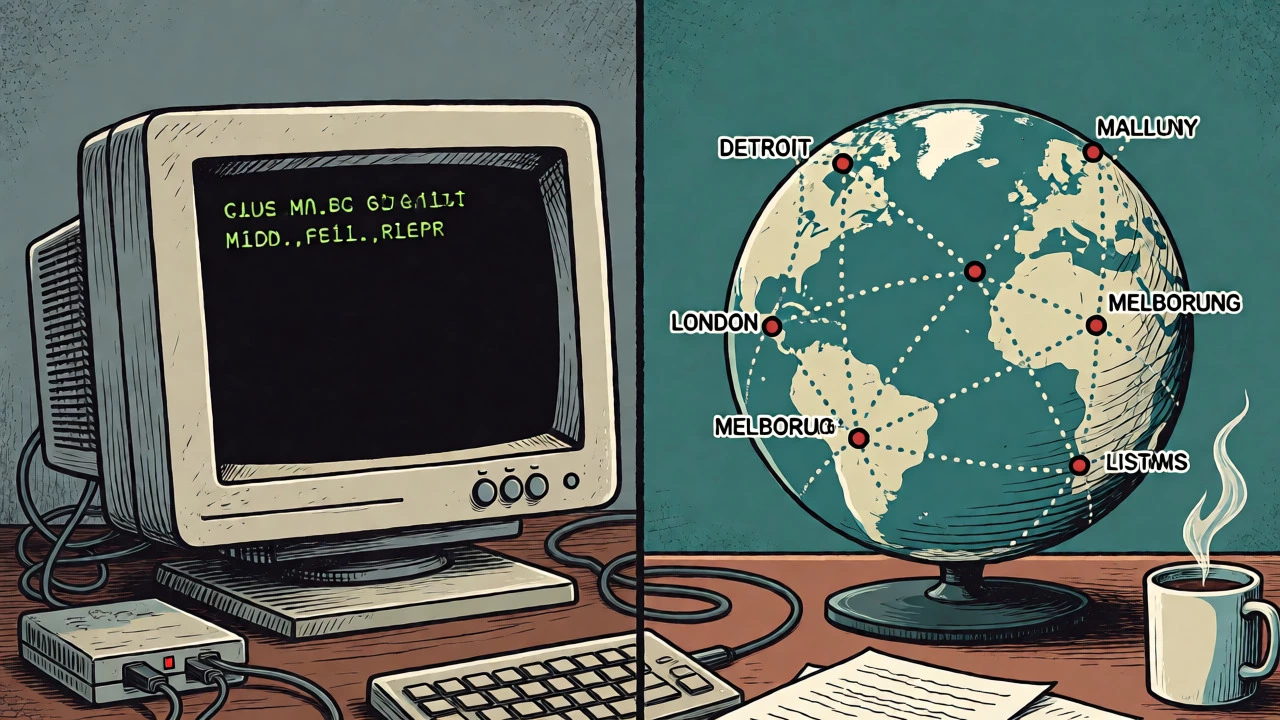
While zines built local identity, the internet built global connection. The turning point wasn’t a website launch; it was an email list. In 1992, Brian Behlendorf, associated with UC Berkeley, started the SFRaves email list. It ran on a Sun Sparc 1 server at Stanford University. This wasn’t just chat; it was distributed journalism. Participants shared event info, reviewed tracks, and argued about genre definitions in real-time. The list grew to over 2,500 members, creating a searchable archive of opinions that no magazine editor could control.
This infrastructure evolved into Hyperreal, a web community and archive that preserved these discussions. Hyperreal hosted regional lists like NE-Raves, UK-Dance, and AusRaves. It also featured the Virtual Rave, a chat environment launched in November 1992. Running on UnixCB software, it allowed users to enter named channels, mimicking the experience of walking into different rooms at a club. The hardware constraints were severe-a Pentium 90 with 32MB of RAM cost $3,500 in 1994-but the value was immense. For the first time, a raver in Melbourne could debate production techniques with a producer in Detroit instantly.
Usenet played a similar role. The alt.rave newsgroup, active since early 1992, offered wide distribution without needing an email subscription. It became a hub for specialist criticism, where technical details about synthesizers and production methods were dissected by enthusiasts. A 2024 study in *Organised Sound* noted that these spaces helped local scenes, like Melbourne’s, connect to global EDM cultures. However, access was unequal. You needed a university account or expensive private ISP service. This created a digital divide where only certain classes and regions could participate in the conversation.
Defining Genres Through Debate
The terminology we use today was forged in these online firestorms. Take IDM, or Intelligent Dance Music. The term wasn’t coined by a label executive; it emerged from a mailing list announced by Alan Parry in August 1993. The very first message was titled “Can Dumb People Enjoy IDM, Too?” This question sparked years of debate about elitism in electronic music. Was Aphex Twin’s work “intelligent” while other techno was not? These discussions shaped the genre vocabulary. Magazines used specific terms like jungle, hardcore, or ambient, but the umbrella term “EDM” didn’t stabilize until later. The online discourse communities helped standardize language, often pushing back against commercial labels imposed by the industry.
This participatory model had downsides. Anonymity led to flame wars. Misinformation spread quickly. Moderation was inconsistent. But the speed was unmatched. If a promoter canceled a show, the news hit the list within minutes, not weeks. If a new track dropped, reviews appeared before the vinyl arrived in stores. This immediacy changed expectations. Readers no longer waited for monthly issues to know what was cool; they curated their own feeds through email filters and forum bookmarks.
Collaboration, Not Competition
It’s easy to view print and web as rivals, but in the 1990s, they worked together. Zines provided design, cultural authority, and durable artifacts. The web provided reach, correction, and networking. Hyperreal explicitly scanned US and UK zines, turning ephemeral paper into permanent digital archives. Chicago flyers, once destined for the trash after a party, were saved online. This symbiosis meant a reader could see a flyer, read a zine review, and then join an online debate about that same event. The transition wasn’t a replacement; it was an expansion of functions.
However, nostalgia shouldn’t blind us to the flaws. Christopher Haworth’s analysis warns that some subcultural media drifted away from DIY egalitarianism. Gatekeeping persisted. Status competition remained. Regional inequality favored cities with better internet infrastructure. The “democratic” promise of online publishing was partially true, but it still required resources-computers, modems, and leisure time-that not everyone had.
Legacy: From Archives to Algorithms
By the late 1990s, the model shifted toward commercial websites and searchable databases. Hyperreal’s Virtual Rave shut down in June 1998, symbolizing the end of the grassroots server era. Commercial forums like inthemix.com.au rose to fill the void. The zine ethos didn’t die; it digitized. Bloggers took the place of zine writers. Social media replaced the mailing list. But the core lesson remains: electronic music culture was defined by its participants, not just its producers.
Today, when we scroll through Spotify playlists or TikTok trends, we’re using tools that standardized these activities. We lost the friction of waiting for the mail, but we gained instant access. Yet, much of the 1990s material is vulnerable. Link rot, obsolete software, and lost hard drives threaten these archives. Projects like Hyperreal’s preservation efforts are crucial because they hold primary evidence of how artists and fans defined their world in real-time. Understanding this history helps us appreciate why electronic music journalism looks the way it does now-it’s the result of a decade-long experiment in decentralized storytelling.
Frequently Asked Questions
What was the main difference between 1990s zines and modern blogs?
Zines were physical, low-cost, locally distributed publications with limited print runs, requiring manual distribution. Modern blogs are digital, instantly accessible globally, and searchable. While both offer independent voices, zines relied on tangible community interaction (handing them out at clubs), whereas blogs rely on algorithmic discovery and hyperlinks.
Why was Hyperreal important for electronic music history?
Hyperreal served as a central archive and community hub for rave and electronic music culture. It hosted major mailing lists like SFRaves and the IDM list, preserving thousands of emails, event flyers, and scanned zines. It transformed ephemeral, localized information into a permanent, searchable historical record.
Did the term "EDM" exist in the 1990s?
Not widely. Journalists and fans typically used specific genre terms like techno, house, jungle, rave, or hardcore. The umbrella term "Electronic Dance Music" (EDM) became prominent later, largely driven by commercial industries and retrospective marketing. Academic writing in the 90s preferred "rave," "dance," or "club culture."
How did Usenet affect electronic music criticism?
Usenet groups like alt.rave allowed for asynchronous, text-based discussions across national borders. It democratized criticism by letting anyone post reviews or technical advice without editorial gatekeepers. This accelerated the spread of production knowledge and connected isolated scenes, though it suffered from moderation issues and required technical access.
Why did many 1990s zines disappear?
Most operated on unpaid labor and small budgets. As the internet grew, readers migrated to faster, free online sources. Additionally, many zines lacked formal business structures, making them vulnerable to burnout, distribution failures, or the founders moving on to other careers. Some merged into commercial magazines or closed entirely as the market consolidated.


