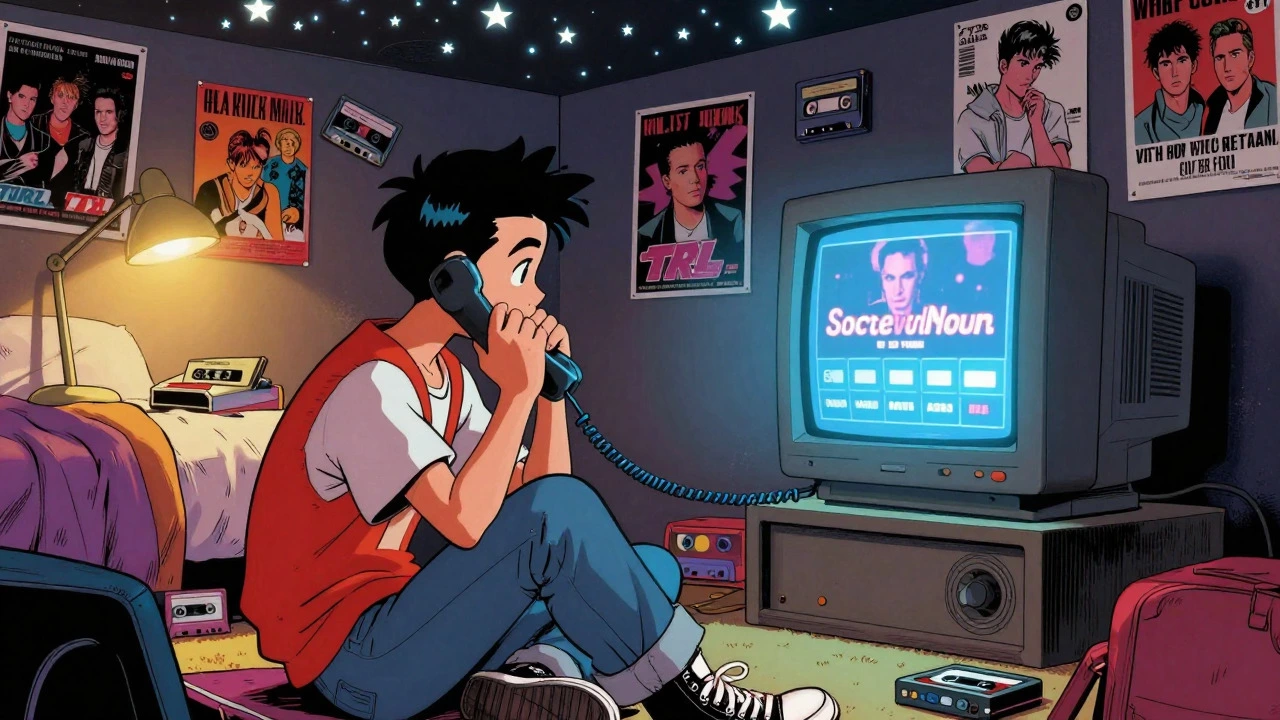

Picture this: It’s September 1998. You’re sitting in your bedroom or huddled with friends after school, phone receiver pressed to your ear, dialing a number on screen. You aren’t just watching TV; you are playing it. This was the era of Total Request Live, commonly known as TRL. It was more than a music video show. It was a daily battleground where teen fans wielded real power, deciding which songs dominated American culture through sheer volume of requests and votes.
For a brief, intense window in the late 1990s, MTV handed the keys of the airwaves to its audience. The result? Unprecedented commercial peaks for boy bands and solo pop stars who learned to mobilize their fandoms like armies. If you want to understand how artists like the Backstreet Boys and Britney Spears achieved cultural dominance, you have to look at the mechanics of TRL. It wasn't just luck. It was organized fan labor.
The Birth of a Daily Ritual
TRL didn't start out as the juggernaut it became. In the spring and summer of 1998, MTV was experimenting. They had a loose live hangout show called "MTV Live" and a dark-room email countdown called "Total Request." Producers saw an opportunity to merge these concepts. They wanted the energy of a live studio combined with the viewer control of the request line.
The experiment moved to the Summer Share in Seaside Heights, New Jersey, during the summer of 1998. The engagement levels were high enough that producers decided to make it permanent. On Monday, September 14, 1998, TRL officially premiered from Times Square in New York City. Hosted by VJ Carson Daly, the show promised a simple premise: the top 10 videos aired each afternoon would be chosen entirely by fan votes.
By late 1999, the brand had solidified so much that MTV dropped the full name and used only the acronym "TRL." This signaled something important: the initials alone carried weight. The show had become MTV’s unofficial flagship program, drawing between 757,000 and 800,000 viewers daily at its peak. For teens, tuning in at 3 PM Eastern Time wasn't optional. It was part of the daily routine, right alongside homework and lunch.
How the Voting System Actually Worked
To understand the power dynamic, you need to know how the votes were cast. In the early days, the system was wide open. Viewers could vote via telephone calls, email, and later, web forms on MTV.com. There was no cap on online votes initially. If you really loved a song, you could spam the system all day long.
This openness created a tiered system of influence. According to analyses of the voting mechanics, phone votes likely carried more weight than email submissions. Calling required effort-waiting on hold, dealing with busy signals. Email was quick and easy. By valuing the harder action (calling), MTV inadvertently rewarded the most dedicated fans. Those with landline access and time to spare held disproportionate power over the chart.
In 2005, MTV changed the rules. Online voting was restricted to registered MTV.com members. This was a direct response to automated scripts and excessive repeat voting. While it tried to clean up the data, it also added friction. Casual voters had to create accounts, which may have dampened participation compared to the chaotic, free-for-all nature of the late 90s.
| Time Period | Voting Methods | Access Level | Impact on Fandom Strategy |
|---|---|---|---|
| 1998-2004 | Phone, Email, Web Forms | Open (No registration) | High volume spamming; coordinated mass calling campaigns |
| 2005-2008 | Phone, Registered Web Votes | Gated (MTV.com membership required) | Reduced casual voting; higher barrier to entry for fans |
The Boy Band Wars and Chart Dominance
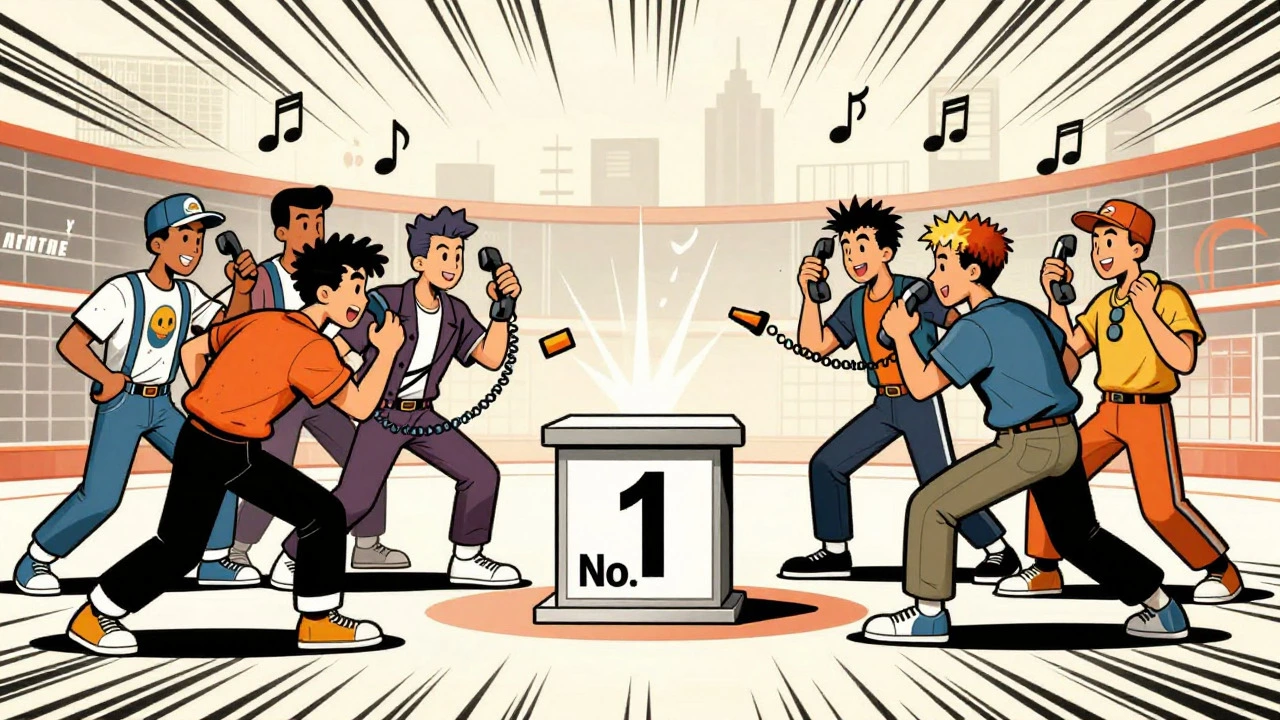
The late 1990s were defined by the rivalry between two massive boy bands: the Backstreet Boys and NSYNC. TRL provided the scoreboard for this battle. The show’s format allowed for sustained dominance. Unlike radio charts that updated weekly, TRL updated daily. This meant fans had to keep pushing every single day to maintain a No. 1 spot.
The Backstreet Boys understood this game better than anyone. Their video "I Want It That Way" broke the record for the longest-running No. 1 hit on TRL, spending 57 days at the top in 1999. Imagine keeping a song at number one for nearly two months against daily challenges from rival fanbases. That required relentless coordination. Other hits like "Larger Than Life" spent 77 days on the chart total, showing sustained mobilization over three months.
NSYNC matched this intensity. Their album "No Strings Attached" sold approximately 2.5 million copies in its first week in March 2000. This set a U.S. record that stood until Adele’s "25" surpassed it in 2015. The connection between TRL visibility and sales is undeniable. The show acted as a launchpad. When a video hit No. 1, fans rushed to buy the CD to support their team. The Ringer has described this era as having a fan intensity comparable to Beatlemania.
Breaking the Boys' Club: Solo Artists Rise
While boy bands dominated the early charts, the voting system eventually allowed solo artists to break through. Britney Spears’ "…Baby One More Time" holds a special place in TRL history. It was the first female solo artist to disrupt the male-dominated slate of late 1998 and early 1999.
This shift proved that concentrated fan voting could challenge incumbent power. Before Spears, the top spots were almost exclusively held by groups like Korn, Hanson, and the aforementioned boy bands. Spears’ breakthrough showed that if a fanbase was organized enough, they could push a solo act to the forefront. This paved the way for other artists like Christina Aguilera, Destiny’s Child, and Aaliyah to gain significant traction on the show.
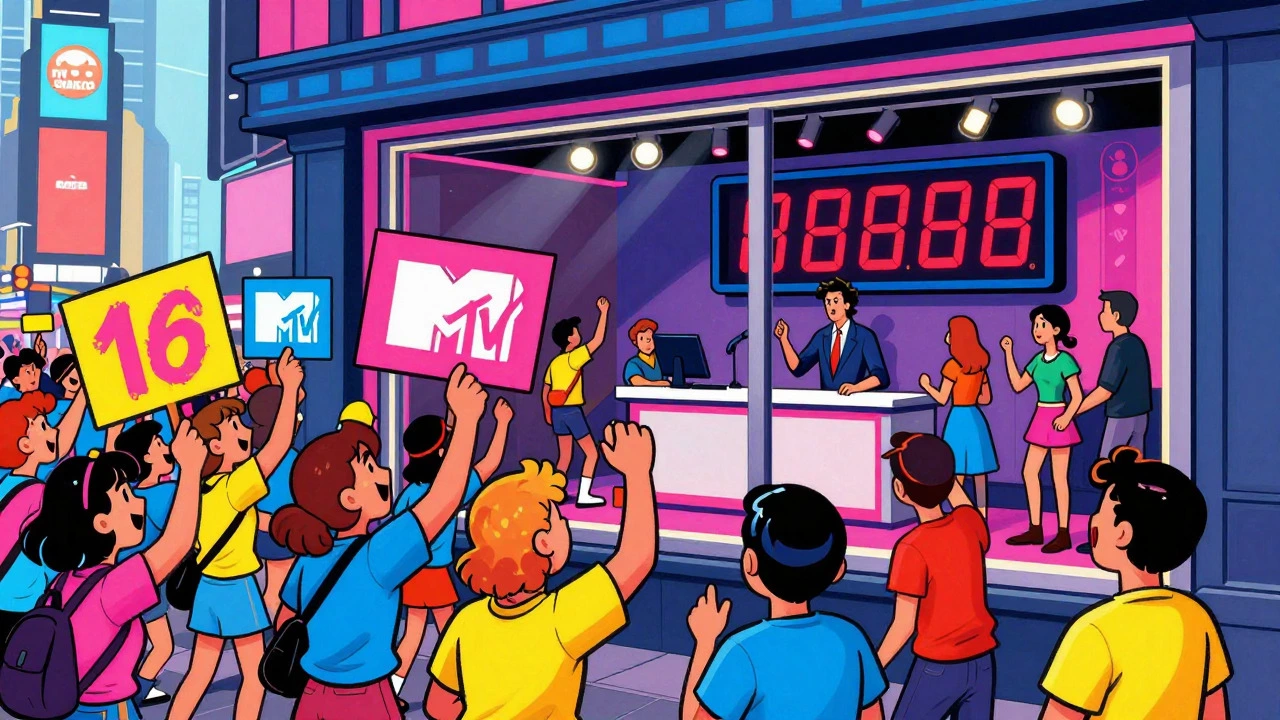
The visual aspect of TRL amplified this impact. The studio in Times Square had large windows facing the street. Massive crowds of fans gathered outside, cheering and waving signs. Inside, the live studio audience mirrored this energy. When Carson Daly announced a new No. 1, the reaction was visceral. For viewers at home, seeing their favorite artist celebrated on national TV validated their efforts. It was a feedback loop of validation and motivation.
Was the Power Real?
A common question among modern analysts is whether the votes truly determined the rankings. The short answer is yes, but with caveats. The system was not fully transparent. MTV never disclosed the exact algorithm used to weigh phone calls versus emails. Some sources suggest phone votes carried more weight due to the higher effort involved.
Furthermore, producers had editorial control over which videos were eligible for the countdown. Not every released video appeared on TRL. Labels had to secure placement, often through promotional deals. However, once a video was in the rotation, the fans decided its rank. The detailed records kept by fan archives, such as the TRL Archive site, show that viewers monitored the numbers closely. They tracked streaks, debuts, and drops. If the system were rigged, the inconsistencies would have been obvious to thousands of obsessive fans. The fact that specific songs held No. 1 for weeks suggests genuine fan-driven momentum.
The Decline and Legacy
TRL ran until November 2008, ending a decade-long run. Its decline mirrored changes in media consumption. As broadband internet grew, teens moved away from scheduled cable TV toward on-demand platforms. Social media began to fragment fandoms into smaller, niche communities rather than mass audiences gathering around one channel.
The 2005 voting restrictions also played a role. By adding barriers to entry, MTV made it harder for casual fans to participate. The magic of the late 90s-the ability to call in and immediately see results-was lost. By the time MTV announced the end of TRL in 2008, ratings had fallen significantly from their 1999 peak.
Yet, the legacy remains. TRL demonstrated that audiences wanted agency. It laid the groundwork for modern interactive media, where fans vote on reality shows, stream songs to boost charts, and engage directly with artists on social media. The late 1990s fan power seen on TRL was a transitional technology. It bridged the gap between passive television viewing and active digital participation.
When did TRL start and end?
TRL premiered on September 14, 1998, and ended its original run in November 2008. The show aired for roughly 10 years and 2 months, becoming a staple of late-night teen culture before being canceled due to declining ratings and shifting media habits.
Who hosted TRL?
Carson Daly was the primary host of TRL throughout its entire original run. He became synonymous with the show, interviewing major artists and managing the live studio audience from the Times Square location.
How did fans vote on TRL?
Fans voted via telephone calls, email, and web forms on MTV.com. In the early years, voting was open and unlimited. In 2005, online voting was restricted to registered MTV.com members to combat spam and automated voting scripts.
Which song stayed at No. 1 on TRL the longest?
The Backstreet Boys' "I Want It That Way" holds the record for the longest-running No. 1 hit on TRL, spending 57 consecutive days at the top of the countdown in 1999.
Did TRL actually affect music sales?
Yes, TRL had a significant impact on music sales. High rankings on the show correlated with increased visibility and fan mobilization. For example, NSYNC's "No Strings Attached" sold 2.5 million copies in its first week, partly driven by the hype generated on TRL.