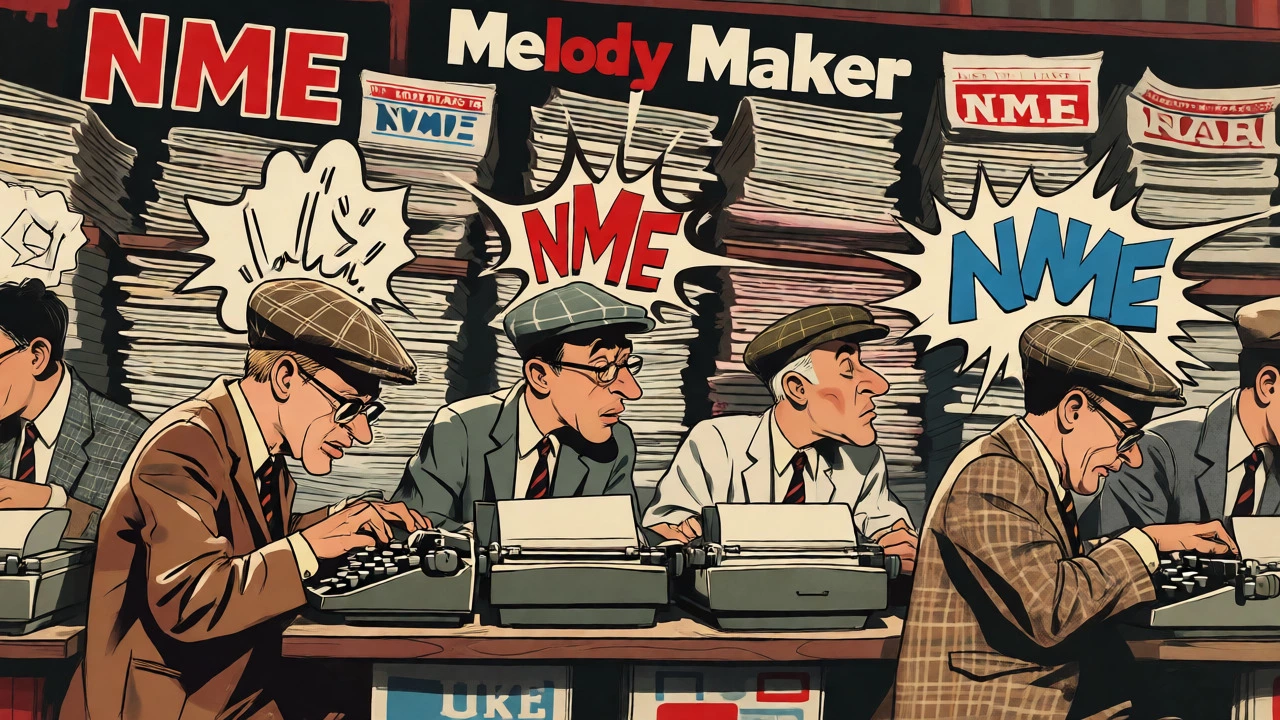

Imagine a world without Twitter feuds, Instagram stories, or TikTok trends. In the mid-1990s, if you wanted to know who was winning the war for your soul, you didn't scroll a feed-you bought a newspaper. Specifically, you bought NME or Melody Maker. These weren't just publications; they were the architects of reality for millions of British teenagers. They took two bands, Blur and Oasis, and turned a friendly competition into a national sport, complete with scorecards, commentators, and a heavyweight championship belt.
The story isn't just about music. It's about how a handful of journalists in London decided what Britain cared about that week. Between 1993 and 1997, the UK music press didn't just report on Britpop; they manufactured it. They framed it as a rebellion against American grunge, a class war between the North and South, and a battle for the very identity of British culture. And when they declared a winner, nearly half a million people went out and bought a single to prove them right.
The Pre-Internet Echo Chamber
To understand why this worked so well, you have to look at the media landscape of 1995. There was no internet to dilute the message. If NME said Blur was cool, Blur was cool. If Melody Maker said Oasis were thugs, they were thugs. The weekly circulation of NME hit around 117,000 copies in its peak years, but its influence stretched far beyond those readers. Tabloids like the Daily Star and national broadcasters like BBC Radio 1 picked up the narratives, amplifying them until they reached everyone from school kids to pensioners.
This created a closed loop of hype. Labels knew that getting a front-page spread could move units. Journalists knew that sensational headlines sold papers. So, they colluded-sometimes consciously, sometimes instinctively-to keep the drama high. The result was a promotional ecosystem where normal release schedules became military operations. When Food Records, Blur’s label, moved the release date of "Country House" to clash with Oasis’s "Roll With It," it wasn't an accident. It was a calculated strike designed to force a confrontation that the press could then narrate as a battle for supremacy.
Manufacturing the Class War Narrative
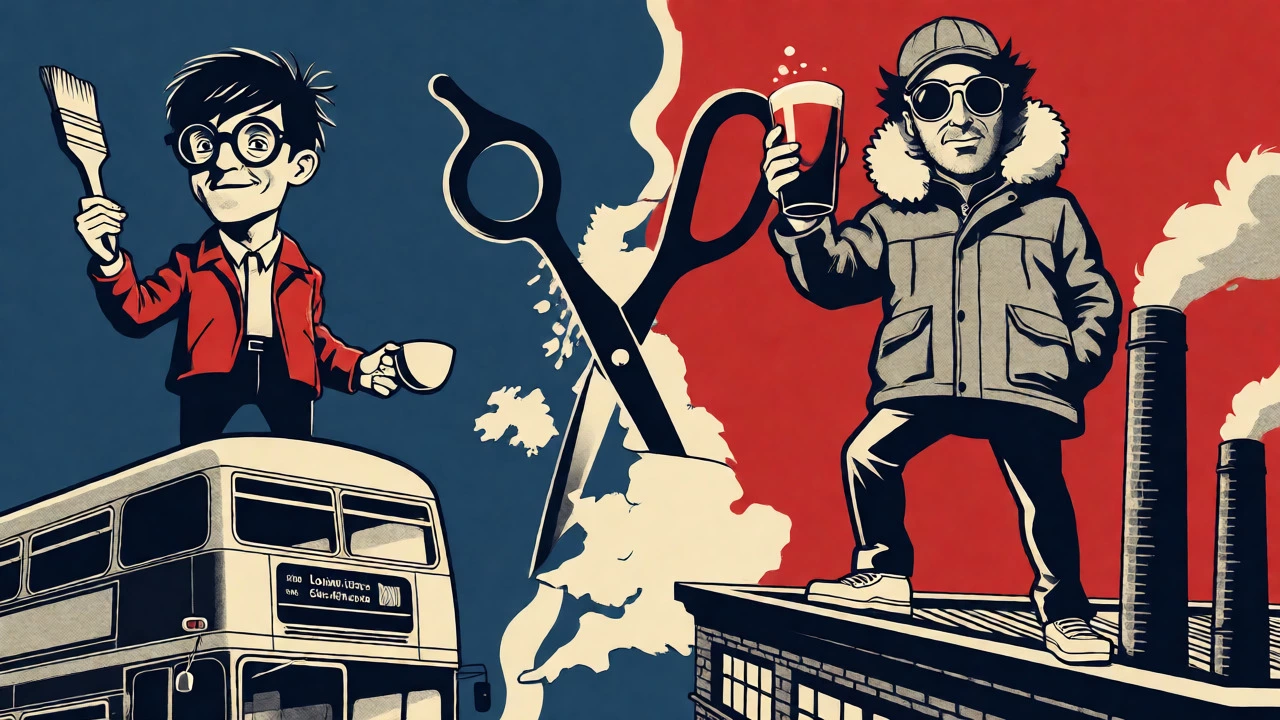
What made the rivalry stick wasn't just the music; it was the story. The press latched onto the obvious demographic differences between the two bands and blew them up into a caricature. On one side, you had Oasis, portrayed as loud-mouthed, working-class heroes from Manchester. On the other, Blur, depicted as art-school, middle-class southerners from London. This wasn't subtle journalism; it was social engineering.
Journalists used specific language to reinforce these stereotypes. Oasis were described using words like "lads," "swagger," and "raw." Blur were tagged with "irony," "wit," and "polished." By framing the conflict through the lens of class and region, the press tapped into deep-seated British anxieties and identities. You weren't just choosing a favorite band; you were declaring your allegiance to a part of Britain. Were you a Northern lad who liked a pint and a guitar riff? Or were you a Southern hipster who preferred irony and tweed?
| Attribute | Blur (The "Southerners") | Oasis (The "Northerners") |
|---|---|---|
| Origin | London / Colchester | Manchester |
| Class Portrayal | Middle-Class / Art School | Working-Class / Council Estate |
| Press Persona | Witty, Ironic, Intellectual | Loud, Arrogant, Authentic |
| Key Insult Used | "Chas & Dave chimney sweep music" | "Oasis Quo" (implying boring rock) |
| Cultural Symbol | Mod Revival / Englishness | Rock 'n' Roll Swagger / Northern Pride |
The insults themselves became currency. Noel Gallagher called Blur’s sound "Chas & Dave chimney sweep music." Damon Albarn dismissed Oasis as "Oasis Quo." These quotes weren't just throwaway lines; they were ammunition. Every time a journalist reprinted them, they reinforced the divide. Fans read these interviews not as casual banter, but as declarations of war. The personalization of the rivalry-focusing on Damon Albarn versus Noel Gallagher-made it accessible. It wasn't abstract corporate competition; it was two guys you could picture punching each other in a pub.
The Battle of Britpop: August 14, 1995
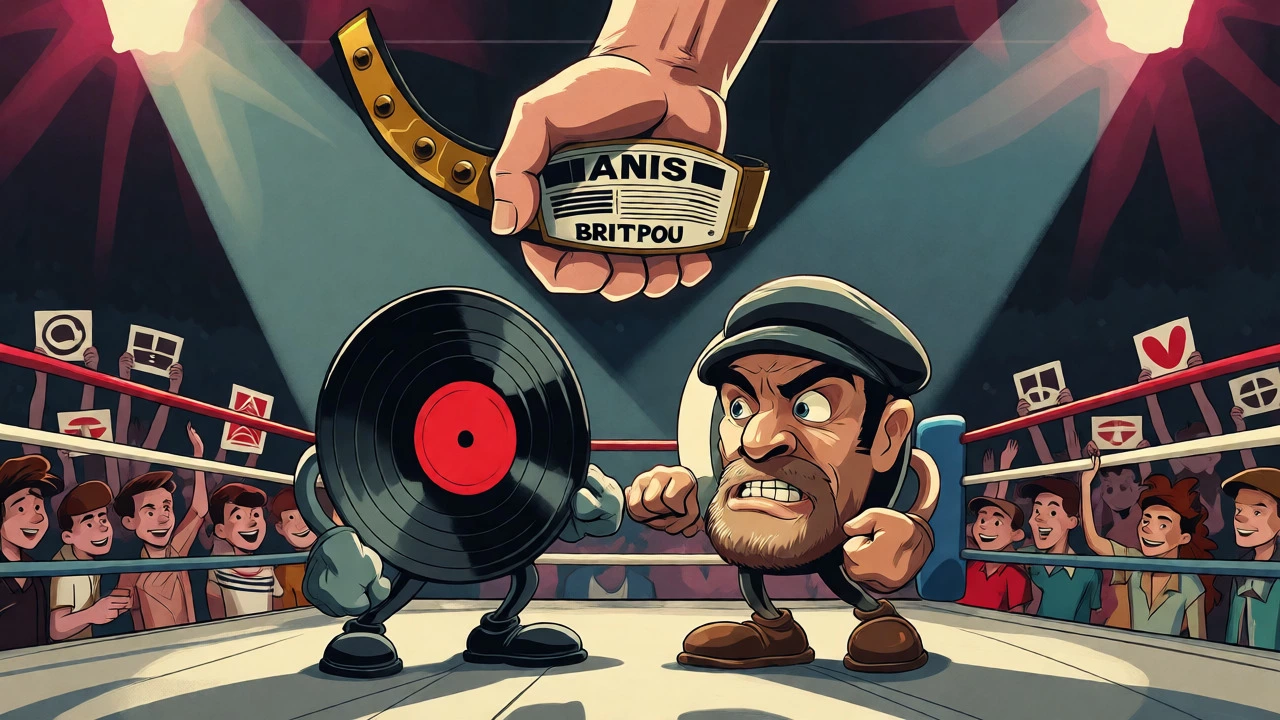
The climax arrived on August 14, 1995. The press dubbed it "The Battle of Britpop." NME ran a cover featuring both bands under the headline "British Heavyweight Championship," mimicking boxing posters. It was brilliant marketing. It told readers exactly how to consume the news: watch the fight, pick a fighter, wait for the count.
The stakes were real. Blur released "Country House," while Oasis dropped "Roll With It." The entire nation watched the charts. Did Blur win because they were smarter? Did Oasis lose because they were too arrogant? The sales figures tell us the immediate outcome: Blur’s single sold approximately 274,000 copies, beating Oasis’s 216,000. But the press narrative extended beyond the numbers. Even though Oasis lost the single battle, the coverage kept their album (What’s the Story) Morning Glory? in the spotlight, eventually leading to massive long-term success.
This event demonstrated the power of the press to turn a commercial decision into a cultural moment. Evening news bulletins covered the chart results like sports scores. Families discussed it over dinner. For one week, the fate of two guitar bands mattered more than politics or economics. That kind of unified attention is almost impossible to replicate today, given how fragmented our media consumption has become.
Beyond the Big Two: Creating a Scene Through Competition
While Blur and Oasis stole the headlines, the press applied similar tactics to the wider scene. Bands like Pulp, Suede, Supergrass, and Elastica were constantly pitted against each other. Editors created league tables, comparing festival crowd sizes and critical acclaim. This constant comparison fostered a sense of urgency and tribalism among fans.
If you liked Pulp, you might be expected to dislike Elastica, even if the bands were friends off-stage. The press encouraged fans to declare loyalty, creating camps that defended their choices fiercely. This wasn't always organic. Often, it was the result of journalists asking leading questions or highlighting minor disagreements as major feuds. The goal was engagement. A neutral reader is a passive reader; a partisan reader buys the magazine, goes to the concert, and tells their friends.
The Irish Examiner noted later that this strategy "cooked up" rivalries by encouraging fans to pick sides. It worked. Britpop dominated the charts, television, and radio. The movement felt alive, dangerous, and exclusive. You had to be part of the conversation, and the conversation was dictated by the pages of the weekly music press.
The Legacy: From Newsstand to Online Tribalism
Looking back from 2026, it’s clear that the techniques pioneered by the 1990s music press anticipated the dynamics of modern online culture. The polarizing narratives, the fan camps, and the relentless amplification of feuds are now standard features of social media discourse. Consequence of Sound argued in 2025 that the Battle of Britpop foreshadowed the age of internet tribalism. The difference is speed and scale. Back then, the cycle was weekly. Now, it’s hourly.
However, there’s a case to be made that the press also contributed to Britpop’s decline. By focusing so intensely on Blur and Oasis, they overshadowed the diversity of the scene. Once the big two moved into blockbuster territory, smaller acts struggled to break through the noise. The rivalry became a cage, trapping the genre in a binary choice that couldn't sustain itself indefinitely. As Luxury London pointed out, it was likely the last great battle for the UK Number One spot in such a concentrated, unified way.
Yet, the cultural impact remains undeniable. The images of the NME covers, the quotes exchanged in interviews, and the sales figures are etched into British pop history. We still talk about "Team Blur" and "Team Oasis" decades later, proving that the press succeeded in making these fictionalized conflicts feel real. They didn't just report the news; they wrote the script, cast the actors, and directed the audience to cheer for whoever they chose.
Frequently Asked Questions
Did Blur and Oasis actually hate each other?
Not initially. In the early stages, the bands praised each other and were seen as friends within the same scene. The hostility grew largely because the press encouraged them to trade jibes, and labels saw the financial benefit of a public feud. Over time, the persona adopted for the media bled into genuine tension, particularly between Damon Albarn and Noel Gallagher, but much of the animosity was performative for the cameras.
Why was the class divide so important to the Britpop narrative?
British society has a long-standing fascination with class and regional identity. By framing Blur as middle-class Southerners and Oasis as working-class Northerners, the press gave fans a simple way to identify with the bands. It transformed musical preference into a statement of social identity, making the rivalry resonate with people who might not have been deeply interested in indie rock otherwise.
Which band actually won the Battle of Britpop?
In terms of the specific chart battle on August 14, 1995, Blur won. Their single "Country House" sold roughly 274,000 copies compared to Oasis's 216,000 for "Roll With It." However, many historians argue that Oasis "won the war" due to the subsequent massive success of their album (What’s the Story) Morning Glory? and their record-breaking Knebworth concerts in 1996, which cemented their status as global superstars.
How did the music press make money from these rivalries?
Rivalries drove circulation. Readers bought NME and Melody Maker specifically to see who had insulted whom and what the latest sales figures were. The emotional investment of fans meant they wouldn't miss an issue. Additionally, the hype generated by the press boosted record sales, which in turn led to more advertising revenue from labels eager to promote their artists in the same publications.
Could a rivalry like this happen today?
It would be difficult to replicate the same effect. Today's media landscape is fragmented across streaming platforms, social media, and blogs. There is no single publication that can dictate the narrative for the entire nation simultaneously. While online feuds happen constantly, they rarely achieve the unified, cross-demographic saturation that the weekly music press managed in the pre-internet era.