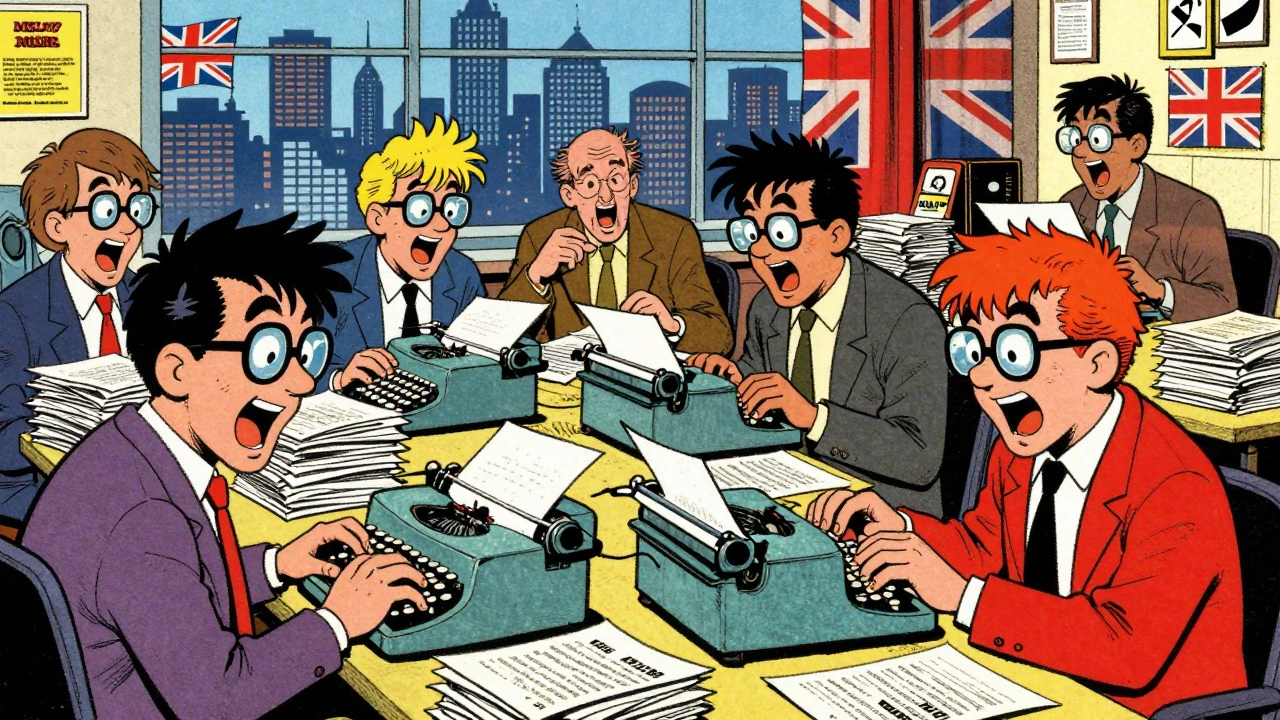

Remember when buying a record felt like picking a side in a war? In the mid-1990s, that wasn’t just hyperbole-it was the reality for millions of young people across Britain. You didn't just listen to Britpop is a British guitar-pop movement centred on bands such as Blur, Oasis, Pulp and Suede, that peaked between roughly 1993 and 1997. You fought for it. But here’s the twist: much of that heat wasn’t organic. It was manufactured, amplified, and sold to you by the media.
We often look back at the era with rose-tinted glasses, remembering the music and the fashion. But if you peel back the layers, you find that journalists, broadcasters, and magazine editors were the real architects of the chaos. They turned musical differences into class warfare and chart positions into national crises. This isn't just about nostalgia; it's about understanding how media narratives shape culture.
The Birth of a Narrative
Before the feuds reached their boiling point, the groundwork was already laid. The late 1980s and early 1990s saw British youth culture dominated by American grunge. Bands like Nirvana and Pearl Jam held sway, leaving UK guitar bands feeling sidelined. Enter Blur, Oasis, Pulp, and Suede. These groups offered something different: distinctly British references, melodic songwriting, and a rejection of American angst.
The media seized on this contrast. Publications like NME and Melody Maker are British music weeklies that played a central role in defining Britpop’s stars and meaning for the public. started framing these bands not just as musicians, but as saviors of national identity. They used slogans and imagery that foregrounded the Union Jack, creating a sense of urgency. Was this a genuine cultural awakening or a marketing strategy? The lines were blurred from the start.
Academic research, such as Philipp Lueders’ work on national identity in the 1990s, highlights how the "Cool Britannia" era (roughly 1996-1998) intersected with politics and media to promote a confident, marketable Britishness. The media didn't just report on the music; they defined what it meant to be British in the 90s through these bands.
The Battle of Britpop: A Media Construct
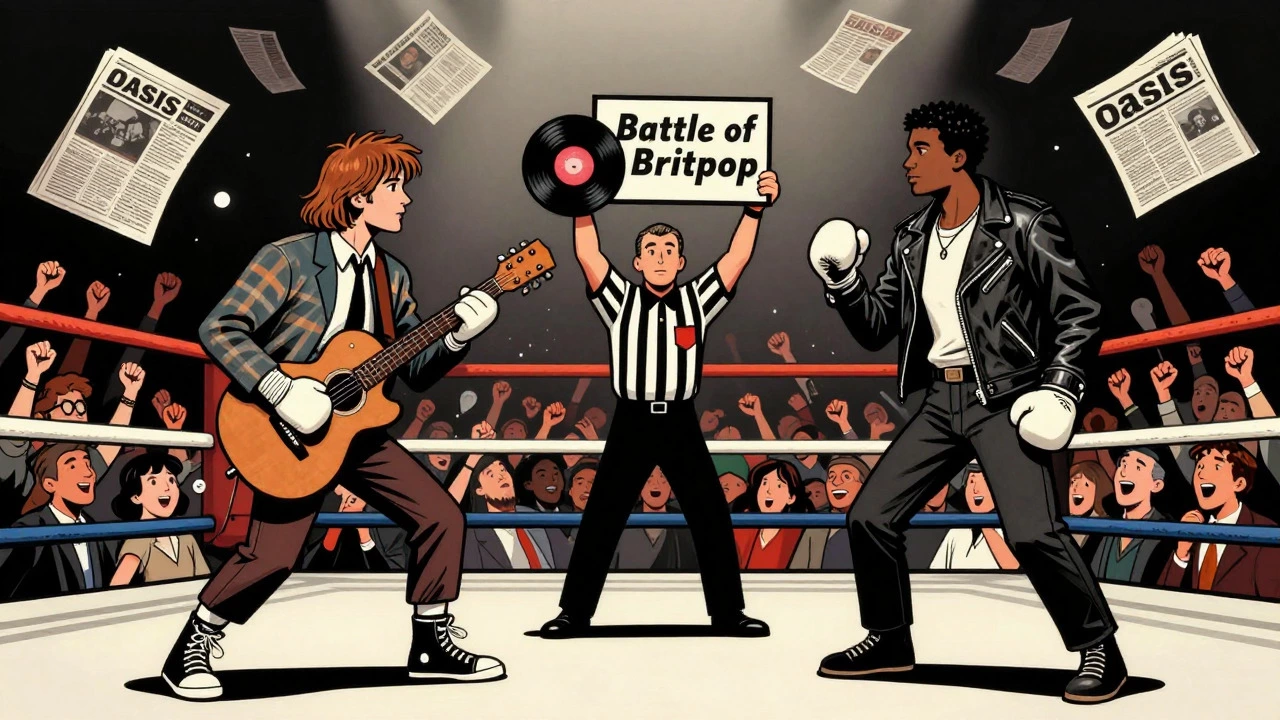
If there is one event that defines the media's role in Britpop, it is the "Battle of Britpop" in August 1995. On August 14, 1995, two singles were released on the same day: Blur’s "Country House" and Oasis’s "Roll With It". This wasn't an accident. Blur’s label, Food Records, deliberately moved the release date to clash with Oasis.
| Band | Single | First Week Sales | Chart Position |
|---|---|---|---|
| Blur | "Country House" | ~274,000 copies | #1 |
| Oasis | "Roll With It" | ~216,000 copies | #2 |
Blur won that specific week by a margin of roughly 58,000 copies. But the story wasn't about the sales figures alone. It was about how the media framed those numbers. Newspapers, TV news, and music magazines turned a routine chart competition into a historic cultural moment. Bookies took odds. Radio programmers tracked airplay. It became a national event.
Why did this matter? Because the media gave it weight. Without the intense coverage, it would have been just another week in the charts. With it, it became a referendum on British culture. As later retrospectives note, Blur won the battle, but Oasis went on to sell millions more albums globally with "(What’s the Story) Morning Glory?". The media focus on that single week obscured longer-term commercial realities.
Class Warfare and Regional Stereotypes
The most potent fuel for the feud was the narrative of class conflict. Journalists constructed a binary that simplified complex social realities into an easy storyline. On one side, you had Blur: described as sophisticated, art-school educated southerners from London. On the other, Oasis: portrayed as boisterous, working-class northerners from Manchester.
This wasn't just gossip. It was a deliberate editorial choice. The NME famously ran a front page tagline describing the contest as the "British heavyweight championship." This phrasing invited readers to interpret the sales contest as an epic boxing match for national supremacy. It mapped broader North-South stereotypes onto two bands.
Critics argue this was a "scam" designed to sell magazines. While personal tensions existed between band members-Noel Gallagher and Damon Albarn certainly had barbs to exchange-the idea of a "war for the soul of British music" was largely manufactured. Many musicians later recalled enjoying each other’s work or socializing in the same circles, complicating the stark enemy narrative promoted by outlets seeking to increase circulation.
Symbols of National Identity
Beyond class, the media used symbols of national identity to fuse these feuds with a wider story about Britishness. The Union Jack became ubiquitous. It appeared on magazine covers, record sleeves, and in music videos. But its use was not always celebratory. Some images, like the famous "Union Jack down a plughole," visually questioned whether the apparent revival of Britain was superficial.
This concept, termed "pop nationalism" by scholars, describes how mainstream and music media framed Britpop as a cultural wave. Bands like Oasis sometimes embodied a swaggering patriotism, while others, including Echobelly, challenged simplified patriotic narratives. The media saturated coverage with these visuals, making the Blur-Oasis feud appear as a debate over which version of Britishness should dominate the mid-1990s cultural mainstream.
Different Audiences, Different Stories
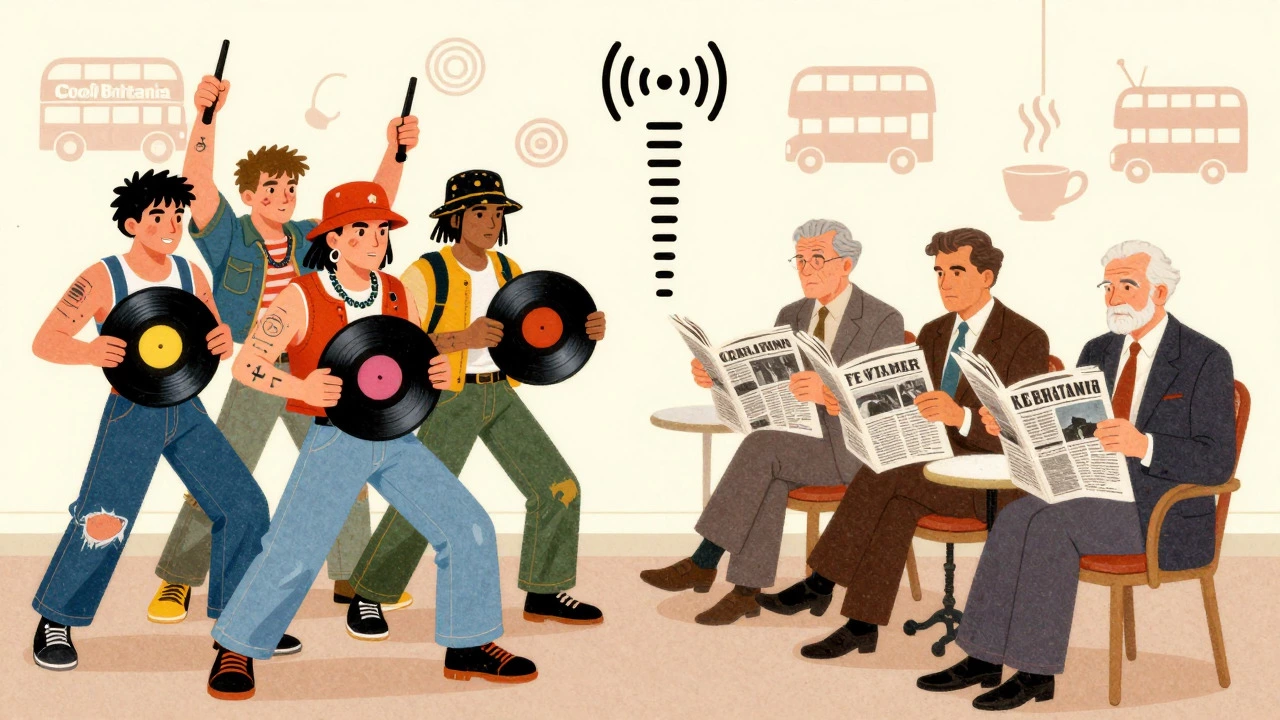
Not everyone experienced the feud in the same way. The type of media you consumed shaped your perception. Younger audiences, reading NME and Melody Maker, encountered near-weekly narratives emphasizing rivalry, loyalty, and taste distinctions. They adopted an insider tone, using slang and in-jokes. For them, buying a single was a participatory act, contributing numerically to a larger victory.
In contrast, older readers of broadsheets like The Guardian and The Times are mainstream newspapers that provided reflective pieces linking Britpop to broader political and economic issues. saw occasional think-pieces connecting the music to the Major government, economic optimism, and debates over multiculturalism. They focused on data-driven storytelling, citing precise sales numbers and dates to legitimize the event as a historical marker.
This age gap mattered. It created two parallel perceptions of the same events. One was playful hype and tribal loyalty; the other was a serious cultural analysis. Both were valid, but both were filtered through the lens of the media outlet delivering the message.
Legacy and Long-Term Perception
Decades later, the media's role remains a subject of debate. Retrospectives from the 2000s to the 2020s revisit the feuds with a mixture of nostalgia and critical distance. Documentaries and articles often reframe the events as both culturally iconic and heavily stage-managed. The BBC’s 2026 report on a stage play recreating the feud reveals ongoing nostalgia, showing that theatre audiences still respond strongly to reenactments of 1995 press conferences.
However, some writers explicitly criticize the original coverage as manipulative. They argue that the rivalry ignored issues of race, class inequality, and political disenchantment present in the UK at the time. By narrowing complex cultural movements into easily narratable feuds between a few highly marketable figures, the media obscured structural realities.
Yet, the longevity of the narrative cannot be denied. The specific dates, sales figures, and headlines have become embedded in collective memory. New generations encounter the feud primarily through mediated re-tellings rather than direct experience. This creates a feedback loop where the original media frames are reinforced, ensuring that the Blur-Oasis rivalry remains the shorthand for Britpop.
Did Blur actually beat Oasis in the Battle of Britpop?
Yes, in terms of the single-week chart race. Blur's "Country House" sold approximately 274,000 copies compared to Oasis's "Roll With It" at 216,000 copies during the week of August 14-20, 1995. However, Oasis went on to achieve greater long-term commercial success with subsequent albums.
Was the feud between Blur and Oasis real or manufactured by the media?
It was a mix of both. There were genuine personal tensions and competitive instincts between the band members. However, the media significantly amplified these differences, constructing a narrative of class warfare and national supremacy that exceeded the actual interpersonal dynamics.
Which magazines were most influential in shaping the Britpop narrative?
NME and Melody Maker were the primary drivers of the narrative among younger audiences. They used sensational headlines and detailed coverage of rivalries. Mainstream publications like The Guardian and The Times also played a role by contextualizing the music within broader social and political trends.
How did the media use class differences in the Britpop feud?
Journalists framed Blur as middle-class, art-school educated southerners and Oasis as working-class northerners. This binary allowed them to present the musical competition as a symbolic struggle between different regional and social identities in Britain.
What is "Cool Britannia" and how does it relate to Britpop?
Cool Britannia refers to a period in the mid-to-late 1990s characterized by a resurgence of interest in British culture, particularly music. Britpop bands were central to this phenomenon, with the media promoting them as symbols of a new, confident British identity.


