

Imagine walking into a record store in 1987. You want the latest hit by Whitney Houston or Pet Shop Boys. But instead of just buying one copy, you see five different versions on the shelf: a small 7-inch vinyl, a large 12-inch maxi-single, a cassette tape, and two different compact discs. Why would anyone buy more than one? The answer lies in the chaotic, exciting rise of the CD single a compact disc format released as a single rather than an album, typically containing 2-4 tracks. This wasn't just about better sound quality. It was a strategic game played by record labels to manipulate the charts and squeeze every possible sale out of a single song.
The Early Days: A Premium Novelty
The story doesn't start with mass-market hits. It starts with exclusivity. In 1985, Dire Straits British rock band known for their technical musicianship and commercial success released a four-track CD version of their song "Brothers in Arms." This is widely recognized by the Official Charts Company the official source for music charts in the United Kingdom as the first CD single in the UK. But here’s the catch: only 400 copies were pressed. It wasn’t meant for the average listener; it was a premium collectible for early adopters who already owned expensive CD players.
During this mid-1980s phase, the CD single was essentially a pilot project. Labels were testing the manufacturing waters. Most singles sales were still dominated by 7-inch vinyl the traditional format for singles, typically holding one track per side and the growing popularity of 12-inch maxi-singles used by DJs. The CD player itself had only been commercially available since 1982, so the installed base of consumers capable of playing these discs was tiny. These early releases emphasized exclusivity over chart impact, serving as proof-of-concept experiments for both manufacturers and record executives.
Standardizing the Format
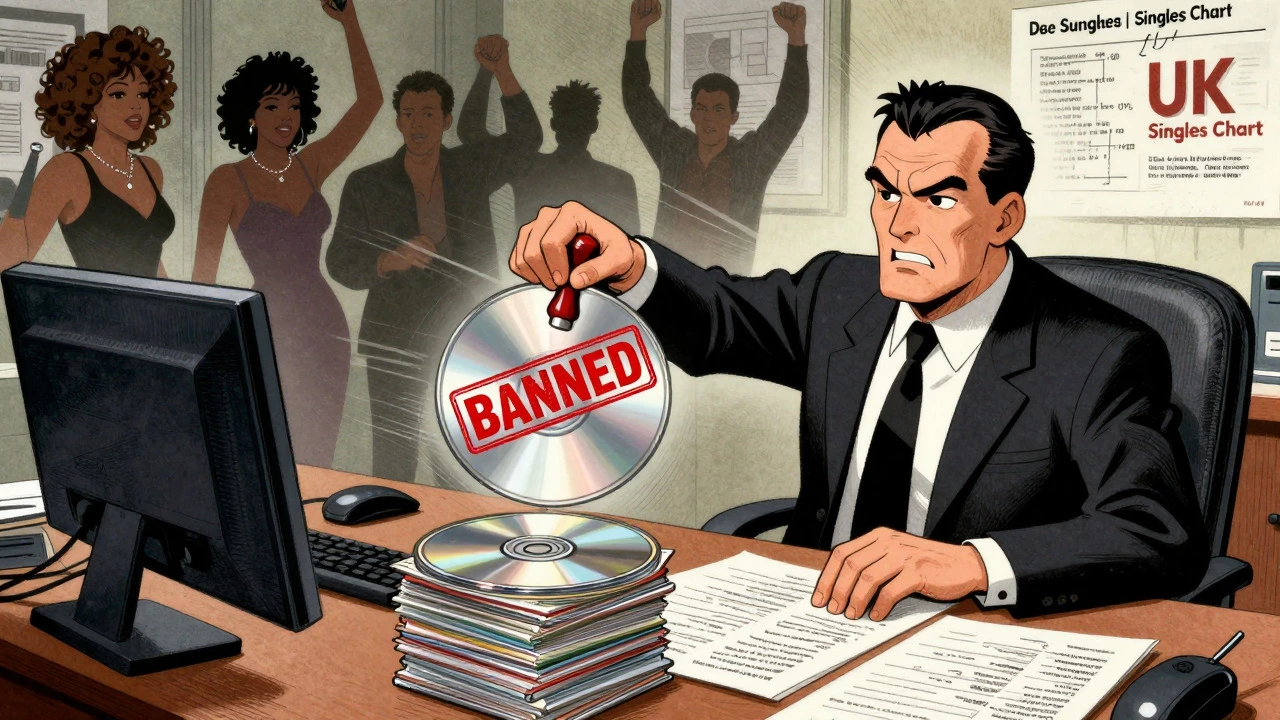
By 1987, the novelty wore off, and the business potential became clear. Major record labels in the UK agreed on a common specification for CD singles. This standardization was crucial because it allowed the format to be treated as a legitimate, chart-eligible product rather than a quirky gift item. However, the path to official recognition was rocky. Chart authorities initially barred CDs from the singles chart, worried that the higher price point and multi-track nature of the discs would distort competition against cheaper vinyl and cassettes.
This ban lasted until December 1987. Once lifted, the floodgates opened. But even before that formal inclusion, labels were using CD singles in mainstream promotional campaigns. They targeted early adopters-listeners who valued digital sound fidelity and durability-and leveraged the perceived prestige of the new technology. The shift from experimental extra-track releases to direct CD equivalents of conventional singles marked a turning point. The industry was no longer asking if CD singles belonged on the charts; they were figuring out how to make them dominate.
Chart-Topping Milestones
Two major events in 1987 highlight this transition. First, Whitney Houston’s "I Wanna Dance with Somebody (Who Loves Me)" reached number 1 on the UK Singles Chart the official record chart of the United Kingdom's best-selling singles in May 1987. While CD sales might not have fully counted under the strict rules at that exact moment, it was the first number-one single available in CD single format. This signaled to the market that top-tier pop acts were embracing the medium.
Then came Pet Shop Boys’ "It’s a Sin," which hit number 1 in June 1987. Collectors often cite this release as significant because its CD single included the standard 7-inch A-side version of the track. Previous CD singles often featured extended remixes or live versions, making them feel like EPs rather than true singles. By including the radio edit, Pet Shop Boys demonstrated that the CD could serve as a direct replacement for vinyl, appealing to both casual listeners and serious collectors. These milestones proved that CD singles were ready for prime time, even if the full regulatory framework was still being finalized.
The Rules of Engagement: Track Limits and Runtimes
To understand why CD singles looked the way they did, you have to look at the rules. Chart authorities imposed strict constraints to prevent labels from releasing mini-albums disguised as singles. In the late 1980s, the rules generally stated that a CD single could contain up to two tracks under one definition, or up to four tracks with a maximum total playing time of 25 minutes. Anything longer was classified as an album, which competed in a completely different chart category.
This created a unique design challenge for producers and marketers. They had to pack as much value as possible into those 25 minutes without crossing the line. Typically, late-1980s CD singles offered three or four tracks, staying just under the 20-to-25-minute threshold. This allowed them to include extended remixes, B-sides, and instrumental versions-content that appealed to dance clubs and collectors-while still qualifying as a single. Compared to a 7-inch vinyl, which usually held only the album version and one B-side, the CD single felt like a miniature EP. This multi-track capacity became a key differentiator, especially for synth-pop and dance acts who relied on multiple mixes to drive engagement.
| Format | Typical Capacity | Price Point | Primary Audience |
|---|---|---|---|
| 7-Inch Vinyl | 1-2 tracks (3-5 mins each) | Low | Casual listeners, radio fans |
| 12-Inch Maxi-Single | Extended mixes (10+ mins) | Medium | DJs, club-goers |
| Cassette Single | 2-4 tracks | Low-Medium | Teens, portable listeners |
| CD Single (120mm) | 3-4 tracks (<25 mins) | High | Collectors, audiophiles |
| Mini CD (80mm) | 2-3 tracks | High | Niche collectors, Japan market |
The Mini CD Experiment
Not all CD singles looked the same. Two physical formats emerged: the full-size 120 mm disc (often called CD-5 when used for singles) and the smaller 80 mm disc, known as the "mini CD" or "CD3." The mini CD was introduced around 1987-1988 and found particular success in Japan, where it became a prominent format. In the UK and US, however, it remained niche.
The problem with the mini CD was practicality. Many home CD players and early car stereos were designed primarily for the standard 120 mm discs. Playing an 80 mm disc often required special adapters or trays, leading to compatibility issues that frustrated consumers. By 1989, the mini CD format was already declining in the United States, replaced by the standard 5-inch CD single, which matched existing hardware better and simplified production. This consolidation around the full-size disc set the stage for future growth, eliminating a barrier to entry for mainstream adoption.
Label Strategies and Consumer Frustration
As CD singles gained chart eligibility, record labels quickly learned to exploit the system. They began issuing multiple variants for the same song: two different CD singles, a 7-inch vinyl, a 12-inch vinyl, and a cassette single. Each format offered slightly different track listings, artwork, or remixes. The goal was simple: maximize chart-eligible sales across all formats.
For collectors, this was a double-edged sword. On one hand, late-1980s CD singles often included bonus content unavailable on albums, turning certain discs into sought-after artifacts. Limited pressings, like the Dire Straits example, added to their allure. On the other hand, fans felt pressured to buy several discs to own all versions of a single song. Critics argued that this strategy artificially inflated chart sales, forcing consumers to spend more money just to support their favorite artists. Despite this frustration, the perception of CD singles as premium products helped create a dedicated collector niche and signaled technological modernity.
A Transitional Era
Although the CD single made headlines in the late 1980s, it did not secure a stable share of the singles market until the early 1990s. Throughout 1987-1989, CD singles accounted for a relatively small but rapidly growing percentage of overall singles sales. Precise market share figures vary by source, but the consensus is clear: the format was marginal in unit sales compared to vinyl and cassette, yet it was on an undeniable upward trajectory.
This period was formative. It established the CD single as an integral part of the singles ecosystem, setting the technical and regulatory norms that would govern the format for decades. As CD player penetration increased and prices fell in the 1990s, the groundwork laid in the late 1980s allowed the format to eventually dominate the market. Today, looking back at those chart-topping hits by Whitney Houston and Pet Shop Boys, we see not just musical milestones, but pivotal moments in the evolution of how we consume and measure music popularity.
When did CD singles officially enter the UK Singles Chart?
CD singles were formally allowed to count towards the UK Singles Chart starting in December 1987. Before this date, there was a temporary ban on CDs in the singles chart, although some early releases like Whitney Houston's "I Wanna Dance with Somebody" appeared on CD in May 1987 prior to the rule change.
What was the first ever CD single released?
The first widely documented CD single in the UK context was a limited edition four-track release of Dire Straits' "Brothers in Arms" in 1985. Only 400 copies were pressed, making it a rare collector's item rather than a mass-market product.
Why did record labels release multiple formats for the same song?
Labels released multiple formats (vinyl, cassette, various CD versions) to maximize sales and chart positions. By offering different track listings, remixes, or artwork for each format, they encouraged collectors and fans to purchase multiple copies of the same song to get all the exclusive content.
What is the difference between a CD-5 and a Mini CD?
A CD-5 refers to a standard 120 mm (approx. 5 inch) compact disc used for singles. A Mini CD (or CD3) is a smaller 80 mm (approx. 3 inch) disc. While Mini CDs were popular in Japan, they faced compatibility issues with many standard CD players in the US and UK, leading to their decline in favor of the full-size CD-5 format by the end of the 1980s.
How long could a CD single be to still qualify as a single?
In the late 1980s, chart rules typically allowed a CD single to have up to four tracks with a maximum total playing time of 25 minutes. Some definitions also restricted it to two tracks. If the runtime exceeded these limits (often cited as 20-25 minutes depending on the specific rule revision), the release was classified as an album rather than a single.


