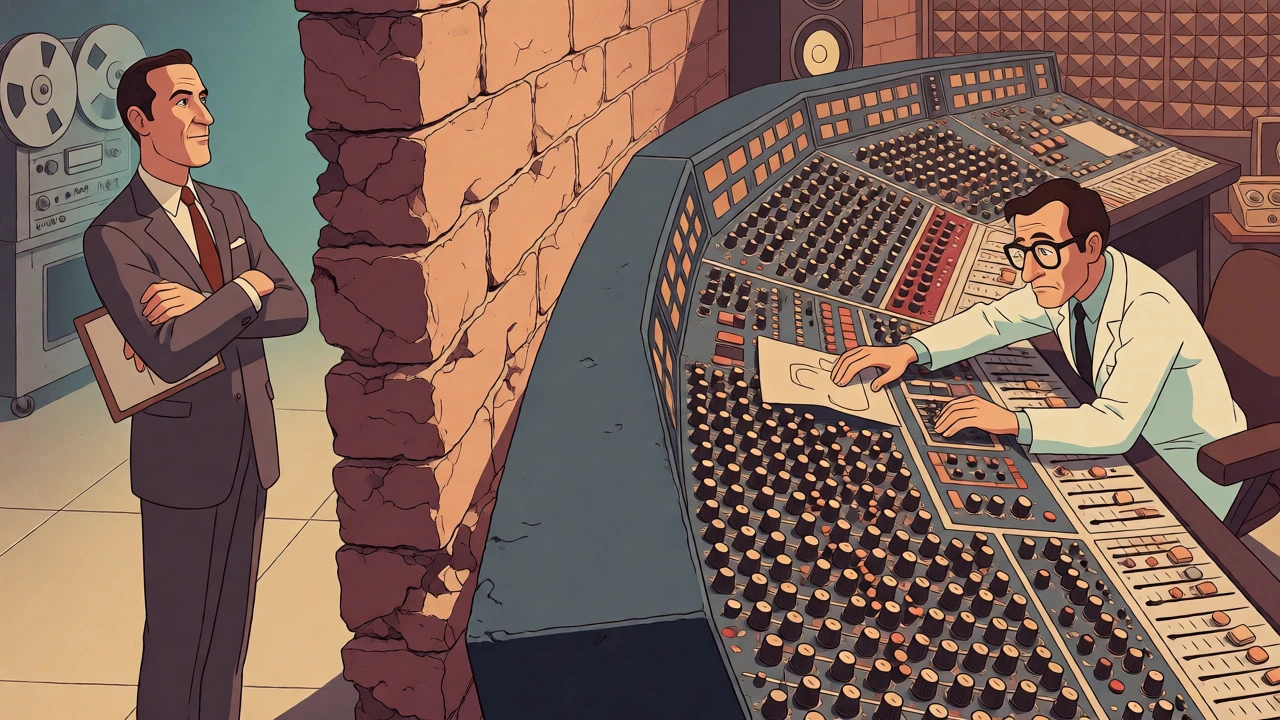

Imagine you are a record producer in 1985. You walk into a high-end studio in London or Los Angeles. Your job is clear: you manage the artist, choose the songs, hire the musicians, and shape the vibe. But when it comes to pushing buttons? That’s not your department. The recording engineer handles the console, the tape machines, and the microphones. They are the technicians; you are the architect. This division of labor was rigid, expensive, and absolute.
Fast forward to 1999. The landscape has shifted beneath our feet. The person sitting at the computer might be writing the song, programming the beats, recording the vocals, editing the timing, and mixing the track-all before lunch. The wall between "creative vision" and "technical execution" didn't just crack; it dissolved. This wasn't just about new gadgets. It was a fundamental redistribution of power in how music gets made. The 1990s marked the era where the producer-engineer became the dominant figure in modern recording, changing who holds the pen when the final mixdown happens.
The Pre-Digital Wall: Specialization as Standard
To understand the shift, you have to respect the constraints of the past. In the analog era, recording was an act of commitment. Tape is finite. If you want to change a guitar solo three weeks after tracking, you don’t just hit "undo." You might need to bounce tracks, lose fidelity, or re-record the whole band. Because of this, roles were strictly separated to maximize efficiency and minimize cost.
The producer focused on macro decisions: repertoire, arrangement, performance psychology, and budget. The engineer focused on micro decisions: signal flow, gain staging, microphone placement, and technical integrity. A producer like Steve Lillywhite, known for his work with U2, famously stated he wasn’t an engineer. He relied on specialists to handle the gear so he could focus entirely on the human element of the session. This separation ensured that technical problems didn’t distract from artistic direction, but it also meant the producer had limited direct control over the sonic texture unless they communicated through the engineer.
This model worked because technology demanded it. Analog consoles were massive physical objects requiring dedicated operators. Editing required razor blades and splicing tape. There was no way for a single person to do it all without sacrificing quality or sanity. The hierarchy was clear, and authority flowed from the label down to the producer, then to the engineer.
The Digital Trigger: Enter the DAW
The catalyst for change was the Digital Audio Workstation (DAW). While digital concepts existed earlier, the practical democratization began with Digidesign’s Sound Tools in 1989 and the first version of Pro Tools in 1991. Initially, these systems were expensive curiosities. A basic Pro Tools setup in the early '90s could cost over $12,000-roughly $25,000 today-excluding the Macintosh computer itself, which added another $6,700. For most indie artists, this was out of reach.
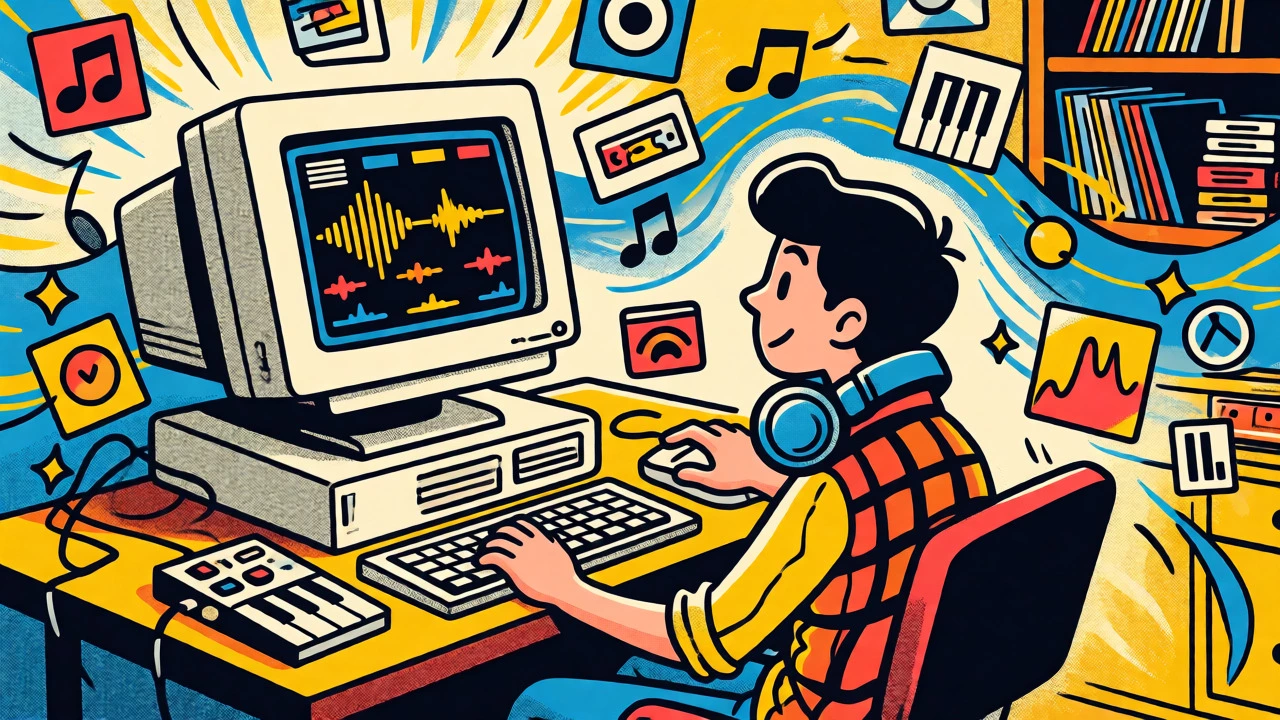
But by the mid-90s, prices dropped, and processing power soared. Suddenly, non-destructive editing became possible. You could cut, copy, paste, and move audio clips without damaging the original file. You could recall a mix instantly. Automation allowed faders to move automatically during playback, freeing the engineer from having to perform every volume ride manually. These weren't just convenience features; they were creative tools. When you can edit a vocal take with surgical precision, you start thinking like an editor. When you can program drums inside the same window where you record them, you start thinking like a composer.
This technological leap collapsed the timeline. Decisions that used to happen in separate rooms at different times now happened in one place, often simultaneously. The engineer wasn't just capturing sound anymore; they were shaping it in real-time within the software environment. And the producer? They realized they could bypass the middleman if they learned the software.
The Blurring of Boundaries: Who Is Doing What?
As DAWs became central to the workflow, the distinction between producing and engineering faded. Scholar Albin Zak described these roles as fluid categories long before the digital age, noting that a mixing engineer alters arrangement through EQ choices, and a producer often acts as an arranger. But the 1990s accelerated this overlap to a breaking point.
In a DAW-centric workflow, technical operations become compositional practices. Pitch-shifting a vocal isn't just a correction; it's a stylistic choice akin to playing a synthesizer. Drum replacement isn't just fixing a bad hit; it's designing the rhythm section's character. When the person operating the mouse is also the person deciding the song's structure, the two roles merge. This created the producer-engineer hybrid, a figure who possesses both the aesthetic judgment of a traditional producer and the technical fluency of an engineer.
| Feature | Traditional Model (Pre-1990s) | Hybrid Model (Late 1990s) |
|---|---|---|
| Primary Tool | Analog Console & Tape Machine | Computer & DAW Software |
| Editing Process | Physical Splicing / Bouncing | Non-Destructive Digital Editing |
| Creative Control | Producer directs; Engineer executes | Shared or Consolidated Authority |
| Revision Cost | High (Time/Money) | Low (Time only) |
| Studio Location | Commercial Facilities | Home/Project Studios |
This consolidation wasn't uniform. Some producers resisted, preferring to stay hands-off. Others embraced the machine. Electronic genres, heavily reliant on sampling and sequencing, naturally favored the hybrid model because the "instrument" was the computer itself. In rock and pop, the shift was more gradual, often resulting in teams where the engineer had significant creative input, effectively acting as a co-producer.
Economic Drivers: The Rise of Project Studios
Technology alone doesn't change culture; economics does. The 1990s saw a boom in independent labels and a desire for lower overhead costs. Major commercial studios charged premium hourly rates. A project studio-a converted bedroom, garage, or basement equipped with a computer and interface-offered a viable alternative. Research indicates that falling hardware costs enabled artists to access professional-quality tools outside major hubs like New York or London. This decentralization meant that creative decision-making moved closer to the artist.
If you’re working in a home studio, you likely aren't hiring a separate engineer. You are doing it yourself. Or, you are hiring a freelancer who wears multiple hats. The economic pressure to reduce headcount forced the merger of roles. Why pay a producer to supervise and an engineer to operate, when one skilled individual can do both for less money? This trend was global. Studies from Senegal document how local artists built home studios in the early '90s to bypass expensive Western-style facilities, fostering unique local sounds driven by self-contained producer-engineers.
The Creative Consequences: Freedom and Friction
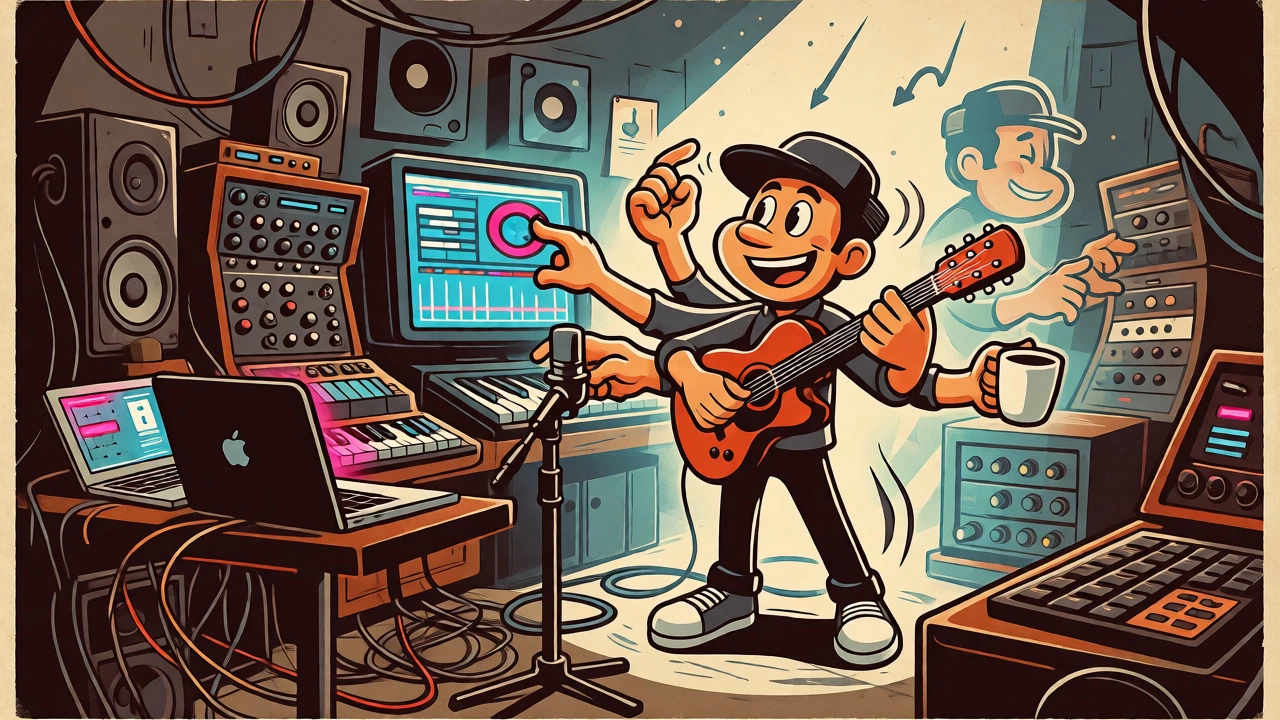
The rise of the producer-engineer brought immense freedom. Experimentation became cheap. You could try ten different drum sounds in five minutes. You could comp a perfect vocal performance from twenty takes without wasting tape. This abundance encouraged creativity but also introduced new challenges.
First, there was the risk of "option paralysis." With unlimited undo and infinite tracks, some producers struggled to commit. Analog limitations forced decisions; digital abundance invited endless tweaking. Critics argued this led to overproduction, where songs were polished to death rather than captured with life. Second, the workload increased. The merged role split attention. One person had to manage artistic direction, technical troubleshooting, file organization, and mixing. It’s hard to be emotionally present for a vocalist while worrying about CPU usage or plugin crashes.
However, the benefits were undeniable. The feedback loop shortened. A producer could hear a technical consequence immediately and adjust the creative idea on the spot. No longer did ideas get lost in translation between departments. The sound design became part of the composition process, not just a post-production step. This integration reshaped genres, allowing hip-hop producers like Dr. Dre or DJ Shadow to craft entire sonic worlds using samplers and sequencers, blurring the line between musician and technician completely.
Legacy: The Modern Landscape
Today, the producer-engineer hybrid is the norm in independent music. While large-budget projects still employ specialized teams, the default expectation is versatility. Artists often expect their collaborators to handle everything from tracking to mastering. This shift established the occupational pattern we see now: self-taught musicians co-opting technical skills, and engineers gaining credit as creative partners.
The 1990s didn't eliminate the engineer or the producer. Instead, it changed the nature of their collaboration. It moved creative power from a hierarchical chain to a networked, flexible system. The question is no longer "Who is the engineer?" but "Who is making the decisions?" Often, it’s the person with the best ears and the fastest hands, regardless of their official title. This era proved that technology doesn't just serve art-it defines who gets to make it.
What was the main technological cause of the producer-engineer role shift?
The primary driver was the introduction and affordability of Digital Audio Workstations (DAWs) like Pro Tools in the early 1990s. These systems allowed for non-destructive editing, instant recall of mixes, and integrated automation, enabling one person to perform tasks previously divided among multiple specialists.
Did the role of the recording engineer disappear in the 1990s?
No, the role evolved rather than disappeared. Engineers gained creative influence by manipulating sound directly within the DAW. Many transitioned into hybrid producer-engineer roles, while others remained specialists in high-end commercial studios, focusing on complex tracking and mixing for larger budgets.
How did home studios contribute to this shift?
Falling costs of computers and interfaces made professional-quality recording accessible outside major commercial facilities. Home studios reduced overhead, encouraging artists and freelancers to consolidate roles. This economic pressure made hiring separate producers and engineers less feasible for many projects, promoting the multi-skilled hybrid model.
What were the downsides of merging producer and engineer roles?
Key downsides included increased workload and cognitive load for individuals managing both artistic and technical tasks. Additionally, the ease of digital editing sometimes led to overproduction, excessive revisions, and a lack of decisive commitment, potentially diluting the raw energy of performances.
Is the producer-engineer distinction still relevant today?
Yes, but the boundary is fluid. In high-budget productions, specialization remains common. However, in independent and electronic music, the roles are frequently combined. The distinction now depends more on project scale, genre conventions, and individual expertise than on rigid industry standards.