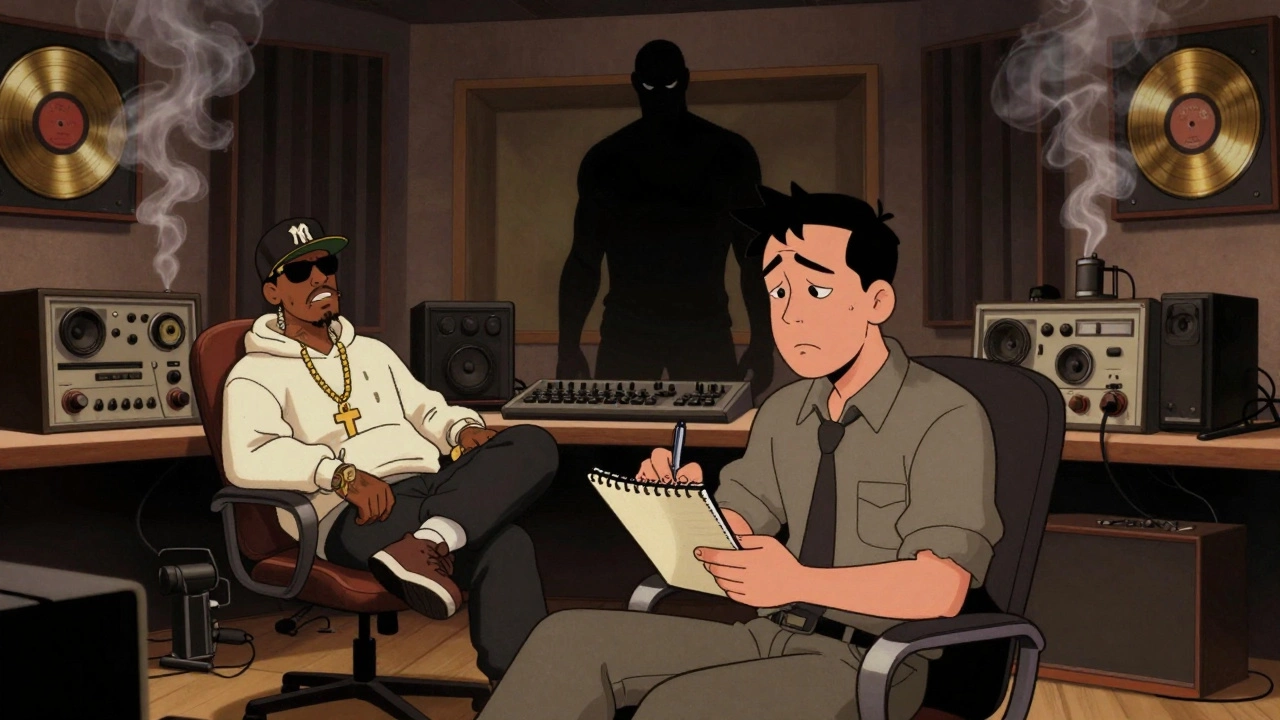

Imagine being a reporter in the mid-90s, sitting in a room with a rapper who is not only the biggest star in the world but is also actively engaged in a deadly street war. Do you report the truth about the violence if it means putting a source's life at risk? Or do you keep quiet to maintain access, effectively becoming a PR agent for a gang-affiliated celebrity? This was the impossible tightrope 1990s hip-hop journalists walked every day. The hip-hop journalism ethics of that era weren't learned in a classroom; they were forged in the heat of the East Coast-West Coast rivalry, where the line between a music review and a police report often blurred into nothing.
During the 1990s, The Source is a seminal hip-hop magazine often called the "bible" of the culture. It didn't just report on the music; it served as the official record for the streets. However, this position of power created a massive conflict of interest. When you are the "bible," your words can either calm a situation or light a match. The rivalry between Bad Boy Records and Death Row Records pushed writers to a breaking point, forcing them to decide if their first loyalty was to the professional standards of journalism or to the cultural community they were covering.
The Access Trap and the Violence Dilemma
One of the hardest jobs in the 90s was figuring out how to write honestly about people who were comfortable using violence. Traditional journalism teaches you to be objective, but in the world of 90s hip-hop, "objectivity" could be seen as a betrayal. If a journalist at Vibe published a story detailing the inner workings of a coastal conflict, they risked losing access to the artists and, more dangerously, inviting retaliation. This created a culture of self-censorship.
Journalists like Kim Osorio and Datwon Thomas found themselves in a weird spot: they were cultural insiders who were expected to act like professional observers. This dual identity meant that reporting accuracy often collided with community safety. If a reporter exposed a specific threat to stop it from happening, they might be labeled a "snitch." If they ignored it, they were failing their professional duty to the public. There was no handbook for this; the ethics were being written in real-time as the body count rose.
The Chaos at The Source: A Case Study in Ethical Collapse
Nothing illustrates the dysfunction of the era better than the internal war at The Source. The magazine was a powerhouse, but inside, it was a mess of race and class tensions. The most explosive moment came when editor James Bernard wrote a scathing letter to publisher David Mays. Bernard wasn't just complaining about a typo; he was demanding Mays resign over systemic ethical violations. In a move that would make any modern HR department faint, Bernard faxed this letter to the entire music industry.
This incident sparked a massive debate. To some, it was a brave stand for editorial independence; to others, it was a blatant violation of professional conduct. Interestingly, fifty-one writers signed a petition supporting Bernard, proving that there was a deep hunger among hip-hop journalists to move away from the "wild west" mentality and toward actual professional standards. It showed that the community was tired of the industry's commercial interests dictating the truth.
| Approach | Primary Goal | Ethical Risk | Outcome |
|---|---|---|---|
| Insider/Community | Cultural Authenticity | Bias and Conflict of Interest | High trust from artists, low objectivity |
| Professional/Objective | Factual Reporting | Loss of Access/Retaliation | Credibility with public, friction with artists |
| Sensationalist | Sales and Hype | Inciting Violence | High profits, damaged community trust |
The Blurred Line Between News and Opinion
If you pick up a magazine from 1995, you'll notice something: it's often impossible to tell where a news report ends and an opinion piece begins. The 90s were the era of the "commentary-journalist." Writers didn't just report that an artist released an album; they criticized the artist's lifestyle, their politics, and their loyalty to a specific coast, all within the same article. This lack of definitional clarity made publications vulnerable. When a writer's personal bias bled into a news story, the publication was accused of taking sides in the war.
Modern journalism emphasizes a strict wall between reporting, criticism, and commentary. In the 90s, that wall didn't exist. This blurriness allowed magazines to play a dangerous game, occasionally acting as mediators or agitators in the rivalry. By treating a rap beef like a geopolitical conflict, the media inadvertently gave the rivalry a level of legitimacy and scale that fueled the fire.
The 'Culture Vulture' Dynamic and the Profit of Pain
As hip-hop moved from the underground to the mainstream, a new ethical problem emerged: the profit motive. Publications realized that violence sold magazines. This gave rise to what many now call the culture vulture phenomenon. This happens when media outlets profit off Black pain by focusing on the most sensational and criminal aspects of the culture while ignoring the complexity of the artists' lives.
During the rivalry, this manifested as a push for the most controversial stories. Instead of analyzing the systemic issues that led to the violence, some journalists focused on the "spectacle" of the beef. This shifted the narrative from artistic growth to street warfare, pandering to a global audience that viewed hip-hop through a lens of danger rather than art. This legacy still haunts the industry, as modern platforms struggle to balance clicks with cultural respect.
The Legacy: What We Learned From the Chaos
The blood-soaked era of the 90s eventually forced a maturation of the craft. The primary lesson was that you cannot be both a "best friend" to your subject and a fair reporter. The rivalry proved that the "outsider" ethos of hip-hop-the rebellious, rule-breaking spirit-was great for making music, but dangerous for reporting news. For the culture to survive and be respected in the mainstream, its journalists had to adopt a level of professional distance.
Today, we see the results of this evolution. There is a much stronger emphasis on transparency and a clearer distinction between an editorial and a news report. The chaos of The Source and the tension of the coastal wars taught the industry that without a shred of ethical consistency, the media doesn't just report on the culture-it can actually destroy it.
Did hip-hop magazines actually contribute to the violence of the 90s?
While magazines didn't start the wars, the sensationalist coverage of the East Coast-West Coast rivalry often amplified the conflict. By treating rap beefs as high-stakes wars and focusing on the most aggressive elements, some publications created a feedback loop that made the conflict feel larger and more inevitable than it might have been otherwise.
What was the significance of James Bernard's letter?
The letter was a pivotal moment in hip-hop journalism because it was a public rebellion against the internal corruption of a major publication. By faxing his demands for the publisher's resignation to the entire industry, Bernard highlighted the desperate need for professional ethical standards and editorial independence in a field that was often driven by personal whims and commercial greed.
How did the 'insider' status of journalists affect their reporting?
Being an insider gave journalists unprecedented access and a deep understanding of the culture, but it created a massive conflict of interest. Journalists often felt a sense of loyalty to the artists they covered, which led to self-censorship or biased reporting to avoid being labeled a traitor or losing the access needed to get stories.
What is the 'culture vulture' accusation in this context?
The 'culture vulture' label refers to entities that exploit Black culture for profit without contributing to or respecting the community. In the 90s, this appeared when magazines focused heavily on the violence and crime associated with the rivalry to sell copies to a mainstream audience, effectively commodifying Black pain for commercial gain.
How do current hip-hop journalism standards differ from the 90s?
Modern standards are much more aligned with general professional journalism. There is a clearer separation between reporting facts and providing commentary. There is also a greater emphasis on diversity of perspective and a conscious effort to avoid the sensationalism that defined the coastal rivalry era.


