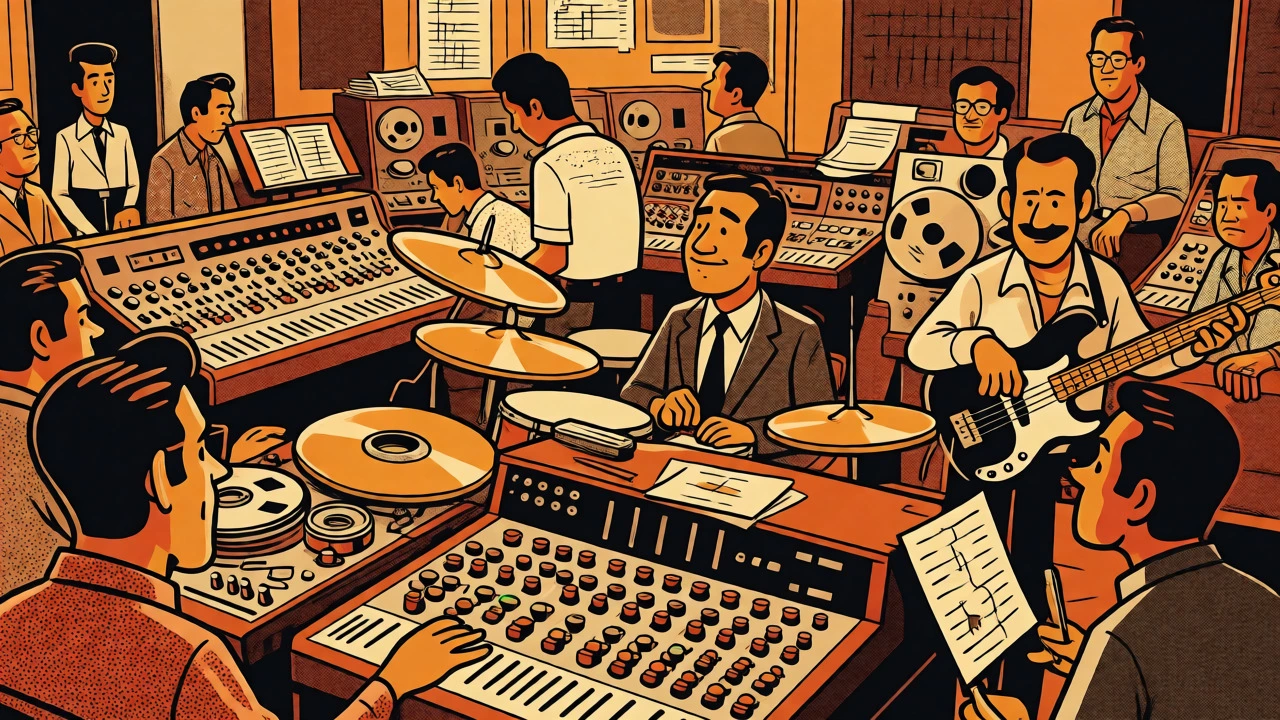

You hear it in every classic soft rock track: that seamless, radio-ready glide where nothing feels forced, yet everything sounds intentional. It’s not magic, and it’s rarely just one band playing together in a room. That specific sheen comes from a highly specialized workforce of anonymous experts known as session musicians. These are the hired guns who show up, read a chart, nail the part, and leave before you even know their names.
If you’re trying to understand why songs by Toto, Steely Dan, or Christopher Cross hit so differently than raw garage rock, you have to look at the labor behind them. This isn’t about ego; it’s about utility. The polished professional sound of the late 1970s and early 1980s was engineered through a precise selection process, rigorous arrangement skills, and a workflow designed for perfection rather than spontaneity. Here is how those invisible hands built the soundtrack of an era.
The Rise of the First-Call Player
The modern session system didn’t happen by accident. It evolved in Los Angeles during the 1950s and 60s, when producers realized they could solve musical problems faster by hiring specialists than by waiting for a permanent band to figure it out. This network became legendary under the name The Wrecking Crew, a loose collective of elite players including drummer Hal Blaine, bassist Carol Kaye, and guitarist Tommy Tedesco. They weren’t just backing bands; they were the actual performers on dozens of Top 40 hits, often uncredited.
This model mattered because it allowed producers to treat recording like assembly-line craftsmanship with artistic flair. Need a drum beat that locks into the kick drum without stealing focus? Hire a specialist. Need a guitar solo that sings but doesn’t scream? Call someone else. By the time soft rock exploded in the 1970s, this pool of talent had deepened. Players like Steve Lukather, David Paich, and Jeff Porcaro-later of Toto-cut their teeth working across sessions for Boz Scaggs and Michael Jackson. They brought a level of versatility that defined the genre: the ability to switch from jazz fusion complexity to pop simplicity within a single take.
Selection Over Spectacle
Here’s the counter-intuitive truth about polished soft rock: the best session player isn’t always the fastest or the most technically flashy. It’s the one whose tone, timing, and vocabulary fit the song’s emotional needs. Producers select musicians based on "feel," a vague term that actually refers to very specific technical attributes.
For a ballad, you need a drummer who can play quietly without losing the pulse. For a groove-driven track, you need a bassist who understands space and melodic movement. Berklee College of Music highlights that reliability and sight-reading are just as critical as instrumental proficiency. A musician who arrives late, can’t read a chart, or argues with the producer gets cut, no matter how good their solos are. The goal is to serve the production, not assert a personal style. This humility creates the cohesive texture listeners love.
| Attribute | Session Musician (Soft Rock) | Standard Band Member |
|---|---|---|
| Adaptability | High: Switches genres/styles per project | Low: Defined by band identity |
| Preparation | Arrives ready to sight-read or improvise quickly | Rehearses extensively over weeks/months |
| Role | Serves the song’s specific sonic needs | Represents the group’s aesthetic brand |
| Compensation | Per-session fee or scale rate | Salary, royalties, or profit share |
Arrangement as a Creative Act
Once the right people are in the room, the work shifts to arrangement. Good session players don’t just play notes; they convert a sketch or demo into mutually compatible parts. They know when to double a hook, when to use contrary motion, and crucially, when to stay out of the vocalist’s frequency range.
In soft rock, this means controlled originality. An expressive fill, a tasteful counter-melody on keyboards, or a subtle dynamic lift in the chorus can strengthen a track without making it feel crowded. This is where experience pays off. A novice might fill every silence with noise; a pro knows that silence is part of the instrument. They contribute unexpected creative solutions that redirect the recording for the better, acting as co-arrangers even if they aren’t credited as such.
The Workflow: Repeatability and Editing
The polish you hear is often created after the performance, but only because the performance was repeatable. Session musicians must reproduce a part consistently across takes and overdubs. This allows engineers to comp (compile) the strongest sections of several performances without jarring changes in tone or timing.
Steely Dan provides the ultimate case study here. Their album *Aja* reportedly involved auditioning multiple drummers and guitarists, with Walter Becker and Donald Fagen demanding perfection. They recorded live foundations, then meticulously overdubbed and edited parts. Direct injection for bass reduced bleed, allowing for clean low frequencies. This method prioritizes technical precision over the raw energy of a live take. If a part isn’t right, they replace it. If a note is flat, they fix it. The result is a dense, high-fidelity ideal of "the real" that feels smoother than reality itself.
Cost, Rights, and Modern Realities
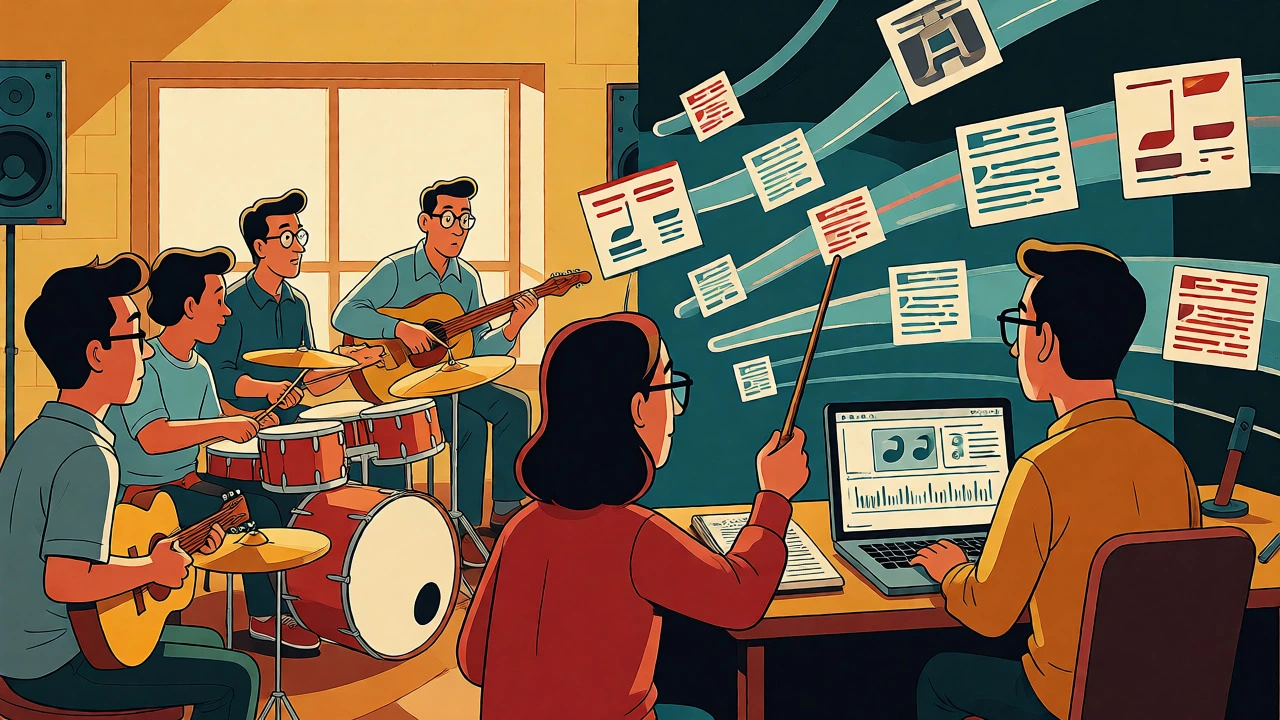
Hiring these experts isn’t cheap, and the economics have shifted. Historically, union scales set by the American Federation of Musicians (AFM) governed pay, with rates fluctuating based on session length and leader status. Today, non-union remote work has lowered barriers, with estimates ranging from $100 to $600 per track depending on complexity.
However, cost isn’t the only risk. Communication failures in remote sessions can lead to incompatible tones or poor timing. Moreover, rights issues are increasingly complex. Does the fee buy a work-for-hire performance, or does the musician retain neighboring rights? With AI tools now capable of mimicking styles, explicit consent for AI training and reuse has become a critical contractual clause. Producers must clarify whether they own the stems outright or if revisions incur extra costs.
Why Human Feel Still Matters
Despite the rise of software instruments and generative AI, human session players remain vital for soft rock. Software can mimic a piano, but it struggles to replicate the micro-timing and phrasing nuances that make a performance feel human. Excessive quantization (snapping notes to a grid) often strips the life out of a track, making it sound robotic.
The enduring value of a session musician lies in their ability to interpret emotion. They distinguish between a correctable technical error and a genuine musical imperfection that adds character. As of late 2026, the market has moved toward a hybrid model: local rooms for core rhythm sections, remote files for overdubs, and specialist contractors for unique textures. But the core principle remains unchanged: hire for fit, provide clear briefs, and preserve the human element that makes the music breathe.
Who were the Wrecking Crew?
The Wrecking Crew was a loose collective of top-tier Los Angeles session musicians active primarily in the 1960s and 70s. Members included Hal Blaine, Carol Kaye, and Tommy Tedesco. They played on countless hit records for artists like Frank Sinatra, The Beach Boys, and Simon & Garfunkel, often without receiving individual credit.
Why do soft rock albums sound so polished compared to other genres?
Soft rock relies heavily on session musicians who prioritize precision, consistent timing, and complementary timbres. The production process involves selecting the best takes, extensive editing, and careful mixing to ensure all instruments sit clearly in the frequency spectrum. This contrasts with genres that value raw, live ensemble energy over technical perfection.
Do session musicians get royalties?
It depends on the contract. Traditionally, many session players were paid a flat fee per session (work-for-hire), meaning they did not receive ongoing royalties. However, some high-profile players negotiate points (a percentage of profits) or neighboring rights payments. Modern contracts increasingly specify terms for streaming revenue and AI usage.
Can I hire session musicians remotely today?
Yes, remote session work is common. You send a guide track, tempo map, and reference audio to the musician, who records their part in their home studio and sends back high-quality stems. While latency prevents true live interaction, asynchronous exchange works well for overdubs and layered parts, provided communication and file management are disciplined.
What skills are most important for a soft rock session player?
Beyond technical proficiency, key skills include sight-reading, adaptability to different styles, reliable timekeeping, and the ability to take direction without ego. Understanding arrangement and knowing when *not* to play is often more valuable than playing fast or loud.