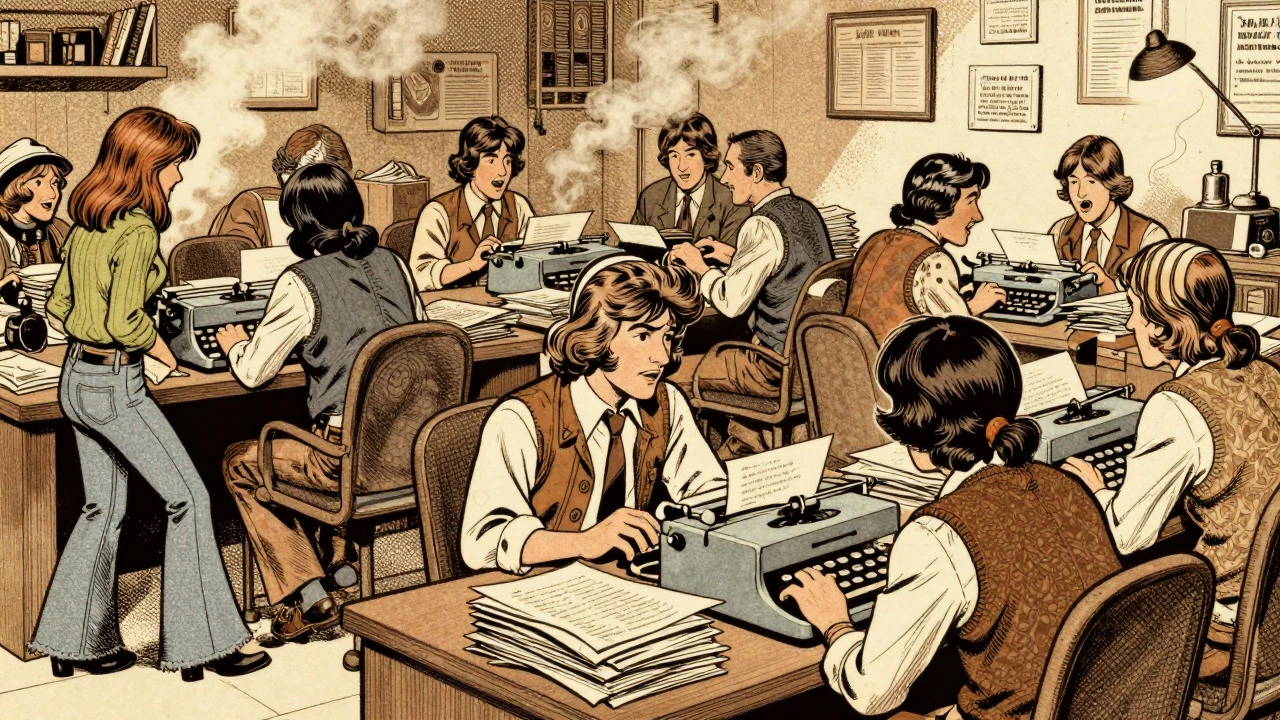

Picture this: it is 1970. The psychedelic euphoria of the 1960s has faded into a hangover of disillusionment and political cynicism. In San Francisco, a ragtag group of writers and editors are putting out a publication that doesn't just report on rock music-it treats the culture surrounding it as serious literature. This was Rolling Stone, a magazine founded in 1967 by Jann Wenner and jazz critic Ralph J. Gleason. By the time the 1970s arrived, Rolling Stone had evolved from a small underground paper into the most ambitious voice in American media, effectively defining what rock journalism would look like for decades to come.
You might think of rock journalism today as quick reviews or celebrity gossip. But in the 1970s, Rolling Stone turned it into immersive, long-form storytelling. They didn't just ask musicians about their new albums; they embedded themselves in political campaigns, covered criminal trials, and serialized novels alongside concert reports. This era established the template for modern cultural reporting, blending hard news with narrative flair in a way that hadn't been seen before.
The Birth of a New Media Model
To understand how Rolling Stone defined the decade, you have to look at where it started. Founded on November 9, 1967, in San Francisco, the magazine began with a modest $7,500 startup budget-most of which Wenner borrowed. The first issue featured John Lennon on the cover. While it emerged from the same counterculture milieu as other underground papers, Rolling Stone deliberately rejected some of the radical publishing practices of its peers. Instead of chaotic layouts and purely activist rhetoric, Wenner opted for professional editing, regular political coverage, and strict music criticism.
This hybrid approach allowed Rolling Stone to scale in ways other underground publications could not. By the early 1970s, it had attracted major advertisers and reached millions of readers. Journalist Joe Hagan later described it as “the most adventurous and ambitious newspaper-cum-magazine of the 1970s.” It wasn't just a fanzine anymore; it was a national institution that treated rock-and-roll news as a continuous, serialized narrative.
Long-Form Reporting as Cultural History
One of the biggest shifts Rolling Stone introduced was the length and depth of its articles. Before this era, music writing was often limited to short reviews or interviews. Rolling Stone changed the game by commissioning features that ran tens of thousands of words. These weren't fluff pieces; they were investigative journalism that treated rock events as significant cultural history.
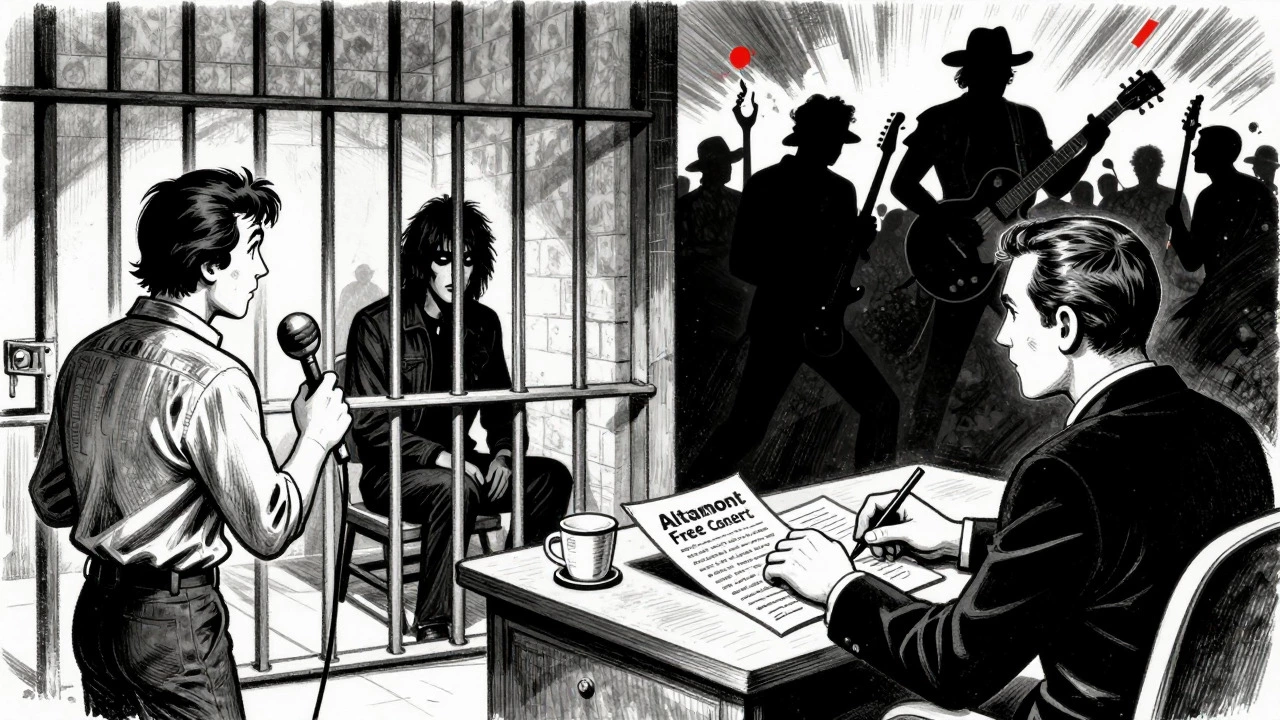
Consider the coverage of the Altamont Free Concert. On January 21, 1970, the magazine published a detailed account of the killing of 18-year-old Meredith Hunter by Hells Angels security guards. This piece won a Specialized Journalism award at the National Magazine Awards in 1971, marking the first time a rock-oriented publication received such institutional recognition for in-depth reporting. Later that year, writers David Dalton and David Felton produced a staggering 30,000-word feature on Charles Manson, including an interview conducted while Manson awaited trial in Los Angeles County Jail. That article earned Rolling Stone its first National Magazine Award, proving that a music magazine could publish book-length investigations into criminal phenomena linked to youth culture.
The Rise of Gonzo and New Journalism
If the length of the articles was one pillar of Rolling Stone's identity, the style was another. The magazine became the home for experimental writing techniques that blurred the lines between fact and fiction. Two names stand out here: Hunter S. Thompson and Tom Wolfe.
Hunter S. Thompson joined Rolling Stone in 1970. His most famous contribution during this period was the serialization of Fear and Loathing in Las Vegas in 1971. This work mixed memoir, fiction, and reportage in a hallucinatory narrative voice that was radically different from conventional journalism. Thompson also filed 14 reports from the 1972 U.S. presidential campaign trail, using terms like “waterheads” and “swine” to attack political elites. This “gonzo” style gave voice to the cynical, hungover mood of a generation looking back at the 1960s.
Similarly, Tom Wolfe brought his “New Journalism” techniques to the magazine. Starting in January 1973, Rolling Stone ran Wolfe’s four-part series on the Apollo 17 mission. Wolfe examined astronauts as psychological characters rather than just technical professionals. By allocating entire issues to these high-risk, literary hybrids, Rolling Stone expanded the boundaries of rock journalism to include space exploration, urban life, and politics as legitimate subjects for stylistic experimentation.
| Writer/Photographer | Role & Style | Notable 1970s Work |
|---|---|---|
| Hunter S. Thompson | Gonzo journalist, subjective narrative | Fear and Loathing in Las Vegas (1971), 1972 Campaign Trail reports |
| Tom Wolfe | New Journalism, scene-by-scene detail | Apollo 17 series (1973) |
| Annie Leibovitz | Chief Photographer (from 1973) | Iconic covers featuring rock stars as complex subjects |
| David Dalton & David Felton | Investigative reporters | 30,000-word Charles Manson feature (1970) |
Visual Storytelling and Annie Leibovitz
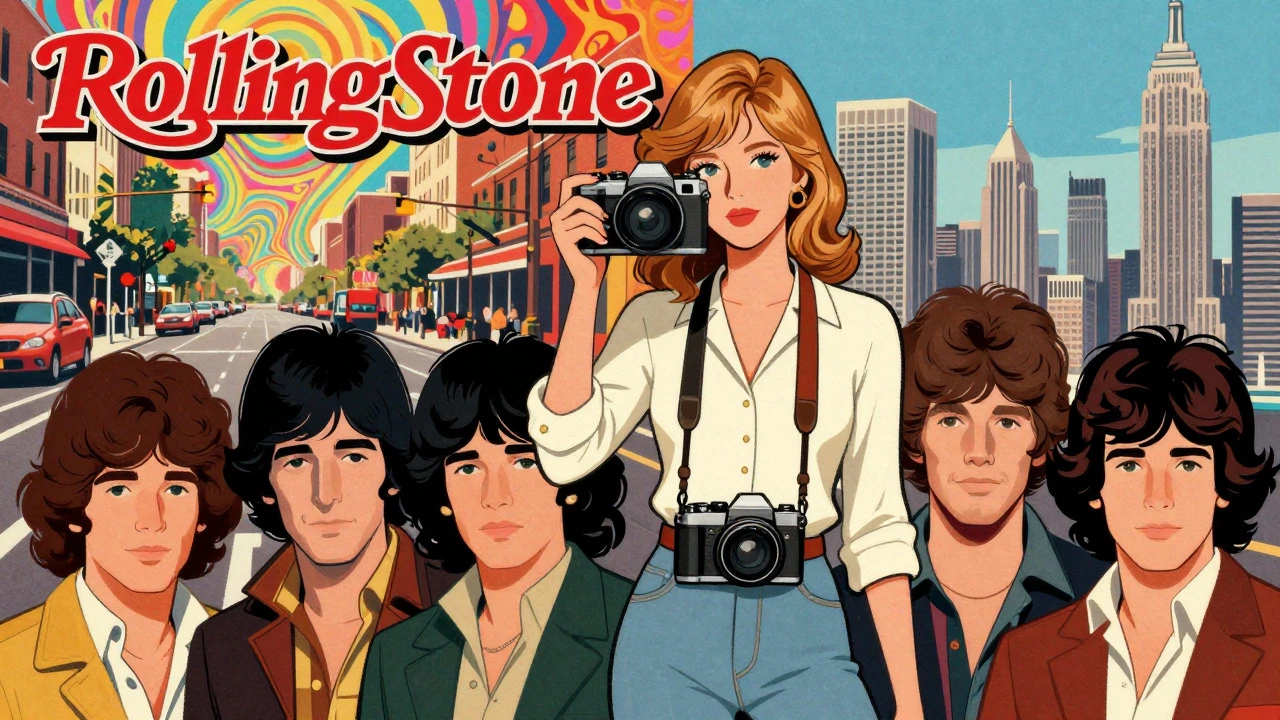
Rock journalism isn't just about words; it's about images. Rolling Stone helped standardize the expectation that serious music coverage should include carefully curated, artistic photography. Enter Annie Leibovitz. She began shooting for the magazine in 1970 when she was in her early twenties. By 1973, she was promoted to chief photographer.
Leibovitz’s work transformed how musicians were portrayed. Instead of generic publicity shots, she created stylized portraits that treated rock stars as complex, human subjects. Over her career, she would produce more than 140 covers for Rolling Stone, many of them in the 1970s and early 1980s. The combination of multi-page text features and full-bleed photo spreads set a visual benchmark that other magazines quickly tried to imitate.
From San Francisco to New York
In 1977, Rolling Stone made a strategic move that symbolized its evolution: it relocated its headquarters from San Francisco to New York City. This shift marked a departure from its roots in the Haight-Ashbury counterculture scene and signaled its ambition to become a mainstream national media brand centered in Manhattan.
The move coincided with changes in content. While long-form rock features continued, the magazine increasingly added profiles of politicians, Hollywood actors, and celebrities. Some older readers criticized this drift, feeling the magazine was losing its focus on pure rock culture. Additionally, the magazine faced a circulation dip in the late 1970s because it responded slowly to the emerging punk rock movement. Despite these challenges, it remained the leading American rock-oriented publication throughout the decade.
Criticisms and Blind Spots
No discussion of Rolling Stone's 1970s legacy is complete without addressing its limitations. While the magazine pioneered narrative techniques, it also had significant blind spots regarding race and genre. Co-founder Ralph J. Gleason himself complained that Rolling Stone functioned as a “white publication,” failing to cover African American music with adequate intelligence or effort. Community retrospectives, such as RateYourMusic’s list of “500 Worst Reviews of All Time,” highlight how the magazine undervalued soul, funk, and other Black genres during this period.
Furthermore, critics noted that its political reporting, while consistent, was sometimes superficial compared to more radical underground papers. The magazine’s commercial success came at the cost of some activist depth. These critiques remind us that while Rolling Stone defined rock journalism, its definition of “rock” was narrow, excluding entire musical communities and shaping the field’s biases as much as its strengths.
Legacy of the 1970s Era
Today, when we read long-form cultural essays or see immersive photo spreads in music magazines, we are seeing the direct influence of Rolling Stone's 1970s experiments. The magazine proved that music writing could be literarily ambitious, politically engaged, and visually stunning. It trained a generation of writers-including Ben Fong-Torres, Greil Marcus, and Cameron Crowe-who went on to shape media across various platforms.
The 1970s remain the golden age of Rolling Stone's identity. Even as the magazine continues to publish in the digital age, scholars and journalists still look back to this decade to understand how rock journalism became a respected form of cultural critique. The blend of gonzo flair, investigative rigor, and iconic photography established a standard that has yet to be fully replicated.
Who founded Rolling Stone Magazine?
Rolling Stone was founded in 1967 by Jann Wenner and jazz critic Ralph J. Gleason in San Francisco, California.
What is "Gonzo" journalism?
Gonzo journalism is a style of reporting where the reporter becomes part of the story, using a subjective, often humorous or exaggerated narrative voice. Hunter S. Thompson popularized this style through his work for Rolling Stone in the 1970s.
Why did Rolling Stone move to New York City?
In 1977, Rolling Stone moved from San Francisco to New York City to transition from a regional counterculture publication to a national media brand, aligning itself with mainstream celebrity and political reporting centers.
Did Rolling Stone cover topics other than music in the 1970s?
Yes. Rolling Stone covered political campaigns, criminal trials (like the Charles Manson case), and even space exploration (Apollo 17), treating these as part of the broader youth culture narrative.
What were the main criticisms of Rolling Stone in the 1970s?
Critics argued that Rolling Stone had a racial bias, neglecting African American music genres like soul and funk. It was also criticized for being slow to cover punk rock and for having superficial political analysis compared to radical underground papers.
Who was Annie Leibovitz's role at Rolling Stone?
Annie Leibovitz became Rolling Stone's chief photographer in 1973. She revolutionized the magazine's visual style by creating artistic, character-driven portraits of musicians for covers and spreads.