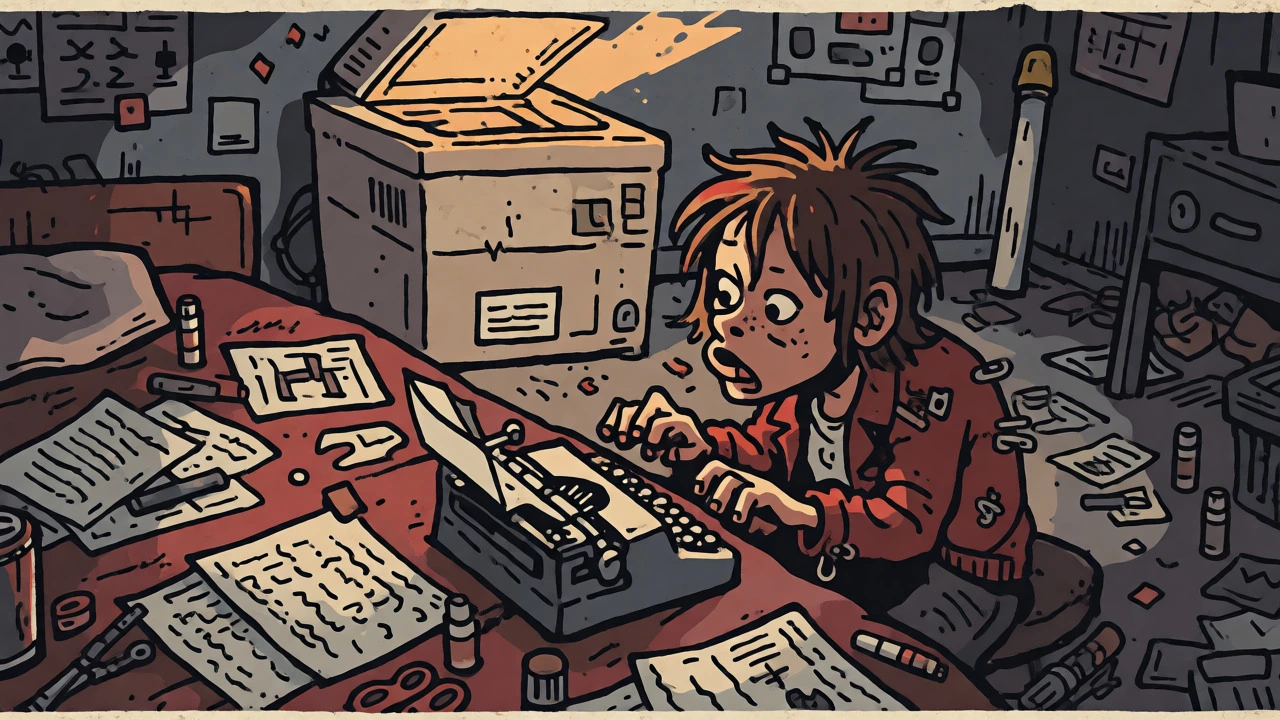

Imagine trying to find out where your favorite band is playing next week without checking Instagram or a website. No emails, no flyers on digital boards, just pure word-of-mouth and paper. That was reality for punk fans in the mid-1970s. If you wanted to know what was happening in the scene, you didn't wait for NME or mainstream music magazines to tell you. You made your own news. This do-it-yourself attitude wasn't just an aesthetic choice; it was survival. The story of how punk became a global movement isn't just about loud guitars and safety pins-it's about photocopied sheets of paper that connected isolated teenagers into a unified subculture.
The Birth of the DIY Press
Punk didn't emerge from a vacuum. It grew out of underground press traditions, science fiction fan clubs, and a general distrust of authority. But what changed in 1976 was the speed and accessibility of production. Before this era, starting a magazine required capital, professional typesetting, and distribution deals. Punk stripped all that away. A teenager with a typewriter, some felt-tip pens, scissors, and access to a photocopier could publish a magazine overnight. This lowered the barrier to entry so dramatically that anyone who felt excluded by mainstream culture could participate. You weren't just consuming media; you were creating it. This shift turned passive listeners into active participants, defining the core ethos of the movement: if you don't like what you see, change it yourself.
Sniffin’ Glue: The British Blueprint
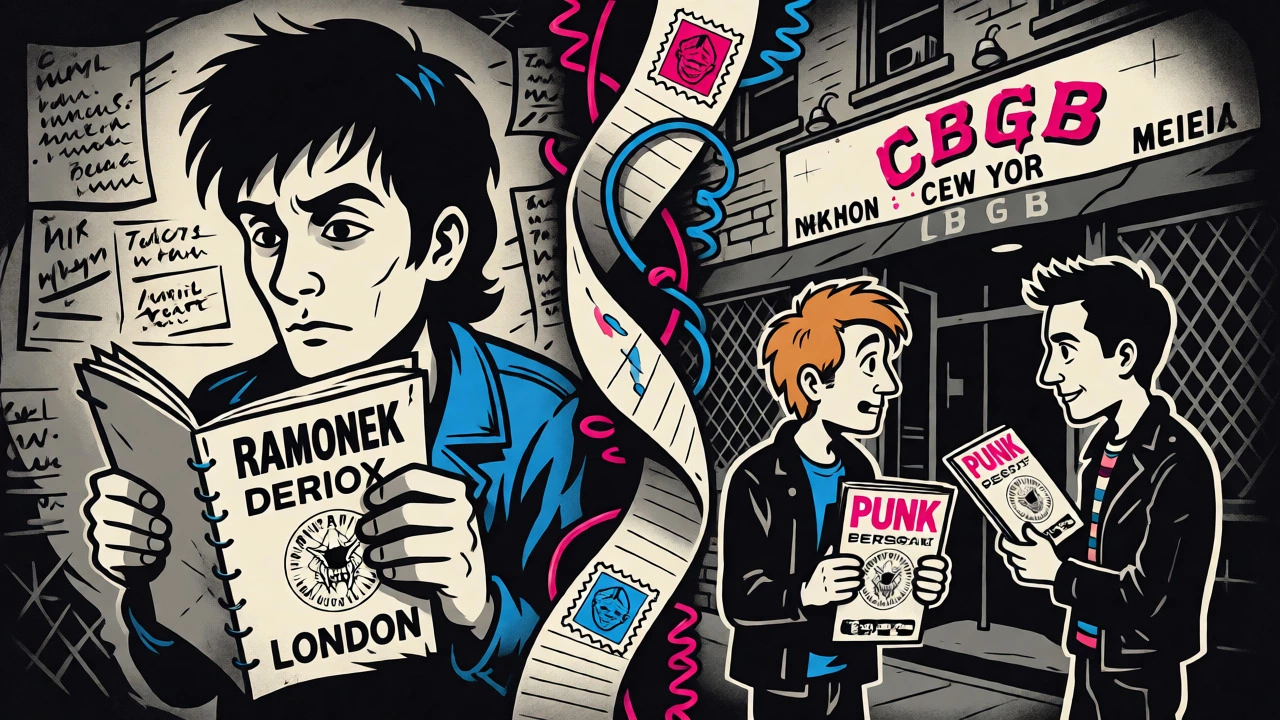
In London, the catalyst for this explosion was Mark Perry. After seeing the Ramones perform at the Roundhouse in July 1976, he decided the existing music press was missing the point entirely. He launched Sniffin’ Glue and Other Rock ’n’ Roll Habits, named after the Ramones song "Now I Wanna Sniff Some Glue." Perry used a child’s typewriter and handwritten headlines, rejecting the polished look of professional journalism. His first issue had only 50 copies. By the time he ended the publication in August 1977, circulation had skyrocketed to approximately 15,000. Why? Because it spoke the language of the street. It reviewed local bands, printed addresses for pen pals, and argued about politics with a raw honesty that Melody Maker never achieved. Perry proved that a zine could be a review sheet, a social network, and a political manifesto all at once.
Punk Magazine: The New York Counterpart
Across the Atlantic, a similar revolution was brewing. In January 1976, Punk magazine, founded by John Holmstrom, Legs McNeil, and Ged Dunn Jr., hit the stands in New York City. While Perry focused on the UK scene, Holmstrom and his team documented the CBGB ecosystem. They combined comics, satire, and interviews to create a visual identity for the downtown scene. At its peak, Punk sold over 23,000 copies per issue. It wasn't just reporting on the scene; it was curating it. The magazine defined who was "in" and who was "out," often with biting sarcasm. Unlike the more earnest tone of many British zines, Punk embraced irony and art-school sensibilities, showing that punk could be both aggressive and intellectually playful. Its closure in 1979 marked the end of the first wave, but its influence on graphic design and music journalism remains visible today.
Regional Voices Beyond London and NYC
A common mistake in punk history is focusing solely on London and New York. But the real power of fanzines lay in their ability to connect provincial scenes. Take Tony Drayton, who started Ripped & Torn in Glasgow in November 1976. At just 18 years old, Drayton published interviews with bands like Adam and the Ants and Crass, moving beyond simple gig reviews into deeper political territory. Regional zines like Ripped & Torn, Bondage (from Sheffield), and Hanging Around (from Manchester) ensured that punk wasn't just a London export. These publications highlighted local accents, venues, and conflicts, proving that the subculture had roots everywhere. They created a decentralized network where information flowed through postal addresses and record shops rather than centralized publishers.
The Visual Language of Scissors and Glue
You can recognize a punk zine instantly. The aesthetic was born out of necessity but became a style icon. Ruth E. E. Adams, in her study "Scissors and Glue," describes this as the creation of a DIY graphic aesthetic. Editors cut up letters from newspapers, stapled pages together haphazardly, and used high-contrast photocopies that blurred images and text. This wasn't sloppy work; it was a deliberate rejection of corporate polish. The rough edges signaled authenticity. If a magazine looked too clean, it risked being seen as part of the establishment. This visual language influenced album covers, fashion, and later, web design. It taught a generation that imperfection was powerful. The medium itself-the stapled, photocopied booklet-became a symbol of resistance against the glossy, expensive products of the mainstream entertainment industry.
Politics, Gender, and Gatekeeping
Fanzines were also arenas for debate. After the Sex Pistols' television scandal in late 1976, zines became crucial spaces for discussing racism, anarchy, and gender. Writers tested political ideas in print, challenging the status quo within the scene itself. However, it wasn't a utopia. Male voices dominated most publications, and gatekeeping was real. Yet, women found ways to insert themselves into the narrative. Publications like Brass Lip and contributions to Vague offered female perspectives that were often ignored elsewhere. While not every zine was progressive, the low cost of production meant that marginalized voices could bypass traditional editorial boards. This laid the groundwork for the riot grrrl movement of the 1990s, which would take these same tools and apply them with even sharper feminist intent.
Why Fanzines Mattered More Than Records
It’s easy to think of punk history through records and gigs. But without fanzines, the scene might have remained fragmented. Records are static; they don't explain context or community. Fanzines provided the glue. They listed upcoming shows, shared contact details for mail-order records, and debated whether a band had "sold out." They built the infrastructure of communication before the internet existed. When record companies eventually caught on and tried to sign punk bands, zine editors were already critiquing the process. They questioned whether commercial success diluted the message. This tension between independence and exposure is still relevant in today's music landscape. The fanzines didn't just reflect the subculture; they constructed it. They gave people a sense of belonging to something larger than their local town.
| Title | Origin | Years Active | Peak Circulation | Notable Feature |
|---|---|---|---|---|
| Sniffin’ Glue | London, UK | 1976-1977 | ~15,000 | First major UK punk zine; rapid growth from 50 copies. |
| Punk | New York, USA | 1976-1979 | >23,000 | Combined comics, satire, and CBGB scene reporting. |
| Ripped & Torn | Glasgow, UK | 1976-1979 | Varies | Highlighted regional scenes and anarchist politics. |
| Sideburns | Cleveland, USA | 1977-1978 | Small/Niche | Coined the phrase "Punks Not Dead". |
Legacy and Preservation
Today, original issues of these zines are rare artifacts held in archives like the British Library and Cornell University. Their value has shifted from ephemeral news to historical evidence. Scholars use them to reconstruct the daily lives of punks, analyzing everything from font choices to political arguments. For collectors, owning a first issue of Sniffin’ Glue is akin to holding a piece of cultural DNA. But beyond the monetary value, the legacy lies in the principle they established: that you don't need permission to speak. In an age of algorithmic feeds and curated content, the chaotic, personal voice of the 1970s fanzine feels increasingly radical. They remind us that media doesn't have to be perfect to be powerful. It just has to be honest.
What was the main purpose of punk fanzines?
The main purpose was to provide a direct line of communication within the punk community. They circulated information about gigs, new bands, and political views, allowing fans to organize and identify themselves independently of mainstream media outlets.
How did punk fanzines differ from mainstream music magazines?
Fanzines were self-published, low-cost, and visually rough, using cut-and-paste aesthetics. Mainstream magazines like NME were professionally produced, commercially driven, and often viewed punk with skepticism or condescension. Fanzines offered insider perspectives and immediate feedback.
Who was Mark Perry and why is he important to punk history?
Mark Perry was the editor of Sniffin’ Glue, widely considered the first significant British punk fanzine. Launched in 1976, it set the template for DIY punk publishing by combining reviews, interviews, and political commentary in an accessible, homemade format.
Did women play a role in 1970s punk fanzines?
Yes, although male voices predominated, women contributed significantly as writers, photographers, and editors. Publications like Brass Lip and contributions to titles like Vague provided essential female perspectives, challenging the male-dominated narrative of the early scene.
Are original punk fanzines valuable today?
Original issues are highly collectible and can fetch significant prices at auction, especially first editions of iconic titles like Sniffin’ Glue or Punk. They are preserved in university archives and private collections due to their historical significance as primary sources of punk culture.