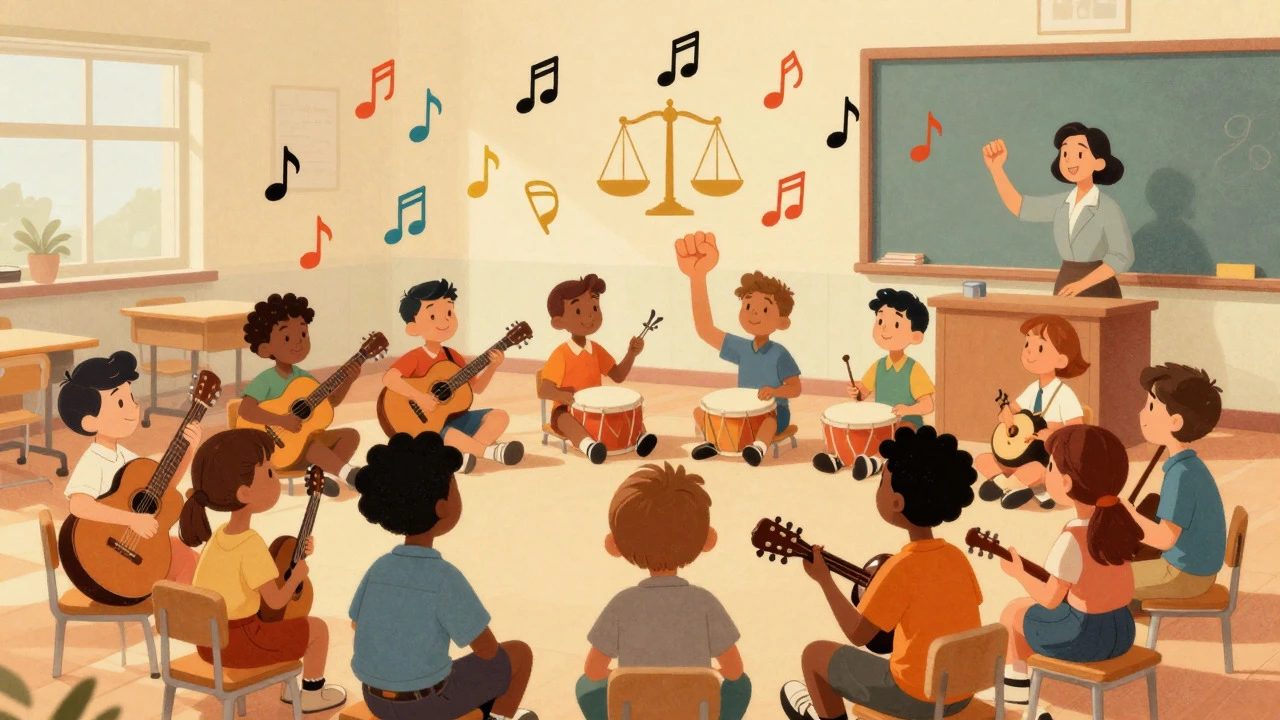

Have you ever listened to a song that made you feel like the world was shifting under your feet? Maybe it was a protest anthem from the 1960s or a modern hip-hop track calling out inequality. That feeling isn’t just emotional; it’s educational. When we use music to teach about society, we aren’t just filling students with facts. We are helping them develop what scholars call critical consciousness. This is the ability to see the hidden power structures in our world and take action against injustice. It turns a simple music lesson into a powerful tool for social change.
The Roots of Critical Consciousness in Music
To understand how music builds social awareness, we have to look back at the work of Paulo Freire. In 1970, he introduced the concept of conscientização, which translates to critical consciousness. He argued that people need to become aware of the social, political, and economic contradictions in their lives to fight oppression. For decades, this idea stayed mostly in sociology classrooms. But starting around 2012, music educators began bringing Freire’s theories directly into band rooms and choir halls.
Educators like Frank Abrahams and David Elliott adapted these ideas for music class. They realized that when students realize they "know that they know"-a key marker in Freire’s theory-they undergo a transformation. It stops being about hitting the right notes and starts being about understanding why those notes matter. Elliott, writing in 2013, pointed out that music education serves humanity by building character and empathy. It helps students develop the ethical dispositions needed to oppose injustice. By connecting musical study with social awareness, teachers help students see themselves as active participants in society, not just passive listeners.
Breaking Down Classroom Hierarchies
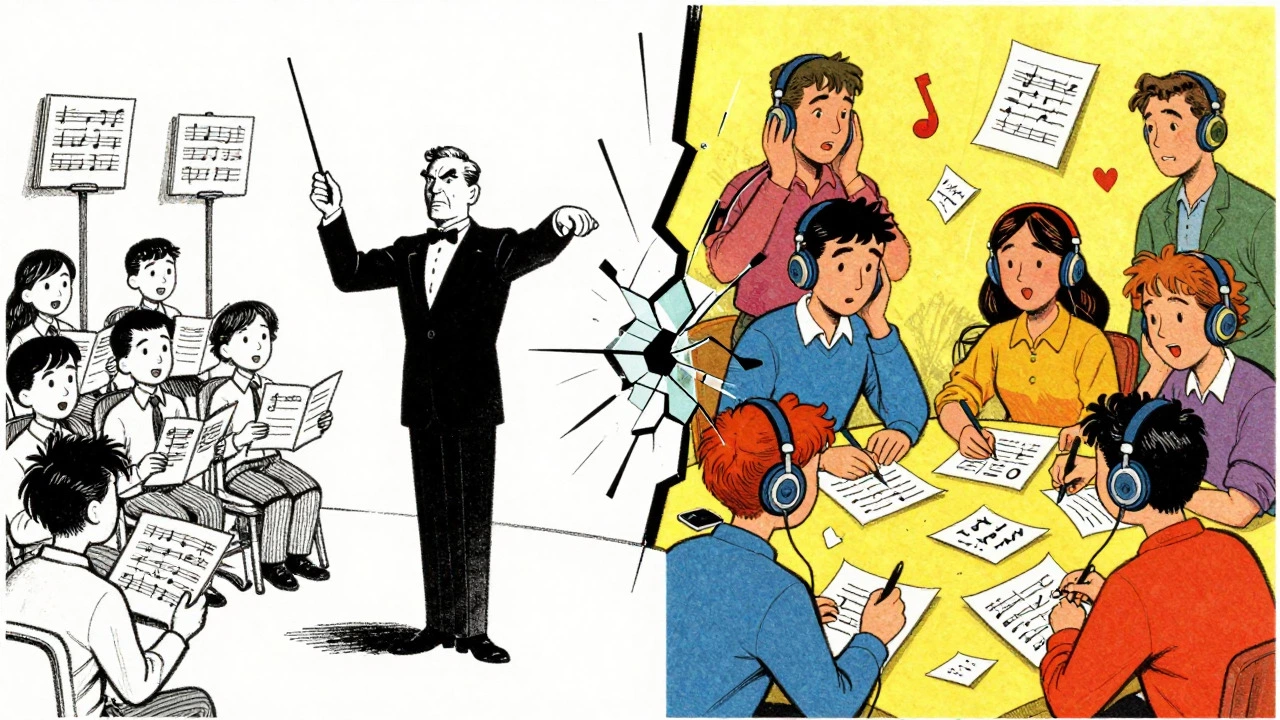
Traditional music classes often feel rigid. The teacher picks the repertoire, controls the tempo, and decides who gets to play solo. This model can unintentionally reinforce power structures. Critical pedagogy in music challenges this setup. It asks teachers to question why certain songs are valued while others are ignored. A study from the University of Connecticut highlighted that critical pedagogy connects the "word" (the music) to the "world" (social reality).
Imagine a classroom where students bring in the music they love outside of school. Instead of dismissing pop, rap, or electronic beats as "not serious enough," the teacher uses these genres as entry points for discussion. Lucy Green’s theory of informal learning supports this approach. She argues for peer-directed band rehearsals and student-chosen repertoire. When students interact as peers rather than subordinates, they experience what Nancy Fraser calls "parity of participation." This means everyone has an equal voice. By examining how music functions in different social contexts, students learn that genre boundaries are arbitrary. They start to see how music can support or resist social norms, making them more aware of the messages they consume and create.
| Feature | Traditional Model | Critical/Socially Just Model |
|---|---|---|
| Repertoire Choice | Teacher-selected, often Eurocentric canon | Student-influenced, culturally diverse, includes popular music |
| Classroom Dynamics | Authoritarian, teacher-centered hierarchy | Dialogic, peer-to-peer interaction, shared reflection |
| Goal of Learning | Technical proficiency, performance fidelity | Social awareness, empathy, critical thinking, agency |
| Assessment | Standardized tests, auditions, solos | Reflective journals, collaborative projects, community impact |
| View of Music | Aesthetic object, neutral art form | Social practice, tool for cultural production and resistance |
Songwriting as a Tool for Empathy
Songs are unique because they combine lyrics, melody, and rhythm to convey complex emotions. The National Association for Music Education (NAfME) released a brochure in March 2021 linking music education directly to Social-Emotional Learning (SEL). SEL focuses on five competencies: self-awareness, self-management, social awareness, relationship skills, and responsible decision-making. Music hits all five.
When students write songs about their own experiences, they practice self-awareness. When they perform in an ensemble, they must listen to others, building relationship skills. But the real magic happens with social awareness. NAfME suggests that cooperative music-making increases empathetic thinking. If you’re playing in a choir, you have to feel the emotion of the person next to you to blend your voices. This physical act of listening creates a bridge to understanding others’ perspectives. Teachers can amplify this by choosing repertoire that reflects diverse composers and stories. It forces students to confront differences and recognize the validity of thoughts and opinions that differ from their own.
Practical Steps: From Listening to Acting
So, how do you actually do this in a classroom? You don’t need a PhD in sociology to start. The "Sounds of Change" lesson plan, published by Learning for Justice in July 2017, offers a clear roadmap. It targets grades 6-12 but works for any age group willing to engage deeply. The process involves three main steps:
- Analyze Emotional Response: Ask students to describe how a specific song makes them feel. Is it angry? Hopeful? Sad? Validating emotions is the first step to critical thinking.
- Deconstruct the Message: Have students analyze the lyrics. What is the songwriter saying? Who is the target audience? What historical event might be influencing this track?
- Connect to Today: Discuss whether the song’s message is still relevant. How does it relate to current events or the students’ personal lives?
This method moves beyond entertainment. It treats songs as texts that educate and influence. You might pair a civil rights anthem with a contemporary protest song. Students can compare the language, the rhythm, and the urgency. They start to see patterns in how marginalized groups use art to demand justice. This aligns with Randall Everett Allsup and Eric Shieh’s call for "public pedagogy." They argue that teachers should "go public" and acknowledge the moral imperative to challenge inequities. By doing so, music teachers become civic leaders, not just instructors.
Navigating Challenges and Paradoxes
It’s not always smooth sailing. A 2017 article in ERIC warned about the "casualties and paradoxes" of critical pedagogy in music. Schools are constrained by testing regimes, strict curricula, and sometimes skeptical parents. Teachers might espouse critical ideals but fall back on conventional practices because it’s safer or easier. There’s a risk of tokenism-adding one diverse song to a program without changing the underlying power structure.
To avoid this, teacher preparation is crucial. Research updated in June 2025 emphasizes that preservice teachers need exposure to diverse communities and critical readings before they even enter the classroom. Without this foundation, they may default to authoritarian models. Also, context matters. What works in a progressive urban district might fail in a rural conservative town. Teachers must read the room. They need to build trust before diving into heavy topics. As Ballantyne and Mills noted, without explicit exposure to diverse contexts, teachers limit social consciousness. It requires sustained professional development and guided reflection. It’s a long-term commitment, not a quick fix.
The Future of Socially Conscious Music Education
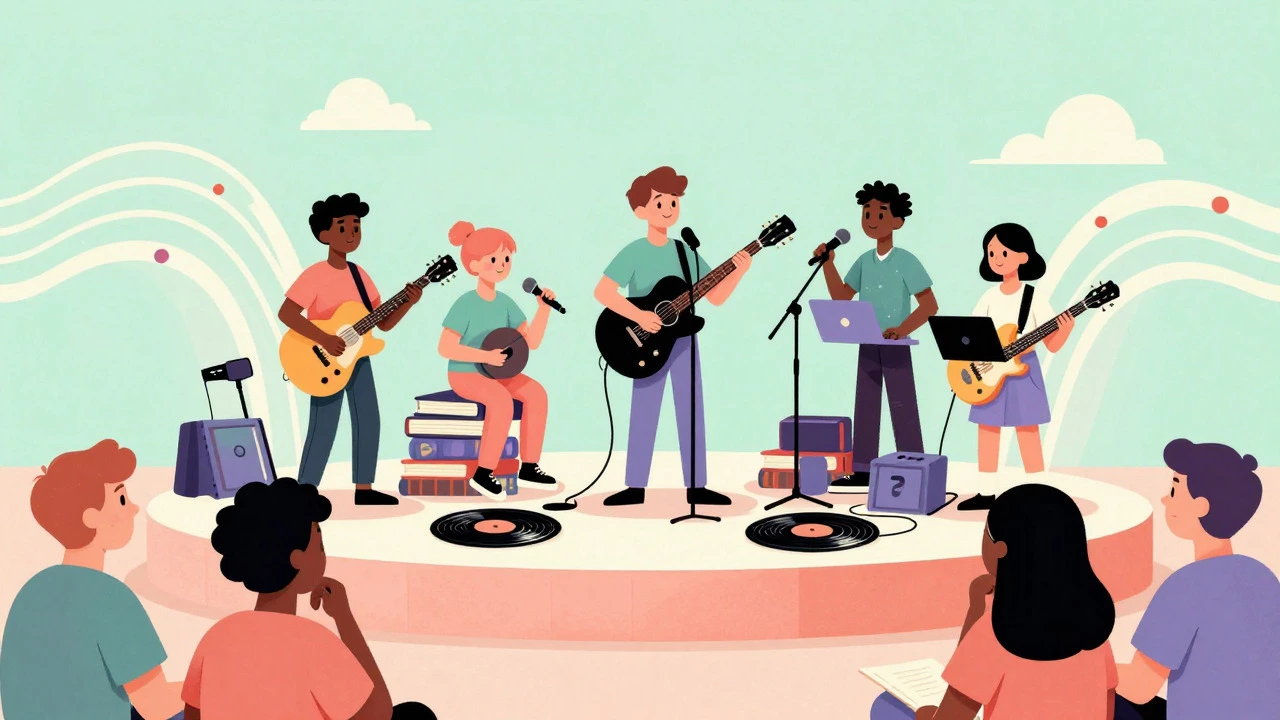
As we move through 2025 and into 2026, the trend is clear. Music education is no longer seen as a neutral aesthetic enterprise. It is recognized as a social practice that shapes identity and citizenship. The integration of SEL frameworks into music standards ensures that empathy and social awareness remain central goals. We are seeing more student-led ensembles, digital production projects, and community collaborations. Students are using technology to articulate their identities and critique societal structures.
The goal isn’t to turn every music class into a political rally. It’s to ensure that students leave with the tools to think critically, feel deeply, and act responsibly. When a student understands that music can both reproduce culture and produce new meanings, they gain agency. They stop being consumers and start being creators of their own social reality. That is the true power of social awareness through song.
What is critical consciousness in music education?
Critical consciousness, or conscientização, is a concept from Paulo Freire that describes the process of becoming aware of social, political, and economic contradictions in the world. In music education, it means teaching students to analyze how music reflects power structures and to use music-making as a way to challenge injustice and develop empathy.
How does songwriting help students develop social awareness?
Songwriting requires students to express their own perspectives and listen to others. It fosters self-awareness and empathy. By analyzing lyrics and creating their own messages, students learn to identify social issues and communicate effectively about them, turning abstract concepts into personal, actionable insights.
What is the difference between traditional and critical music pedagogy?
Traditional pedagogy focuses on technical skill, teacher authority, and a fixed canon of Western classical music. Critical pedagogy prioritizes student voice, cultural diversity, and dialogic learning. It encourages students to question why certain music is valued and to connect musical activities to broader social and political contexts.
Can music education really change society?
While one class won’t solve systemic issues, music education contributes to social change by developing citizens who are empathetic, critical thinkers. Scholars like Allsup and Shieh argue that music teachers act as public figures who can foster a disposition to perceive and act against injustice, thereby strengthening democratic engagement.
What are some practical ways to start teaching social awareness through music?
Start by mapping what music students already listen to. Use resources like the "Sounds of Change" lesson to analyze lyrics for social messages. Incorporate diverse repertoires that reflect different cultures and histories. Encourage collaborative composition where students address themes like fairness, diversity, or environmental concerns.


