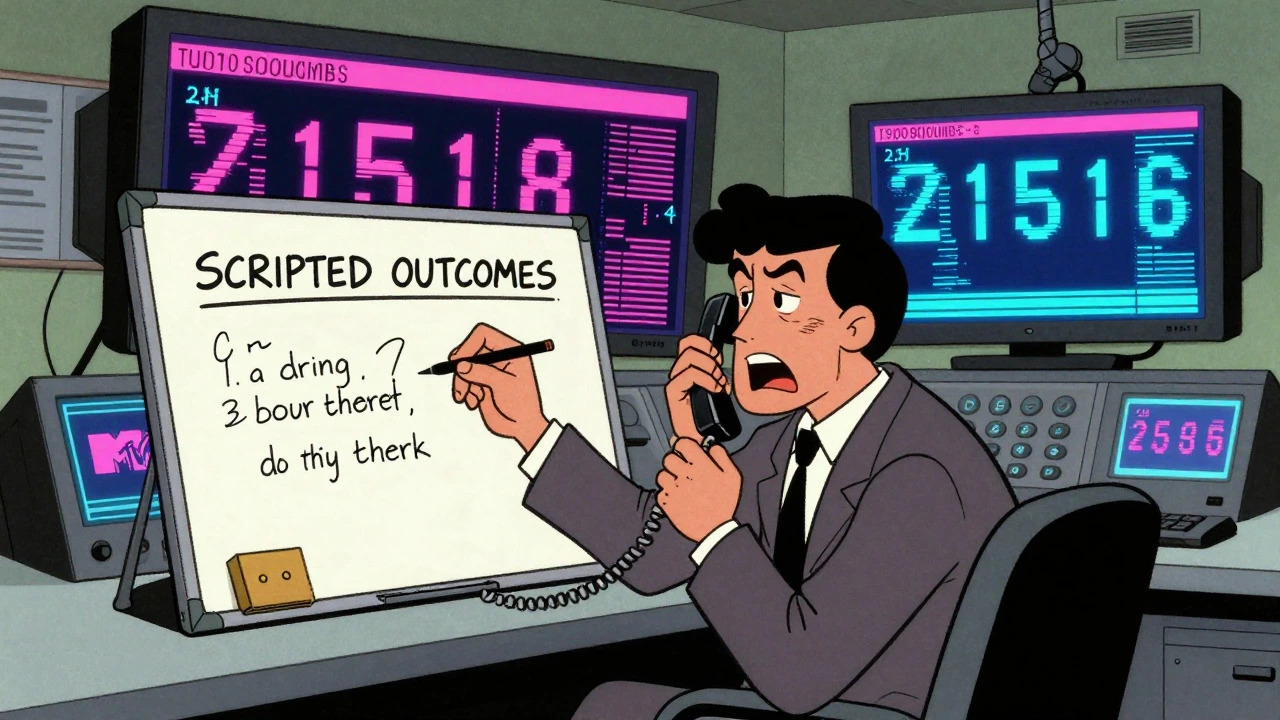

Remember the thrill of calling into Total Request Live (TRL) or watching the weekly rotation on MTV? For a generation of teens in the late 1990s and early 2000s, those video countdowns weren't just entertainment; they were the ultimate validation of pop culture success. You believed your phone call mattered. You believed that if your favorite artist hit number one, it was because millions of fans voted for them. But what if I told you that the rankings you watched every day were often scripted, manipulated by record labels, or outright fabricated by producers?
The reality of 1990s video countdowns is far more complex than the glossy facade presented on screen. These shows-ranging from MTV’s flagship daily programs to VH1’s adult-oriented charts-operated as massive marketing engines where metrics, manipulation, and corporate strategy collided. While the public saw a democratic vote, the industry saw a lever to pull for sales spikes. Understanding how these systems worked reveals not just how the music business operated back then, but why certain artists skyrocketed to fame while others faded into obscurity despite having popular songs.
The Evolution of Video Rankings
To understand the manipulation, we first need to look at how these rankings started. In the mid-1980s, MTV introduced Dial MTV, a daily program that ranked videos based on viewer requests to a toll-free 1-800 number. Premiering on February 17, 1986, this show ran until June 1991. It established a crucial precedent: audience participation could serve as a measurable metric for popularity. Viewers called in, their votes were tallied, and the most requested clips aired in descending order. This created the illusion of direct control over television programming.
By 1990, MTV had evolved this concept into the Top 20 Video Countdown. Unlike Dial MTV, which relied solely on phone calls, the Top 20 pulled from a controlled universe of approximately 80 active videos in MTV’s main playlist. Academic analysis of MTV Europe suggests that programmers determined rotation levels internally before presenting the final chart to viewers. For example, a reconstructed chart from July 7, 1990, shows specific movements like Glenn Medeiros featuring Bobby Brown’s "She Ain’t Worth It" moving up two spots, while New Kids on the Block’s "Step By Step" dropped three. These numbers looked organic, but they were curated by editors who decided which videos entered the rotation pool in the first place.
Other networks followed suit with similar formats tailored to different demographics. VH1 launched its Top 10 Countdown in 1994 as part of a "Music First" rebranding, eventually expanding to a Top 20 format. This targeted an older, adult-contemporary audience, offering a perceived alternative to MTV’s youth-centric programming. Meanwhile, in Canada, MuchMusic’s Countdown served as a national chart, allowing domestic acts to compete with international superstars. These parallel systems meant that an artist needed to navigate multiple ranking structures to achieve widespread visibility, each with its own set of rules and hidden influences.
The Data Revolution: SoundScan and BDS
While TV channels played with viewer perception, the underlying music industry underwent a seismic shift in how it measured success. Before November 30, 1991, Billboard’s Hot 100 chart relied on manually reported lists from retailers and radio stations. A Los Angeles Times report from September 1991 noted that sales data came from a limited panel of stores, largely major chains like Tower Records, and airplay data from about 250 Top 40 stations. This system was vulnerable to subjective reporting and informal payola, where labels could pressure store managers to inflate sales figures.
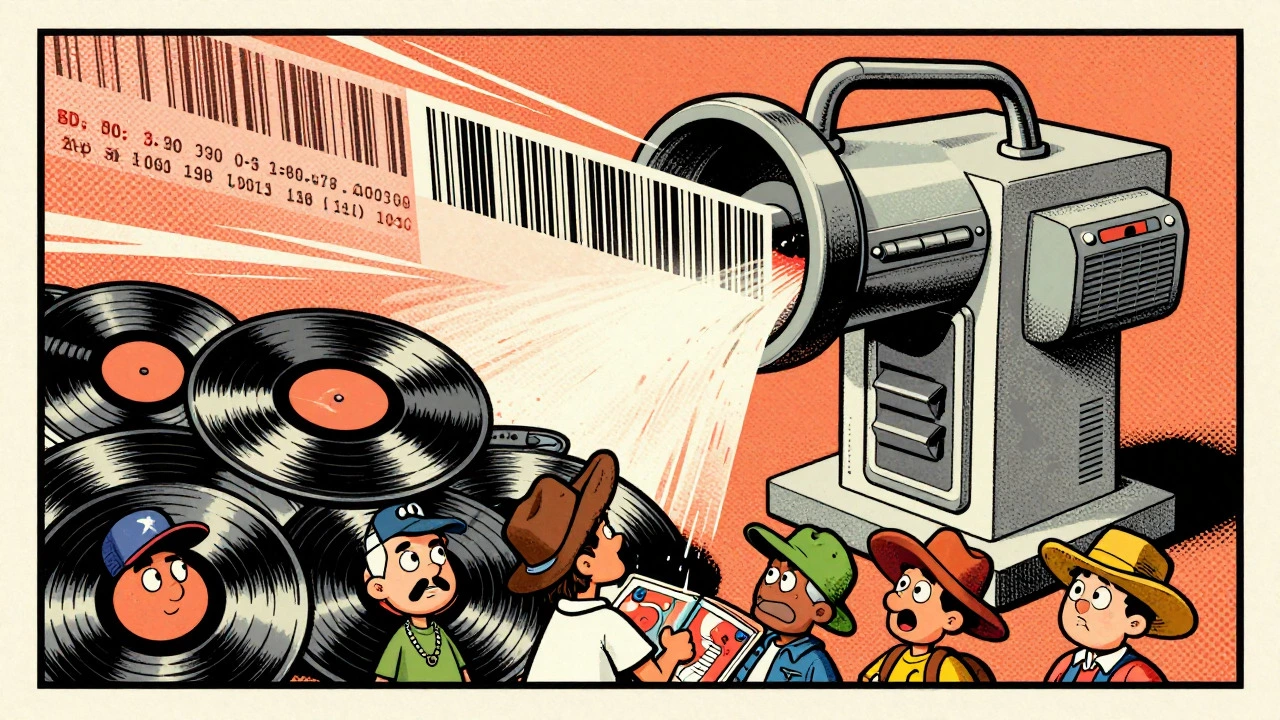
Then came the revolution. On that fateful November date, Billboard integrated SoundScan and Broadcast Data Systems (BDS). SoundScan used barcode scanners at point-of-sale systems to track actual piece-count sales, while BDS electronically monitored radio airplay across roughly 1,000 stations. This change exposed genres like hip-hop, R&B, and country, which were selling significantly more than previous methodologies suggested. Suddenly, popularity wasn't a matter of opinion; it was hard data.
This shift forced video countdowns to adapt. Programmers could now correlate their internal rotations with verified sales spikes. If a video was climbing the MTV Top 20, labels could check SoundScan to see if retail sales were following suit. This data-driven approach made the countdowns even more powerful marketing tools. A high ranking on a video show wasn't just vanity; it was a predictor of commercial performance. However, this transparency in sales didn't eliminate manipulation-it just moved it to new areas, specifically the interactive elements of shows like TRL.
Total Request Live: The Illusion of Democracy
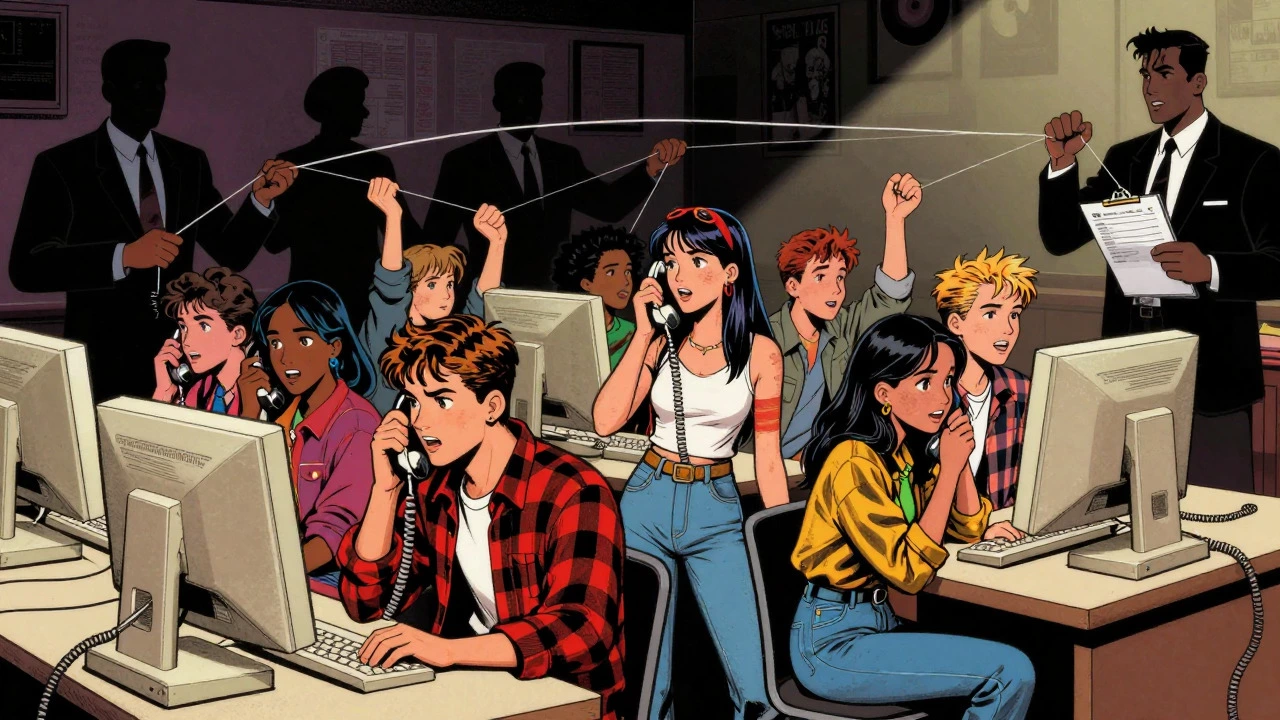
No show exemplifies the tension between democratic ideals and corporate control quite like Total Request Live (TRL). Debuting on September 14, 1998, TRL became the cultural heartbeat of teen pop. Hosted initially by Carson Daly, the show counted down the top 10 viewer-requested videos daily. The premise was simple: fans called in, voted online, or cast ballots in the studio audience, and the results determined the lineup. MTV marketed TRL as "the only show where the viewers have total control," creating a feedback loop of engagement that drove massive ratings.
In practice, however, the metrics were heavily weighted and managed. Phone requests were prioritized over email votes, with staff taking calls during a strict half-hour window each day. Online votes were tracked using cookies to limit users to one vote per day. Yet, as soon as these safeguards were put in place, fans and record labels found ways to game them. A Salon investigation from August 2001 revealed that Interscope Records explicitly advised fans on how to beat TRL’s cookie-based defenses. They instructed supporters to delete browser cookies after each vote, effectively allowing mass ballot-stuffing. This turned the voting process into a technical arms race between MTV’s fraud detection teams and label-sponsored fan armies.
But the manipulation went deeper than just fans deleting cookies. Internal documents and producer interviews suggest that MTV often scripted the outcomes. If a song was trending too high or too low for programming reasons, producers would adjust the narrative. The goal wasn't necessarily to reflect real-time popularity, but to create a compelling story arc for the week. This editorial control meant that while fans felt empowered, the ultimate power rested with the network executives who decided which videos got the prime slots.
Cases of Manipulation and Scripting
If you think the idea of rigged charts sounds like conspiracy theory, consider the evidence. Pablo Torre’s 2025 audio documentary, *Tearin’ Up My Charts*, provides a detailed account of how TRL manipulated results. One infamous incident involved New Kids on the Block’s "Hangin’ Tough." Fans engineered an algorithm to spam the website by repeatedly selecting "Other" and entering the band's name. When the online poll showed the group winning, MTV publicly claimed the song received 26% of phone votes. Later, insiders admitted this number was fabricated because the band wouldn't have been an option on the phone menu via the "Other" category. The network essentially rewrote the rules to protect their preferred narrative.
Another striking example involves comedian Tom Green and his novelty hit "The Bum Bum Song." According to reports, MTV asked Green to "retire" the song at number one because host Carson Daly had already pre-taped upcoming episodes. If the song remained at the top, the pre-recorded segments would no longer match the live results, exposing the disconnect between the scripted content and the actual votes. To avoid this embarrassment, MTV retroactively shaped the narrative, forcing the retirement of a genuinely popular track to maintain the integrity of their pre-produced tapes.
These instances highlight a fundamental truth: TRL was a hybrid spectacle. It combined real fan enthusiasm with heavy-handed editorial oversight. Labels spent millions on promotional campaigns designed to boost TRL exposure, hiring teams to make calls and coordinate online voting. The result was a chart that reflected a mix of genuine popularity, financial investment, and corporate preference. For artists like Christina Aguilera, Kid Rock, Creed, and the Backstreet Boys, breaking through on TRL translated directly into measurable sales gains, proving that even a manipulated metric could drive real-world success.
Marketing Power and Industry Impact
Why did everyone play along? Because the marketing power of these countdowns was undeniable. A top-10 placement on TRL or VH1’s Top 20 was cited in press releases, advertising materials, and artist bios. It provided social proof that resonated with consumers. For Canadian labels, a high ranking on MuchMusic’s Countdown offered specific numeric evidence to use in domestic campaigns and export pitches. Even year-end specials, like MTV’s Top 100 Music Videos, served to canonize artists, assigning them a permanent place in pop culture history.
The interplay between video rankings and sales data created a self-reinforcing cycle. Artists who appeared frequently on countdowns saw increased radio airplay, which boosted SoundScan sales, which in turn justified further rotation on TV. This ecosystem allowed labels to identify breakout hits quickly and double down on promotion. Conversely, artists who failed to gain traction on these platforms struggled to break through, regardless of their musical talent. The countdowns acted as gatekeepers, controlling access to the mainstream audience.
As the decade progressed, the reliance on these televised metrics began to wane. Accusations of rigging eroded credibility, and changing media consumption habits shifted attention toward internet platforms. TRL ended its original run in 2008, and VH1’s formats evolved. Yet, the legacy of the 1990s video countdowns remains. They demonstrated the potential-and the pitfalls-of interactive media. They showed how easily audience participation could be co-opted for commercial ends. And they left behind a generation of fans who learned early on that popularity is often a manufactured product, carefully crafted behind the scenes.
| Show Name | Network | Primary Metric | Manipulation Risk | Target Audience |
|---|---|---|---|---|
| Dial MTV | MTV | Phone Requests | Low (Direct Input) | General Youth |
| Top 20 Video Countdown | MTV | Editorial Playlist + Rotation | High (Curated Selection) | Teen/Young Adult |
| Total Request Live (TRL) | MTV | Weighted Votes (Phone/Web) | Very High (Scripted Outcomes) | Teens |
| VH1 Top 20 | VH1 | Airplay/Sales Data | Medium (Data Driven) | Adult Contemporary |
| MuchMusic Countdown | MuchMusic | Regional Chart Data | Medium (Market Specific) | Canadian Market |
Lessons for Modern Music Promotion
The strategies used in the 1990s still echo today. While we no longer call into TV shows to vote, the principles remain the same. Social media algorithms act as the new countdowns, determining which songs get visibility. Record labels still invest heavily in mobilizing fan bases to stream tracks, buy digital copies, and engage with content. The difference is that the manipulation is now automated and embedded in code rather than handled by producers in a control room.
Understanding the history of video countdowns helps us see through the current hype cycles. When a song blows up overnight, ask yourself: Is this organic growth, or is there a coordinated campaign behind it? The answer is often both. The 1990s taught us that metrics are never neutral. They are shaped by technology, influenced by money, and filtered through human judgment. Recognizing this allows us to appreciate the music we love without blindly accepting the narratives sold to us.
Was Total Request Live (TRL) actually rigged?
Yes, evidence suggests TRL was frequently manipulated. Producers sometimes scripted outcomes to fit pre-taped segments, and record labels employed tactics like cookie-deleting instructions to inflate online votes. While fan enthusiasm was real, the final rankings were often adjusted by MTV editors to ensure desirable programming narratives.
How did SoundScan change the music industry?
SoundScan introduced objective, barcode-based sales tracking in 1991, replacing subjective retailer reports. This revealed the true popularity of genres like hip-hop and country, forcing radio and TV programmers to acknowledge data-driven trends rather than relying on personal biases or informal payola.
What was the purpose of MTV's Dial MTV?
Dial MTV, which ran from 1986 to 1991, was an early interactive program where viewers called a toll-free number to request videos. Its primary purpose was to engage the audience and establish viewer participation as a metric for popularity, laying the groundwork for later shows like TRL.
Did video countdowns actually increase record sales?
Absolutely. Artists like Christina Aguilera, Backstreet Boys, and Kid Rock saw significant sales spikes after achieving high rankings on TRL and other countdowns. These placements served as powerful marketing tools that drove consumer interest and retail purchases.
How did record labels manipulate TRL votes?
Labels organized fan clubs to make mass phone calls during specific windows and instructed fans to delete browser cookies to bypass online voting limits. Some even offered prizes for successful votes, turning the process into a coordinated campaign to boost their artist's ranking.