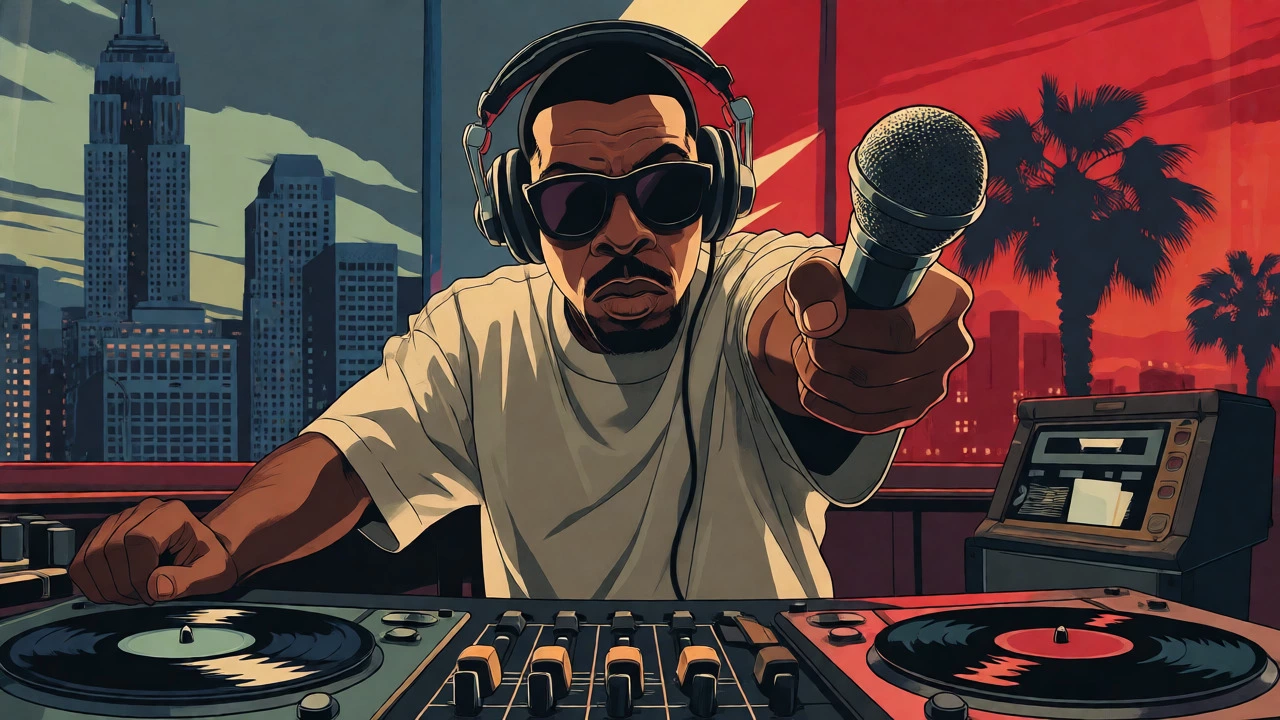

Did you know that the violence of the 1990s hip-hop rivalry wasn't just about rappers throwing punches? It was largely shaped by who held the microphone and the turntables. While history books often focus on the tragic deaths of Tupac Shakur and The Notorious B.I.G., a quieter, yet equally powerful force was at work: the DJs. These figures acted as cultural gatekeepers, deciding which diss tracks got airplay and which peace talks made headlines.
If you were listening to the radio in New York or Los Angeles between 1994 and 1997, your perception of the "East vs. West" war was curated by specific personalities. They weren't just playing songs; they were arbiters of conflict. This article breaks down how radio hosts, mixtape dealers, and club selectors mediated one of music's most intense eras.
The Radio Gatekeepers: HOT 97 and the Power of Airplay
HOT 97 in New York became the epicenter of this dynamic after shifting to a hip-hop-only format around 1992. Its DJs didn't just reflect public opinion; they created it. Funkmaster Flex, who rose to prominence there, wielded enormous influence over what millions of listeners heard each night. If a track had heat, Flex played it. If an artist annoyed him, their records might vanish from rotation for years.
This power came with significant ethical dilemmas. DJs like Angie Martinez navigated the escalating tension between Bad Boy Records and Death Row Records daily. In her memoir, she describes how Tupac used radio appearances to pressure Biggie and Puff Daddy, turning interviews into strategic moves in a larger game. The DJs had to balance sensational content-which drove ratings-against the risk of inflaming conflicts that could spill into real-world violence.
The stakes were highest when DJs took sides. A notorious example is the feud between HOT 97 and the Wu-Tang Clan. When the station demanded Wu-Tang headline Summer Jam under threat of losing airplay, Inspectah Deck called it musical blackmail. Ghostface Killah later led a crowd chanting anti-station slogans, resulting in a near-decade blackballing of Wu-Tang records. This incident proves that DJs weren't neutral observers; they were active participants whose decisions could isolate entire camps of artists.
Cross-Coastal Bridges: The Wake Up Show
While HOT 97 often amplified regional pride, other platforms sought to lower the temperature. The Wake Up Show, co-founded by Sway Calloway and King Tech in 1991, offered something rare: a neutral cypher space. Syndicated to over 20 cities, the show allowed East Coast, West Coast, and Midwest artists to perform live freestyles without the hostile framing typical of competitive battles.
The show’s philosophy prioritized lyrical skill over geographic affiliation. By featuring future stars like Jay-Z and Eminem alongside established names from both coasts, Sway and King Tech built a reputation for fairness. Their compilation track 'The Anthem' featured artists ranging from KRS-One to Xzibit, showcasing collaboration rather than animosity. This approach provided a counter-narrative to the media-driven feud, reminding listeners that talent existed everywhere, regardless of zip code.
Mixtape Culture: Fanning Flames and Building Networks
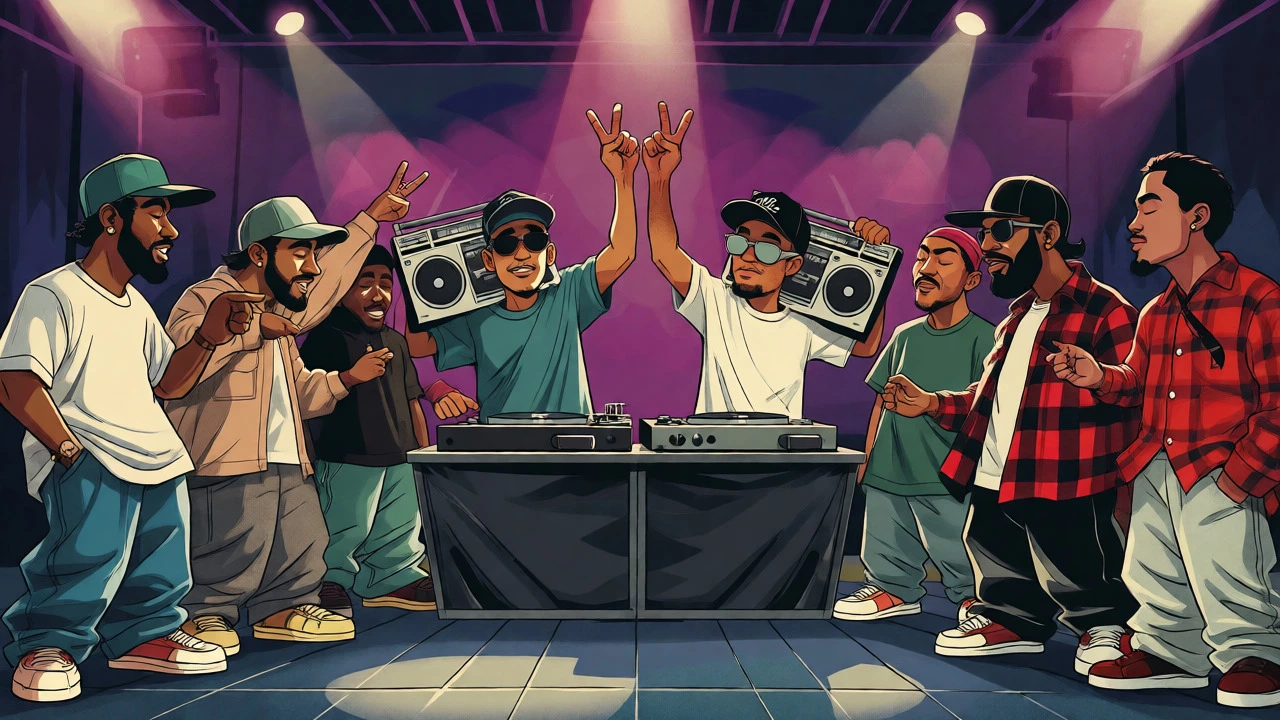
Beyond commercial radio, mixtape DJs operated in the streets, where tensions ran hottest. Figures like DJ Clue and DJ Kay Slay controlled the underground economy of sound. Clue’s unauthorized mixtapes gave fans exclusive access to tracks before official release, while Kay Slay, known as "The Drama King," openly threatened rivals and championed aggressive New York MCs.
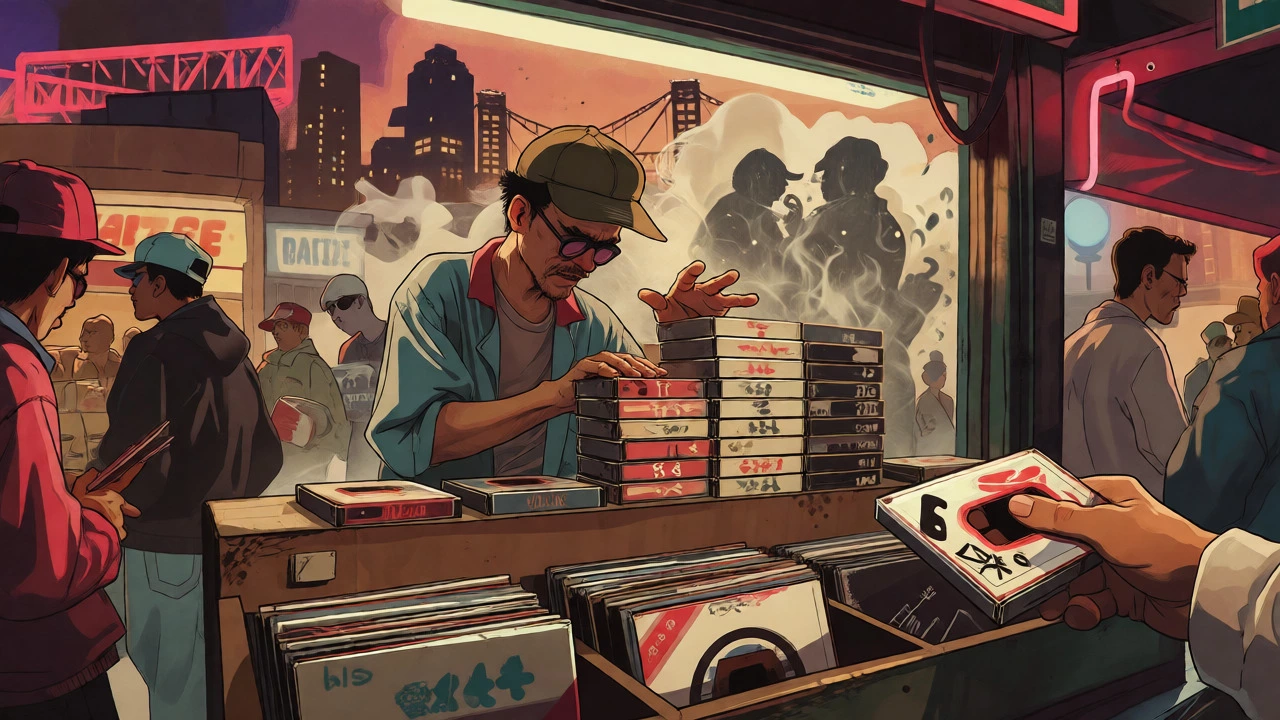
These DJs had a dual role. On one hand, they fueled rivalry by dropping exclusives that favored one camp over another. On the other, they created unofficial channels for cross-regional exchange. A rapper from L.A. might hear a new Queens beat on a tape sold in Brooklyn, fostering a shared aesthetic even amidst public beefs. The physical infrastructure of record stores, where DJs traded vinyl, served as behind-the-scenes mediation hubs, allowing dialogue to continue even when public rhetoric remained heated.
College Radio and Independent Voices
Not all mediation happened on major commercial stations. College radio, particularly Stretch & Bobbito on Columbia University’s WKCR, provided an independent forum. Hosted by Stretch Armstrong and Bobbito Garcia, the show aired late nights and hosted everyone from Nas to Run-DMC. Because they weren't beholden to advertisers, they could explore controversial and politically charged material without fear of backlash.
However, their position was delicate. As non-Black DJs curating a genre rooted in Black urban experience, they navigated questions of authenticity and representation. Yet, their independence allowed them to spotlight socially conscious artists rarely heard on mainstream outlets. This diversity of perspective helped complicate the simple "coast versus coast" binary, showing that hip-hop was more than just a turf war.
Formal Interventions and DJ Facilitation
As the violence escalated, formal interventions occurred. Nation of Islam leader Louis Farrakhan hosted peace meetings in Chicago in 1996 and 1997, summoning dozens of artists to discuss ending the rivalry. DJs and industry insiders often facilitated these gatherings, using their relational capital to bring warring parties together.
Legal scholars now view these informal roles through the lens of conflict resolution. Craig Epstein’s research suggests that trusted industry insiders, including DJs, could serve as effective mediators because they already brokered access to audiences. Whether it was Howard Stern’s "Rap Summit" in 1997 or smaller, private meetings, DJs often acted as conveners, positioning themselves as bridges between generations and regions.
| Platform Type | Key Examples | Mediation Strategy | Impact on Conflict |
|---|---|---|---|
| Commercial Radio | HOT 97 (Funkmaster Flex) | Airplay selection, public feuds | Often escalated tension via agenda-setting |
| Syndicated Shows | Wake Up Show (Sway & King Tech) | Neutral cyphers, cross-coastal features | De-escalated by emphasizing skill over region |
| Mixtapes | DJ Clue, DJ Kay Slay | Exclusive releases, street marketing | Ambiguous: fanned flames but shared culture |
| College Radio | Stretch & Bobbito (WKCR) | Independent curation, diverse voices | Complicated binaries, highlighted nuance |
Legacy: From Gatekeepers to Historians
Today, many of these DJs occupy roles as elder statesmen. Funkmaster Flex publicly apologized to Wu-Tang Clan in 2023, nearly 25 years after their dispute, illustrating how DJs can shift from conflict participants to high-profile mediators over time. Academic discussions now frame these 1990s practices as early forms of algorithmic curation, comparing HOT 97’s influence to modern streaming playlists like Spotify’s RapCaviar.
The lessons remain relevant. Just as DJs once decided which diss tracks defined the era, today’s playlist curators shape narratives around artistic feuds. Understanding the 1990s requires recognizing that the music was only half the story; the people selecting and spinning the records wrote the other half.
Why were DJs so powerful in the 1990s hip-hop scene?
DJs controlled the primary channels of distribution before the internet. Radio DJs decided which songs reached mass audiences, while mixtape DJs determined which artists gained street credibility. This gatekeeping power allowed them to elevate or silence artists, directly influencing the narrative of regional rivalries.
Did DJs try to stop the East Coast-West Coast feud?
Yes, some did. Shows like the Wake Up Show provided neutral ground for artists from both coasts to collaborate. Additionally, DJs often facilitated private meetings and peace summits, such as those organized by the Nation of Islam, acting as intermediaries between conflicting camps.
What was the impact of HOT 97 on the hip-hop rivalry?
HOT 97 significantly influenced the rivalry by choosing which diss tracks received heavy airplay. Personalities like Funkmaster Flex could amplify tensions by favoring certain artists or blackballing others, effectively shaping public perception of who was winning the feud.
How did mixtape DJs contribute to hip-hop tensions?
Mixtape DJs like DJ Clue and DJ Kay Slay released unauthorized exclusives that often favored specific labels or regions. While this sometimes escalated beefs by highlighting rivalries, it also circulated music across borders, helping fans appreciate styles outside their home coast.
Are modern playlist curators similar to 1990s DJs?
Yes, experts compare modern streaming playlist curators to 1990s radio DJs. Both groups act as gatekeepers who decide which songs get promoted, thereby influencing which artistic conflicts gain visibility and how they are perceived by the broader audience.