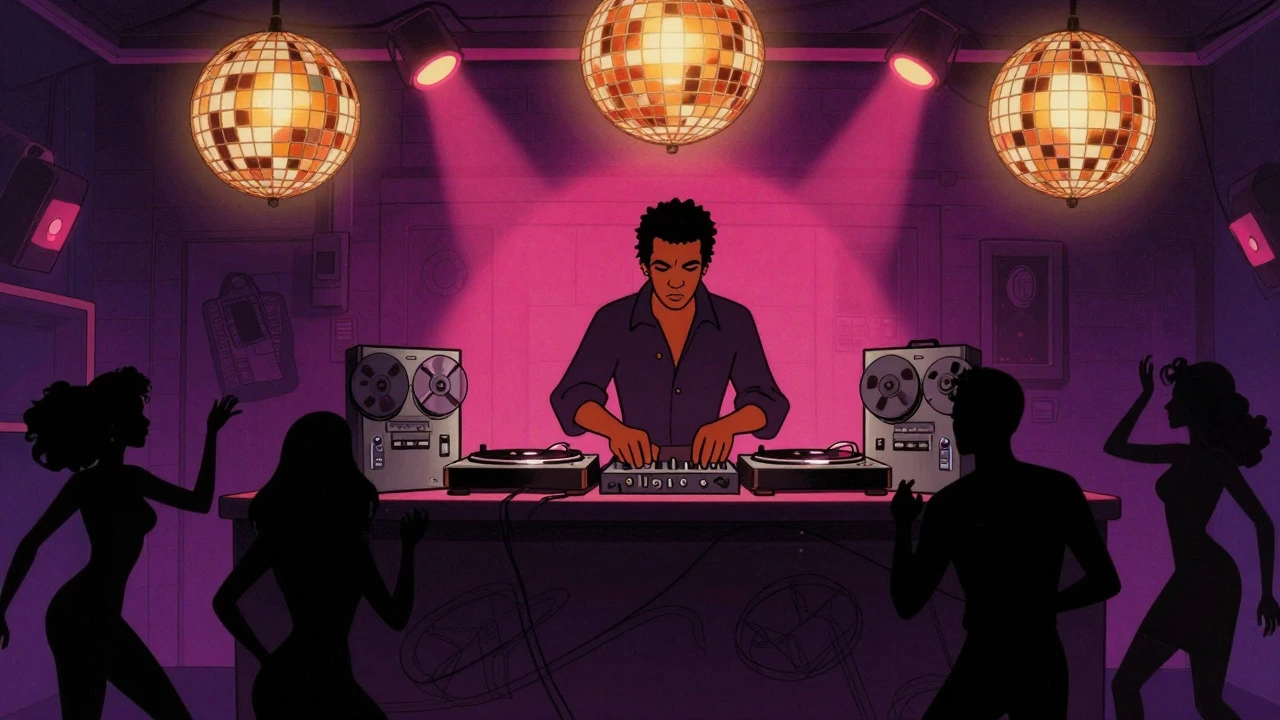

Imagine walking into a dark room in New York City around 1982. The air is thick with heat and anticipation. On stage, there is no band. No drums, no bass guitar, no saxophone player sweating under hot lights. Instead, you hear a crisp, mechanical kick drum-*thump, thump, thump*-layered over a squelching synthesizer bassline that feels like it’s moving through your chest. This wasn’t just background noise; it was the heartbeat of a new era. This was dance-funk, a post-disco electronic style that replaced live instruments with drum machines and synths to create tight, mid-tempo grooves for club dancers.
When disco died in 1979, many people thought the dance floor was finished. They were wrong. Dance-funk didn’t just fill the void left by disco; it rebuilt the entire architecture of how we experience nightlife. It turned clubs from places where you went to see a performance into spaces designed purely for movement. If you want to understand why modern EDM works the way it does, you have to look back at this specific moment when funk rhythms met electronic technology.
The Sound That Replaced the Band
To get dance-funk, you first have to understand what it reacted against. Disco was lush. It had orchestras, soaring strings, and complex horn sections. It was beautiful, but it was also expensive and hard to mix continuously. When the backlash against disco hit, producers needed a cheaper, cleaner, and more consistent sound. Enter the drum machine.
Dance-funk stripped away the excess. It kept the groove-the syncopated basslines and the rhythmic drive-but swapped the human drummer for machines like the Roland TR-808 or the Linn LM-1. This shift changed everything. A live drummer might speed up or slow down slightly with emotion. A drum machine stays perfectly on time. For DJs, this was a game-changer. You could beat-match two records together without fighting against tempo fluctuations.
This style often sat between 100 and 120 beats per minute (BPM). It wasn’t as frantic as later techno, nor as slow as some soul tracks. It was a "mid-tempo" sweet spot. Tracks like D.Train’s "You’re the One for Me" (1981) or West Street Mob’s "Break Dancin’ - Electric Boogie" (1984) used rubbery synth basses and sharp handclaps. These elements created a pocket that felt physical. You didn’t just hear the rhythm; you felt it in your legs. This precision allowed clubs to stay open longer, with music flowing seamlessly for hours rather than stopping for song breaks.
New York: The Laboratory of Hybrid Culture
If dance-funk was the engine, New York City was the testing ground. Between 1980 and 1986, the city’s club scene became a melting pot unlike anything before or since. Venues like Paradise Garage, a legendary private members-only club in New York City known for its massive sound system and DJ Larry Levan's innovative mixing techniques weren't just parties; they were cultural laboratories.
Larry Levan, the resident DJ at Paradise Garage, is central to this story. He didn’t just play records; he manipulated them. Using reel-to-reel tape delays and early synthesizers, he would extend breakdowns, loop basslines, and create entirely new versions of songs on the fly. His sets blended dance-funk with rock, dub, and early hip-hop. Imagine hearing a funky electro track segue into a punk riff, then drop back into a heavy bass groove. This hybrid approach broke down social barriers. Black, white, Latino, and gay crowds shared the same floor because the music spoke a common language of rhythm.
Other clubs like Club 57 and the Mudd Club pushed this even further. DJs like David Azarch and Johnny Dynell mixed funk with no-wave and industrial sounds. The result was a chaotic, vibrant energy that defined downtown NYC. These spaces proved that dance music didn’t need to be polished pop to work. It just needed to move people. The focus shifted from the artist on stage to the DJ in the booth, establishing the DJ as the primary curator of the night’s experience.
Minneapolis: The Synth-Funk Revolution
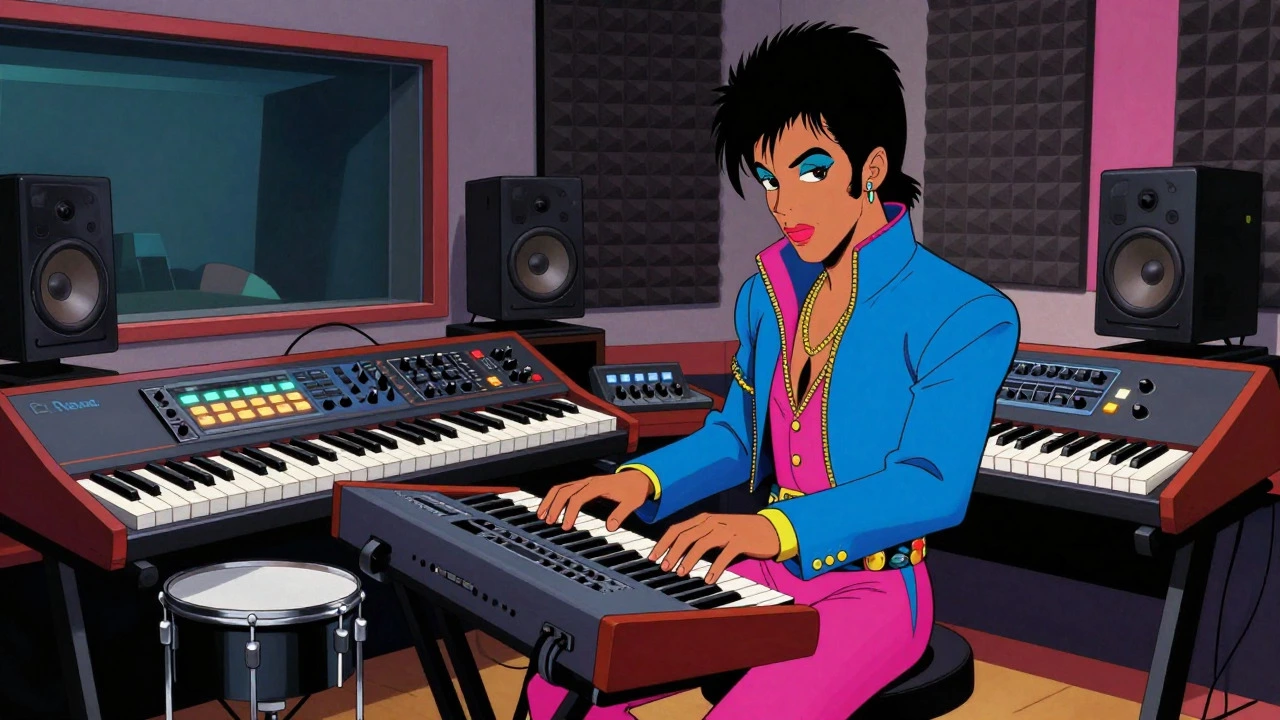
While New York was experimenting with hybrids, Minneapolis was building a distinct sonic identity. This is where the Minneapolis sound, a musical style pioneered by Prince and André Cymone that combined funk, rock, and new wave with prominent synthesizer use and drum machine rhythms emerged. Led by Prince, the influential musician born Prince Rogers Nelson who pioneered the Minneapolis sound using synthesizers and drum machines to redefine funk music and his collaborators like André Cymone, this scene took dance-funk and made it sleek, sexy, and radio-ready.
Unlike the gritty, underground vibe of New York, Minneapolis dance-funk was polished. It featured bright, jangly electric guitars processed through effects pedals, deep synth basslines, and tight, quantized drum patterns. Tracks like those by The Time or Vanity 6 were designed to be catchy yet complex. The key here was minimalism. Every element had a job. There was no clutter. Just hook after hook.
This sound dominated local clubs like First Avenue and the 7th Street Entry. Nights like "More Funk" drew hundreds of people who came specifically for this blend of R&B and electronics. The Minneapolis sound showed that dance-funk could be commercially viable without losing its edge. It influenced not just club culture but mainstream pop, proving that electronic production could carry emotional weight and sexual tension.
The UK Connection: From Soul All-Dayers to Acid House
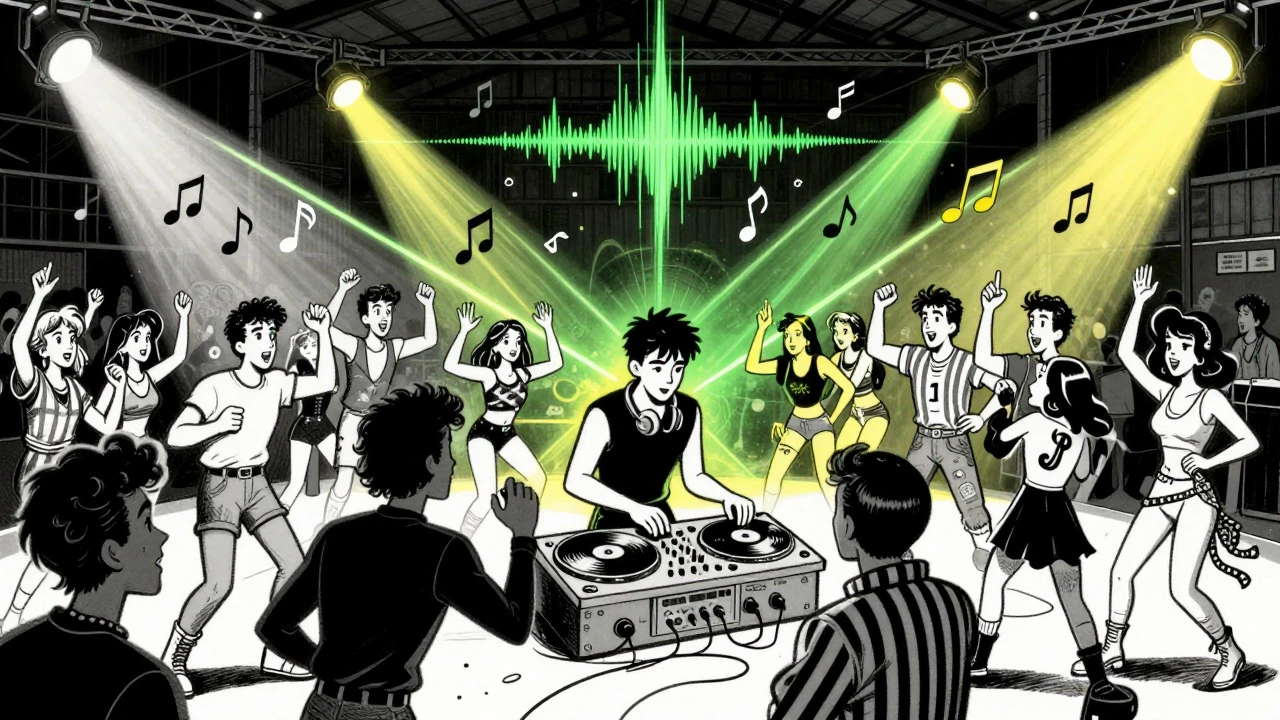
Dance-funk didn’t stay in America. It crossed the Atlantic and found a home in the United Kingdom, particularly in London. In the early 1980s, British club culture was heavily influenced by African American music. DJs like Gilles Peterson and Norman Jay played boogie and electro-funk records at soul all-dayers and pirate radio stations.
In the UK, "boogie" became a catch-all term for these American dance-funk imports. These events were crucial because they built a community around black dance music outside of traditional jazz or reggae scenes. Multi-racial crowds gathered in warehouses and outdoor festivals, dancing to records that emphasized rhythm over lyrics. This environment prepared the ground for what came next.
By the mid-1980s, as house music began to emerge from Chicago, UK DJs were already familiar with the electronic funk aesthetic. The transition from boogie to acid house felt natural. The repetitive structures, the emphasis on the bassline, and the extended mixes were all present in dance-funk. When acid house exploded in the late 1980s, it wasn’t a sudden shock; it was an evolution of the habits formed during the boogie years. Dance-funk taught British clubbers how to listen to electronic music, creating a dedicated audience for the rave culture that followed.
Why Dance-Funk Matters Today
You might wonder why this matters now. Well, every time you go to a club and hear a DJ seamlessly blend tracks, you are experiencing the legacy of dance-funk. Before this era, clubs often relied on live bands or jukeboxes. Dance-funk established the DJ as the star. It normalized the use of technology to enhance the dance experience.
Consider the structure of modern house or techno. The four-on-the-floor beat, the build-ups, the drops-these elements have roots in the ways Larry Levan and Frankie Knuckles manipulated dance-funk records. Even the concept of the "extended mix," where a song stretches out to five or six minutes, originated from DJs needing more material to work with during long sets. Dance-funk provided the raw material for these innovations.
Furthermore, dance-funk demonstrated that electronic music could be soulful. It proved that machines could feel. This idea continues to influence producers today, who strive to add human emotion to digital sounds. Whether you’re listening to contemporary R&B, indie dance, or mainstream EDM, the DNA of 1980s dance-funk is there. It taught us that technology serves the groove, not the other way around.
What is the difference between disco and dance-funk?
Disco typically features live orchestras, string sections, and acoustic drums, creating a lush, organic sound. Dance-funk, emerging after the disco backlash, replaced these live instruments with drum machines, synthesizers, and sequencers. This resulted in a tighter, more mechanical, and electronically precise groove that was easier for DJs to mix continuously.
Who were the key figures in the dance-funk movement?
Key figures include Prince, who pioneered the Minneapolis sound; Larry Levan, the legendary DJ at New York's Paradise Garage; André Cymone, Prince's collaborator; and producers like Arthur Baker. DJs such as Frankie Knuckles in Chicago and Gilles Peterson in the UK also played crucial roles in spreading the style.
How did dance-funk influence house music?
Dance-funk served as a direct precursor to house music. It introduced the use of drum machines and synthesizers in dance contexts, established the importance of the bassline, and popularized extended remixes. Early house DJs like Frankie Knuckles used dance-funk records as source material, adapting their rhythms and structures to create the faster, four-on-the-floor beats characteristic of house.
What role did the Minneapolis sound play in 1980s club culture?
The Minneapolis sound, led by Prince, brought a polished, synth-heavy version of funk to the forefront. It emphasized minimalism, catchy hooks, and high-energy performances. This style dominated clubs in Minneapolis and influenced national trends by showing how electronic production could be both commercially successful and deeply rooted in funk traditions.
Why was Paradise Garage so important to dance-funk?
Paradise Garage was a sanctuary for dance music experimentation. Under DJ Larry Levan, it became a place where diverse crowds could experience immersive, multi-hour sets that blended dance-funk with other genres. Levan’s innovative mixing techniques and focus on the physical impact of sound helped define the modern club experience.