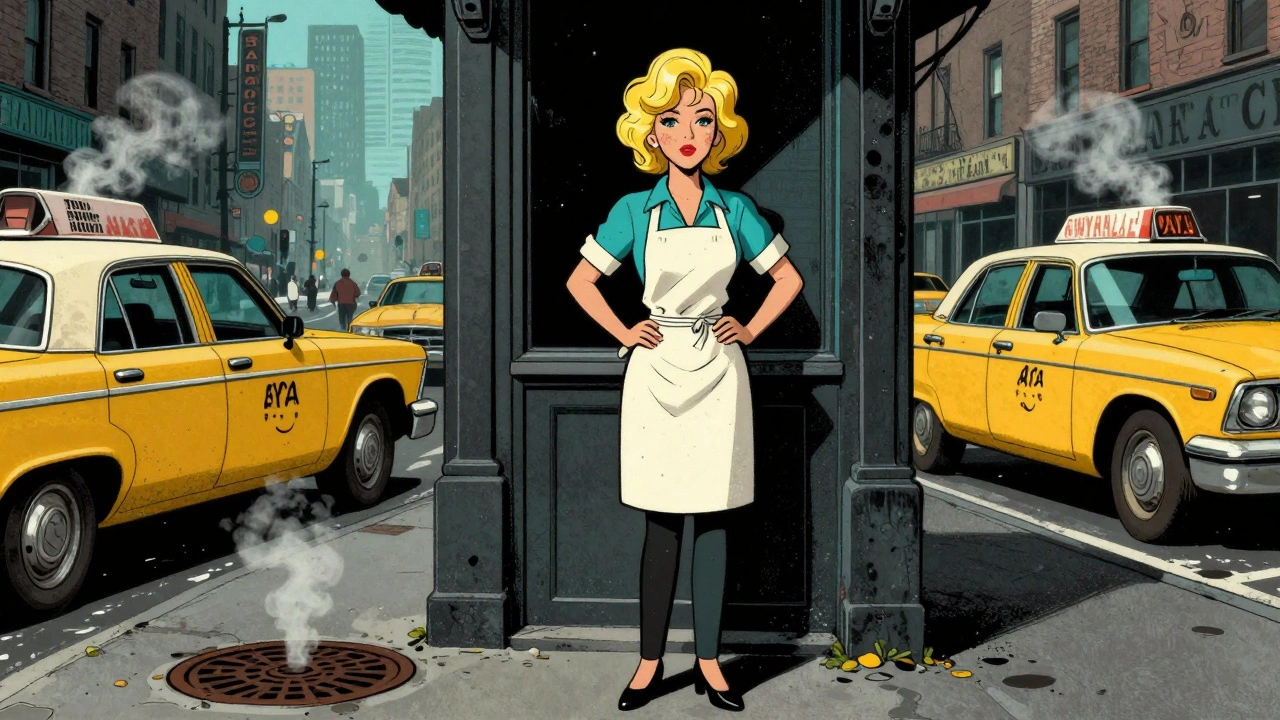

The Waitress Who Became an Icon
Before she was a global superstar, Debbie Harry is the lead singer of Blondie, known for her distinct vocals and commanding stage presence spent her days working as a waitress at Max's Kansas City. If you know anything about NYC in the 60s and 70s, you know that Max's wasn't just a restaurant-it was the epicenter of the underground. Harry wasn't just serving coffee; she was absorbing the energy of the Warhol crowd and the emerging avant-garde scene. She had already dipped her toes into music with a hippie band called Wind in the Willows, but that was a different era. She needed something sharper, something that matched the grit of the city.
Her meeting with Chris Stein is the guitarist and co-founder of Blondie who partnered with Harry to merge art-school concepts with rock music changed everything. Together, they moved through a few iterations, including a stint with The Stilettoes, before finally locking in the lineup that would become Blondie. Their approach was different from the typical punk band of the era. While others were trying to burn the house down, Harry and Stein were looking for a way to invite everyone into the party, provided the music was catchy enough.
Breaking the Punk Mold
When we talk about Punk Rock is a loud, fast, and aggressive form of rock music that emerged in the mid-1970s as a reaction against perceived excesses of mainstream music , we usually think of distorted guitars and shouting. Blondie started in that world, playing the legendary CBGBs in Manhattan. But they quickly realized that pure aggression has a ceiling. If you want to reach a million people, you need a hook. They began integrating New Wave is a genre of pop-rock that emerged in the late 70s, characterized by a more polished sound and the use of synthesizers elements, which allowed them to transition from the underground to the airwaves without losing their edge.
This transition wasn't an accident. It was a strategic move led by Harry's image and the band's versatility. They weren't afraid to lean into things that punk purists hated. They embraced disco, rap, and reggae. This musical agility is what allowed them to bridge the gap between the grit of the Bowery and the glitz of the disco ball. Have you ever wondered why some punk bands vanished after two albums while Blondie lasted decades? It's because they weren't afraid to evolve.
| Feature | Traditional Punk | Blondie's Approach |
|---|---|---|
| Sound Palette | Distorted guitars, raw vocals | Pop hooks, synths, diverse genres |
| Target Audience | Underground outcasts | Cross-over mainstream appeal |
| Vocal Style | Screaming / Monotone | Melodic, versatile, polished |
| Goal | Shock and disruption | Artistic evolution and hits |
Female Leadership in a Man's World
It's easy to look back now and see a female lead singer as normal, but in 1974, the dynamic was different. Most bands were structured as a group of guys with a girl as a decorative addition. Debbie Harry flipped that script. She wasn't just the voice; she was the image, the brand, and the driving force of the band's public identity. Her leadership was subtle but absolute. She managed to be an object of desire while maintaining total control over her artistry.
This female leadership paved the way for countless artists. By proving that a woman could lead a band through the transition from the underground to the Top 40, Blondie dismantled the idea that "feminine" music had to be soft or passive. Harry brought a cool, detached confidence to the stage that felt powerful. She wasn't asking for permission to be there; she was owning the space. This shifted the perspective of the industry, showing that female-led acts could be commercially viable without sacrificing their artistic credibility.
The Genre-Bending Experiment
If you listen to Blondie's discography, you'll notice they don't stay in one lane. This was their secret weapon. They didn't just play rock; they played everything. For example, their exploration of Disco is a dance-centric genre of music that peaked in popularity in the late 1970s allowed them to dominate dance clubs, while their interest in early rap music made them some of the first white artists to successfully integrate hip-hop elements into a pop song.
Think about the impact of their versatility. By blending Power Pop is a melodic style of rock music that emphasizes strong melodies and catchy choruses with a punk attitude, they created a sound that felt familiar yet fresh. They were essentially the original "mash-up" artists. They took the structure of a pop song and injected it with the spirit of New York's street culture. This wasn't just about making hits; it was an artistic experiment in how many different styles one band could master while still sounding like themselves.
From CBGBs to the World Stage
The journey from the tiny, dirty stage of CBGBs to international fame is a masterclass in branding. The band's name itself, Blondie, was a nod to Harry's look, but the music was far more complex than the label suggested. They used the tension between Harry's "pop star" appearance and the band's "punk" roots to create a magnetic attraction. People came for the look but stayed for the songs.
Their success proved that the "mainstream" didn't have to be boring. By bringing elements of the underground into the light, they forced the general public to engage with a more adventurous style of music. They didn't sell out; they expanded the definition of what a hit song could be. They showed that you could be an art-school experiment and a chart-topping sensation at the same time. This blueprint-the fusion of high art, street fashion, and accessible melody-is still used by pop stars today.
Did Blondie start as a punk band?
Yes, Blondie emerged from the New York punk scene of the mid-1970s and regularly performed at CBGBs. However, they quickly moved toward a New Wave sound, incorporating elements of pop, disco, and reggae to broaden their appeal.
Who was the driving force behind Blondie's sound?
While Debbie Harry provided the iconic voice and image, the band's sound was a collaborative effort, heavily influenced by guitarist Chris Stein's artistic vision and the band's collective desire to experiment with different genres.
How did Debbie Harry influence other female artists?
She broke the mold of the passive female singer by taking a leadership role in a rock band. Her blend of fashion, confidence, and musical versatility showed that women could lead a band through the transition from underground punk to mainstream success.
What is the difference between Punk and New Wave in Blondie's context?
Punk was the raw, aggressive starting point. New Wave was the more polished, melodic evolution that used synthesizers and structured pop songwriting to make their music accessible to a global audience.
Was Blondie's shift to the mainstream seen as selling out?
Some punk purists felt that way, but most critics see it as an intentional artistic evolution. By blending genres like disco and rap, they were innovating rather than just following a commercial formula.
What to Explore Next
If you're fascinated by how Blondie changed the game, you might want to look into the history of the CBGBs scene to see who else was playing those stages in 1975. You could also dive into the rise of synth-pop in the 80s to see how Blondie's New Wave experiments paved the way for the electronic music explosion. Finally, researching the "Riot Grrrl" movement of the 90s will show you the next evolution of female leadership in punk music.


