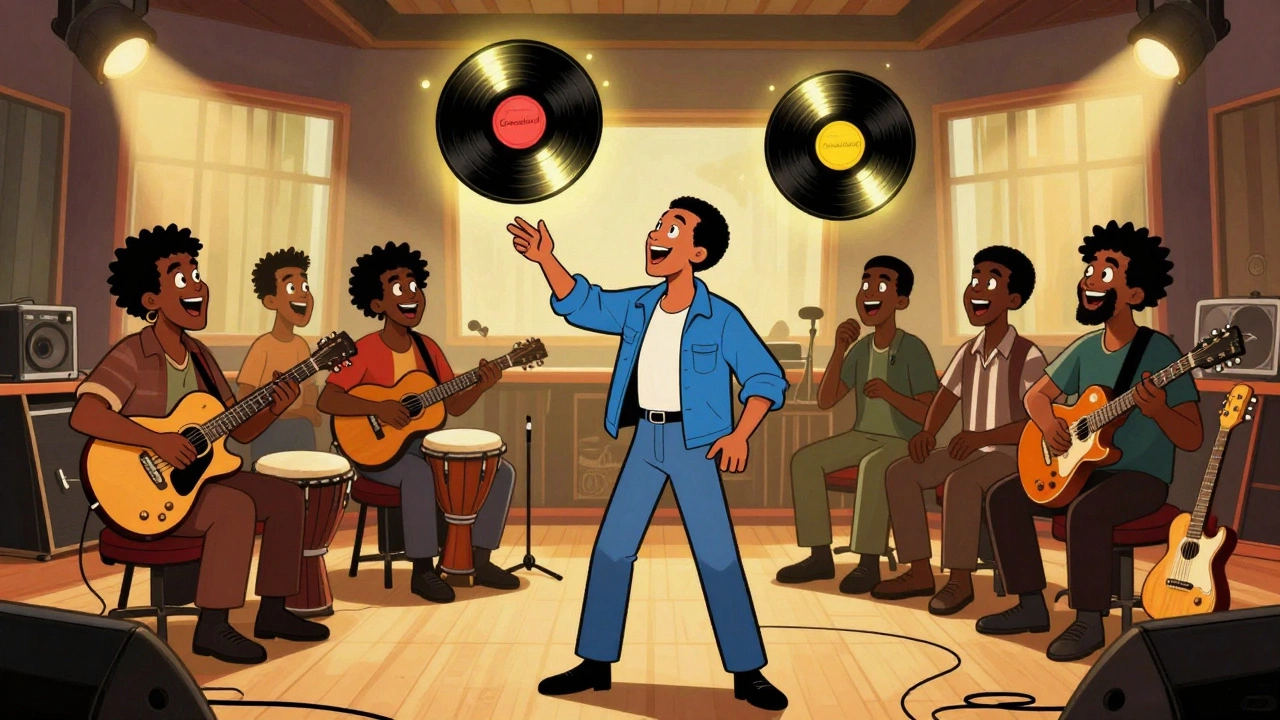

The 1980s didn’t just birth MTV and synth-pop-it also turned African music into a global force. Before this decade, African sounds were mostly heard in niche circles or as exotic background noise in Western films. But something shifted. Suddenly, radio stations in London, New York, and Berlin started playing songs with complex polyrhythms, soaring vocals in Wolof and Yoruba, and electric guitar lines that sounded like they’d been dipped in funk. This wasn’t a fluke. It was a perfect storm of star power, political tension, and raw musical innovation.
Paul Simon’s Graceland: The Breakthrough That Changed Everything
It all exploded with Graceland by Paul Simon. Released in 1986, the album sold over 14 million copies worldwide. It wasn’t just popular-it was unavoidable. The title track, with its twangy Americana, got attention. But the real magic was in songs like "Londonderry" and "You Can Call Me Al," built on rhythms from South African township bands. Simon didn’t just borrow these sounds-he recorded them live in Johannesburg with musicians like Ladysmith Black Mambazo, who sang in the tight, harmonized style of isicathamiya, and the bass-heavy grooves of mbaqanga.
What made it controversial? Simon broke a cultural boycott against apartheid-era South Africa. UNESCO and many activists called it betrayal. But for the musicians he worked with, it meant their music reached millions for the first time. They got paid. They toured. They recorded in studios with state-of-the-art gear. And for many, it was the first time their names appeared on international record sleeves.
The Other Architects of the African Soundwave
Simon wasn’t alone. Around the same time, Peter Gabriel teamed up with Senegalese singer Youssou N’Dour for the haunting duet "In Your Eyes." It wasn’t just a song-it was a bridge. N’Dour’s voice, powerful and fluid, carried the weight of West African oral tradition, while Gabriel’s production wrapped it in atmospheric synths and drums that felt familiar to Western ears.
Brian Eno traveled to Accra in 1981 to produce Edikanfo’s album The Pace Setters. He didn’t try to "fix" their sound-he recorded their live energy, letting the horns and talking drums ring out raw. Meanwhile, Ginger Baker, the legendary drummer of Cream, became a vocal champion of Fela Kuti, even helping to reissue his records in Europe. Fela’s Afrobeat-a fusion of Nigerian highlife, American funk, and jazz-was already huge in West Africa. But now, it found listeners in New York clubs and London punk dives.
The Rise of Juju, Afrobeat, and the Global Sound
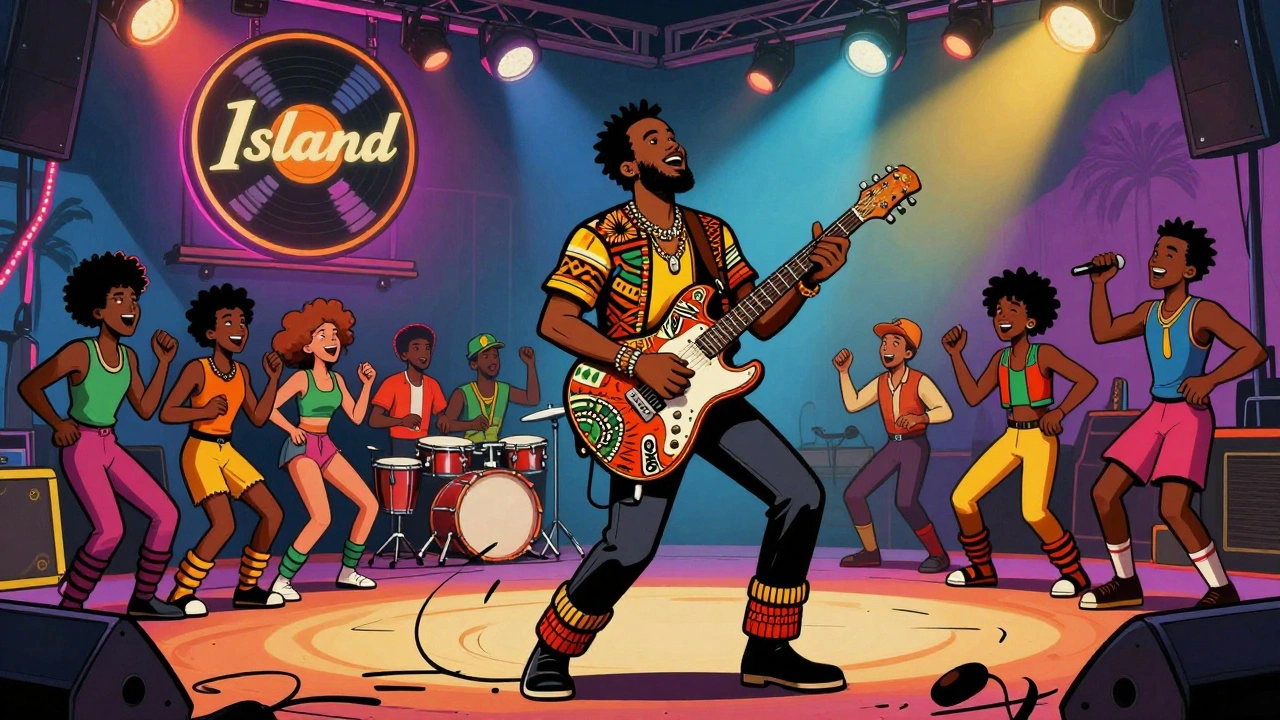
While Simon and Gabriel brought African music to pop charts, other artists were reshaping their own sounds with new tools. King Sunny Ade, Nigeria’s juju king, signed with Island Records in 1982 after Bob Marley’s death. Island saw a chance to replace Marley’s global appeal with another African superstar. Ade’s music, built on layered electric guitars and intricate talking drums, sounded like nothing else on the radio. His 1983 album Synchro System became the first African record to chart in the U.S. top 100.
Across the continent, Ali Farka Touré from Mali was blending desert blues with American slide guitar traditions. His music didn’t need translation-it felt like a cousin to Mississippi blues. And in Senegal, Youssou N’Dour was already a national icon before he ever set foot in a Western studio. His 1989 album Immigres fused Wolof poetry with synth-pop, making him one of the first African artists to truly break into mainstream European pop.
What Made African Music So Appealing?
Why did Western audiences connect so deeply? Because they heard echoes of their own music. The driving basslines in mbaqanga reminded people of Motown. The call-and-response vocals in isicathamiya sounded like gospel choirs. The polyrhythms of Afrobeat? That was James Brown with a new accent. African musicians weren’t copying Western styles-they were already working with them. They’d been listening to American R&B, funk, and jazz for decades. Now, with better recording gear and international labels, they were remixing those influences into something entirely new.
For the first time, African pop wasn’t just "traditional" or "folk." It was modern. Electric. Polished. A Nigerian juju band could now use a drum machine and still sound authentically African. A Malian guitarist could play a blues riff and make it his own. This wasn’t exoticism-it was evolution.
The Backlash: Appropriation or Collaboration?
But not everyone celebrated. Critics called it cultural theft. Paul Simon was accused of profiting from South African musicians while apartheid was still in place. Some argued that Western producers sanitized African music-removing its political edge, softening its rhythms, and turning it into feel-good pop. The term "World Music", coined in 1987, became a marketing label that lumped together wildly different traditions-from Senegalese mbalax to Congolese soukous-as if they were one thing.
And yes, the spotlight was uneven. While King Sunny Ade and Youssou N’Dour got record deals, countless other African artists remained unheard. The music industry picked a few stars and called them "the sound of Africa," ignoring the dozens of vibrant scenes in Lagos, Kinshasa, Abidjan, and Harare.
Still, the damage was mixed. On one hand, African musicians gained access to global studios, touring circuits, and royalties they’d never seen before. On the other, their music was often packaged as "exotic" rather than innovative. But even with these flaws, the door was cracked open-and African artists walked through it.
A Legacy That Still Echoes
Today’s Afrobeats explosion-from Burna Boy to Wizkid-didn’t come out of nowhere. It grew from the foundation laid in the 1980s. The same studios that recorded Graceland later produced early tracks by Senegalese and Nigerian artists who would become legends. The same radio stations that played N’Dour now stream Afrobeats playlists. The same labels that signed King Sunny Ade now scout talent in Lagos.
The 1980s didn’t just introduce African music to the West. It changed how the world thought about music itself. No longer was pop a one-way street from America and Europe to the rest of the world. For the first time, African artists weren’t just influences-they were equal partners. And that shift? It’s still rewriting the rules.


