
You hear it in the snap of a snare drum or the way a singer bends a note just before the chorus drops. It’s not just nostalgia; it’s structural DNA. If you’ve ever wondered why modern hits feel so smooth yet gritty, or why today’s biggest stars sound like they’re paying homage to an era they barely lived through, look no further than the 1990s R&B. This decade didn’t just add songs to the charts; it rewired the entire engine of mainstream music. The gap between Black radio formats and white pop consumption collapsed during these years, creating a blueprint that artists from The Weeknd to SZA still follow. We aren’t talking about vague vibes here. We are talking about specific production techniques, rhythmic templates, and vocal styles that turned hip-hop beats and soul harmonies into the default language of global pop.
The Blueprint: New Jack Swing and Hip Hop Soul
To understand where we are, you have to look at where the walls came down. In the late 1980s and early 1990s, New Jack Swing emerged as the first major hybrid, blending swing-style drum machine beats with R&B vocals and hip-hop sampling. Think Bell Biv DeVoe. Their hit "Poison" wasn’t just a song; it was a template. They described their sound as "Hip-hop Smoothed Out on an R&B Tip with a Pop Appeal," and that description became the industry standard. Before this, R&B and pop were distinct lanes. After this, they merged. By the mid-90s, producers like Sean Combs took this further, coining the term Hip Hop Soul. He worked with Mary J. Blige to frame emotional ballads with street-oriented rap textures. This wasn’t subtle. Academic analysis of crossover charts shows that between 1987 and 1990, the percentage of songs featuring rapped vocals jumped from roughly 7% to one-third. That rapid shift meant that by the time you heard Backstreet Boys or ’N Sync later in the decade, the R&B-derived harmonies and hip-hop rhythms were already baked into the product. Today’s pop acts don’t need to explain why they have a rapper feature or a syncopated beat. The groundwork laid by New Jack Swing made that expectation permanent.
Neo Soul: The Counter-Culture That Became Mainstream
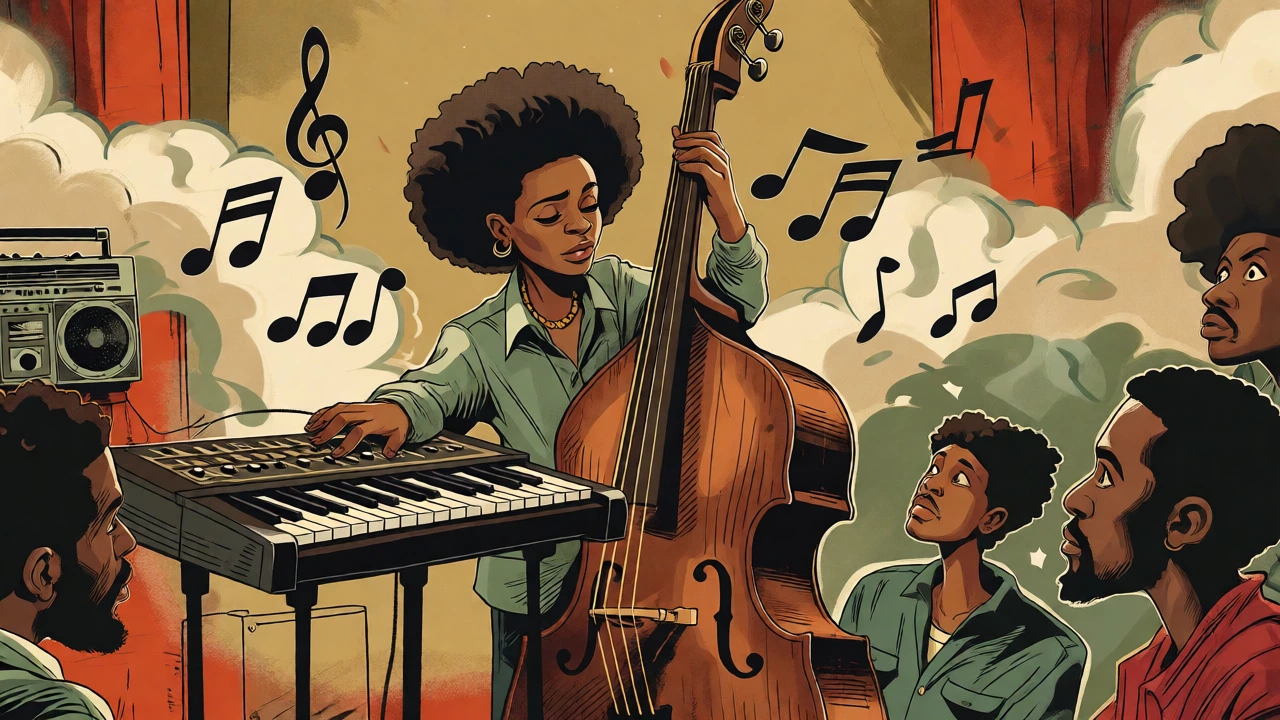
If New Jack Swing was about smoothing things out for mass appeal, Neo Soul was the reaction against it. Coined by executive Kedar Massenburg in the late 90s, this subgenre rejected the highly digitized, synthetic production of the time. Artists like D’Angelo, Erykah Badu, Maxwell, and Lauryn Hill went back to the roots. They brought in live instruments, warm analog sounds, and jazz-inflected chords. But here is the twist: they didn’t abandon hip-hop. They kept the rhythmic feel but wrapped it in classic soul warmth. This created a tension that defines contemporary soul today. You see it clearly in current artists who blend lo-fi beats with lush, organic instrumentation. Neo soul proved that you could be authentic and commercially viable simultaneously. Scholar Mark Anthony Neal noted that neo-soul helped redefine the boundaries of black pop, and he was right. When you listen to H.E.R. or Daniel Caesar now, you are hearing the direct descendants of albums like D’Angelo’s "Brown Sugar" or Lauryn Hill’s "The Miseducation of Lauryn Hill." These records showed that complexity and emotion could sell millions, a lesson that modern A&R teams take seriously every day.
Production Techniques That Never Died
Let’s get technical for a second, because the sound design of the 90s is literally everywhere. Producers like The Neptunes (Pharrell Williams and Chad Hugo) and Timbaland set precedents that dominate streaming playlists right now. They introduced stuttering kick patterns, sparse synth lines, and off-kilter rhythmic accents. Remember the dry, clicking snare in Nelly’s "Hot in Herre"? Or the bouncy, minimal beat in Britney Spears’ "Toxic"? Those are echoes of 90s innovation. Janet Jackson, working with Jimmy Jam and Terry Lewis, pioneered rhythmic intricacy that served as the foundation for most modern R&B. Her influence trickled down to TLC, Aaliyah, and Destiny’s Child, whose music became reference points for early-2000s pop.
| Subgenre | Key Characteristics | Modern Pop/Soul Echoes |
|---|---|---|
| New Jack Swing | Swing beats, heavy sampling, polished vocals | Boy band harmonies, teen pop structures |
| Hip Hop Soul | Rap verses, street textures, emotional ballads | Rapper features on pop hits, trap-soul blends |
| Neo Soul | Live instruments, jazz chords, analog warmth | Alternative R&B, indie soul, lo-fi aesthetics |
| Quiet Storm | Lush arrangements, slow jams, atmospheric | Mid-tempo pop ballads, cinematic soul |
This table isn’t just academic. It maps directly to what you hear on Spotify. The "quiet storm" aesthetic-those lush, atmospheric ballads-has returned in force. Artists like Adele or Sam Smith often use arrangements that mirror the dense, reverb-heavy production of 90s slow jams. Meanwhile, the hip-hop driven beats of the mid-90s evolved into the trap-influenced pop that dominates today. The binary choice 90s producers faced-lean smoother or harder?-is still the central decision in pop production.
Vocal Styles: Melisma and Harmony
It’s not just the beats. It’s the voices. The 1990s normalized melisma-the technique of singing multiple notes on a single syllable-as a standard pop skill. Mariah Carey and Whitney Houston had started this earlier, but the 90s R&B girls groups like TLC and SWV, along with soloists like Brandy and Monica, made intricate vocal runs accessible to younger audiences. Call-and-response arrangements, inherited from gospel and 70s soul, became standard in pop choruses. If you listen to Ariana Grande or Beyoncé today, their vocal phrasing is deeply rooted in this tradition. The expectation for vocal agility in pop singers skyrocketed because 90s R&B listeners demanded it. Radio stations played these complex performances alongside simple pop hooks, training the ear of a generation to appreciate technical skill. This raised the bar for everyone. You can’t just sing on pitch anymore; you need texture, runs, and harmony layers. That demand originated in the studios of Atlanta, New York, and Los Angeles during the Clinton era.
Cultural Crossover and Industry Shifts
Beyond the music, 1990s R&B changed how the industry works. It blurred the spatial politics of race in pop music. Before the 90s, there was a clear line between "Black radio" and "Top 40." Artists like Bell Biv DeVoe and later Boyz II Men erased that line. They sold millions to diverse audiences, proving that R&B was universal. This opened doors for racially diverse boy bands and girl groups that adopted R&B sounds but marketed themselves as pop. The success of TLC’s "CrazySexyCool" or Usher’s "My Way" showed that urban authenticity could drive global sales. Today, when a pop star collaborates with a producer like Pharrell or samples a 90s track, they are leveraging this established trust. The audience already knows the language. Furthermore, children’s TV shows like "All That" featured R&B guest stars, embedding these sounds in the childhood memories of millennials and Gen Z. This cultural saturation means that for many young listeners, 90s R&B isn’t retro; it’s foundational.
Why It Still Matters
We are living in an era of revivalism, but it’s more than just nostalgia. Current trends in UK garage and dance-pop, seen in Craig David’s recent resurgence, rely on recreating those 90s club sounds. The harmonic language developed then remains widely imitated because it works. It balances familiarity with surprise. Neo soul’s emphasis on authenticity continues to challenge the over-produced nature of some modern pop, pushing artists toward more organic sounds. At the same time, the rhythmic innovations of the Neptunes keep pop fresh. The debate among fans about whether modern R&B lacks the "depth" of the 90s misses the point: the depth is there, but it’s hidden inside the structure. The 90s didn’t just give us hits; they gave us the toolkit. Every melodic run, every syncopated beat, and every genre-blending collaboration in today’s charts owes a debt to that decade. If you want to understand the future of pop, you have to study its past, and that past is undeniably colored by 1990s R&B.
What exactly is New Jack Swing?
New Jack Swing is a subgenre of R&B that flourished from the late 1980s to the mid-1990s. It combines swing-style drum machine beats, hip-hop sampling, and R&B vocals. Pioneered by producers like Teddy Riley and groups like Bell Biv DeVoe, it served as a bridge between traditional R&B and the emerging hip-hop culture, heavily influencing later boy bands and teen pop acts.
Who coined the term "Neo Soul"?
The term "Neo Soul" was coined by record executive Kedar Massenburg in the late 1990s. He used it to market music that blended contemporary R&B with classic 1960s and 1970s soul elements, jazz, funk, and hip-hop rhythms. Artists like D’Angelo, Erykah Badu, and Maxwell are considered key figures in this movement.
How did 1990s R&B change pop music production?
1990s R&B introduced hip-hop influenced drum programming, syncopated rhythms, and layered vocal harmonies into mainstream pop. Producers like The Neptunes and Timbaland popularized minimalist yet rhythmically complex beats that became standard in pop and R&B. This shifted pop production away from purely acoustic or disco-based arrangements toward digital, sample-driven, and groove-centric structures.
Are modern pop singers influenced by 90s R&B?
Yes, extensively. Many contemporary pop stars, such as Ariana Grande, Beyoncé, and The Weeknd, cite 90s R&B artists as primary influences. They adopt vocal techniques like melisma, use similar chord progressions, and incorporate hip-hop beats into their pop tracks. The sonic landscape of modern pop is largely built upon the foundations laid by 90s R&B crossovers.
What is the difference between Hip Hop Soul and Neo Soul?
Hip Hop Soul, associated with producers like Sean Combs, integrates hard hip-hop beats and rap verses into R&B songs, emphasizing street credibility and emotional rawness. Neo Soul, conversely, reacts against highly produced R&B by reviving classic soul warmth, using live instruments, jazz chords, and analog production while maintaining hip-hop rhythmic sensibilities. Hip Hop Soul is more sample-heavy and aggressive; Neo Soul is more organic and musically complex.