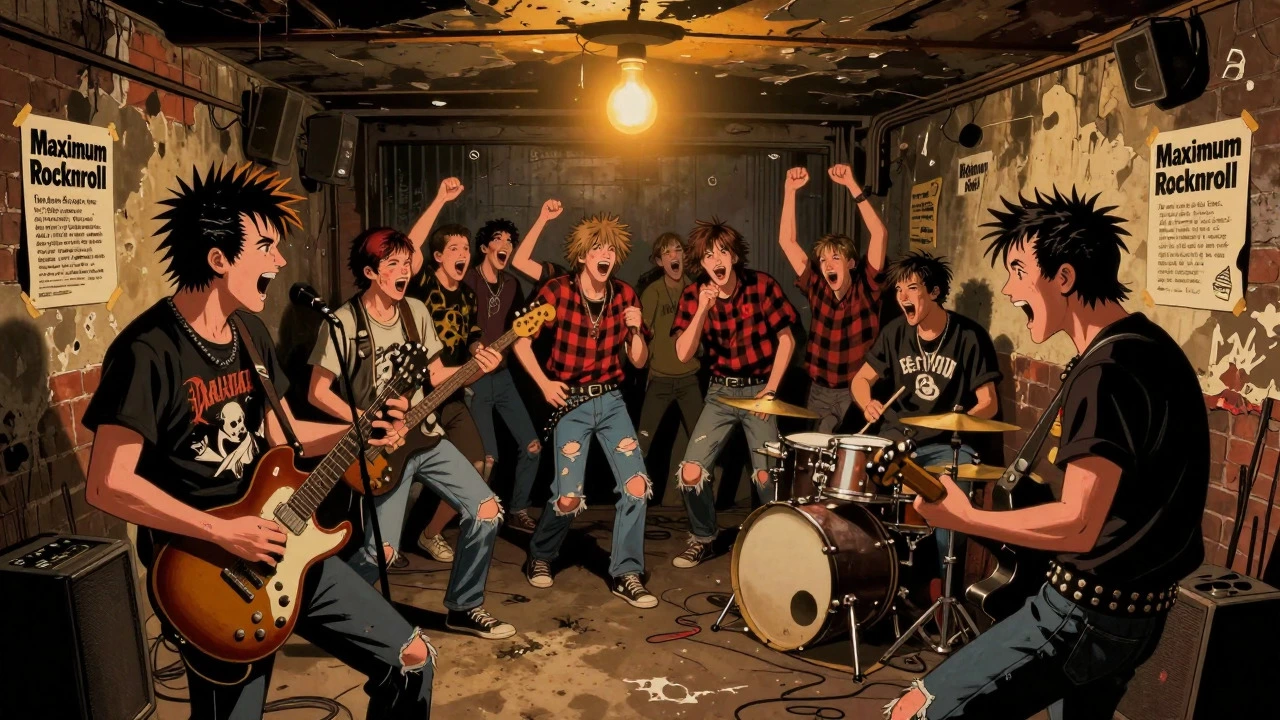

It is easy to look back at the mid-1990s and see a contradiction. You had bands wearing studded belts and playing three-chord songs that sounded like they were recorded in a garage, yet those same records were blasting from car stereos across America, topping the Billboard charts, and selling millions of copies. How did punk rock, a genre built on anti-corporate anger and do-it-yourself (DIY) independence, suddenly become the most popular style of music in the world? The answer isn't that punk sold out. It is that the industry changed around it, and the bands found clever ways to keep their credibility while riding the wave of mainstream success.
To understand this balance, you have to look at the infrastructure that existed before the radio hits. In the 1980s, punk was largely underground. Bands pressed small runs of vinyl-usually between 1,000 and 3,000 copies-on tiny independent labels because major record companies ignored them. They relied on direct sales at shows, mail-order catalogs, and volunteer labor. This wasn't just about saving money; it was an ethical stance. As scholar Brian Cogan noted, zines like Maximum Rocknroll framed punk as "honest music, not money making." This created a culture where authenticity was tied to economic marginalization. If you weren't struggling, were you still punk?
The Rise of Hybrid Independent Labels
The bridge between the basement scene and the top of the charts was built by a specific type of label: the large independent. These weren't major corporations like Warner Bros. or Sony, but they weren't bedroom operations either. They were run by musicians who understood the scene but wanted to scale up. Epitaph Records, founded by Bad Religion guitarist Brett Gurewitz in 1980, became the blueprint for this model. Other key players included Lookout! Records in Berkeley and Fat Wreck Chords, co-founded by NOFX's Fat Mike.
These labels allowed bands to grow without immediately signing away their souls to a major corporation. They used professional distribution networks and pressed CDs in much larger quantities than the old-school DIY imprints, but they kept the aesthetic and the control within the punk community. When the music industry realized that aggressive guitar music could be profitable following Nirvana’s breakthrough with Nevermind in 1991, these independent labels were already positioned to capitalize. They acted as intermediaries, proving to the mainstream that punk had a massive audience, all while maintaining a veneer of subcultural purity.
| Label Type | Key Examples | Primary Goal | Typical Pressing Run |
|---|---|---|---|
| Traditional DIY | Lookout! Records (early era) | Cultural preservation, community support | 1,000-3,000 units |
| Hybrid Independent | Epitaph Records, Fat Wreck Chords | Commercial growth while retaining artistic control | Hundreds of thousands to millions |
| Major Label | Reprise Records, Geffen Records | Mass market profitability | Millions (global distribution) |
Green Day: The Major Label Leap
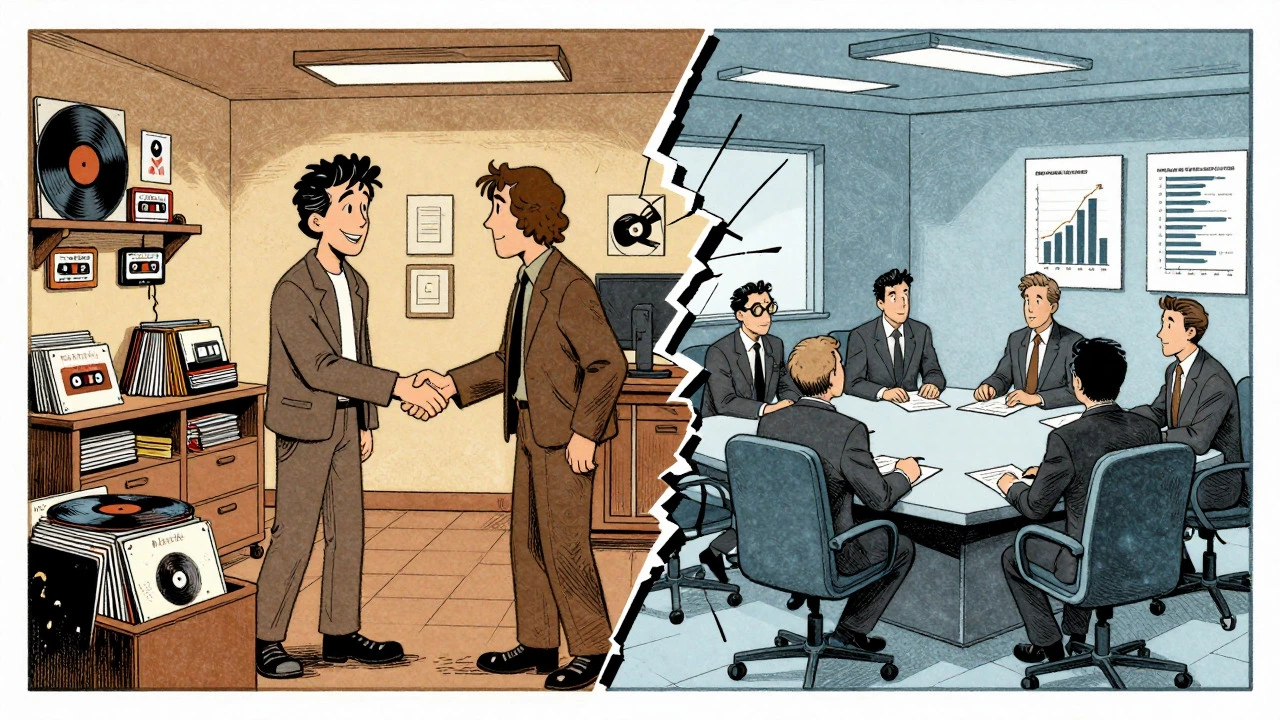
Green Day offers the clearest example of a band crossing the line from DIY to mainstream dominance. Before they were global superstars, they spent nearly a decade grinding in the Bay Area scene, centered around the 924 Gilman Street venue. Gilman was strictly DIY: no majors allowed, bands paid for their own stage time, and everyone pitched in. This environment honed their work ethic and songwriting. They released albums like 39/Smooth and Kerplunk! on Lookout! Records, building a cult following through relentless touring.
In 1993, they signed with Reprise Records, a Warner Bros. imprint. Producer Rob Cavallo helped them refine their sound for Dookie, which was released in February 1994. The album was a phenomenon. It featured simple power chords and lyrics about boredom and alienation that resonated with teenagers everywhere. Despite the major-label backing, Green Day retained their DIY markers: chaotic live shows, self-deprecating humor, and a visual style that looked ripped off rather than tailored. However, the move sparked intense backlash. Many in the Gilman community viewed it as a betrayal of the "anti-money" ethos. Yet, Green Day argued that they simply wanted to make music a full-time career, using the major label's resources to amplify a sound that was fundamentally rooted in their years of underground labor.
The Offspring and Rancid: Staying Independent
If Green Day showed how to use a major label, The Offspring proved you didn't need one. Their 1994 album Smash was released on Epitaph Records. It became the best-selling independent album of all time at that point, shifting millions of copies. The Offspring remained firmly embedded in Southern California skate-punk culture, and their success demonstrated that an independent label could orchestrate mainstream radio penetration without corporate oversight. This path preserved their street cred while achieving commercial heights that rivaled any major-label act.
Rancid took this a step further by deliberately refusing major-label offers. Even when approached by Madonna’s Maverick Records, they chose to stay with Epitaph. This decision earned them immense respect among hardcore fans who were skeptical of Green Day’s move. Rancid’s albums like ...And Out Come the Wolves received heavy rotation on MTV and radio, particularly for tracks like "Ruby Soho," but the band maintained creative autonomy. By staying independent, they avoided the narrative of "selling out" while still enjoying the financial stability and reach that came with hit records. Later, Tim Armstrong and Brett Gurewitz would launch Hellcat Records, an Epitaph imprint, further solidifying the infrastructure for punk bands to succeed on their own terms.
NOFX, Bad Religion, and the Pop-Punk Wave
Other bands navigated this tension differently. Bad Religion, despite having a founder who ran Epitaph, entered into distribution deals with Atlantic Records in the mid-90s for albums like Stranger Than Fiction. They balanced this by remaining anchored to the punk touring circuit and maintaining their intellectual, political lyrical edge. Meanwhile, NOFX stayed entirely on Fat Wreck Chords. Their 1994 album Punk in Drublic became a landmark release, deeply embedded in skateboard and surf communities, showing that niche cultural alignment could drive massive sales without compromising DIY principles.
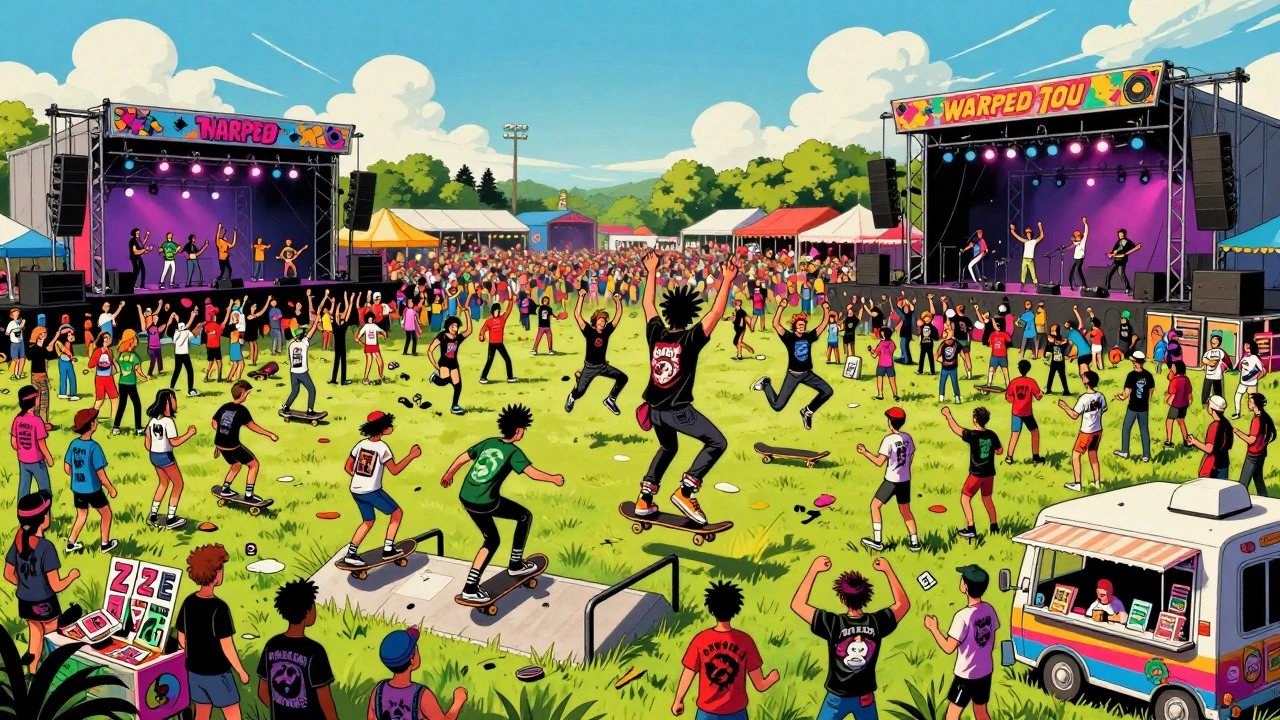
By the late 1990s, the wave had shifted toward pop-punk, led by bands like Blink-182. The Warped Tour, founded in 1995, played a crucial role here. It institutionalized a DIY-style festival format-multiple stages, skate culture, zine vendors-but combined it with corporate sponsorship and mass marketing. This created a pipeline where new artists could gain exposure to wide audiences while still participating in the rituals of the punk scene. The result was a genre that felt accessible to mainstream radio but retained enough stylistic cues-fast tempos, melodic hooks, casual fashion-to satisfy the core fanbase.
The Authenticity Debate
Throughout the 1990s, the question of authenticity was constantly negotiated. Scholars describe this as an "ambivalent relationship" to mass culture. Bands sought to critique commercial circuits even as they participated in them. For fans, authenticity wasn't just about the music; it was about perceived motives. Was the band in it for the art, or for the profit? This concept, known as "economic authenticity," meant that bands who appeared disinterested in money-even if they were making lots of it-were viewed more favorably.
Community reactions were mixed. Some fans credited Green Day and The Offspring with introducing them to deeper, more political punk scenes. Others argued that major-label pop-punk diluted the genre's original anger. But ultimately, the 1990s punk revival succeeded because it offered multiple paths. You could sign to a major label after years of DIY grind, stay on a large independent, or refuse corporate offers entirely. Each path had its trade-offs, but all allowed the music to reach a wider audience while keeping the DIY spirit alive in some form. The legacy of this era is not a single story of compromise, but a complex web of strategies that proved punk could be both underground and ubiquitous.
Did Green Day sell out when they signed to Reprise Records?
Whether Green Day "sold out" is a matter of perspective. From a strict DIY viewpoint, signing to a major label like Reprise was a betrayal of anti-corporate ethics. However, many argue that their hard work in the Gilman Street scene gave them the leverage to negotiate favorable terms. They maintained their musical style and chaotic live energy, suggesting they used the major label's resources to amplify their existing sound rather than change it for commercial appeal.
What was the role of Epitaph Records in the 1990s punk boom?
Epitaph Records, founded by Brett Gurewitz, served as a hybrid independent label that bridged the gap between underground DIY and mainstream success. It released landmark albums like The Offspring's Smash and Rancid's ...And Out Come the Wolves. By handling distribution and production at a larger scale while remaining artist-owned, Epitaph proved that punk bands could achieve massive commercial success without signing to major corporate labels.
How did the Warped Tour contribute to punk's mainstream success?
The Warped Tour, launched in 1995, created a traveling festival platform that exposed new pop-punk and skate-punk bands to large audiences. It combined DIY elements like multiple stages and vendor areas with corporate sponsorships and professional promotion. This structure helped institutionalize punk as a viable touring genre and provided a pipeline for bands like Blink-182 to reach mainstream radio listeners.
Why did Rancid choose to stay with Epitaph instead of signing to a major label?
Rancid refused major-label offers, including one from Madonna's Maverick Records, to maintain artistic autonomy and preserve their credibility within the punk community. Staying with Epitaph allowed them to keep control over their music and image, earning them significant "street cred" among fans who valued independence. Despite this choice, they still achieved substantial radio play and sales.
What is "economic authenticity" in the context of 1990s punk?
Economic authenticity refers to the perception that a band is not primarily motivated by profit or market values. In the 1990s punk scene, bands were judged by their perceived honesty and commitment to DIY ethics. Even if they made money, maintaining an appearance of disinterest in commercial gain helped them retain legitimacy among core fans who valued anti-corporate ideals.