
Before August 1, 1981, if you wanted to know what a rock band looked like, you had to buy their album, read a magazine interview, or hope they toured your city. You heard the music on the radio, but the face behind the sound was often a mystery. Then MTV launched at 12:01 a.m. Eastern time with The Buggles' "Video Killed the Radio Star," and everything changed overnight. Suddenly, looking good wasn't just a bonus; it was a survival skill. The channel didn't just play songs; it turned musicians into characters. For many bands in the 1980s, this meant completely rebuilding who they were. They realized that in a world of constant rotation, a strong visual identity was worth more than technical perfection alone.
The Shift from Sound to Spectacle
Think about how we consume media today versus then. Back in 1981, MTV reached only about 2.1 million cable households. By 1984, that number exploded to over 24 million viewers. This massive reach forced record labels to treat music videos not as afterthoughts, but as primary marketing tools. The budget for a video became as important as the studio time for the song itself. Andrew Goodwin, a cultural theorist, noted in 1988 that artists faced a tricky balance: they had to look spectacular enough for television while still feeling authentic enough for hardcore fans. If you failed at either, you vanished.
This new reality created a specific problem for traditional rock acts. Heavy metal, for instance, was loud, aggressive, and sometimes intimidating. How do you make that accessible to a suburban teenager watching TV in their living room? You don't change the guitar riffs; you change the packaging. Bands started treating their appearance as a brand asset. Every hair flip, every leather jacket, and every camera angle reinforced a specific idea. It wasn't just about being famous; it was about being instantly recognizable within seconds of a clip starting.
Duran Duran and the Cosmopolitan Cool
No group understood this better than Duran Duran. While American rockers were still figuring out the medium, these British newcomers arrived with a polished, cinematic style that felt tailor-made for the screen. Their videos weren't just recordings of them playing instruments; they were short films featuring exotic locations, high-fashion styling, and a sense of international adventure. Simon Le Bon and his bandmates sold a lifestyle-travel, romance, and cosmopolitan cool-that appealed to millions who would never set foot in London.
Their strategy proved that you could sell an attitude rather than just a genre. Critics called their visuals "glitzy" and "effortlessly sexy," which was exactly what MTV needed to attract advertisers and young viewers. By embracing the visual medium, Duran Duran became one of the first true MTV superstars. They showed that a band could be successful by being aspirational figures, much like movie stars, rather than just musical performers. This opened the door for other acts to prioritize aesthetics without losing commercial viability.
Glam Metal: Turning Aggression into Accessibility
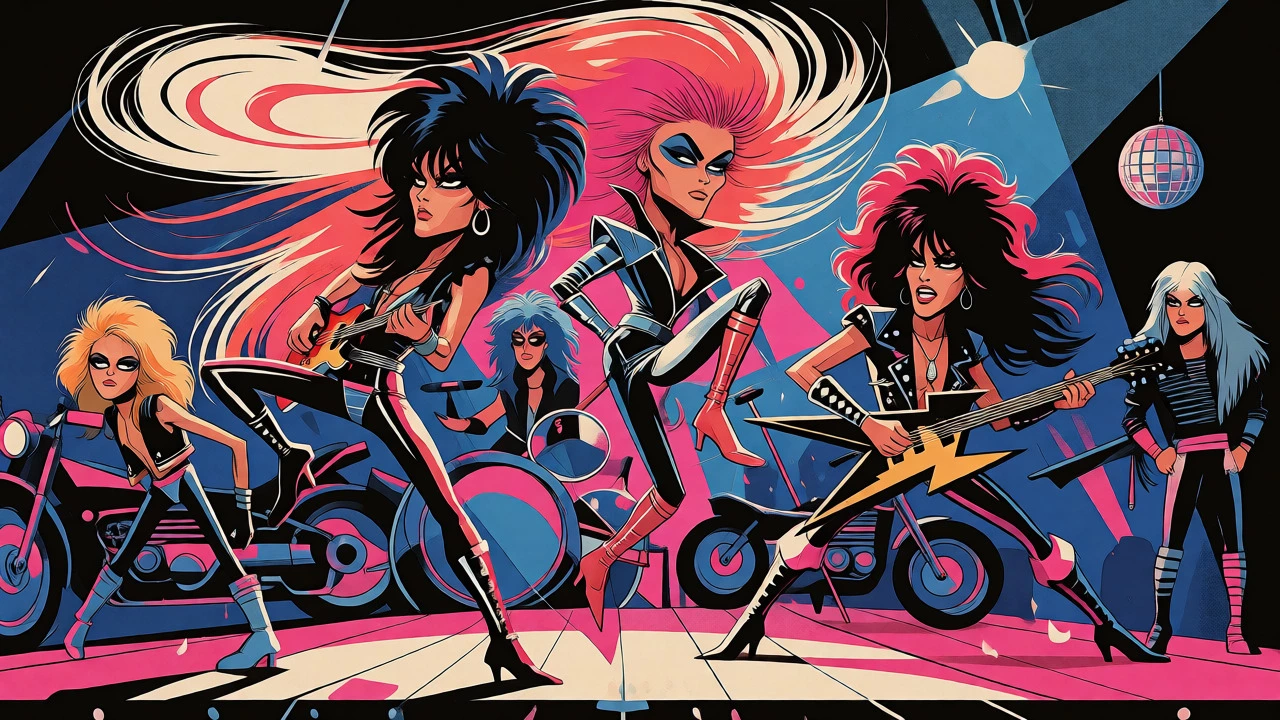
If Duran Duran represented the sophisticated side of MTV reinvention, Glam Metal bands took the concept to its loudest, most flamboyant extreme. Groups like Mötley Crüe, Poison, and Twisted Sister faced a challenge: heavy metal was sonically complex and often visually dark or aggressive. To fit the bright, fast-paced world of MTV, they transformed their image entirely.
They adopted huge hairstyles, heavy makeup, spandex, and bright colors. This wasn't just vanity; it was a translation tool. The exaggerated masculinity mixed with feminine-coded styling made the music less intimidating and more playful. A scholarly analysis of this era notes that these bands used party narratives, motorcycles, and choreographed swagger to turn heavy music into pop culture spectacle. Bon Jovi managed to appear rugged yet romantic, while Def Leppard offered arena-scale theatricality. The result was a massive commercial boom in the mid-to-late 1980s.
However, this strategy had a downside known as the "quick burn effect." Because MTV played these videos on repeat, audiences consumed the image rapidly. Bands could go from unknown to overexposed in months. The visual novelty wore off faster than the musical talent could sustain interest, leading to a sharp decline when grunge arrived in the early 1990s. But for a few years, glam metal dominated because they mastered the art of being "camera ready."
Reinventing Authenticity: Springsteen and Dire Straits
Not every reinvention involved changing genres or adding glitter. Some established artists used MTV to refine their existing personas. Take Bruce Springsteen. He was already known as the "Boss," a working-class hero with incredible live energy. His 1984 video for "Dancing in the Dark" didn't try to make him a pop star. Instead, it placed him on a black stage, performing directly to the camera, and even pulled actress Courteney Cox from the audience. It was a staged version of his live authenticity, edited for television.
Dire Straits took a different approach with "Money for Nothing" in 1985. Directed by Steve Barron, the video used crude computer-generated animation, a technology previously reserved for corporate logos. The clip featured animated characters alongside the real band members, creating a surreal commentary on rock stardom and television itself. This move shifted Dire Straits' identity from a conventional British guitar group to pioneers of digital innovation. They won Video of the Year, proving that technological novelty could become part of a band's core brand.
Gender, Sexuality, and Visual Ambiguity
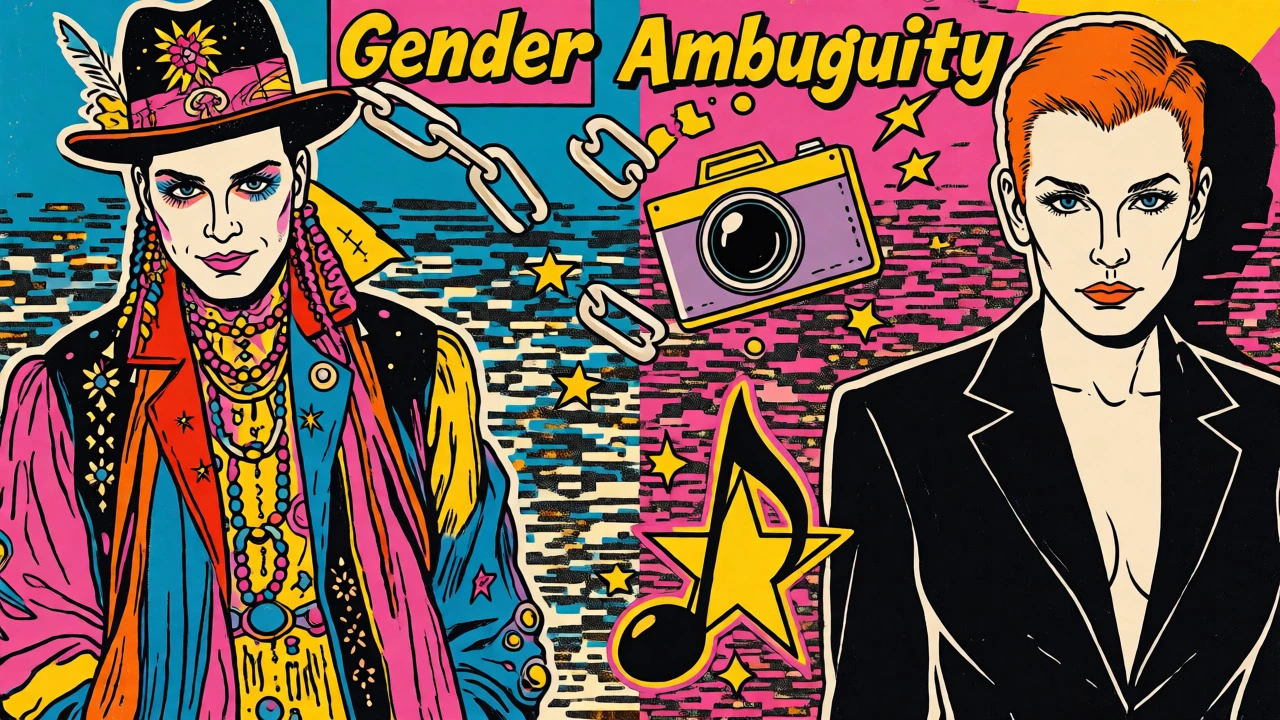
MTV also expanded what was acceptable for male rock stars. Before the 1980s, rock masculinity was often rigid. The new visual landscape allowed for ambiguity. Boy George of Culture Club used gender-fluid fashion and makeup to stand out. Annie Lennox of Eurythmics presented a sharply controlled androgyny that challenged norms. These performers used their looks to create distinct, memorable characters that stood out against the sea of standard rock tropes.
Glam metal bands further blurred these lines. They retained the power chords and lyrics associated with heterosexual male dominance but wrapped them in tight clothes and long hair. This created a commercially useful tension: performers could appear dangerous and comic simultaneously. It allowed younger viewers to engage with rock culture without feeling alienated by traditional machismo. However, this visual freedom came with criticism. Detractors argued that the focus on "big hair" and makeup overshadowed musical integrity, a debate that continues in music journalism today.
The Racial Gatekeeping of Early MTV
We can't talk about MTV's influence without addressing who was left out. Despite its claim to be a universal channel for youth culture, early MTV programming heavily favored white, guitar-oriented rock. Record executives reportedly rejected Michael Jackson's early videos because they didn't fit the network's narrow definition of "rock." It wasn't until CBS executive Walter Yetnikoff threatened to pull all his label's artists that the barrier began to crack.
When "Billie Jean" finally aired, it didn't just break a racial barrier; it demonstrated the power of the medium to redefine genre boundaries. Jackson's fully choreographed, cinematic style commanded the same mass attention as any rock band. This forced MTV to broaden its playlist to include R&B, funk, and hip-hop. For rock bands, this shift meant competing in a more diverse visual marketplace, where charisma and production value mattered more than just having a guitar.
Legacy of the Visual Franchise
By the end of the 1980s, a successful rock act was no longer just a recording and touring unit. It was a visual franchise. The hairstyles, clothes, gestures, and video directors became independent drivers of sales and recognition. Peter Gabriel's "Sledgehammer" used stop-motion animation to win nine MTV Video Music Awards, proving that artistic craft could rival raw performance. Van Halen's David Lee Roth used direct, high-energy displays to dominate the screen.
The 1980s taught the music industry that visibility is a form of musicianship. Bands that failed to adapt their image struggled, regardless of their musical talent. Those that embraced the medium, whether through glam excess, cinematic polish, or technological innovation, secured their place in history. MTV didn't just broadcast music; it redesigned the very concept of what it meant to be a rock star.
| Band/Genre | Visual Strategy | Key Attributes | Outcome |
|---|---|---|---|
| Duran Duran (New Wave) | Cosmopolitan Cinema | Fashion, Exotic Locations, Polished Look | Became first global MTV superstars; sold lifestyle |
| Mötley Crüe/Poison (Glam Metal) | Flamboyant Spectacle | Huge Hair, Makeup, Party Narratives | Massive mainstream appeal; rapid rise and fall |
| Bruce Springsteen (Heartland Rock) | Edited Authenticity | Live Energy, Direct Camera Contact, Relatability | Expanded audience to younger/female demographics |
| Dire Straits (Rock) | Tech Innovation | CGI Animation, Surreal Humor | Modernized image; won Video of the Year |
| Culture Club (Pop/Rock) | Gender Ambiguity | Theatrical Styling, Androgyny | Distinct brand identity; crossed genre barriers |
Did MTV really kill radio?
No, radio remained crucial for audio discovery. However, MTV became the primary driver for visual branding and single promotion. Songs with strong videos received significantly more airplay and sales than those without, making the video a critical component of a hit record's success.
Why did glam metal bands wear makeup?
Makeup and flamboyant styling helped translate aggressive heavy metal into a format that was visually accessible and entertaining for television audiences. It softened the intimidation factor of hard rock and created a distinct, memorable silhouette that stood out during rapid video rotations.
Was MTV biased against Black artists initially?
Yes. Early MTV programming focused almost exclusively on white rock acts. It took significant pressure from record executives, including threats from CBS Records, before Michael Jackson's "Billie Jean" received regular rotation, eventually opening the door for other Black artists.
How did music videos affect album sales?
Videos acted as powerful advertisements. A compelling video could introduce a band to millions of people who might not have heard their radio singles. This exposure often translated directly into higher album sales, as seen with Born in the U.S.A. and Thriller, though correlation does not always equal causation due to other market factors.
What happened to these image-focused bands in the 1990s?
Many glam metal and highly stylized pop-rock bands struggled when grunge emerged. Grunge promoted a "slacker" aesthetic that rejected the polish and excess of the 1980s. Bands that couldn't adapt their image or music lost relevance quickly, demonstrating the volatility of trend-driven fame.