

It feels like just yesterday we were blasting Michael Jackson’s "Thriller" or dancing to Whitney Houston’s "I Will Always Love You." But for the families and business partners behind these giants, the music never really stopped-it just changed form. Today, managing the legacy of a 1980s icon isn't just about keeping the songs playing on the radio. It is a high-stakes financial operation involving billion-dollar catalog sales, complex estate battles, and controversial hologram tours that bring the dead back to the stage.
If you think an artist's career ends when they retire or pass away, you are missing half the story. The real work begins then. From Prince to Bruce Springsteen, the strategies used to protect and monetize their life's work reveal a new economy built on nostalgia, technology, and legal maneuvering.
What is legacy management in the music industry?
Legacy management refers to the post-peak or posthumous control, monetization, and curation of an artist's rights, including songs, recordings, image, likeness, trademarks, and biographical stories. It involves estates, labels, and specialist funds working together to turn cultural icons into enduring financial assets and branded experiences.
The Business of Memory: Understanding Music Estates
When an icon dies without a clear plan, chaos often follows. Look at Prince, who died on April 21, 2016, without a will. His estate became a legal nightmare overseen by Comerica Bank until 2017. This lack of structure forced his family into difficult positions, eventually leading to significant portions of his economic interests being sold to outside investors.
In contrast, Michael Jackson's estate was formally established after his death on June 25, 2009. Co-executors John Branca and John McClain took charge, managing his publishing catalog, Mijac Music (founded in 1980), alongside recorded masters and theater productions like "MJ: The Musical." This structured approach allowed them to negotiate massive deals, such as the 2024 agreement with Sony Music Group valued between $1.2 billion and $1.5 billion for half of his publishing and recorded masters.
Then there is Whitney Houston, whose estate entered a partnership in 2019. Her family sold 50% of her assets-including music royalties, merchandising, and name rights-to Primary Wave Music in a deal valued at roughly $14 million. By 2022, reports indicated this move had quadrupled the estate's earnings. These examples show that how an estate is set up directly impacts its financial health and creative control.
Catalog Sales: The Billion-Dollar Boom
Over the last few years, we have seen a frenzy of catalog sales. Artists and estates are selling their songwriting and recording rights for staggering sums. Why? Because old songs make steady money. In early 2022, catalog music (defined as older than 18 months) accounted for roughly 73% of U.S. recorded-music consumption. That is a huge chunk of streaming revenue coming from tracks released decades ago.
Bruce Springsteen made headlines in December 2021 when he sold his entire recorded-music and songwriting catalog to Sony Music Entertainment for approximately $500 million. This included 20 studio albums from 1973 to 2020. It was recognized by Guinness World Records as the largest publishing/catalogue sale by a musician at the time. Similarly, Bob Dylan sold his entire songwriting catalog of roughly 600 songs to Universal Music Publishing Group in late 2020 for more than $300 million, possibly reaching $400 million.
These aren't just cash grab moves; they are strategic financial decisions. For living artists like Springsteen and Dylan, it provides liquidity and tax advantages. For estates, it ensures the artist's work remains promoted and licensed effectively by major corporate players with deep pockets.
| Artist/Estate | Buyer | Deal Value (Approx.) | Type of Rights Sold |
|---|---|---|---|
| Bruce Springsteen | Sony Music Entertainment | $500 million | Full recorded music & songwriting catalog |
| Bob Dylan | Universal Music Publishing Group | $300-$400 million | Full songwriting catalog (~600 songs) |
| Michael Jackson Estate | Sony Music Group | $1.2-$1.5 billion (for 50%) | 50% of publishing & recorded masters |
| Whitney Houston Estate | Primary Wave Music | $14 million (total value) | 50% stake in all assets |
Primary Wave: The New Power Broker
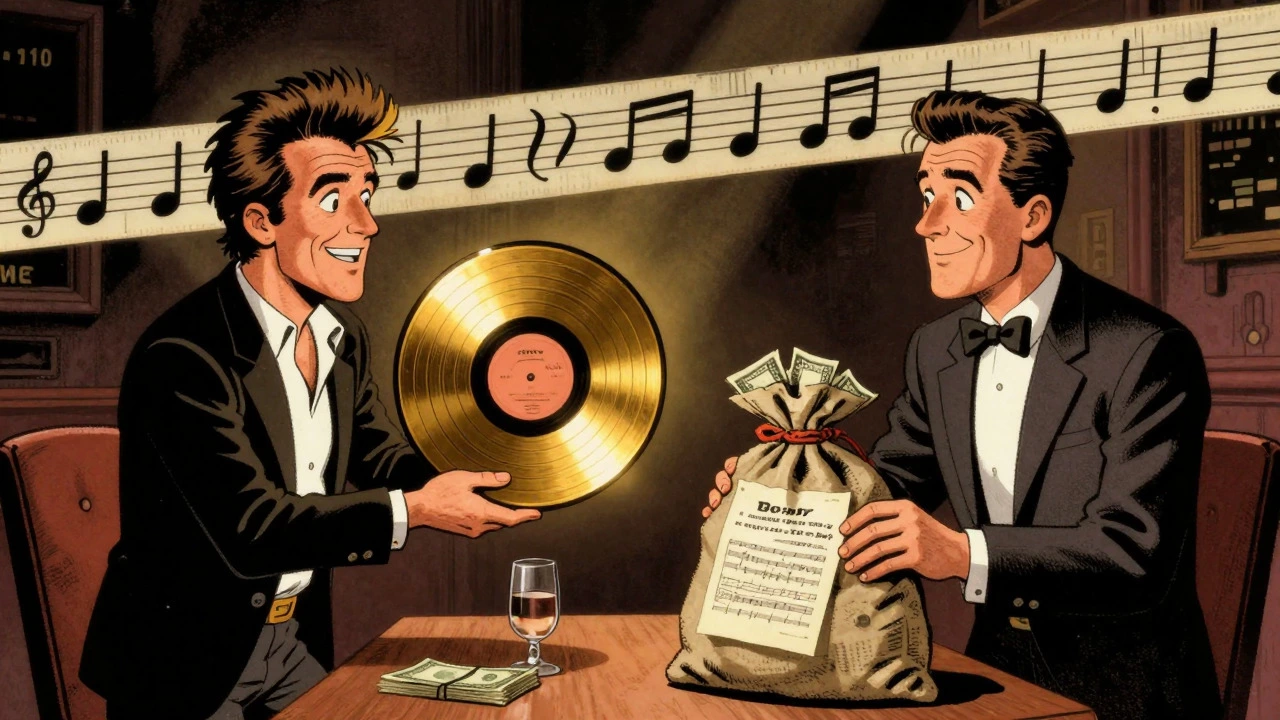
You cannot talk about legacy management today without mentioning Primary Wave Music. Founded in January 2006 by former Virgin Records CEO Larry Mestel in New York City, Primary Wave has become a central player in this ecosystem. Unlike traditional publishers that focus on sheet music, Primary Wave acts as a brand manager for estates.
Their model is different. Instead of buying out heirs completely, they typically take 25-50% stakes in partial acquisitions. This allows families to get immediate cash while retaining long-term royalty streams. Primary Wave then uses its infrastructure to boost sync licensing (getting songs into movies and TV shows), merchandising, and branding projects.
Consider the James Brown estate. In December 2021, Primary Wave acquired its assets-including music rights, real estate, and name/image-for about $90 million. The deal was structured to support Brown’s charitable trust "in perpetuity." More recently, in 2026, Primary Wave announced partnerships with the estates of Eartha Kitt (March 19, 2026) and Donna Summer (June 10, 2026). This expansion shows they are moving beyond just rock and pop into cabaret and disco, proving their model works across genres.
Larry Mestel himself noted in a June 2024 interview that "buying a catalogue is the easy part." The hard part is patient investment and brand development. They treat an artist's name not just as a source of royalties, but as a lifestyle brand that can span hotels, fragrances, and digital experiences.
Holograms: Bringing Icons Back to Stage
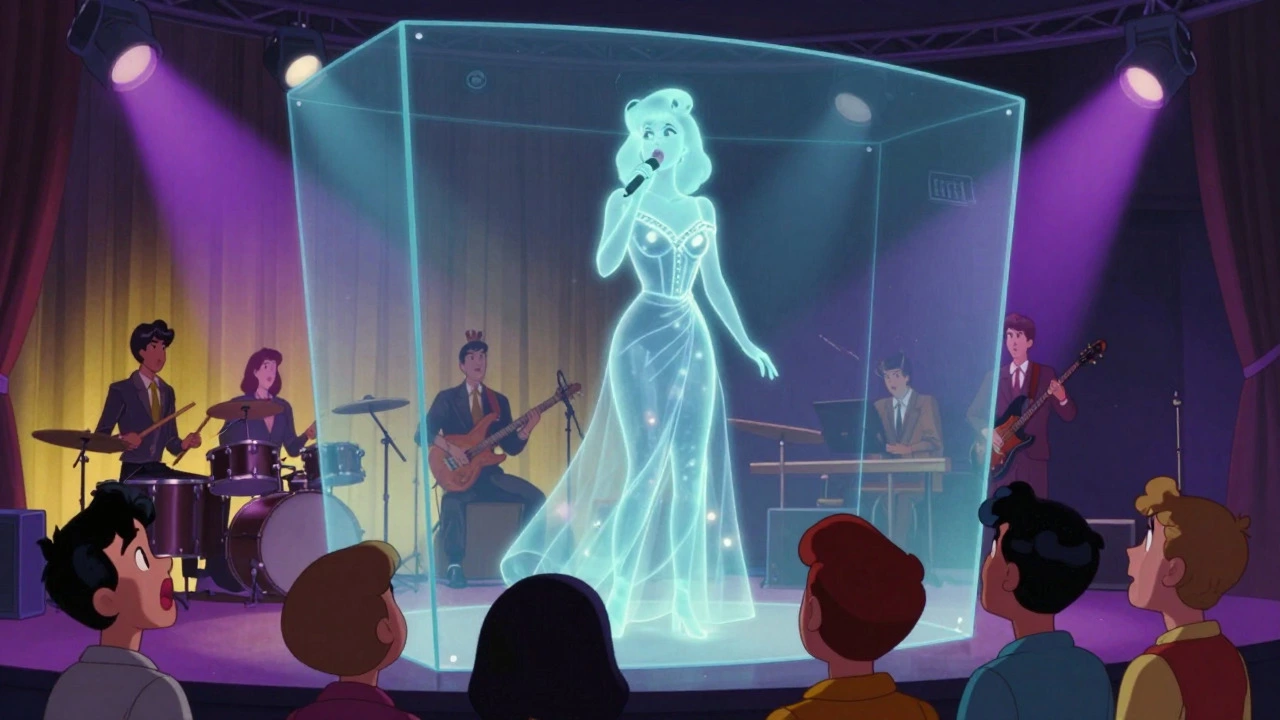
This brings us to the most controversial aspect of modern legacy management: hologram performances. Companies like Base Hologram (now Base Xperiential) and effects houses like Digital Domain use advanced projection technology to create the illusion of live performances by deceased artists.
The most prominent example for an 1980s icon is "An Evening with Whitney: The Whitney Houston Hologram Tour." Sanctioned by the Whitney Houston estate and produced by Base Hologram, it began in Sheffield, England on February 25, 2020, and later ran a residency in Las Vegas until May 31, 2022. The show used a live band and dancers on stage with a Houston likeness projected onto a nearly invisible scrim. This wasn't true volumetric holography, but a modernized version of the 19th-century Pepper’s Ghost illusion technique, combined with CGI and hundreds of hours of archival footage.
Similarly, Base Hologram mounted "In Dreams: Roy Orbison In Concert" in 2018. Licensed from Orbison’s family, the tour visited 28 cities across the U.S. and Canada, allowing fans to see the late singer (who died in 1988) perform decades after his passing. While technically impressive, these shows raise ethical questions. Are we honoring the artist, or exploiting their image?
Critics argue that reducing complex figures like Whitney Houston-who struggled publicly with addiction and privacy issues-to a "pristine, highly rendered" digital performance sanitizes their history. Fans have mixed reactions too. Some marvel at the technology, feeling thrilled to "see" their heroes again. Others find it unsettling, preferring the honesty of recorded audio and video.
Full Sales vs. Partnerships: Choosing a Path
So, what should an estate choose? Selling everything outright or partnering with a firm like Primary Wave? Each path has trade-offs.
- Full Sales (e.g., Springsteen, Dylan): You get a massive lump sum upfront. However, you lose control over future licensing decisions. Sony or Universal decides where your songs appear next. You also give up any potential upside if the catalog becomes even more valuable later.
- Partnerships (e.g., Whitney Houston, Prince): You retain some ownership and voting power. In Prince's case, his non-selling heirs still hold a majority interest (58%), meaning estate committees approve major decisions like biopics or tours. You get professional marketing help and access to sync opportunities, but you share the profits and cede some creative direction to the partner.
For hologram tours specifically, arrangements usually operate under license rather than outright acquisition of image rights. Base Hologram negotiates multi-year licenses with estates for specific territories. This means the estate retains ultimate ownership of the likeness, but grants temporary permission for commercial use. This contrasts with one-off festival appearances, like the famous 2012 Coachella Tupac hologram created by Digital Domain, which was a single event rather than an ongoing touring property.
The Future of Legacy Management
As we look ahead, the trend is clear: legacy management is becoming more sophisticated and expansive. We are seeing deals extend to artists from the 1960s and 1970s, not just the 1980s. Primary Wave’s recent moves with Phil Lynott’s estate (Thin Lizzy) and Donna Summer indicate this widening scope.
At the same time, ethical debates will intensify. As more estates consider hologram tours, questions about consent, cultural memory, and the role of heirs in shaping an artist's posthumous image will grow louder. Will religious views or personal wishes be respected? Or will financial incentives override artistic integrity?
Ultimately, the success of these strategies depends on balancing financial optimization with authenticity. Fans want to feel connected to the artist's true spirit, not just a polished product. Transparent estate governance, like that seen in Prince’s court-supervised process, and curated projects that respect documented wishes are key. Companies like Primary Wave and Base Xperiential continue to refine the business and technology of turning songs, stories, and images from the 1980s into 21st-century cultural assets. Whether you view this as preservation or exploitation, one thing is certain: the music-and the money-is here to stay.
Why are music catalogs so valuable right now?
Catalogs are valuable because older songs generate consistent streaming revenue. In 2022, catalog music accounted for about 73% of U.S. recorded-music consumption. Investors see these libraries as stable, low-risk assets compared to the unpredictability of new releases.
What is the difference between a hologram and Pepper’s Ghost?
True holograms record light fields to create 3D images viewable from multiple angles. Most concert "holograms," like those for Whitney Houston or Tupac, actually use Pepper’s Ghost-a 19th-century illusion technique using reflective glass or scrims to project 2D video onto a stage, creating the appearance of a 3D figure.
Did Primary Wave buy Prince's entire estate?
No. Primary Wave holds approximately 42% of the Prince estate’s economic interests. The remaining 58% is held by his siblings and other heirs, allowing the family to retain majority control over major decisions regarding his legacy.
How much did Bruce Springsteen sell his catalog for?
Bruce Springsteen sold his entire recorded-music and songwriting catalog to Sony Music Entertainment for approximately $500 million in December 2021. This was recognized as the largest publishing/catalogue sale by a musician at the time.
Are hologram tours profitable for estates?
Yes, they can be highly profitable. Tours like "An Evening with Whitney" sold out dates in Europe and Las Vegas, generating significant ticket revenue and boosting merchandise and streaming numbers. However, they require substantial upfront investment in technology and production.