
Imagine it’s 1986. You’re listening to a rock station in Boston, and suddenly, instead of just guitar riffs, you hear rapid-fire rhymes from three guys in leather jackets. That was the moment Run-DMC and Aerosmith smashed through the wall between genres. But how did rap go from being played only in clubs or on college radio to topping the Billboard charts? The answer isn’t complex technology or marketing genius; it was something much simpler: a catchy hook.
In the 1980s, hip-hop faced a massive barrier. It had energy, style, and culture, but mainstream radio programmers didn’t know how to fit it into their existing playlists. Enter the "pop partnership." By teaming up with established pop or rock acts, hip-hop artists borrowed familiar musical structures-specifically strong choruses and hooks-to make their new sound palatable to a wider audience. This strategy transformed hip-hop from a niche subculture into a global commercial force.
The First Crack in the Wall: Blondie’s “Rapture”
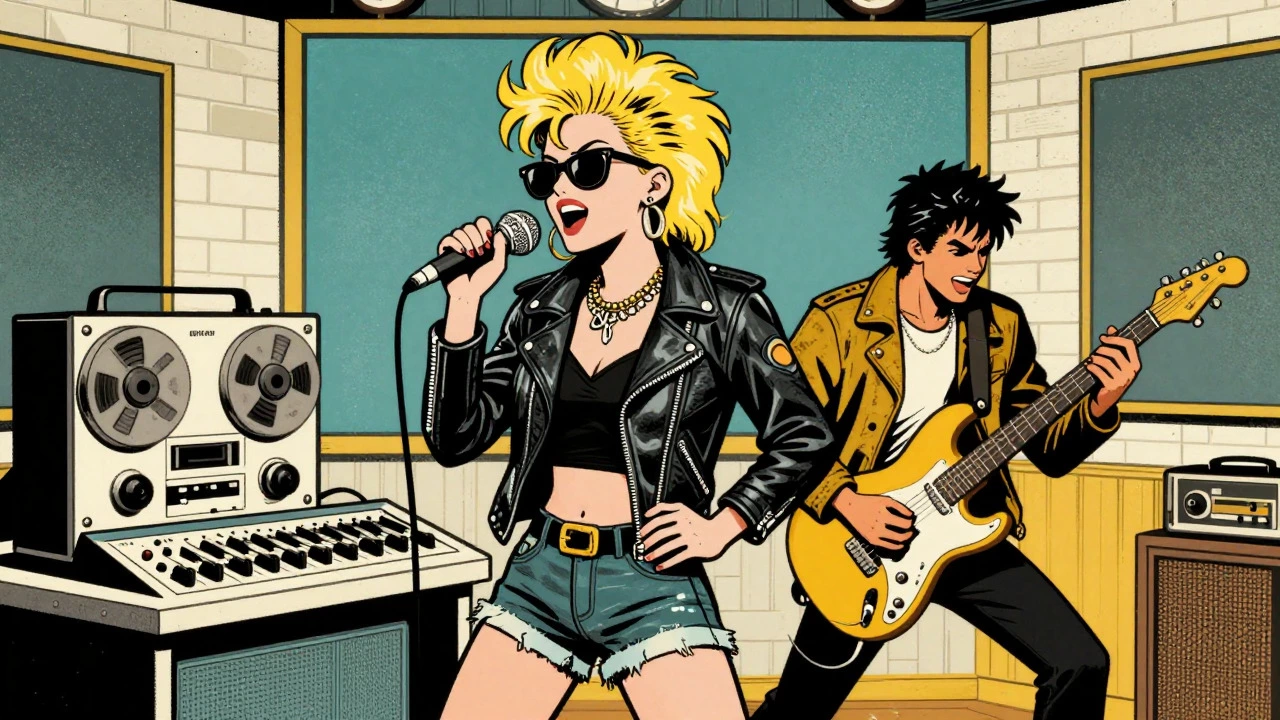
Before Run-DMC made headlines, a punk-pop band from New York City had already opened the door. In early 1981, Blondie, led by vocalist Deborah Harry, released Rapture. At first glance, it looked like a standard new-wave track with a driving bassline and a memorable melody. But tucked inside the verses was something radical: rap.
Harry and guitarist Chris Stein wrote the song after absorbing influences from New York’s downtown club scene. They knew that if they wanted to introduce rap to people who listened to Top 40 radio, they couldn’t just drop a raw rap verse over silence. They needed an anchor. So, they built the song around a conventional pop chorus. Listeners were anchored by the familiar, singable hook, which made the subsequent rap section feel less like a shock and more like an exciting variation.
The result was historic. On March 28, 1981, Rapture hit No. 1 on the Billboard Hot 100. It became the first U.S. No. 1 single to feature rap vocals. While Sugarhill Gang’s Rapper’s Delight (1979) is often credited with introducing rap to the masses, Rapture proved that a pop act could successfully integrate rap cadences without losing its core audience. The song shipped one million copies in the U.S., earning Gold certification from the RIAA. For radio programmers, this was proof of concept: if a proven hit-maker like Blondie could include rap, maybe other stations should too.
The Decisive Break: Run-DMC and Aerosmith’s “Walk This Way”
If Rapture was a whisper, Walk This Way was a shout. Released on July 4, 1986, this collaboration between Run-DMC and Aerosmith is widely considered the most pivotal moment in hip-hop’s mainstream acceptance. Produced by Rick Rubin, the track took Aerosmith’s 1975 classic and grafted Run-DMC’s rap verses onto it.
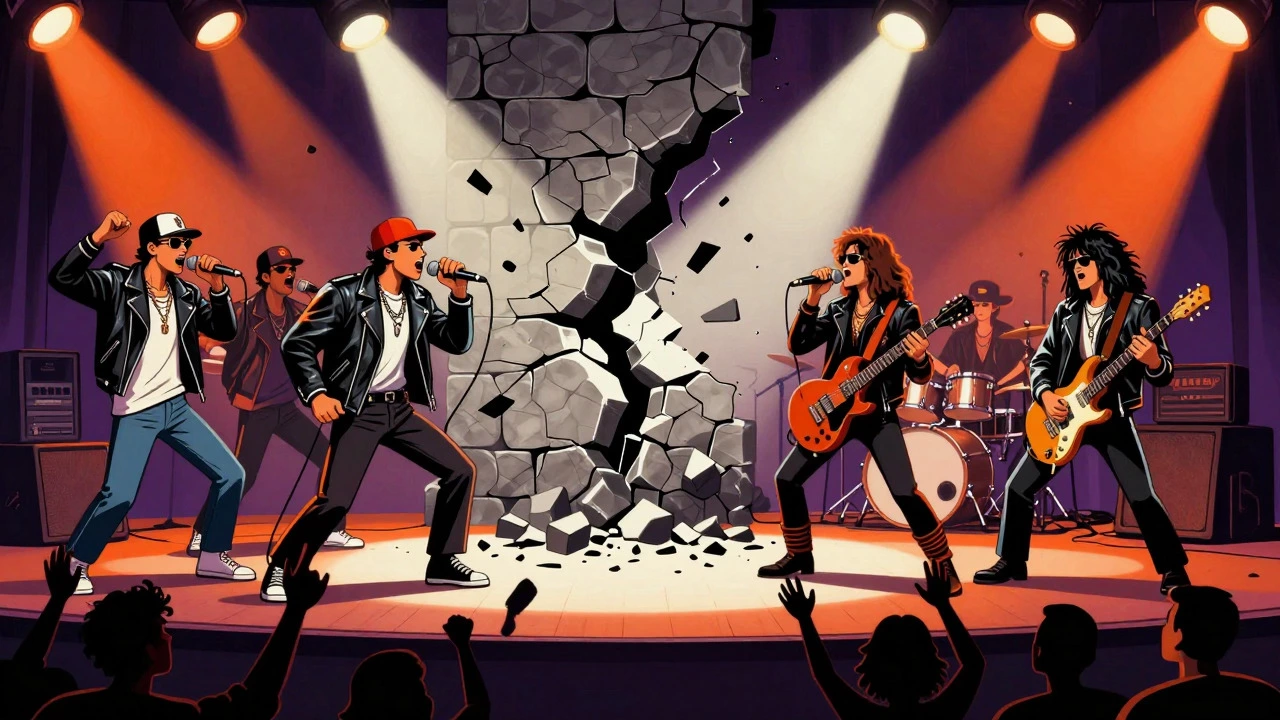
The genius lay in the structure. Aerosmith’s original riff and chorus were instantly recognizable to rock fans. When those listeners heard the song, they weren’t encountering an alien genre; they were hearing a favorite song with a new twist. Meanwhile, hip-hop fans got to see their heroes sharing the stage with rock legends. The video reinforced this message visually: Steven Tyler smashing a wall separating the two groups symbolized the breaking down of genre barriers.
The commercial impact was immediate and staggering. The single climbed to No. 4 on the Billboard Hot 100, becoming the first rap song to break into the Top 10. More importantly, it changed how radio worked. WBCN, a major rock station in Boston, played Walk This Way as the first rap song in its history. Once that dam broke, other rock and pop stations followed suit. MTV, which had rarely shown rap videos, placed the clip in heavy rotation, exposing hip-hop aesthetics to millions of viewers who previously only saw it in documentaries or news segments.
Why Hooks Were the Key to Reach
Why did these specific songs work while others didn’t? It comes down to cognitive accessibility. In the mid-1980s, the average American listener had limited exposure to hip-hop. If a song started with a dense, complex rap flow, many listeners would tune out before understanding the rhythm or language. A strong pop hook solves this problem.
Hooks serve as memory anchors. When a listener hears a familiar melody, their brain relaxes. They feel safe. By placing rap verses after or between these melodic sections, producers created a bridge. The listener enters through the door of familiarity (the hook) and steps into the room of innovation (the rap). This structural choice allowed hip-hop to retain its rhythmic complexity and lyrical density while remaining accessible to a broad audience.
This strategy also benefited the commercial side of the music industry. Labels could market these tracks to multiple demographics simultaneously. Rock fans bought the record for the guitar work and the name recognition; pop fans bought it for the catchy chorus; hip-hop fans bought it for the authenticity of the rap group. This cross-pollination led to massive sales figures that pure genre records rarely achieved at the time.
| Song | Year | Artists | Chart Peak (US) | Key Impact |
|---|---|---|---|---|
| Rapture | 1981 | Blondie | No. 1 | First No. 1 single featuring rap vocals |
| Walk This Way | 1986 | Run-DMC & Aerosmith | No. 4 | First rap song in Billboard Top 10; opened MTV and rock radio |
Commercial Consequences and Industry Shifts
The success of these partnerships didn’t just change what we listened to; it changed how the music business operated. Before 1986, rap albums struggled to achieve platinum status. Raising Hell, the Run-DMC album featuring Walk This Way, became the first rap album to go triple platinum in the United States, shipping over three million copies. This financial success signaled to record executives that hip-hop was not a fad but a viable, profitable genre.
For the partner acts, the benefits were equally significant. Aerosmith’s career had been stagnant in the mid-1980s. Following the collaboration, their 1987 album Permanent Vacation sold ten times as many copies as its predecessor. The association with hip-hop rejuvenated their image, making them seem current and relevant to a younger demographic. Similarly, while Blondie’s Rapture was their last U.S. No. 1, it cemented their legacy as innovators willing to take risks that paid off commercially.
Radio programming models also shifted permanently. Programmers realized that call-out research (phone surveys asking listeners about their favorite songs) showed high acceptance for rap tracks with strong hooks. This data gave station managers the confidence to add more hip-hop to their rotations, creating a feedback loop where increased airplay led to higher chart positions, which led to even more airplay.

Criticism and Cultural Tensions
Not everyone was thrilled about these crossovers. Within the hip-hop community, there was a valid concern that partnering with white rock stars might dilute the culture or signal a "sell-out" to mainstream tastes. Many purists felt that hip-hop should stand on its own merits, not lean on rock credibility to gain acceptance. Run-DMC members themselves have admitted they initially feared Walk This Way might ruin their reputation.
However, hindsight reveals that these tensions were part of the growth process. The collaborations forced a dialogue between communities that had previously ignored each other. By using the rock vocabulary to validate Black-led genres in rock markets, these songs created a shared cultural space. As journalist Geoff Edgers noted, Walk This Way "big-banged" hip-hop into being as mainstream entertainment, integrating it into film, fashion, and politics in ways that purely underground releases never could.
The Legacy of Hook-Driven Crossovers
The strategies pioneered in the 1980s set the template for decades of genre-blending. From Vanilla Ice’s Ice Ice Baby in 1990 to modern collaborations between hip-hop stars and pop divas, the formula remains: use a familiar melodic hook to lower the barrier to entry for a new rhythmic or lyrical style. Today, genre boundaries are fluid, and listeners expect variety. But in 1981 and 1986, that variety was revolutionary.
These partnerships remind us that artistic innovation often requires strategic compromise. By embracing the structure of pop music, hip-hop artists didn’t lose their identity; they expanded their reach. The hooks and choruses served as invitations, welcoming millions of new listeners into a world that was previously closed off. That initial welcome changed the trajectory of popular music forever, ensuring that hip-hop would become not just a genre, but a dominant cultural force.
What was the first No. 1 song to feature rap vocals?
Blondie's "Rapture," released in 1981, is widely recognized as the first song to reach No. 1 on the Billboard Hot 100 while featuring rap verses. It peaked at No. 1 on March 28, 1981.
Why did Run-DMC and Aerosmith collaborate on "Walk This Way"?
Producer Rick Rubin proposed the idea to blend the two genres. The goal was to use Aerosmith's recognizable rock riff and chorus to introduce Run-DMC's rap style to a mainstream rock and pop audience, effectively bridging the gap between the two fanbases.
How did these partnerships affect radio programming?
The success of these tracks proved that hip-hop could perform well on mainstream stations. Stations like WBCN began playing rap songs, and MTV added rap videos to heavy rotation, leading to a permanent expansion of hip-hop's presence in media.
Did the artists face criticism for these collaborations?
Yes, particularly within the hip-hop community. Some fans and artists worried that collaborating with rock stars would be seen as a sell-out or would dilute the authenticity of hip-hop. However, the commercial success ultimately validated the move.
What role did music videos play in these crossovers?
Music videos were crucial, especially for "Walk This Way." The visual element of Steven Tyler smashing the wall between the bands symbolized the breaking of genre barriers. MTV's heavy rotation of the video exposed hip-hop aesthetics to a massive new audience that might not have tuned in for the audio alone.