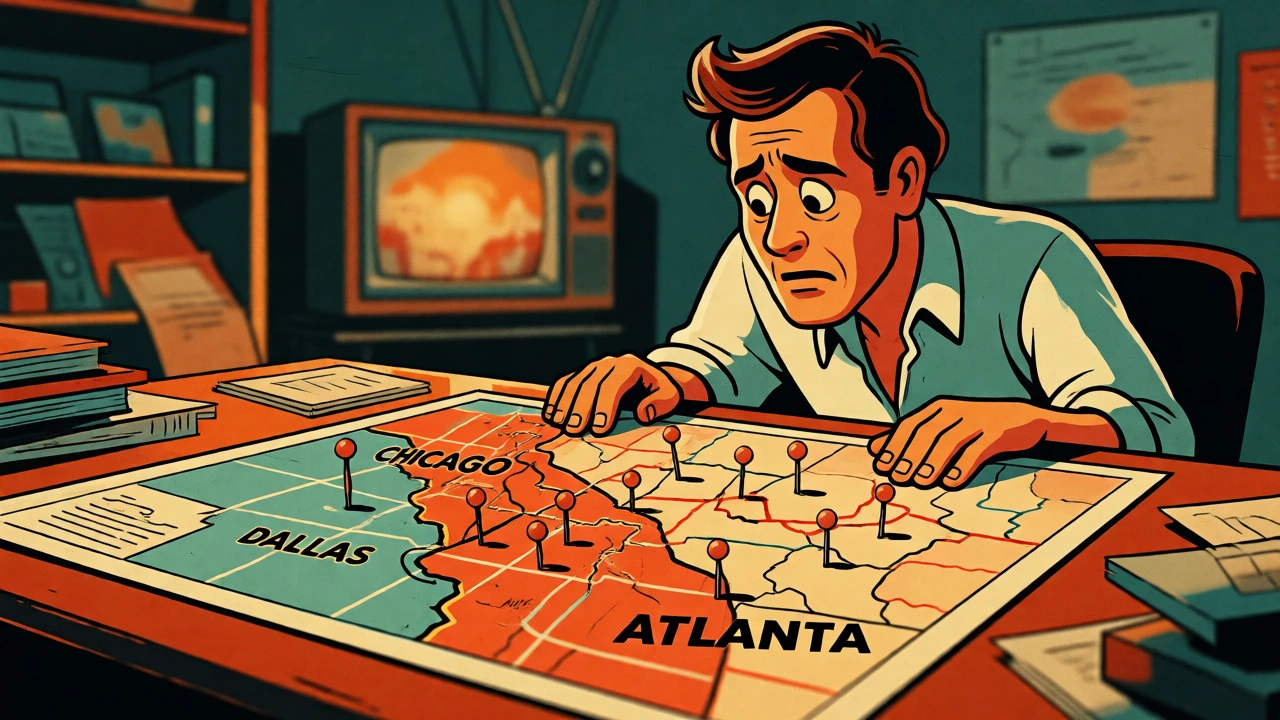

Imagine you are a band manager in 1983. You have a great new single, but your tour bus is empty in three key markets: Chicago, Dallas, and Atlanta. The fans there don't know who you are yet. In the 1970s, you would have sent a van full of flyers and relied on radio DJs to spin your record. But by the mid-1980s, the game had changed completely. Live television became the most powerful tool for selling tickets. It wasn't just about playing songs; it was about proving that your band could deliver an experience worth paying for.
The shift happened fast. Before MTV launched on August 1, 1981, touring was often seen as a money-loser by record labels. Costs were rising, and attendance was inconsistent. Labels started cutting tour budgets because they didn't see the return on investment. Then, television stepped in. Suddenly, a band could perform once in New York or London, and millions of people in cities they hadn't visited yet would see them. This visual proof created demand before the truck even arrived at the venue.
The Rise of Visual Proof
Why did this work so well? Because music is increasingly visual. A radio spot tells you what a song sounds like. A live TV performance shows you what the artist looks like, how they move, and whether they have energy. For promoters, this was gold. If a viewer saw a band looking cool and energetic on screen, they were more likely to buy a ticket when that band came to town.
MTV played the biggest role here. Initially reaching only 2.1 million households, its audience exploded to roughly 22 million by 1984. It functioned as a national publicity department. VJs didn't just introduce videos; they gave out tour dates, interviewed artists, and replayed clips from recent concerts. This repetition built familiarity. By the time the tour hit a specific city, the local audience already felt like they knew the band.
But it wasn't just about playing pre-recorded videos. True live performances on TV carried extra weight. They proved authenticity. In an era where lip-syncing scandals were common, seeing a band play live-even if the audio was slightly sweetened-built credibility. It told the audience: "This isn't a studio trick. We can do this in front of you."
Case Study: U2 and the Power of One Show
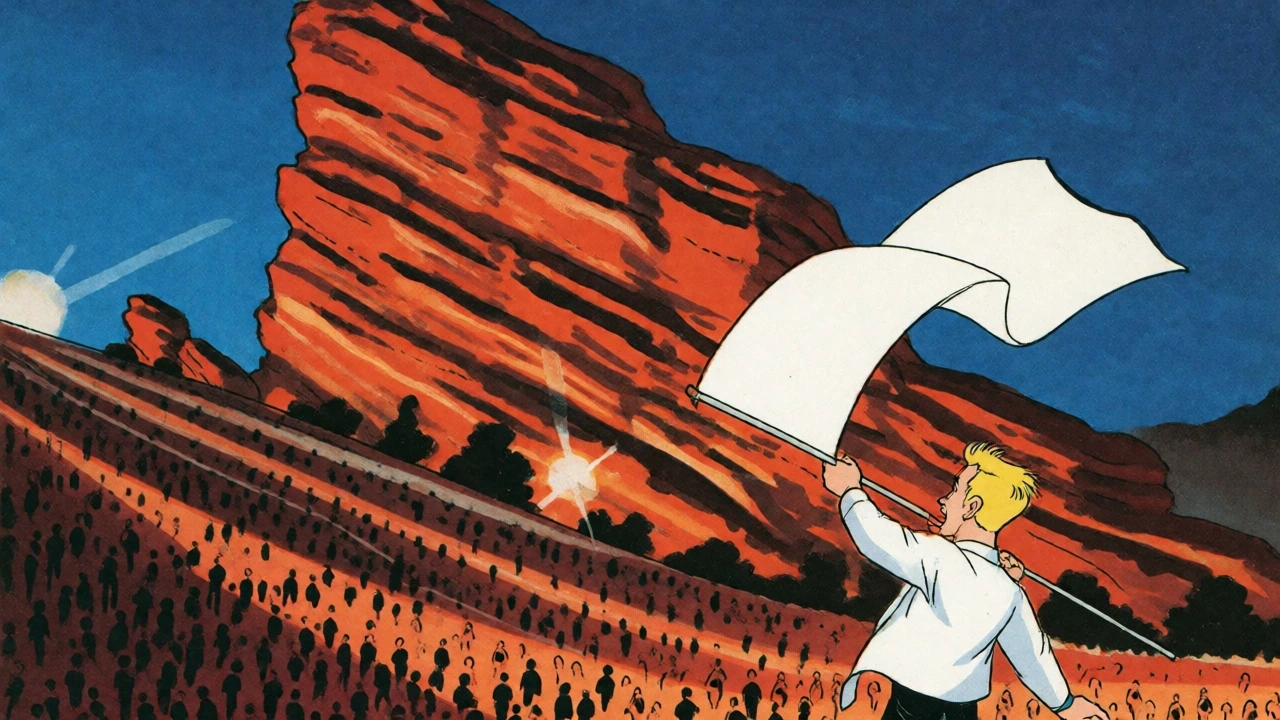
No example illustrates this better than U2. In 1983, the Irish band was big in Europe but still fighting for attention in the United States. Their management made a bold move. They arranged to film their June 5, 1983 concert at Red Rocks Amphitheatre in Colorado. This wasn't just any gig; it was chosen for its stunning natural backdrop and acoustic intensity.
The resulting video, Under a Blood Red Sky, circulated heavily on MTV. The image of Bono waving a white flag during "Sunday Bloody Sunday" became iconic. Rolling Stone later called it one of the moments that changed rock history. Why? Because it turned a single night's performance into a repeatable promotional asset. American viewers who had never heard of U2 suddenly saw a band with massive emotional scale. Ticket sales for subsequent US dates spiked. The lesson? Choose one visually spectacular show, film it professionally, and let television sell the rest of the tour.
The Tube and British Innovation
Across the Atlantic, Britain developed its own approach. Channel 4’s The Tube launched in November 1982. Unlike other shows that relied on polished studio recordings, The Tube broadcast live from various locations, including clubs and outdoor venues. It ran until April 1987 and became a defining platform for breaking new acts.
Bands like Dire Straits, Wham!, and Tears for Fears used The Tube to connect directly with audiences. The show’s format mixed interviews, live sets, and news segments. For a developing act, getting booked on The Tube meant instant visibility across the UK. It also provided a testing ground. If a band bombed on The Tube, they might rethink their stage presence before launching a major tour. If they shone, the buzz translated directly into ticket demand.
Madonna offers another interesting angle. Her first UK appearance was on The Tube in January 1984, performing "Holiday." Interestingly, she lip-synched. This highlights a key truth: television promotion prioritized visual consistency over vocal perfection. Viewers needed to recognize her look and style. When Madonna eventually toured, fans knew exactly what spectacle to expect. The TV image set the expectation; the live show delivered the reality.
Global Spectacles: Live Aid and Beyond
By the mid-80s, television didn't just promote tours; it created global events that boosted careers overnight. Live Aid on July 13, 1985, is the prime example. Broadcast from Wembley Stadium in London and JFK Stadium in Philadelphia, it reached hundreds of millions of viewers. Estimates vary, but the BBC cited around 400 million viewers across 60 countries.
For artists like Queen, Elton John, and U2, Live Aid wasn't just charity; it was massive exposure. U2’s performance, particularly Bono pulling a fan onto the stage, became a defining TV moment. This kind of event branding showed that television could manufacture urgency. Fans who watched these stars command stadium crowds realized they had to see them live. The gap between the TV image and the live experience narrowed, making tickets feel essential rather than optional.
| Strategy | Example Artist/Event | Promotional Benefit | Risk/Limitation |
|---|---|---|---|
| Filmed Concert Special | U2 at Red Rocks (1983) | Showcased stage presence and visual identity to new markets. | High production cost; required selecting the perfect venue. |
| Live Music Program | The Tube (UK) | Regular exposure; built credibility through live (or semi-live) sets. | Limited to specific regions/countries; dependent on programmer taste. |
| Global Satellite Event | Live Aid (1985) | Massive international awareness; associated artist with major cultural moments. | Short duration; difficult to control individual artist narrative. |
| Branded Tour Package | Club MTV Tour (1989) | Leveraged existing TV audience for immediate ticket sales. | Artist less control; perceived as commercial package deal. |
Making the Tour Part of the Brand
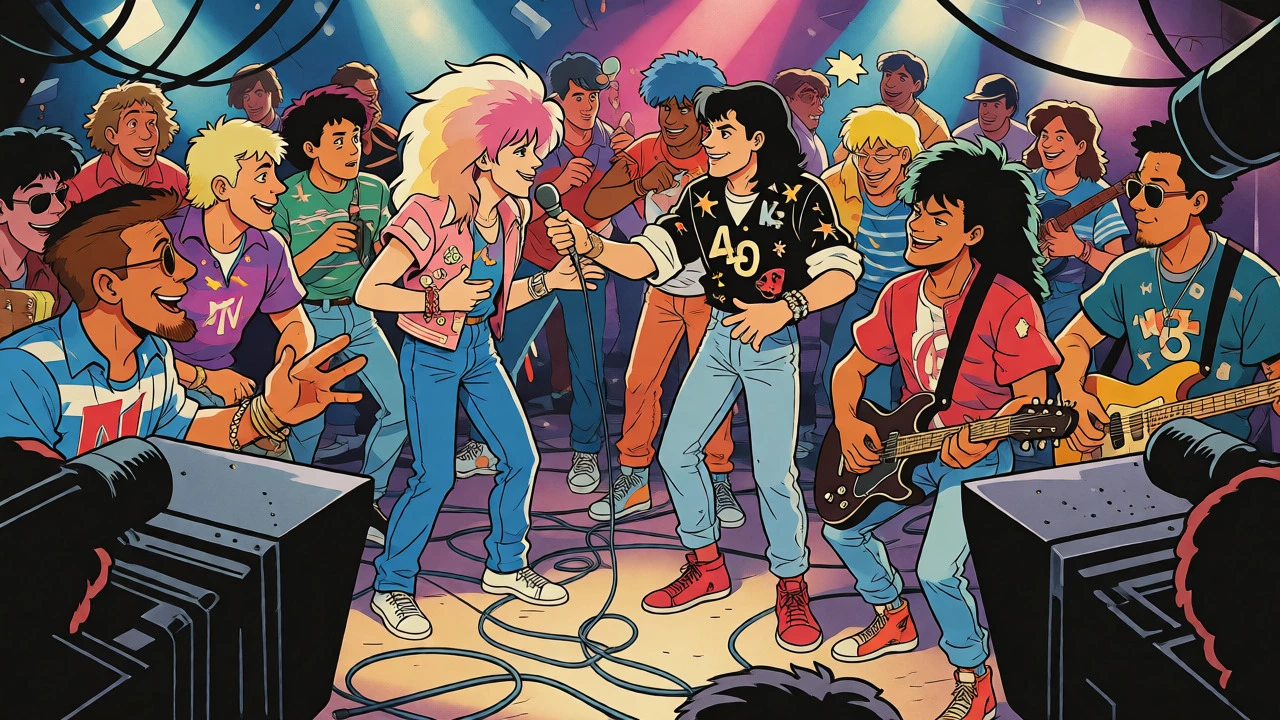
As the decade progressed, the relationship between TV and touring evolved further. MTV didn't just advertise tours; it started creating them. In 1989, they launched the Club MTV Tour. This featured acts like Paula Abdul, Milli Vanilli, and Was (Not Was). Here, the TV brand itself sold the tickets. Fans trusted the MTV curation. If MTV said these artists were hot, you bought a ticket to see them together.
This reversed the traditional model. Instead of a band using TV to fill arenas, TV used its brand power to create a touring product. It anticipated modern festival packages and branded concert series. The logic was simple: reduce risk for the consumer. You already liked the music on TV; now you get a guaranteed good time live.
Michael Jackson mastered the multi-platform approach. His Bad World Tour (1987-1989) was supported by CBS specials and MTV documentaries like From Motown to Your Town. These broadcasts kept his tour relevant globally. Even after a show sold out in Tokyo or London, footage aired elsewhere, building anticipation for future dates. Television extended the commercial life of the tour far beyond the actual travel schedule.
Practical Lessons for Today
What can we learn from this era? First, visual consistency matters. The 1980s taught us that fans need to recognize the artist’s persona before they commit to a live show. Second, leverage high-impact moments. You don’t need to be on TV every week. One powerful, well-produced appearance-like U2 at Red Rocks-can do more than ten mediocre ones.
Third, integrate your media. Don't treat your social media feed, your press kit, and your tour dates as separate silos. In the 80s, the clip, the interview, and the date listing all lived in the same ecosystem. Today, your TikTok snippet, your Spotify playlist placement, and your ticket link should tell the same story.
Finally, prove your value. Television (and now streaming/social) creates desire, but the live show must deliver. The 1980s artists who succeeded weren't just good on camera; they were good on stage. The TV ad brought them in; the performance kept them coming back.
Did live TV performances actually increase ticket sales?
Yes, significantly. Case studies like U2’s 1983 Red Rocks special demonstrate a direct correlation between televised exposure and increased demand in new markets. Television reduced the risk for fans by showing them what to expect, which converted passive listeners into active buyers.
Was everything on 1980s music TV truly live?
No. While programs like The Tube emphasized live elements, many performances were lip-synched or used pre-recorded backing tracks. Shows like MTV often aired prerecorded videos during weekday blocks. However, the perception of liveness mattered more than technical reality for promotional purposes.
How did MTV change the economics of touring?
Before MTV, labels often cut tour budgets due to high costs and low ROI. MTV allowed artists to reach millions cheaply, making tours more viable by ensuring audiences were already familiar with the act before arrival. It shifted promotion from local radio reliance to national visual branding.
What was the Club MTV Tour?
Launched in 1989, it was a touring package created by MTV featuring popular dance-pop acts like Paula Abdul and Milli Vanilli. It demonstrated that a TV brand could successfully curate and sell a live event, leveraging viewer trust to guarantee ticket sales.
Did television hurt the live music industry?
Initially, some promoters feared TV would replace concerts. However, history shows it largely complemented them. TV created awareness and desire, while live shows provided the exclusive, visceral experience that TV couldn't replicate. The two fed each other in a symbiotic cycle.