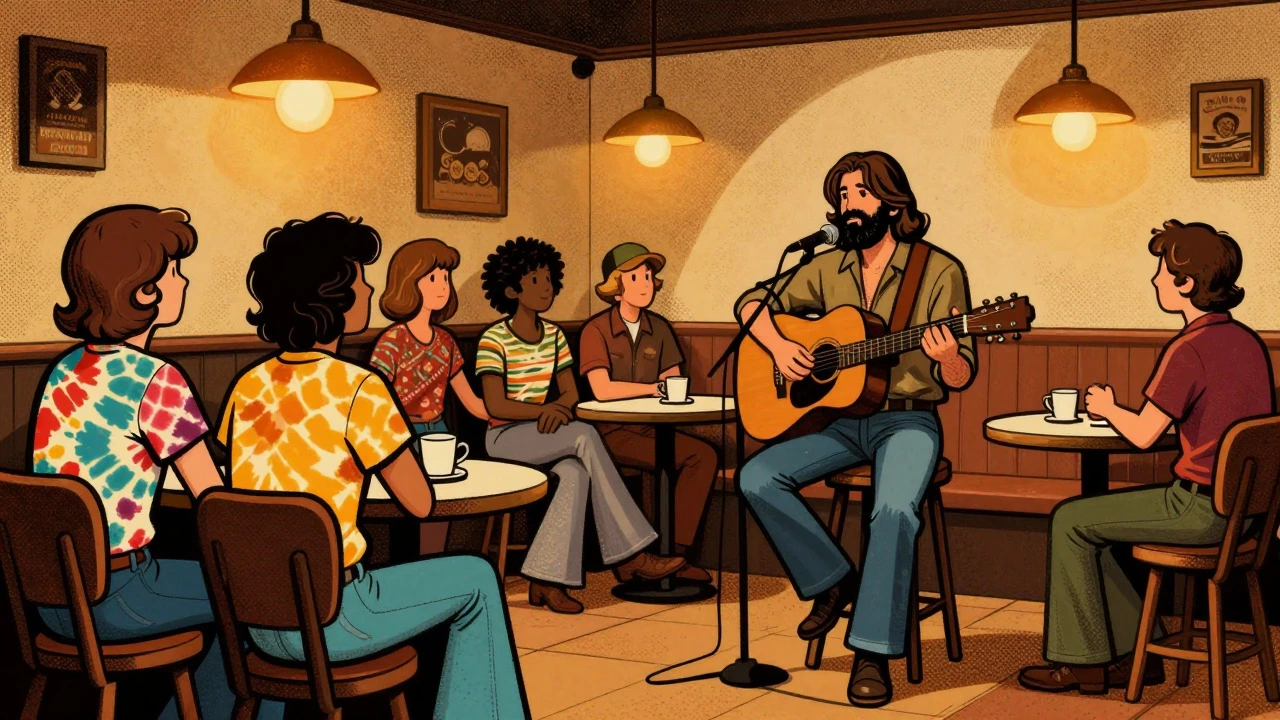

Walk into any small venue in Portland or Austin today, and you’ll likely hear a solo artist with an acoustic guitar, singing about heartbreak, isolation, or rural life. The production might be lo-fi, recorded on a laptop in a bedroom, but the emotional core feels ancient. This isn’t a coincidence. It’s a direct line of inheritance from the 1970s singer-songwriter boom. When we listen to modern indie folk and Americana, we are hearing echoes of artists who defined how personal storytelling could dominate popular music half a century ago.
The connection between the introspective songwriting of the early 1970s and today’s independent music scenes is not just stylistic; it is structural. The blueprint established by figures like Joni Mitchell, Townes Van Zandt, and Nick Drake created a template that prioritized lyrical honesty over commercial polish. This shift allowed future generations of musicians to bypass major label gatekeepers and connect directly with audiences through raw, authentic expression. Understanding this legacy helps explain why these genres remain so vital in 2026, even as digital technology changes how we produce and consume sound.
The Birth of the Confessional Style
To understand where indie folk comes from, we have to look at what happened between 1968 and 1975. During this period, a specific group of artists moved away from the bombastic rock sounds of the late 1960s. Instead, they turned inward. This era saw the rise of the "confessional" style, where songs became deeply autobiographical documents. Artists like James Taylor, Carole King, and Leonard Cohen brought their private lives-relationships, anxieties, and daily observations-to the forefront of their work.
This approach was revolutionary because it treated the singer-songwriter as a primary author, similar to a poet or novelist, rather than just a performer. The technical definition of this tradition involves a hybrid of post-Dylan folk music and Tin Pan Alley pop structures. Writers like Laura Nyro and Randy Newman merged sophisticated chord progressions with confessional lyrics. Meanwhile, artists influenced by Bob Dylan focused more on narrative and social commentary. This dual lineage created a rich vocabulary that modern indie artists still use today. When you hear a contemporary track with complex harmonies and vulnerable lyrics, you are hearing the result of this 1970s innovation.
Joni Mitchell: The Architect of Emotional Nuance
If there is one figure who bridges the gap between 1970s folk and modern indie, it is Joni Mitchell. Her albums from the 1970s, particularly Blue (1971) and Court and Spark (1974), set a new standard for emotional openness. Mitchell didn’t just write songs; she constructed intricate musical landscapes that reflected psychological states. She introduced unconventional guitar tunings and blended jazz influences with folk traditions, giving other musicians permission to break genre rules.
Mitchell’s influence is visible in the work of countless modern artists. Bands like Big Thief and solo acts like Phoebe Bridgers cite her as a primary inspiration. Her ability to express "quiet devastation"-a term often used to describe the subtle intensity of indie folk-became a cornerstone of the genre. In recent years, critics have noted that female artists in the Americana scene, such as Jobi Riccio, explicitly draw on Mitchell’s self-produced approach and her exploration of female subjectivity. By treating her own experiences as worthy material for art, Mitchell paved the way for the diverse voices we hear in indie folk today.
Townes Van Zandt and the Roots of Americana
While Mitchell pushed boundaries with harmony and jazz, Townes Van Zandt dug deep into the roots of American storytelling. Active primarily in the 1970s, Van Zandt was known for his emotionally honest, plainspoken lyrics. He didn’t care about radio play or chart success; he cared about the integrity of the song. This attitude resonates strongly with the DIY ethos of modern Americana.
Van Zandt’s catalog, including albums like For the Sake of the Song (1968) and High, Low and In Between (1971), has become a touchstone for artists seeking authenticity. His song "Pancho and Lefty," released in 1972, has been covered by dozens of major artists, including Willie Nelson and Emmylou Harris, demonstrating its enduring power. Today, artists like The Avett Brothers and Rodney Crowell trace their lineage directly back to Van Zandt. His focus on character-driven narratives and rural imagery helped define what Americana means: a blend of country, folk, and blues that tells real stories about real people. Without Van Zandt’s uncompromising vision, the Americana genre might lack its moral and emotional weight.
Nick Drake and the Lo-Fi Aesthetic
Nick Drake died young in 1974, but his three studio albums, recorded between 1969 and 1972, have had a massive posthumous impact on indie folk. Drake’s soft baritone voice and intricate fingerstyle guitar work created a sound that was intimate and fragile. Unlike the polished productions of his contemporaries, Drake’s recordings felt private, almost secretive. This aesthetic aligns perfectly with the lo-fi trend that emerged in the 1990s and exploded in the 2000s.
Artists like Elliott Smith drew heavily from Drake’s model of quiet, introspective songwriting. In the 2020s, this influence continues with artists like Annahstasia and Joan Shelley, who embrace delicate arrangements and minimal production. The idea that a song doesn’t need big drums or loud guitars to be powerful is a lesson learned from Drake. His legacy teaches us that vulnerability can be louder than volume. Modern indie folk producers often aim to capture that same sense of solitude, using simple recording techniques to create an atmosphere of closeness between the artist and the listener.
Gram Parsons and the Cosmic Country Fusion
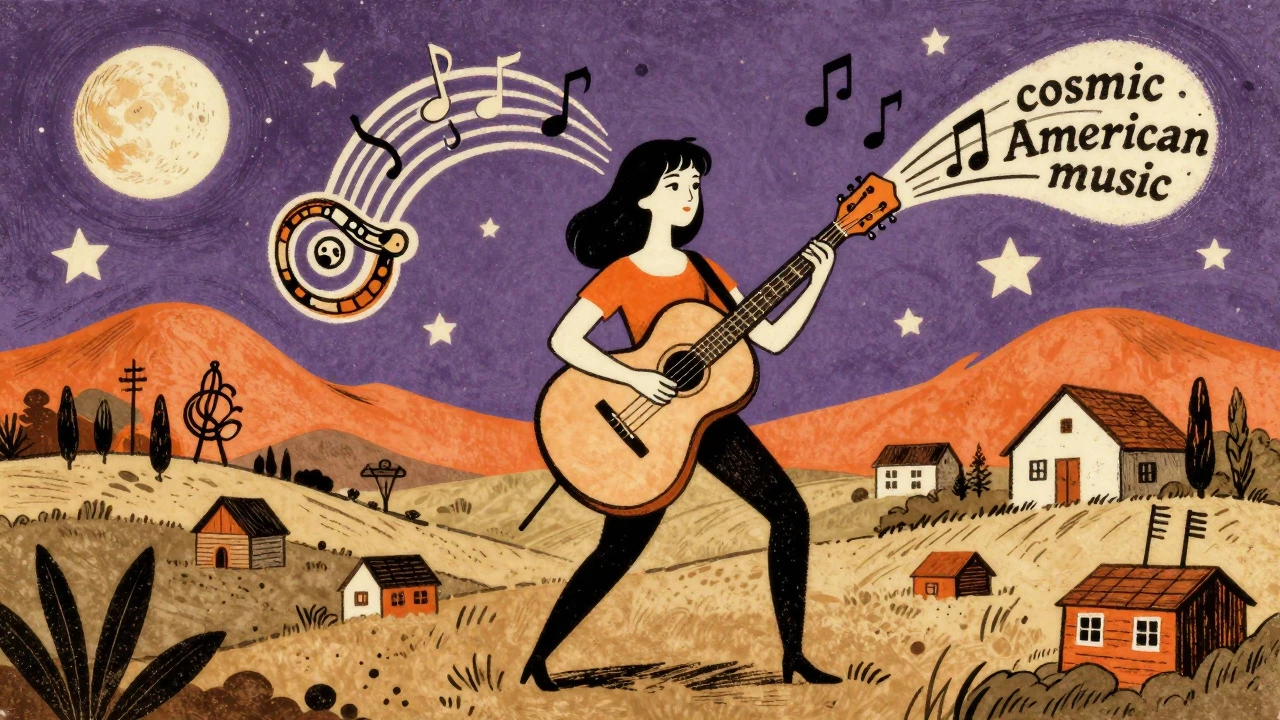
When we talk about Americana, we cannot ignore Gram Parsons. Though his career was cut short by his death in 1973 at age 26, Parsons created a fusion of country, rock, soul, and folk that he called "cosmic American music." His work with The Byrds on Sweetheart of the Rodeo (1968) and later with The Flying Burrito Brothers challenged the rigid boundaries of country music.
Parsons is often called the godfather of Americana because he showed that country music could be artistic and experimental. His collaboration with Emmylou Harris further cemented this legacy. Harris took Parsons’ cross-genre vision and expanded it, helping to codify the Americana style in the 1970s and beyond. Today, when alt-country bands like Wilco or Uncle Tupelo mix twang with rock energy, they are walking a path Parsons cleared. His insistence on blending high and low culture, sacred and secular, remains a defining characteristic of the Americana genre.
The Role of Women in Shaping the Sound
The 1970s singer-songwriter movement was not dominated solely by men. Women like Joan Baez, Carly Simon, and Sandy Denny played crucial roles in shaping the sound and themes of the era. Their albums combined rock, jazz, psychedelia, and country, creating a sonic palette that later indie artists would adopt.
These women wrote about personal autonomy, domestic life, and societal critique, providing templates for 21st-century indie folk albums. For example, the harmony-rich approach of Crosby, Stills, Nash & Young was partly inspired by Judy Collins and Joni Mitchell. This multi-part vocal arrangement style is now common in indie folk groups like Fleet Foxes. Gender-focused histories argue that without these women, the modern indie folk landscape would sound very different. Their contributions ensured that the genre remained emotionally diverse and politically aware.
From Coffeehouses to Streaming Playlists
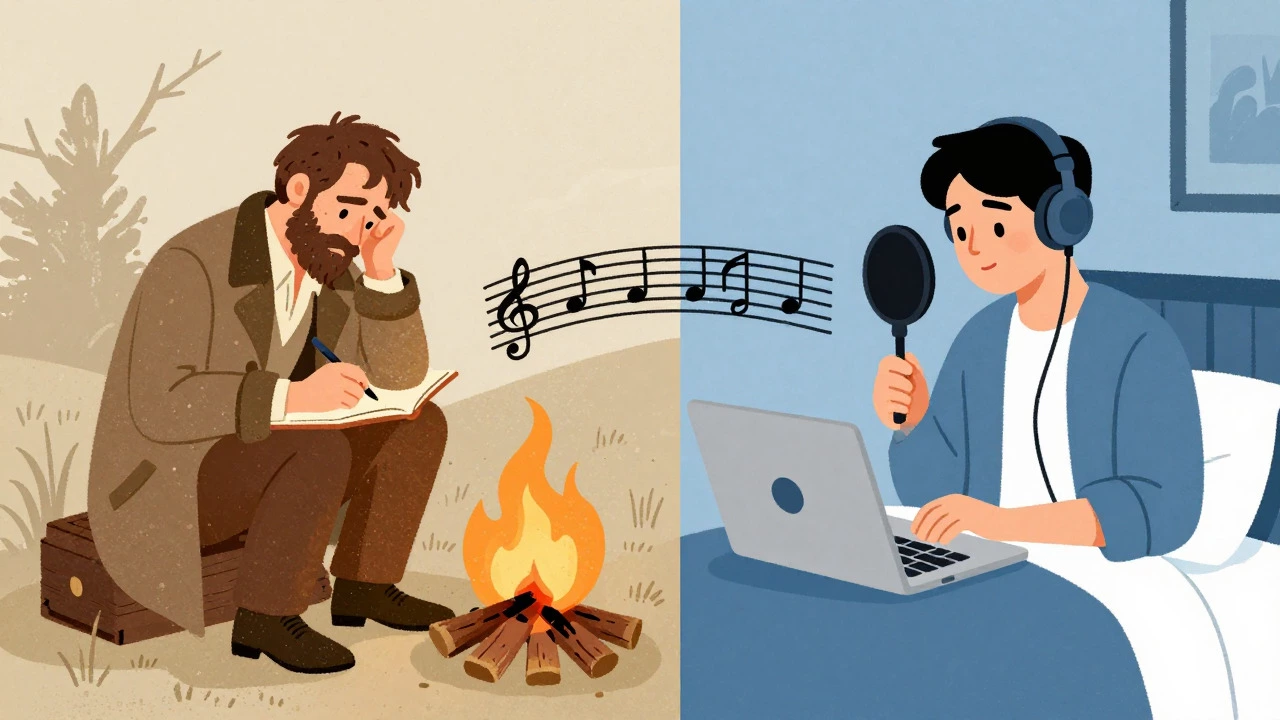
The journey from 1970s coffeehouses to 2026 streaming platforms shows how adaptable this musical tradition is. In the 1970s, artists performed in small venues, building local followings before reaching national charts. Today, the internet allows artists to share their work globally without needing a record deal. This democratization mirrors the solo, self-authored ethos of the 1970s singer-songwriters.
Online communities continue to celebrate this legacy. Reddit threads and fan forums frequently discuss artists like Tim Buckley and Vashti Bunyan, showing that listeners actively seek out the "unique blend" of progressive and jazzy folk from that era. Streaming services curate playlists that place 1970s tracks alongside modern indie folk hits, reinforcing the connection for new audiences. This continuous dialogue between past and present ensures that the innovations of the 1970s remain relevant. As long as people crave authentic storytelling, the legacy of these pioneers will endure.
| Artist | Primary Contribution | Modern Legacy |
|---|---|---|
| Joni Mitchell | Unconventional tunings, jazz-folk fusion, emotional honesty | Influenced Big Thief, Phoebe Bridgers, and female-led indie acts |
| Townes Van Zandt | Plainspoken lyricism, narrative depth, anti-commercial stance | Core influence for Americana artists like The Avett Brothers |
| Nick Drake | Fingerstyle guitar, fragile vocals, lo-fi intimacy | Template for Elliott Smith and modern bedroom pop/folk |
| Gram Parsons | "Cosmic American Music," country-rock-blues fusion | Godfather of Americana; influenced Wilco and alt-country |
| Emmylou Harris | Harmony-rich arrangements, bridging traditional and modern styles | Expanded Americana’s reach; mentor to younger generations |
Why This Legacy Matters Today
In an age of AI-generated music and algorithmic playlists, the human element of 1970s singer-songwriters feels more important than ever. These artists proved that a single person with a guitar and a story could move millions. They valued authenticity over perfection, and emotion over technique. Modern indie folk and Americana artists carry this torch, adapting it to new technologies while keeping the core values intact.
As we look to the future, we can expect further hybridization. Artists may blend folk with electronic or global sounds, but the foundation will remain the same: honest, narrative-driven songwriting. The legacy of the 1970s is not a museum piece; it is a living, breathing influence that shapes how we create and experience music today. By understanding this history, we gain a deeper appreciation for the songs that speak to our shared humanity.
Who are the most influential 1970s singer-songwriters for modern indie folk?
Joni Mitchell, Nick Drake, and Townes Van Zandt are widely considered the most influential. Mitchell introduced complex harmonies and emotional vulnerability, Drake pioneered the lo-fi, intimate aesthetic, and Van Zandt established the narrative depth central to Americana. Their work provides the foundational elements that modern artists like Bon Iver and Phoebe Bridgers build upon.
How did Gram Parsons influence the Americana genre?
Gram Parsons is often called the "godfather" of Americana because he fused country, rock, soul, and folk into "cosmic American music." His work with The Byrds and The Flying Burrito Brothers challenged traditional country norms, paving the way for alt-country and modern Americana artists who blend genres freely. His collaboration with Emmylou Harris also helped solidify the harmonic and stylistic traits of the genre.
What is the connection between Nick Drake and modern lo-fi music?
Nick Drake’s recordings were characterized by their fragility, intricate fingerstyle guitar, and lack of commercial polish. This intimate, solitary approach resonated with 1990s artists like Elliott Smith and continues to influence modern bedroom pop and indie folk musicians who prioritize emotional authenticity over high-production values. His posthumous fame helped legitimize the lo-fi aesthetic as a valid artistic choice.
Did women singer-songwriters of the 1970s shape the current indie folk landscape?
Yes, significantly. Artists like Joni Mitchell, Carole King, and Sandy Denny broke ground by writing openly about personal experiences, relationships, and societal issues. Their willingness to blend genres and explore female subjectivity created a template for today’s prominent female-led indie folk projects, such as those by Waxahatchee and Angel Olsen. Their contributions ensured the genre remained emotionally diverse and politically engaged.
Why is Townes Van Zandt considered a cornerstone of Americana?
Townes Van Zandt is revered for his uncompromising commitment to lyrical honesty and narrative depth. Despite limited commercial success during his lifetime, his songs, such as "Pancho and Lefty," have been covered extensively by major artists. His plainspoken style and focus on rural life and human struggle set a benchmark for authenticity that defines the Americana genre today. Many contemporary artists cite him as a primary influence.