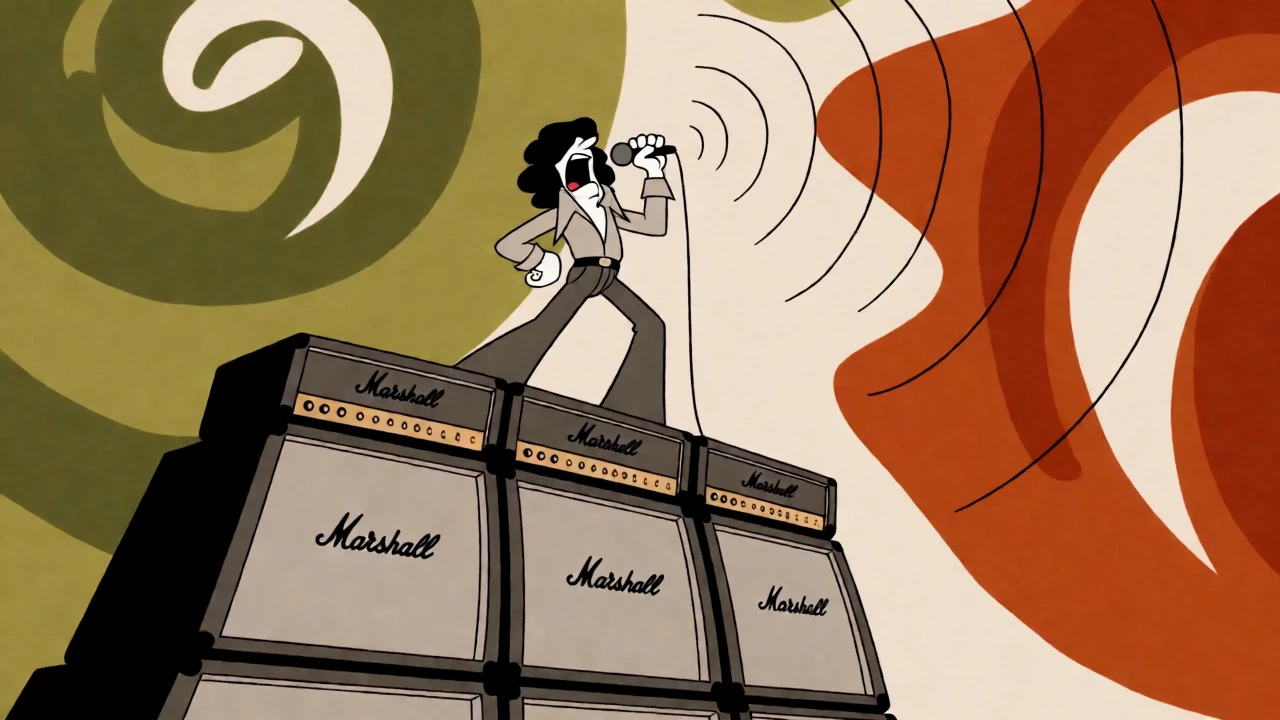

You hear it on the news, you see it in the viral clips from Portland to Paris: a crowd chanting, singing, demanding change. But where does that energy actually come from? It isn't just spontaneous noise. It’s a direct echo of the 1970s protest songs that defined an era of upheaval. These weren't just background tracks; they were weapons. From the ashes of the Vietnam War to the rise of second-wave feminism, the music of the 1970s created a blueprint for how art can interrupt politics. Today, when activists chant Kendrick Lamar or sample Marvin Gaye, they aren't just being nostalgic. They are tapping into a sonic infrastructure built fifty years ago.
The Sonic Blueprint: How the 70s Changed Activism
Before the 1970s, protest music often felt like folk sermons-earnest, acoustic, and sometimes preachy. The 1970s shifted the paradigm. Artists realized that if you wanted to reach millions, you couldn't just whisper truth to power; you had to scream it through a Marshall stack or groove it out on a Motown beat. This decade didn't just produce songs; it produced templates for resistance that remain relevant because they solved the core problem of activism: how do you make people feel something urgent enough to act?
Take Crosby, Stills, Nash & Young's "Ohio". Written within days of the Kent State shootings in May 1970, this track wasn't a reflection on history; it was a reaction to breaking news. It proved that music could move faster than political discourse. Similarly, Marvin Gaye's "What's Going On" (1971) shattered the mold by blending complex jazz chords with raw social commentary on police brutality and poverty. It showed that pop music could be intellectually rigorous and emotionally devastating at the same time. These artists established three key rules that modern movements still follow:
- Immediacy: Address current events directly, not abstractly.
- Anthemic Structure: Create choruses that crowds can chant without needing lyrics sheets.
- Mainstream Accessibility: Package radical ideas in commercially viable genres so they reach beyond the choir.
From Vinyl to Viral: The Continuity of Resistance
Fast forward to 2020. When George Floyd was killed, the world didn't just wait for politicians to speak. They reached for their playlists. Data from CBC Music showed that streams of Childish Gambino’s "This Is America" jumped 149%, while Kendrick Lamar’s "Alright" saw a 71% increase during protest surges. Why these songs? Because they function exactly like "I Am Woman" or "War" did in the 70s. They provide a shared language.
Kendrick Lamar’s "Alright" is the spiritual successor to Helen Reddy’s "I Am Woman." Both songs offer a mantra of resilience. Reddy’s line "I am strong, I am invincible" gave women a psychological shield against sexism. Lamar’s "We gon' be alright" offers a communal promise of survival against systemic racism. The mechanism is identical: repetition creates solidarity. When thousands of people sing the same line, individual fear dissolves into collective power. This is the legacy of the 1970s-not just the melodies, but the understanding that rhythm regulates group emotion.
| Feature | 1970s Example (Marvin Gaye) | Modern Example (Kendrick Lamar) | Shared Legacy |
|---|---|---|---|
| Primary Genre | Soul / R&B | Hip-Hop / Jazz Rap | Black musical traditions as sites of resistance |
| Distribution | Vinyl, Radio, Live Concerts | Streaming, Social Media, Viral Clips | Mass media penetration of radical ideas |
| Lyrical Focus | Vietnam, Poverty, Police Brutality | Mass Incarceration, Police Violence, Systemic Racism | Direct critique of state violence |
| Chantability | High ("What's going on?") | Very High ("We gon' be alright") | Simple hooks for crowd participation |
Narrative Power: The "Hurricane" Effect
Not all protest music is about chanting. Sometimes, it’s about telling a story so specific that it forces the listener to confront injustice. In 1975, Bob Dylan released "Hurricane," a narrative ballad detailing the wrongful imprisonment of boxer Rubin Carter. It wasn't just a song; it was investigative journalism set to music. This approach influenced a generation of storytellers who use personal tragedy to highlight structural failure.
You see this DNA clearly in J. Cole’s "Be Free" (2014) or D’Angelo’s "The Charade" (2014). Like "Hurricane," these tracks don't just shout slogans; they narrate the human cost of policy. They force the listener to sit with the discomfort of a specific life interrupted by violence. This narrative tradition is crucial because it counters dehumanization. When you hear the details of Michael Brown’s final moments or the specifics of a wrongful conviction, the abstraction of "systemic racism" becomes a tangible reality. The 1970s taught us that facts alone don't change minds; stories do.
Beyond Borders: Global Echoes of Local Struggles
The influence of 1970s protest music isn't confined to the United States. Look at the UK. In 1978, the Rock Against Racism movement organized a massive concert at Victoria Park in London, featuring The Clash and Tom Robinson. This event fused punk rock’s aggression with anti-fascist politics, creating a model for large-scale, music-centered activism. It demonstrated that protest music could cross genre lines and national borders.
Today, we see this global exchange in real-time. Nigerian artists involved in the EndSARS protests against police brutality draw on both local Afrobeat traditions and the global hip-hop lineage that traces back to American soul and funk. When a protester in Lagos chants a lyric adapted from a US track, they are participating in a transnational conversation started by 1970s artists. The tools have changed-TikTok replaces radio-but the strategy of using culturally resonant sound to unify disparate groups remains unchanged.
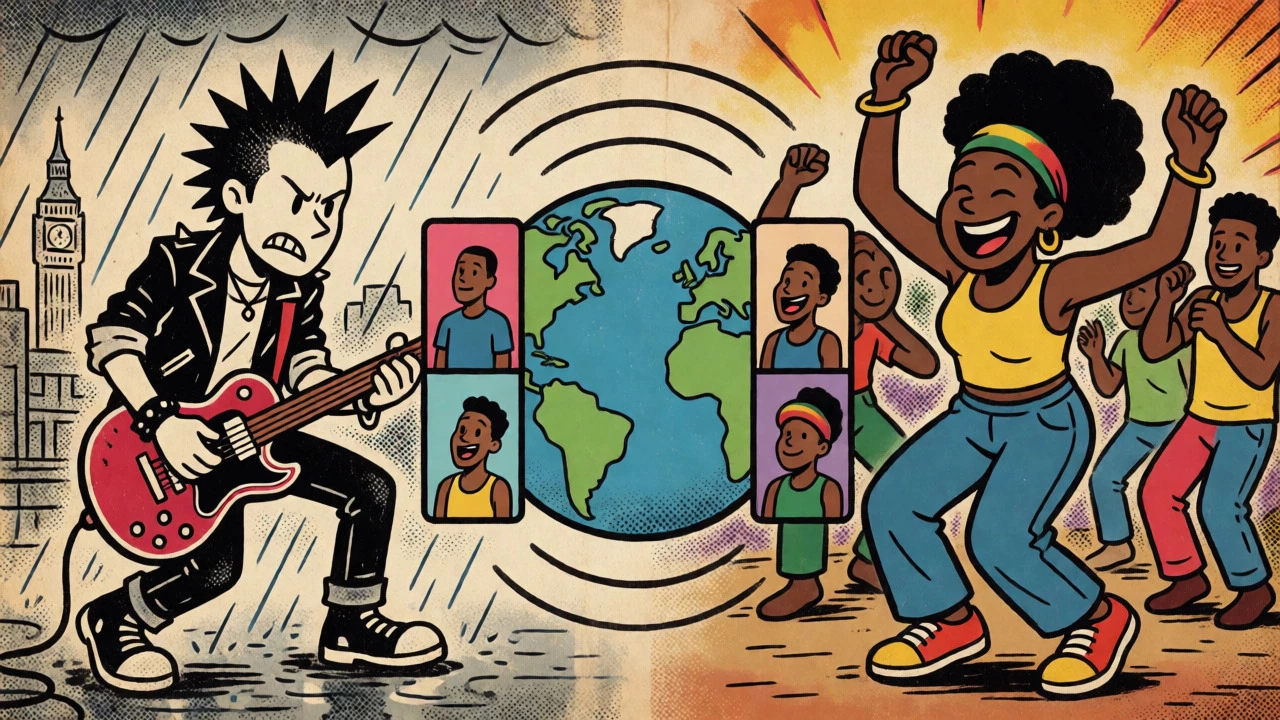
The Fragmented Anthem: Challenges in the Digital Age
Here’s the tricky part: while the legacy is strong, the landscape has fractured. An NBC analysis in 2025 noted that while protest songs are common, true "anthems" are rare. In the 1970s, there were only a few channels. If everyone watched the same news and listened to the same Top 40, a song like "Ohio" became universal knowledge. Today, algorithms create echo chambers. A song might go viral in one community and be unknown in another.
This fragmentation means modern movements must work harder to build consensus around a soundtrack. We don't have one "We Shall Overcome" anymore; we have hundreds of niche tracks serving different sub-groups. However, this isn't necessarily a weakness. It allows for more diverse voices. Queer artists, indigenous musicians, and disabled activists can find platforms that wouldn't have existed in the monolithic radio era. The 1970s gave us the volume knob; today’s technology gives us the equalizer.
Practical Takeaways for Activists and Listeners
If you're looking to engage with this legacy, whether you're organizing a march or just trying to understand the cultural moment, here is how to apply the lessons of the 1970s:
- Curate for Context: Don't just pick popular songs. Choose tracks that match the emotional tone of your action. Is it a funeral procession? Use somber narratives like "A Change Is Gonna Come." Is it a celebratory victory rally? Use high-energy anthems like "Fight the Power."
- Know the History: When you use a 1970s track, acknowledge its origin. Sampling Harold Melvin & the Blue Notes’ "Wake Up Everybody" without context strips it of its radical edge. Educate your audience on why that song matters.
- Create New Hooks: Study the structure of "I Am Woman." Notice the simple melody and repetitive affirmation. Write new lyrics using those proven structures to ensure they stick.
The 1970s didn't just leave us with records gathering dust in attics. They left us with a toolkit. Every time a crowd finds harmony in discord, every time a song turns grief into fuel, the spirit of that decade lives on. It’s not about living in the past; it’s about recognizing that the best tools for fighting today’s battles were forged yesterday.
Why are 1970s protest songs still relevant today?
They remain relevant because they established the fundamental mechanics of musical activism: immediate response to current events, anthemic choruses for crowd unity, and the use of mainstream genres to deliver radical messages. Contemporary movements like Black Lives Matter explicitly cite these songs as foundational influences, using similar lyrical themes of police brutality and systemic inequality.
Which 1970s song had the biggest impact on modern movements?
While many songs contributed, Marvin Gaye's "What's Going On" and Helen Reddy's "I Am Woman" are arguably the most influential. Gaye's album normalized socially conscious pop, paving the way for artists like Kendrick Lamar and J. Cole. Reddy's anthem provided a template for identity-based empowerment chants that are still used in feminist and LGBTQ+ rights marches today.
How has digital streaming changed protest music?
Streaming allows for rapid mobilization. As seen with the 149% spike in streams for Childish Gambino's "This Is America" after major news events, audiences can instantly access protest tracks. However, algorithms also fragment the audience, making it harder for a single song to become a universal anthem compared to the mono-media environment of the 1970s.
Did 1970s protest music only focus on war?
No. While the Vietnam War was a central theme, 1970s protest music heavily addressed civil rights, feminism, environmentalism, and labor issues. Songs like "I Am Woman" focused on gender equality, while "Big Yellow Taxi" highlighted environmental concerns. This diversity allows modern movements to find historical precedents for a wide range of contemporary causes.
Can modern artists achieve the same status as 1970s legends?
It is difficult due to media fragmentation. In the 1970s, limited radio stations created shared cultural touchstones. Today, niche communities dominate. However, artists like Kendrick Lamar have achieved significant crossover success, suggesting that while the path is harder, universal recognition is still possible if the song combines artistic excellence with timely social relevance.


