
You’re listening to a track that feels brand new. The bass hits hard, the rhythm loops perfectly, and the production is slick. But if you peel back the layers, you’ll find the blueprint was drawn fifty years ago. Today’s global pop isn’t just a collection of modern trends; it’s the direct descendant of specific cultural explosions in the 1970s. From the sound systems of Kingston to the Bronx block parties and the studios of Munich, the decade didn’t just produce hits-it invented the operating system for how we make, distribute, and consume music today.
We often think of the 1970s as the era of disco balls and bell-bottoms, but its real impact was structural. It established the methods of cross-border borrowing that define our current streaming landscape. If you want to understand why your playlist looks the way it does, you have to look at who picked up the mixing console, who broke the record, and who rewired the synthesizer half a century ago.
The Studio as an Instrument: Dub’s Digital Legacy
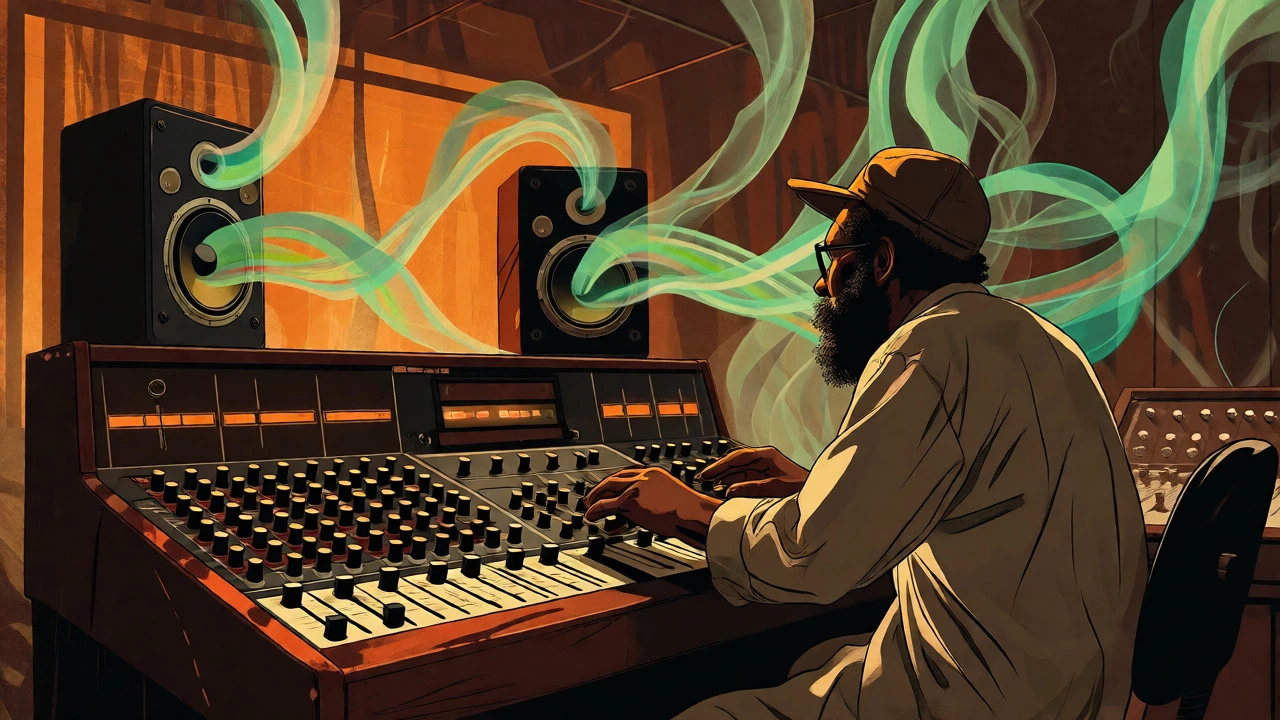
Before dub, the recording studio was mostly a place to capture a performance. In Jamaica during the early 1970s, engineers like King Tubby and Lee "Scratch" Perry changed that. They realized the mixing board itself could be an instrument. By manipulating echo, delay, and reverb, they stripped songs down to their rhythmic skeletons. This wasn’t just editing; it was composition.
This approach anticipated modern remix culture by decades. Think about how today’s electronic dance music (EDM) or even pop tracks are built. Producers don’t just record bands; they sculpt sounds using digital audio workstations. The idea that a song can have multiple versions-a radio edit, a club mix, an instrumental-is a direct inheritance from Jamaican dub. When you hear a sub-bass wobble in a modern trap beat or a vocal chopped into rhythmic patterns in a hyperpop track, you’re hearing the ghost of King Tubby’s console. The concept of the producer as the primary artist, rather than the singer, was born here.
| 1970s Technique | Origin Scene | Modern Application |
|---|---|---|
| Dub Mixing | Jamaica | Remix culture, EDM drops, Producer-led authorship |
| Breakbeat Looping | Bronx, USA | Hip-hop sampling, Trap beats, Viral TikTok audio |
| Synth Sequencing | Germany (Kraftwerk) | Electropop, House music, Programmed drums |
| Polyrhythmic Fusion | Nigeria (Fela Kuti) | Afrobeats, Latin Pop hybrids, Global dance rhythms |
From Sedgwick Avenue to Spotify Charts
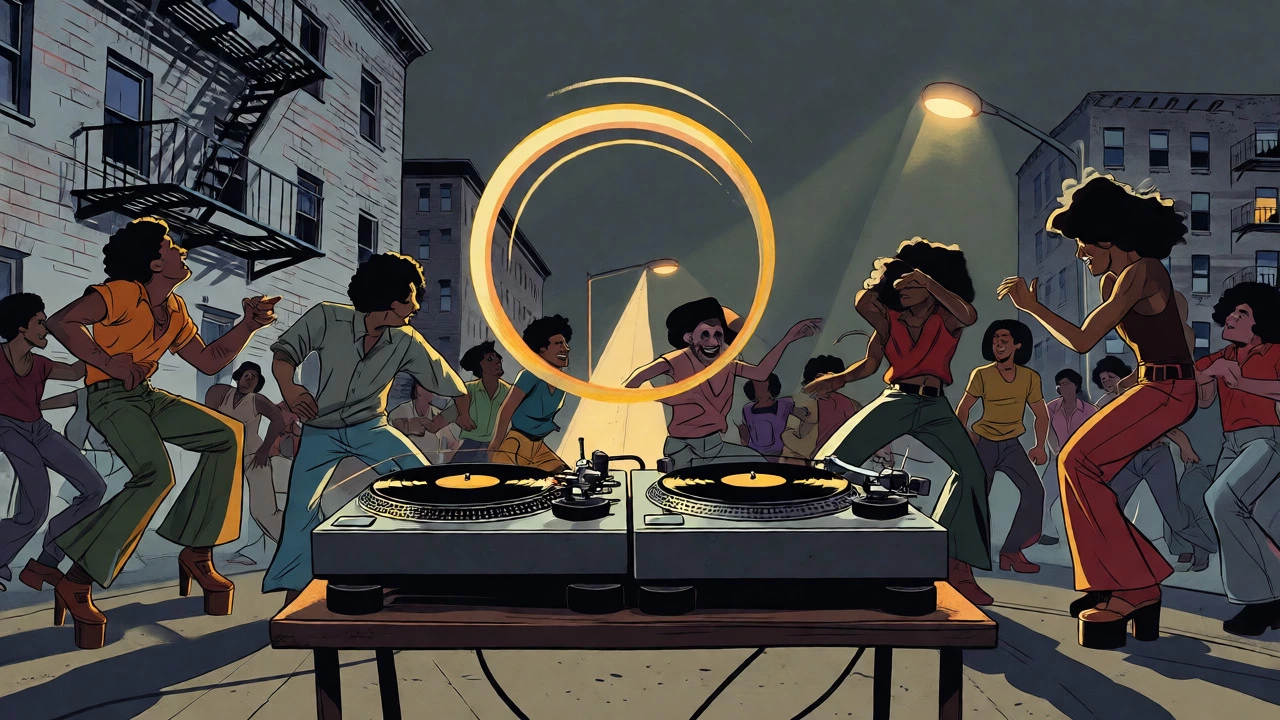
If dub gave us the studio logic, hip-hop gave us the social logic. On August 11, 1973, DJ Kool Herc threw a party in the West Bronx. He noticed people danced hardest during the instrumental breaks of funk records. So, he used two turntables to isolate and extend those breaks. This simple innovation created the breakbeat, the foundational unit of almost all modern urban pop.
Herc’s technique wasn’t just about dancing; it was about curation. He treated existing records as raw material. Today, when a producer samples a 1970s soul record for a Drake track, or when a TikTok user splices together two different songs for a viral trend, they are using Herc’s method. Hip-hop proved that music could be reconstructed from fragments. This democratized production. You didn’t need a full orchestra; you needed a good ear and two decks. That ethos drives the bedroom pop and lo-fi movements dominating streaming platforms today. The barrier to entry collapsed because a kid in the Bronx showed the world that technology could be repurposed for creative expression.
The Machine Groove: Kraftwerk and Disco
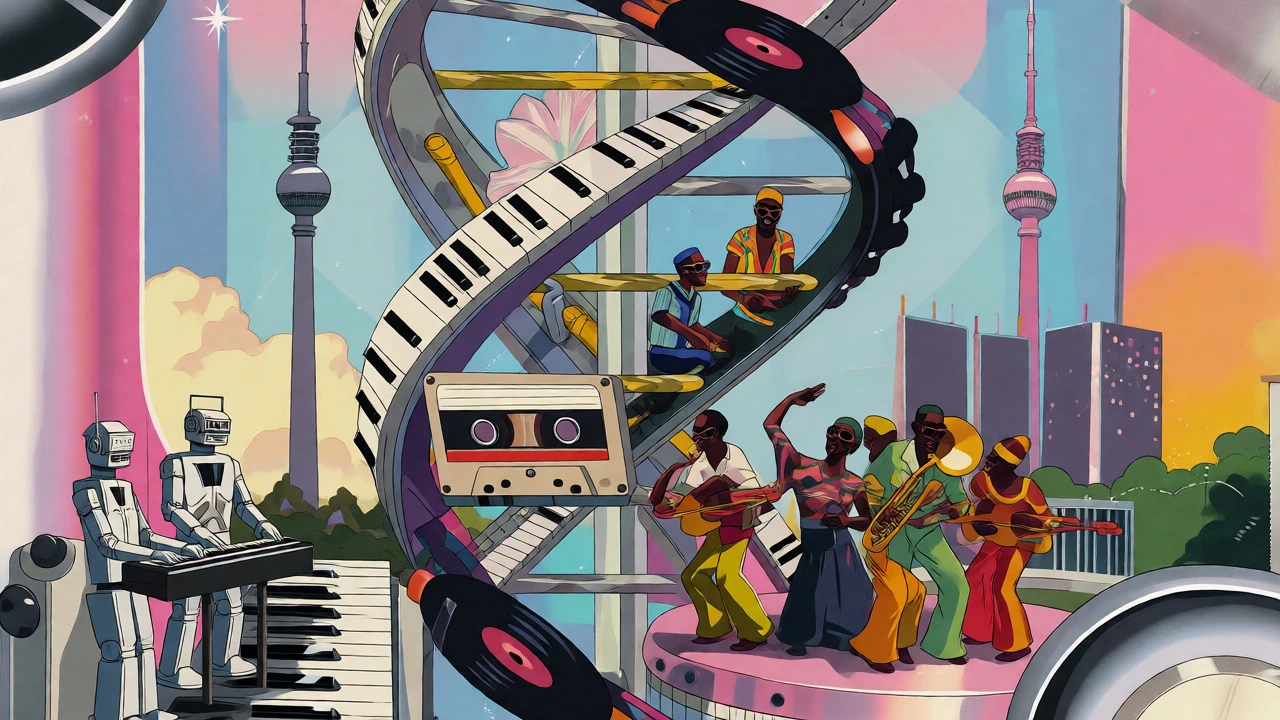
While Jamaica and New York were remixing human performances, Germany was building new ones from scratch. Bands like Kraftwerk and producers like Giorgio Moroder pushed electronic music into the mainstream. Donna Summer’s 1977 hit "I Feel Love," produced by Moroder, is a prime example. Apart from Summer’s voice, the entire track was synthesized. It had no live instruments.
This shift made electronic timbres commercially legible. Before this, synths were novelties. After this, they were standard. Contemporary pop relies heavily on programmed drums, synthesizer basslines, and arpeggiated melodies. When you listen to Dua Lipa or The Weeknd, you’re hearing the polished evolution of that 1970s disco-electronic hybrid. The four-on-the-floor kick drum pattern, which became ubiquitous in house and techno, was solidified in the disco era. These genres didn’t replace rock; they added a machine-like precision to pop that allows for perfect loopability-essential for both club DJs and algorithmic playlists.
African Rhythms and the Birth of Afrobeats
In Lagos, Nigeria, Fela Kuti was creating Afrobeat, a complex fusion of jazz, funk, and traditional Yoruba rhythms. Unlike the Western focus on melody, Afrobeat emphasized polyrhythms and extended jams. While Fela’s original style is distinct from today’s Afrobeats, the latter draws heavily on the former’s rhythmic vocabulary and political consciousness.
The connection isn’t linear, but it is vital. Modern artists like Burna Boy or Wizkid blend these African rhythmic foundations with dancehall, hip-hop, and R&B. This creates a sound that is globally accessible yet locally rooted. Streaming data backs this up: Spotify reported over 4,000% growth in Afrobeats listenership in Nigeria since 2021. This explosion isn’t accidental; it’s the result of decades of cultural exchange where African musicians adapted imported technologies to tell local stories. The 1970s provided the template for combining indigenous languages with internationally recognizable dance forms, a strategy now replicated across Latin America and Asia.
Salsa and the Multilingual Market
Don’t overlook salsa. In the 1970s, salsa exploded in New York and across Latin America. It was a hybrid genre, mixing Cuban son, Puerto Rican plena, jazz, and soul. Crucially, it proved that non-English music could dominate international charts. Salsa created a pan-Latino identity, connecting communities from Colombia to Venezuela through shared rhythm and language.
This precedent paved the way for reggaeton and Latin pop’s current dominance. Artists like Bad Bunny or Karol G benefit from the infrastructure salsa built. They operate in a market where multilingual lyrics are normal and cross-border collaboration is standard. The 1970s taught the industry that local scenes could go global without erasing their cultural specificity. Today’s global pop is increasingly reciprocal: Latin audiences adopt African sounds, and African artists collaborate with Caribbean stars, creating new hybrids that defy simple categorization.
Punk’s DIY Ethos in the Digital Age
Punk might seem unrelated to glossy pop production, but its influence is profound. Punk introduced the DIY ethic: low-cost production, independent labels, and short-form songs. It rejected virtuosity in favor of energy and accessibility. In the 1970s, punk bands bypassed major labels to build local scenes. Today, artists use SoundCloud, Bandcamp, and social media to do exactly the same thing.
The tools have changed, but the principle remains. An artist in Portland can record an album in their bedroom and reach fans in Tokyo without ever signing a contract. This decentralization mirrors the punk movement’s rejection of gatekeepers. Modern micro-scenes, whether in indie electronic or hyperpop, thrive on this model. They prioritize community and aesthetic cohesion over commercial polish, a direct nod to the punk ideology that emerged in London and New York fifty years ago.
Why This Matters Now
Understanding these roots helps you navigate the modern music landscape. When a song goes viral, it’s rarely a random event. It’s usually a resonance with one of these historical currents. Is it the dub-inspired bass? The hip-hop sample? The disco groove? Recognizing these elements allows you to appreciate the craft behind the catchiness.
Moreover, it highlights the importance of cultural agency. These genres weren’t just exported; they were adapted. Communities took foreign technologies and made them their own. As we move further into the digital age, this pattern continues. Local scenes will continue to feed global platforms, ensuring that pop music remains a diverse, evolving conversation rather than a monolithic product.
What is the main difference between 1970s Afrobeat and modern Afrobeats?
1970s Afrobeat, pioneered by Fela Kuti, is characterized by long instrumental jams, complex polyrhythms, and explicit political lyrics, often performed by large bands. Modern Afrobeats is a more concise, radio-friendly genre that blends these African rhythmic foundations with influences from dancehall, hip-hop, R&B, and digital production techniques.
How did Jamaican dub music influence modern electronic music?
Dub music turned the recording studio into an instrument by using echo, delay, and reverb to create space and texture. This technique laid the groundwork for remix culture, the concept of the producer as an artist, and the emphasis on bass and rhythm found in genres like house, techno, dubstep, and drum and bass.
Why is the 1973 Bronx party considered a founding moment for hip-hop?
At this party, DJ Kool Herc isolated and extended the instrumental breaks of funk records using two turntables. This technique, known as the breakbeat, allowed dancers to move longer and MCs to speak rhythmically over the loop, establishing the core structural and social elements of hip-hop culture.
Did disco only influence dance music?
No. Disco influenced pop, R&B, and rock by introducing four-on-the-floor rhythms, orchestral layering, and extended mixes designed for clubs. It normalized the idea of producing songs specifically for DJs and dance floors, a practice that continues in modern pop production aimed at streaming playlists and festivals.
How has streaming changed the way we access 1970s music?
Streaming platforms have made deep catalogs from the 1970s easily accessible, allowing modern producers to sample obscure tracks and listeners to discover regional genres like highlife or dub. This accessibility facilitates cross-genre hybridization and revives interest in archival recordings, keeping the 1970s legacy active in contemporary music.