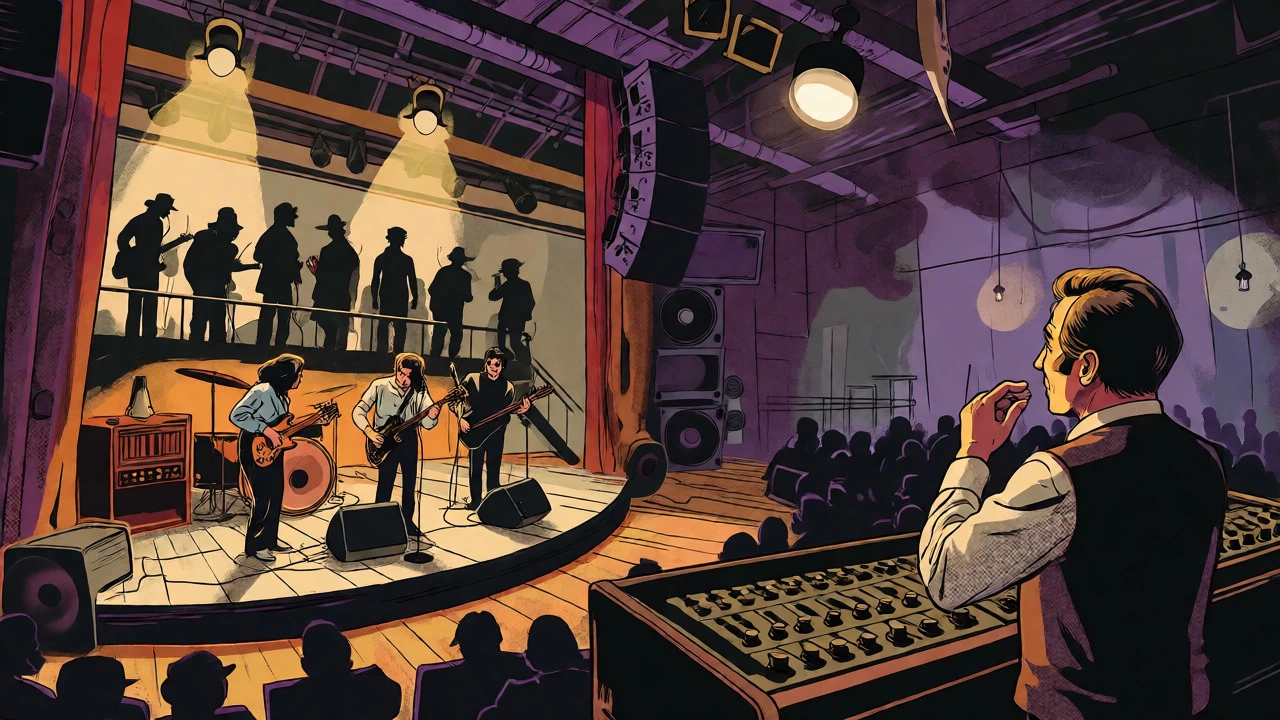

You paid $8.50 for a ticket to see The Who at the Roundhouse in London on December 20, 1970. You arrived early because you heard there was an opener. You expected some local band warming up the crowd with three songs. Instead, you got Patto, then a 45-minute set from a guy named Elton John who had just released Tumbleweed Connection, and finally The Who. That wasn't an accident. It was a calculated machine.
The 1970s weren't just about long hair and vinyl sales; they were the decade when the live music industry figured out how to manufacture stars through the stage. If you think today's festival bills are complex, wait until you look at how promoters like Bill Graham stacked three or four major names on one night to create a narrative arc that kept audiences glued to their seats for four hours. This article breaks down exactly how those lineups worked, why openers often played longer sets than you'd expect, and how the structural hierarchy of a 1970s show turned unknown bands into arena headliners within five years.
The Anatomy of the Multi-Act Bill
Modern concerts often feel sparse: one big name, maybe one opener, done in two hours. The 1970s were different. A typical evening ran between 2.5 and 4 hours. Why? Because tickets were expensive relative to wages, and promoters needed to justify the price by offering volume. But it wasn't just about quantity. It was about curation.
Promoters treated a concert bill like a playlist. They didn't just throw random bands together. They built a ladder. You started with a regional act or a genre-specific warm-up. Then came a mid-level artist who bridged the gap. Finally, the headliner closed the show. This structure served two purposes: it kept energy levels rising, and it allowed promoters to introduce new artists to established fanbases without risking the main draw.
| Feature | 1970s Standard | Modern Equivalent (2020s) |
|---|---|---|
| Total Duration | 2.5 - 4 hours | 1.5 - 2.5 hours |
| Opener Set Length | 30 - 60 minutes (sometimes 80+) | 20 - 45 minutes |
| Number of Acts | 3 - 4 significant names | 1 - 2 acts (Headliner + Opener) |
| Billing Logic | Narrative flow / Genre progression | Commercial chart status / Viral reach |
| Set Division | Explicit "Set 1" and "Set 2" per artist | Continuous performance |
Take the example of Jerry Lockwood opening for Stevie Wonder in 1972. Stevie wasn't just a pop star; he was transitioning into his classic soul era with Music of My Mind. He played a 55-minute set. In today's world, a 55-minute set is a headliner's job. In 1972, it was a middle-slot duty. This flexibility meant that "opening" didn't always mean "lesser." It meant "earlier."
Bill Graham and the Art of Curation
If you want to understand 1970s lineup strategy, you have to talk about Bill Graham. He wasn't just a promoter; he was a curator. At venues like the Fillmore West and Winterland Ballroom in San Francisco, Graham booked nights that felt like journeys. He might pair Jethro Tull with Santana, followed by The Doobie Brothers, and close with The Allman Brothers Band.
Graham’s philosophy was simple: don't just sell tickets, sell an experience. He understood that if you put a heavy blues-rock band right after a psychedelic folk act, you lost the audience. So he smoothed the edges. He used openers to set the mood. If the headliner was aggressive, the opener might be rhythmic but melodic. If the headliner was acoustic, the opener might be electric but subtle.
This approach created a "ladder of exposure." Bands didn't just play to their fans; they played to the headliner's fans. And because Graham curated carefully, those fans were receptive. They trusted his taste. If he said this opener was worth watching, they watched. This trust economy is something modern algorithms struggle to replicate.
When Openers Stole the Show
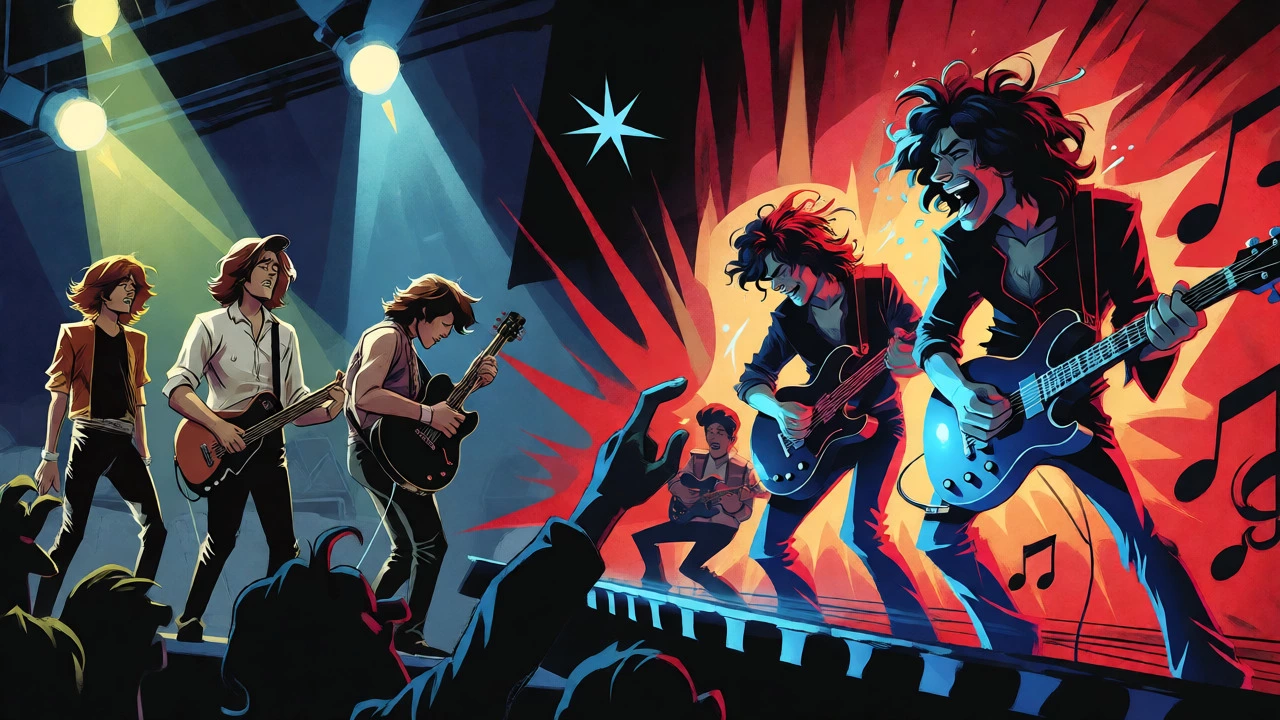
Here’s the irony of the 1970s: the best thing that could happen to a headliner was having a great opener who eventually became bigger than them. This happened constantly. It wasn't bad luck; it was part of the system.
- AC/DC opening for Rainbow (1978): Rainbow, led by Ritchie Blackmore, was the established name. AC/DC was still finding its footing. Fast forward to 1980, and Back in Black made AC/DC global superstars while Rainbow faded.
- Queen opening for Mott the Hoople (1974): Queen toured the U.S. as a support act. Mott had hits; Queen had potential. By 1975, Queen was headlining arenas worldwide.
- Bruce Springsteen opening for Anne Murray: Yes, really. Springsteen played an 80-minute set. Murray was the commercial draw based on radio charts. Springsteen was the critical darling. Guess who filled stadiums ten years later?
These examples show that billing order reflected current market power, not future potential. Promoters took risks. They bet on talent over trends. When those bets paid off, the entire ecosystem benefited. Fans felt smart for discovering the next big thing before everyone else did.
The Economics of the Support Slot
Why did bands agree to open? Money and exposure. But let's be clear: the pay disparity was massive. Headliners commanded six-figure guarantees plus a percentage of the door. Openers often received flat fees ranging from $500 to $2,000, depending on their fame level. For a band like Tom Petty and the Heartbreakers in 1977, opening for Meat Loaf at the Agora Ballroom in Cleveland wasn't about getting rich. It was about playing to 2,000 people who might buy their record next week.
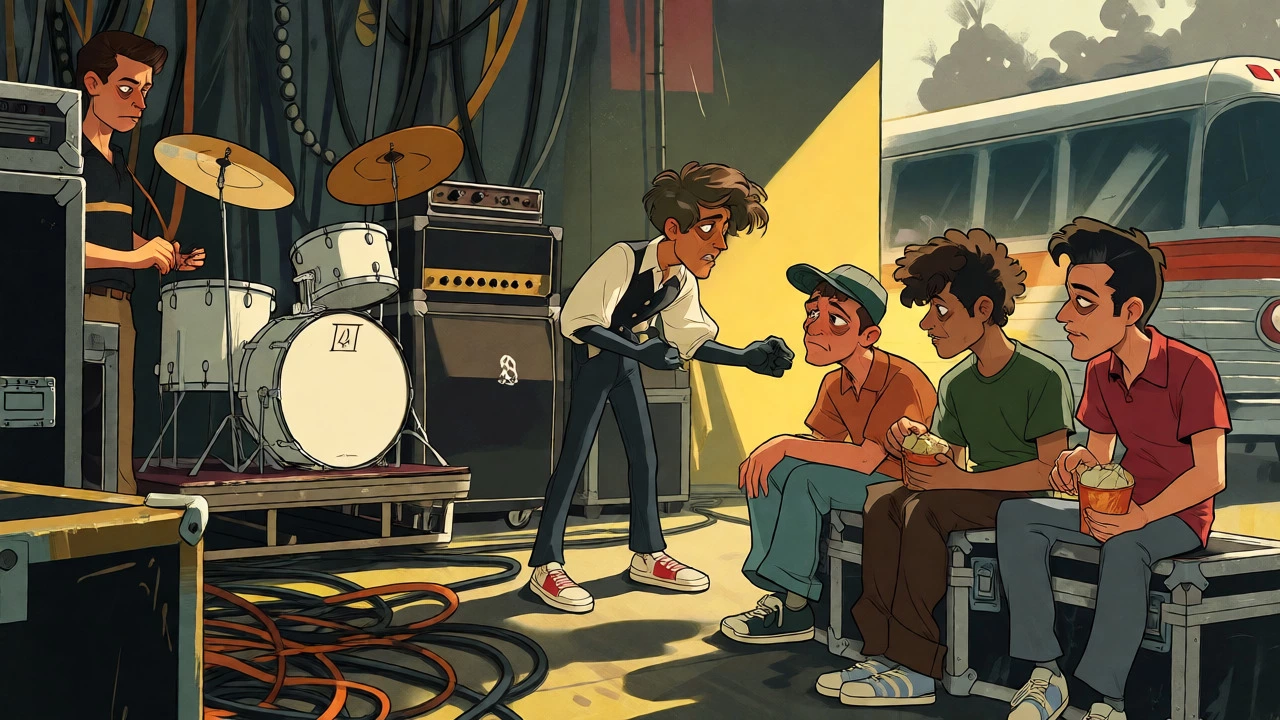
There were also logistical downsides. Openers rarely got prime sound checks. They often shared backline equipment-drums, amps-with the headliner. If the headliner's crew wanted specific settings, the opener adjusted. Sometimes, openers played to half-empty rooms because doors opened late. You'd watch Lynyrd Skynyrd tear it up in 1973 for Dr. John, only to realize half the audience was still buying beer outside.
Yet, the value proposition remained strong. Touring costs were lower when supported by a larger production. You traveled on the headliner's bus. You ate on their rider. You learned stagecraft from pros. For many bands, the 1970s support slot was a paid apprenticeship.
Setlists and Performance Dynamics
Concerts in the 1970s were segmented. Artists didn't just play a continuous block of songs. They performed in distinct sets, often separated by a break. James Taylor’s shows at the Jabberwocky in Syracuse in 1970 listed "Set 1" and "Set 2" explicitly. Deep Purple even mixed formats, playing standard rock sets alongside orchestral collaborations like Jon Lord’s Concerto for Group and Orchestra.
This structure affected how openers approached their slots. With limited time (often 30-45 minutes), they had to choose high-energy tracks immediately. No slow intros. No deep cuts. You had to hook the audience in the first 90 seconds. Bands like Cheap Trick mastered this. They knew they had to leave the crowd wanting more, not tired out.
Fans noticed these dynamics. Reddit threads and forum posts from the 2020s recall how AC/DC’s set for Cheap Trick in 1979 felt more intense than the headliner’s. The energy differential was real. Openers had nothing to lose. Headliners had reputations to protect. This psychological edge sometimes allowed underdogs to dominate the night.
Legacy of the 1970s Lineup Model
Today, we still use the 1970s framework, but we’ve simplified it. Festivals mimic the multi-act structure, but club tours usually stick to one opener. Why? Economics. Travel costs, insurance, and venue curfews make large bills harder to sustain. But the core idea remains: use the opener to build momentum.
The difference now is data. Promoters use streaming stats and social media metrics to book openers. In the 1970s, they used gut instinct and road reputation. Both methods work, but the 1970s model produced more surprises. More unexpected stars emerged from support slots because the barrier to entry was artistic merit, not algorithmic visibility.
If you’re organizing a show today, look at the 1970s playbook. Don’t just pick the most popular opener. Pick the one that complements your headliner’s vibe. Give them enough time to shine. Trust your audience to appreciate variety. You might just discover the next Queen before anyone else does.
How long did opening acts typically perform in the 1970s?
Opening acts in the 1970s typically performed for 30 to 60 minutes. However, exceptions were common. Established artists appearing in non-headlining roles, such as Stevie Wonder in 1972 or Bruce Springsteen in the mid-1970s, sometimes delivered sets lasting 55 to 80 minutes, which was comparable to headliner lengths.
Did opening acts get paid well compared to headliners?
No, the pay gap was significant. Headliners earned substantial guarantees and percentages of ticket sales. Openers usually received smaller flat fees, often ranging from $500 to $2,000, though they benefited from reduced travel costs and exposure to larger audiences.
Who was Bill Graham and why was he important to concert lineups?
Bill Graham was a legendary promoter known for curating multi-act bills at venues like the Fillmore West. He emphasized narrative flow, pairing genres strategically to keep audiences engaged throughout long evenings, setting a standard for concert curation that influenced the entire industry.
Can you give examples of openers who became more famous than their headliners?
Yes. AC/DC opened for Rainbow in 1978 but surpassed them in fame. Queen opened for Mott the Hoople in 1974 and became global icons. Bruce Springsteen opened for Anne Murray despite delivering longer, more energetic sets, eventually becoming a stadium-filling legend.
Were 1970s concerts divided into sets?
Yes, concerts were often structured with explicit "Set 1" and "Set 2" segments, even for single artists. Multi-act bills followed this pattern, with each artist performing distinct blocks separated by changeovers, creating a formalized rhythm to the evening.