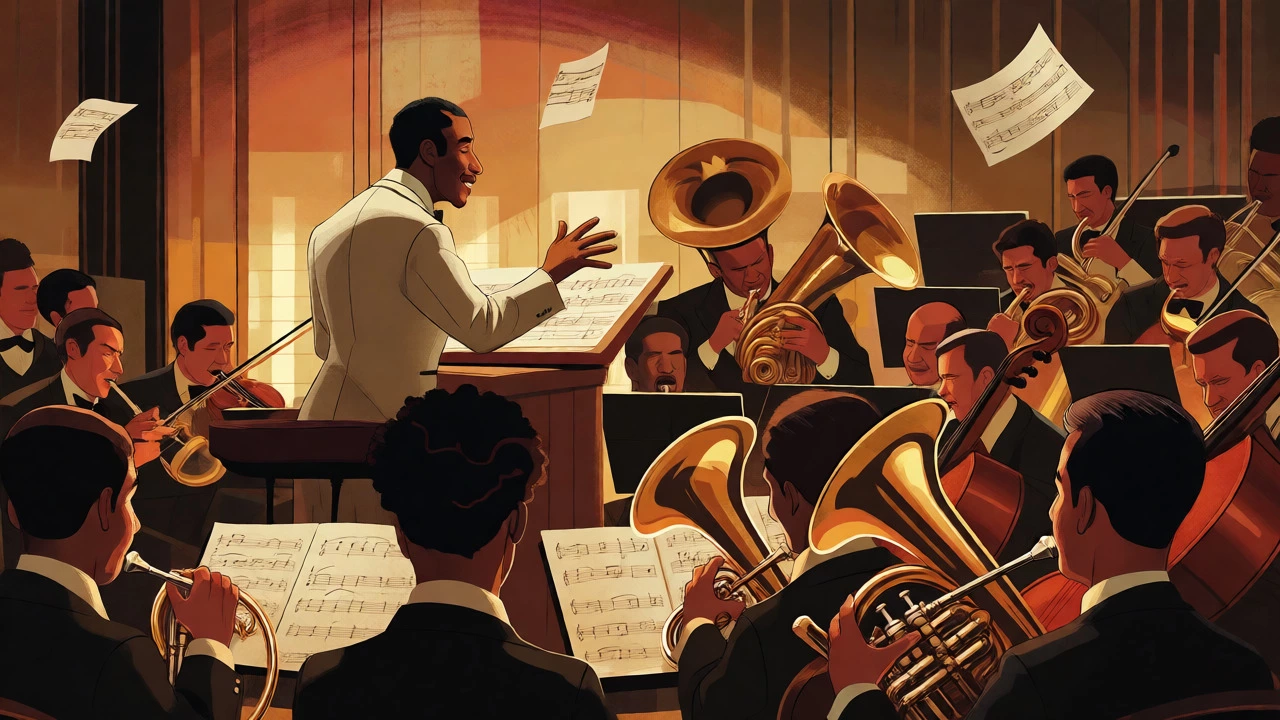

You’re listening to a classic 1970s R&B track. Maybe it’s the silky smoothness of The O’Jays or the punchy groove of Earth, Wind & Fire. What hits you first isn’t just the vocal hook-it’s that wall of sound behind it. That’s the horns. But they aren’t just blowing notes; they are acting as a second rhythm section, a harmonic bed, and an emotional amplifier all at once.
If you’ve ever tried to write a horn part for a soul track and it sounded thin, stiff, or like a jazz club in 1955, you’re missing the specific "color" that defined the decade between 1970 and 1979. This era saw brass arrangements evolve from background accompaniment into central architectural elements of the song. From the lush, orchestral density of the Philadelphia Sound to the tight, syncopated stabs of Memphis funk, understanding how these parts were constructed is the key to unlocking that authentic vintage vibe.
The Philadelphia School: Orchestral Density Over Raw Power
To understand 1970s soul brass, you have to start in Philadelphia. Before this era, R&B horns were often gritty, loud, and direct-think Stax Records or early Motown. Then came Gamble & Huff and their arranger Thom Bell. They didn’t want raw power; they wanted sophistication. They treated the horn section not as a separate entity but as part of a "working orchestra."
At Sigma Sound Studios, producer-engineer Joe Tarsia helped craft a sound that was richer in timbre than Motown and suaver than Stax. How? By blending traditional R&B horns with classical instruments. Thom Bell famously stated that he disliked the harshness of saxophones, so he frequently replaced them with French horns. This choice softened the upper register, creating a rounded, mellow texture that sat perfectly underneath the vocals rather than competing with them.
This approach required a massive ensemble. The house band, MFSB (Mother Father Sister Brother), wasn’t just a quartet; it was a pool of over thirty musicians, including string players from the Philadelphia Orchestra and brass players recruited from local theater pits. The result was a vertical layering effect: strings provided the low-end warmth, horns framed the mid-range harmonies, and the rhythm section drove the beat. If you’re writing for this style, think less about "riffs" and more about "voicings." Your trumpets should be playing long, sustained chords that resolve gently, avoiding the sharp, aggressive attacks found in earlier eras.
Rhythm and Lock: The Funk Influence
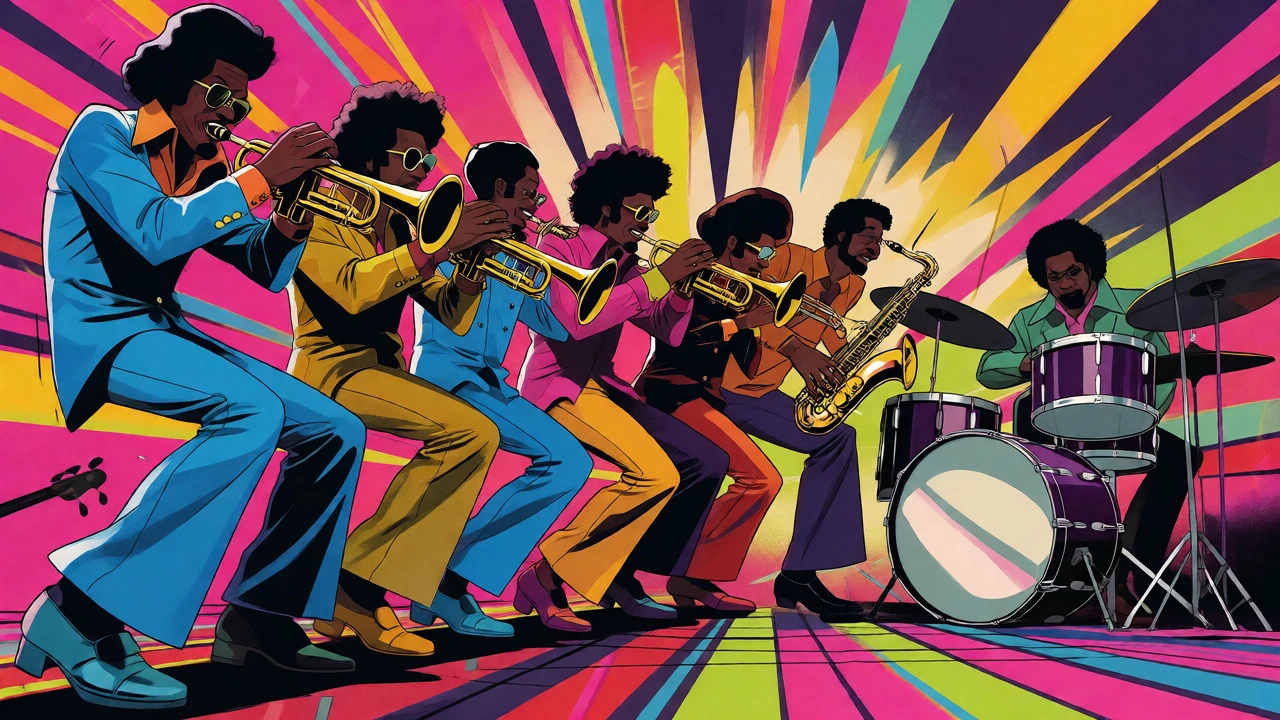
While Philadelphia focused on melody and harmony, other hubs like Detroit and Memphis pushed the rhythmic envelope. In tracks by Stevie Wonder or Tower of Power, the horns stopped being melodic counters and became percussive tools. Listen to "Superstition" or "What Is Hip." The horns aren’t singing; they’re punching.
This shift required a fundamental change in how arrangers thought about time. In 1970s funk-infused R&B, the horn section had to lock tightly with the drums and bass. It wasn’t enough to play on the beat; you had to play *with* the kick drum. A common technique was the "stab"-a short, accented chord played on the off-beat (the "and" of the beat) to create syncopation. These stabs were often doubled in unison across trumpets and saxes to maximize impact.
Notice the articulation. There’s rarely any legato phrasing here. Instead, you hear ghost notes, falls, and slides. A player might hit a note, let it decay quickly, and then slide down into the next one. This mimics the human voice’s natural inflection, adding a conversational quality to the brass. When arranging for this style, keep your lines stepwise. Large intervals feel disjointed in a funk context. Stick to thirds and sixths, and use contrary motion between parts to maintain clarity without cluttering the mix.
Voicing Secrets: Why It Sounds Smooth
Why do some modern attempts at 70s soul sound clunky while the originals glide? It usually comes down to voicing. The goal was consonance, not tension. Unlike jazz, which loves complex extensions like ninths and elevenths, 1970s R&B horns relied heavily on simple triads, thirds, and sixths.
A critical rule of thumb from historical analyses is to avoid doubling the seventh scale degree in close harmony. Doing so creates a dissonant cluster that clashes with the lush aesthetic. Instead, arrangers would spread the voices out. For example, if the lead trumpet plays the root, the second trumpet might play the third, and the trombone might play the fifth, but an octave lower. This open spacing prevents masking the lead vocal and allows each instrument’s tone to breathe.
Furthermore, register planning was crucial. Saxophones often handled the middle registers, bridging the gap between the bass guitar and the trumpets. Trombones provided the bottom anchor, reinforcing the bass line. By assigning specific frequency ranges to each instrument, producers ensured that the horn section added weight without muddying the track. If your arrangement sounds muddy, check your overlaps. Are two instruments fighting for the same space? Shift one up or down an octave.
Production Techniques: Glue and Space
Writing the notes is only half the battle. How those notes were recorded contributed massively to the "brass color." In the 1970s, multi-track recording allowed for overdubbing, but engineers like Tarsia preferred capturing the ensemble live to preserve interplay. However, they also used clever tricks to thicken the sound.
One standard practice was doubling. You might record the same horn part twice, panning one take left and the other right. This creates a wider stereo image and adds a subtle chorus effect due to microscopic timing differences. Another technique involved using plate reverb on a unified send bus for all horns. This glued the section together, making them sound like they were playing in the same room, even if they were recorded separately. Contrast this with modern DAW workflows where every instrument might get its own unique reverb; in the 70s, consistency was king.
Also, consider the "air" around the notes. 1970s recordings often featured less compression on horns than modern pop does. This allowed for dynamic expression-a soft pad could swell into a loud stab naturally. When mixing, resist the urge to squash the life out of your brass. Let the transients speak. Use EQ to carve out space for the vocals, typically rolling off some low-mids in the horns to prevent conflict with the snare drum and vocal presence.
| Style/Hub | Key Characteristics | Typical Instruments | Reference Artists |
|---|---|---|---|
| Philadelphia Soul | Lush, orchestral, mellow, integrated with strings | French horns, flugelhorns, alto saxes, violins | MFSB, The Stylistics, Harold Melvin & The Blue Notes |
| Detroit/Motown | Tight, economical, rhythmic support, bright tones | Trumpets, tenor saxes, baritone saxes | The Temptations, Stevie Wonder, The Four Tops |
| Memphis/Stax | Gritty, raw, loud, heavy emphasis on backbeat | Baritone saxes, trombones, trumpets | Isaac Hayes, Booker T. & the M.G.'s, The Bar-Kays |
| Funk/Disco | Percussive stabs, syncopated, high-energy | Unison trumpets, saxes, tight sections | Tower of Power, Earth, Wind & Fire, Kool & The Gang |
Legacy and Modern Application
You don’t need a thirty-piece orchestra to capture this magic. Modern sample libraries, such as those categorized under "Philly Soul" or "Detroit Soul," codify these techniques into thousands of pre-recorded licks. But samples alone won’t save a bad arrangement. The enduring appeal of 1970s brass lies in its intentionality. Every note served the song’s emotion or groove.
Today, producers sampling these records-from Public Enemy to Anderson .Paak-mine these breaks because they offer a complexity that digital synths struggle to replicate. The slight imperfections, the breathiness, the way a slide bends pitch slightly flat before resolving-these human elements define the genre. If you’re producing today, study the silence as much as the sound. The best 70s horn arrangements know when to shut up and let the vocal shine.
Start by transcribing simple parts. Take a track like "TSOP (The Sound of Philadelphia)" and map out where the horns enter and exit. Notice how they frame the chorus rather than interrupting it. Try writing a countermelody that moves in contrary motion to the vocal line. Experiment with French horn patches if you want that Philly warmth, or stick to bright trumpets for a Motown edge. The colors are there; you just have to learn how to mix them.
Why did Philadelphia soul arrangers prefer French horns over saxophones?
Arrangers like Thom Bell preferred French horns because they produced a mellower, rounder tone that blended better with strings and didn't compete aggressively with lead vocals. Saxophones were often seen as too bright or harsh for the sophisticated, orchestral aesthetic Gamble & Huff aimed to achieve.
How did horn sections contribute to the groove in 1970s funk R&B?
In funk-influenced R&B, horns acted as a percussion instrument. They played short, syncopated stabs that locked in with the drums and bass, emphasizing off-beats and adding rhythmic drive rather than just providing harmonic support.
What is the difference between Stax and Philadelphia horn arrangements?
Stax arrangements were typically rawer, louder, and more direct, focusing on grit and energy. Philadelphia arrangements were denser, smoother, and more orchestrated, often integrating horns with string sections to create a lush, polished, and radio-friendly sound.
Can I recreate 1970s horn sounds with modern software?
Yes, but it requires careful attention to articulation and voicing. Use sample libraries that include specific techniques like falls, slides, and ghost notes. Apply plate reverb to glue the section together and avoid overly quantized MIDI data to retain human feel.
What common voicing mistakes ruin 1970s-style horn parts?
Doubling the seventh scale degree in close harmony creates unwanted dissonance. Additionally, failing to plan registers can cause instruments to mask each other or the lead vocal. Keep voicings open and use contrary motion to maintain clarity.