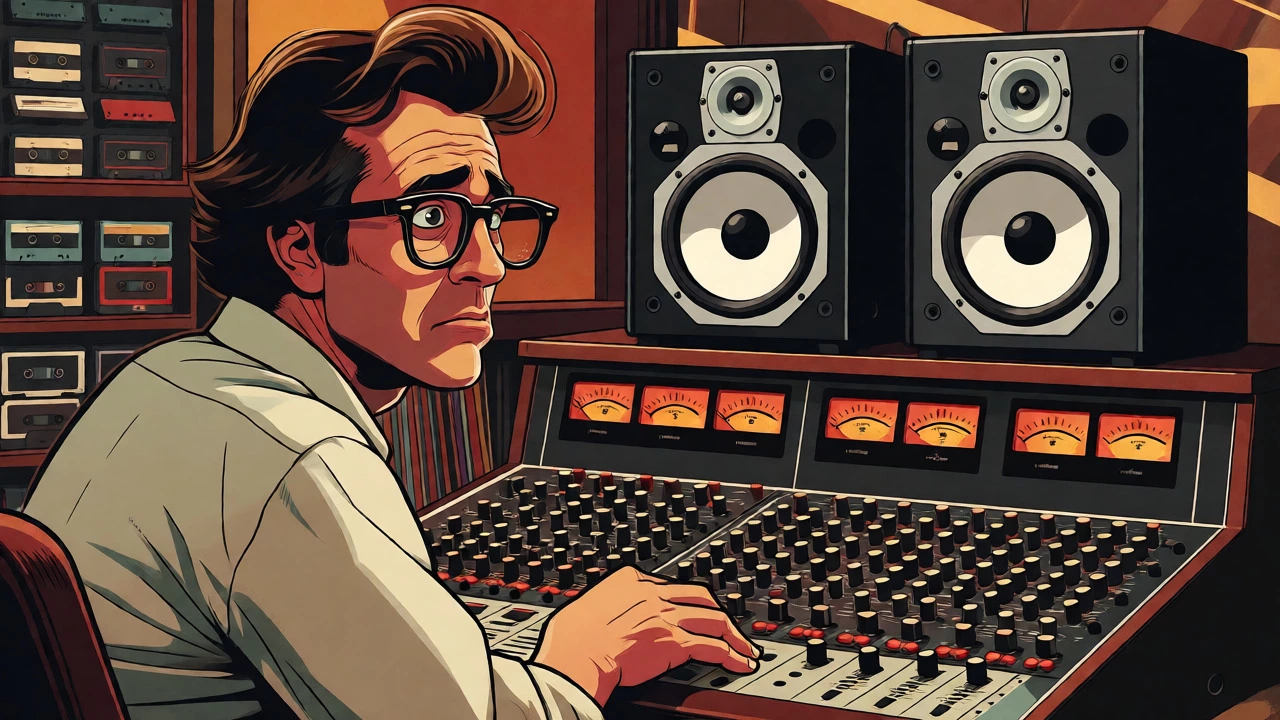

Imagine you spend three weeks perfecting a mix in a high-end control room. The bass is tight, the vocals sit perfectly, and the highs sparkle. You hand it to your client, they play it on their car stereo, and suddenly the vocal disappears into a muddy wall of sound. Why did that happen? In the 1980s, engineers didn't just guess; they used specific tools to predict this disaster before it happened. This practice is called mix translationthe ability of a stereo mix to maintain its intended balance across different playback systems. It wasn't about making the mix sound pretty in the studio; it was about making it sound correct everywhere else.
Today, we have flat-response monitors and high-fidelity headphones that reveal every flaw. But back then, the goal was different. Engineers relied on deliberately imperfect speakers like the Yamaha NS-10a nearfield studio monitor known for its unflattering midrange response and the Auratone 5Ca small single-driver speaker designed to mimic consumer playback devices. They also used headphonespersonal listening devices used primarily for checking noise floor and stereo imaging rather than tonal balance, though often as secondary tools. Understanding how these three elements worked together explains why so many classic records from that era still hold up, while modern mixes sometimes fail outside the studio.
The Core Problem: Why Your Studio Sound Lies to You
Here is the uncomfortable truth: your expensive studio monitors are lying to you. Not because they are bad, but because they are too good. A $10,000 pair of main monitors reproduces frequencies from 30 Hz to 20 kHz with surgical precision. But where does your listener actually hear music? In 1984, most people listened on cassette decks, car radios with tiny speakers, or televisions. These systems couldn't reproduce deep sub-bass or crisp air frequencies. If you mixed a track to sound full and rich on big mains, it would sound thin and harsh on a car radio because the car radio simply couldn't handle the low end you were boosting.
Mix translation solves this by forcing the engineer to make decisions based on limitations, not possibilities. Instead of asking, "Does this bass sound powerful?" the question became, "Can I still hear the bass note clearly when the speaker cuts off everything below 100 Hz?" This mindset shift defined the workflow of top studios in Los Angeles, London, and New York during the late 70s and 80s. It required a toolkit that prioritized consistency over beauty.
The Yamaha NS-10: Ugly Truths and Honest Mids
If you walk into any recording studio documentary from 1985, you will see them. White cones, black cabinets, sitting on the console bridge. The Yamaha NS-10originally released as the NS-10M hi-fi bookshelf speaker in 1978 wasn't designed for studios. Akira Nakamura at Yamaha designed it for living rooms. But engineers discovered something profound: the NS-10 was brutally honest. It had no port, meaning the bass was tight but limited. It had a prominent midrange peak, which made vocals and guitars stand out aggressively. And it sounded harsh if you got the EQ wrong.
This harshness was the feature, not the bug. Because the NS-10 exposed flaws, an engineer who could make a mix sound balanced on an NS-10 knew it would likely sound acceptable on other systems. The logic was simple: if the mix survived the NS-10's midrange scrutiny, it would survive the average home stereo. By the mid-80s, freelance mixers literally carried pairs of NS-10s from studio to studio. They didn't trust the house monitors. They trusted the one reference they knew inside out. This created a de facto standard. When Bob Rock mixed Metallica's *Black Album* in the early 90s, he was working within a tradition established by the NS-10's dominance in the 80s.
It is worth noting that the NS-10 was discontinued in 2001, partly because Yamaha struggled to source the specific wood pulp needed for those white cardboard woofers. Today, used pairs sell for hundreds of dollars. Modern equivalents try to replicate this behavior, but few capture that specific combination of fatigue-inducing honesty and reliable translation.
Auratone 5C: The Car Radio Simulator
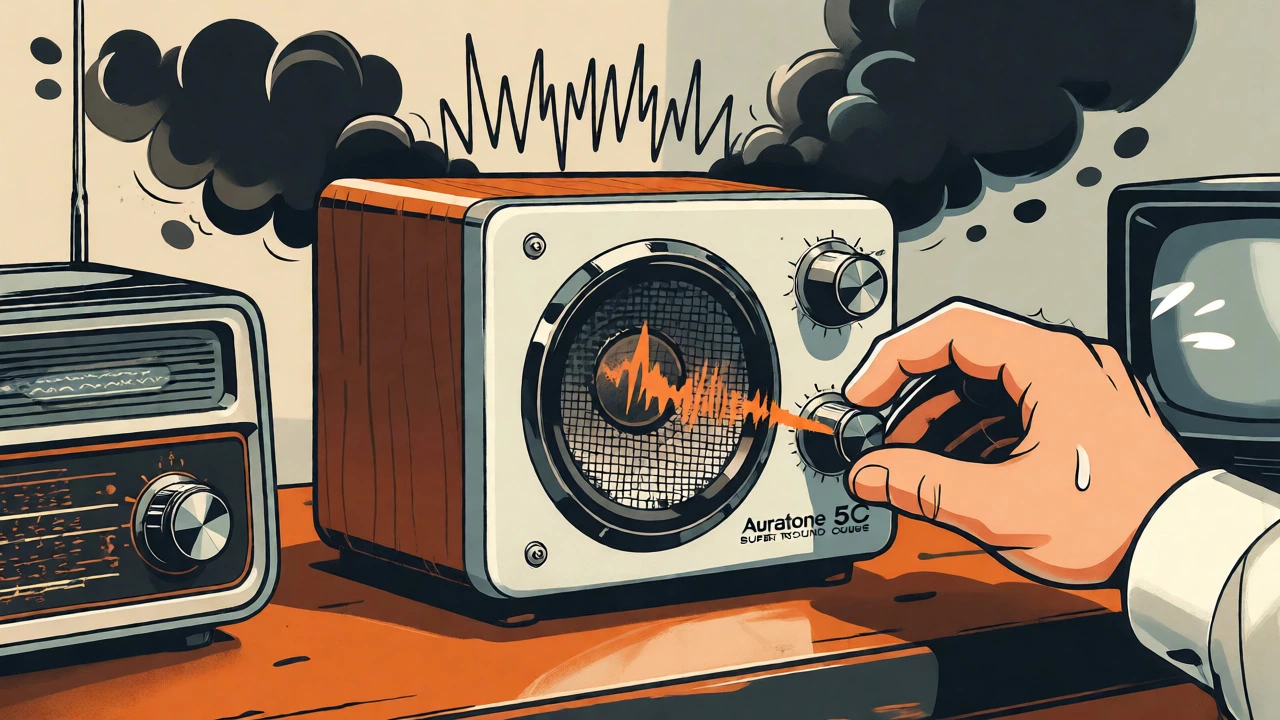
If the NS-10 was the primary mixing tool, the Auratone 5C Super Sound Cubea compact reference speaker with a single 4.5-inch full-range driver was the reality check. Often called "truth speakers," Auratones took the concept of limitation even further. With a frequency response roughly between 80 Hz and 15 kHz (sources vary slightly on exact specs), they completely removed the sub-bass and the extreme highs. They simulated the experience of listening to a song on a portable transistor radio or a TV set.
Why use such a terrible-sounding speaker? Because it forced clarity. If your lead vocal disappeared when played through an Auratone, it meant your vocal frequency range was getting masked by instruments. You couldn't hide behind lush reverb tails or deep sub-bass rumble. The Auratone stripped the mix down to its core components: melody, rhythm, and intelligibility. Engineers would frequently switch between their NS-10s and Auratones during a session. One moment they were balancing the snare drum on the NS-10s; the next, they were checking if the singer's lyrics were still audible on the Auratone cube.
| Feature | Yamaha NS-10 | Auratone 5C | Studio Headphones |
|---|---|---|---|
| Primary Role | Nearfield Mixing Reference | Consumer Playback Simulation | Noise Floor & Imaging Check |
| Frequency Focus | Midrange Heavy, Tight Bass | Midrange Only (No Sub/Lows) | Full Range (Variable) |
| Listening Fatigue | High (Harsh Mids) | Low (Limited Bandwidth) | Medium (Ear Pressure) |
| Translation Reliability | Excellent for Cars/Home Stereo | Excellent for Radios/TVs | Poor for Tonal Balance |
The Forgotten Tool: Headphones in the Analog Era
You might think headphones were the secret weapon. After all, they isolate the listener from room acoustics. But in the 1980s, headphones played a very different role than they do today. Most professional engineers avoided using headphones for final tonal balance. Why? Because headphone sound is unnatural. When you listen on speakers, left ear hears right speaker and vice versa (crosstalk). Headphones send distinct signals to each ear. This creates an exaggerated stereo image that doesn't exist on speakers. A mix that sounds wide and spacious on headphones can collapse into a narrow, mono-like mess on a car dashboard.
So, what did they use headphones for? Three things:
- Noise Floor Checks: Putting on closed-back headphones allowed engineers to hear tape hiss, hum, or clicks that were masked by ambient room noise on speakers.
- Stereo Imaging: Checking if a panned instrument was truly in the center or drifting to one side.
- Editing Precision: For cutting tape or editing digital audio, headphones provided the detail needed to find exact start points without disturbing neighbors.
Engineers rarely mixed *on* headphones. They mixed on speakers, then checked with headphones. This hierarchy mattered. The loudspeaker was the judge; the headphones were the inspector.

Building a 1980s Translation Workflow
How did this actually work in practice? Imagine you are mixing a rock song in 1986. You start on large soffit-mounted mains to get the energy and dynamics right. Then, you switch to the NS-10s. Here, you adjust the guitar tones and vocal levels. If the vocals are buried, you boost them until they cut through the NS-10's midrange bump. Next, you hit the button for the Auratones. Now the bass is gone. Does the song still groove? If yes, your bass line has strong fundamental frequencies that don't rely on sub-bass tricks. Finally, you put on headphones. Do you hear any weird phase issues? Is there a click at the beginning of the track?
This triangulation method-Mains for vibe, Nearfields for balance, Cubes for clarity, Headphones for technical errors-created robust mixes. It prevented the common pitfall of "studio syndrome," where a mix sounds amazing in the controlled environment of the control room but fails in the real world.
Modern engineers often struggle with this. We have access to spectrum analyzers and reference tracks, but we lack the physical discipline of switching monitors constantly. Many modern mixes are over-compressed or over-EQ'd because they are tuned to flat-response monitors that never complain. If you want to revive this approach, buy a cheap Bluetooth speaker or use a phone speaker. If your mix sounds good on that, it will likely sound good on anything.
Legacy and Modern Application
Did the NS-10 disappear? Not really. Its DNA lives in every "flat response" monitor that tries to be neutral. But the philosophy of intentional bias remains. Companies like Auratone now sell active recreations of the 5C, complete with built-in amplifiers, catering to producers who miss that immediate, brutal feedback. Some modern plugins emulate the frequency response of the NS-10 or Auratone, allowing you to switch modes inside your DAW.
Is it outdated? No. The problem hasn't changed. People still listen on bad speakers. Smartphones, laptops, and cheap earbuds dominate consumption today, just as TVs and car stereos did in the 80s. The specific hardware has changed, but the need for translation is stronger than ever. Using a reference speaker that lacks bass forces you to mix the midrange content correctly, which is exactly what smartphone speakers reproduce best.
Next time you finish a mix, don't just bounce it and call it done. Put it on your phone. Listen to it in your car. Put on cheap earbuds. If it holds up, you've mastered the art of translation. If it falls apart, go back to the drawing board-and maybe consider buying some white-coned speakers.
Why were Yamaha NS-10s so popular if they sounded bad?
They weren't popular because they sounded beautiful; they were popular because they were consistent. Their unflattering midrange response exposed mix errors quickly. If a mix sounded good on NS-10s, engineers trusted it would translate well to consumer systems like cars and home stereos, which shared similar sonic limitations.
What is the difference between Auratones and NS-10s?
NS-10s were primary nearfield monitors used for detailed mixing decisions, offering a wider frequency range than Auratones. Auratones were smaller, single-driver speakers with very limited bandwidth (no sub-bass), used specifically to check if the core musical elements remained clear on small consumer devices like radios and TVs.
Did engineers mix on headphones in the 1980s?
Rarely for tonal balance. Headphones were used for checking noise floors, stereo imaging, and precise edits. Mixing on headphones was avoided because the lack of crosstalk created an unnatural stereo image that didn't translate accurately to loudspeakers.
Are Auratones still useful today?
Yes. Modern listeners consume music on smartphones and laptop speakers, which have limited frequency ranges similar to 1980s consumer gear. Using Auratones or similar reference speakers helps ensure that vocals and rhythmic elements remain clear on these small playback systems.
What happened to the Yamaha NS-10?
Production ended in 2001, largely due to difficulties sourcing the specific wood pulp used for the white paper cone drivers. However, used units remain highly sought after, and Yamaha's subsequent HS series monitors carry forward some of the translation-focused design principles.