

Did you know that some of the most iconic "greatest hits" albums of the 1980s weren't created because artists wanted to celebrate their careers, but because they were legally forced to? It sounds cynical, but it’s true. The Greatest Hits album was a multi-purpose tool for record labels. It served as a cash cow during the Compact Disc boom, a way to fulfill contractual obligations without recording new material, and a strategic method to lock down ownership of valuable master recordings. If you’ve ever wondered why so many bands released compilations right before leaving their labels, or why your favorite 80s tracks suddenly sounded better on CD, this is the story behind the business.
The Perfect Storm: MTV, CDs, and Corporate Greed
To understand why the greatest-hits machine went into overdrive in the 1980s, you have to look at the industry landscape. Three major shifts happened almost simultaneously. First, MTV launched in 1981, turning music videos into a primary sales driver. Second, the CD arrived, offering consumers a chance to "upgrade" their collections with pristine digital sound. Third, corporate consolidation turned record catalogs into billion-dollar assets.
In 1987, Sony bought Columbia Records’ parent company for roughly $2 billion. PolyGram followed suit, acquiring Island and A&M Records. These weren’t just purchases of current stars; they were acquisitions of historical catalogs. Labels realized that old hits, when repackaged correctly, could generate revenue with minimal risk. Unlike a new studio album, which might flop, a greatest-hits collection contained songs that had already proven their worth on the radio. The financial incentive was massive. In 1986 alone, while LP sales dropped by 25%, CD sales skyrocketed by approximately 150%. Labels saw an opportunity to sell the same songs twice-once on vinyl, then again on shiny new discs.
The Contractual Loophole: Fulfilling Obligations Cheaply
For many artists, a greatest-hits release wasn’t a choice; it was a legal necessity. Standard recording contracts often required artists to deliver a specific number of albums. When an artist wanted to leave a label but still owed an album, a compilation was the cheapest, fastest way to satisfy the contract. You didn’t need to book expensive studio time or wait for inspiration. You just needed to license existing tracks and maybe add one or two new singles to make it feel fresh.
Tom Petty and the Heartbreakers are a prime example. By the late 1980s, they wanted out of their deal with MCA Records. They still owed the label one final album. Instead of spending months crafting a new masterpiece, they released Greatest Hits in 1993 (though the strategy was prevalent throughout the late 80s). This package included two new songs, which gave the label promotional material while allowing Petty to move on. For the label, it was a win-win: they got a commercially reliable product without investing in development costs, and they kept the artist’s catalog under their umbrella until the contract expired.
Format Wars: Why Your Vinyl Didn’t Sound Like Your CD
The transition from analog to digital formats heavily influenced how these albums were packaged. In the early 80s, labels were scrambling to adapt. Cassettes became the dominant format by 1984, outselling vinyl LPs. Then came the CD. By 1987, CDs had overtaken LPs in sales. This created a unique marketing challenge: how do you get someone who already owns all the hits on cassette to buy them again?
The answer was the "twofer" strategy and deluxe packaging. Labels began releasing double-CD sets that included rare B-sides, remixes, or unreleased demos. Billy Joel’s Greatest Hits Volumes I & II, released in 1985, is a classic case study. It wasn’t just a list of top ten songs; it was a comprehensive career overview designed to appeal to both casual listeners and die-hard fans. The inclusion of deeper cuts justified the purchase price. Furthermore, the superior audio quality of the CD format was marketed as a reason to upgrade. Suddenly, owning the original vinyl felt obsolete, even if the song selection was identical.
| Album Title | Artist | Year | Label | Strategic Purpose |
|---|---|---|---|---|
| Greatest Hits | Queen | 1981 | EMI / Elektra | Capitalized on the rise of MTV; first major global compilation for the band. |
| Greatest Hits, Vols. 1 & 2 | Billy Joel | 1985 | Columbia | Leveraged the CD boom; certified 23x Platinum due to dual-format sales. |
| Greatest Hits | Journey | 1988 | Columbia | Stabilized revenue during a hiatus; later became one of the best-selling compilations ever. |
| Greatest Hits | Reba McEntire | 1987 | MCA | Monetized country catalog; reached #2 on US charts, proving crossover appeal. |
| Greatest Hits | Prince | 1985 (context) | Warner Bros. | Used to manage release schedule disputes; highlighted tension over master ownership. |
Master Ownership: The Battle for Control
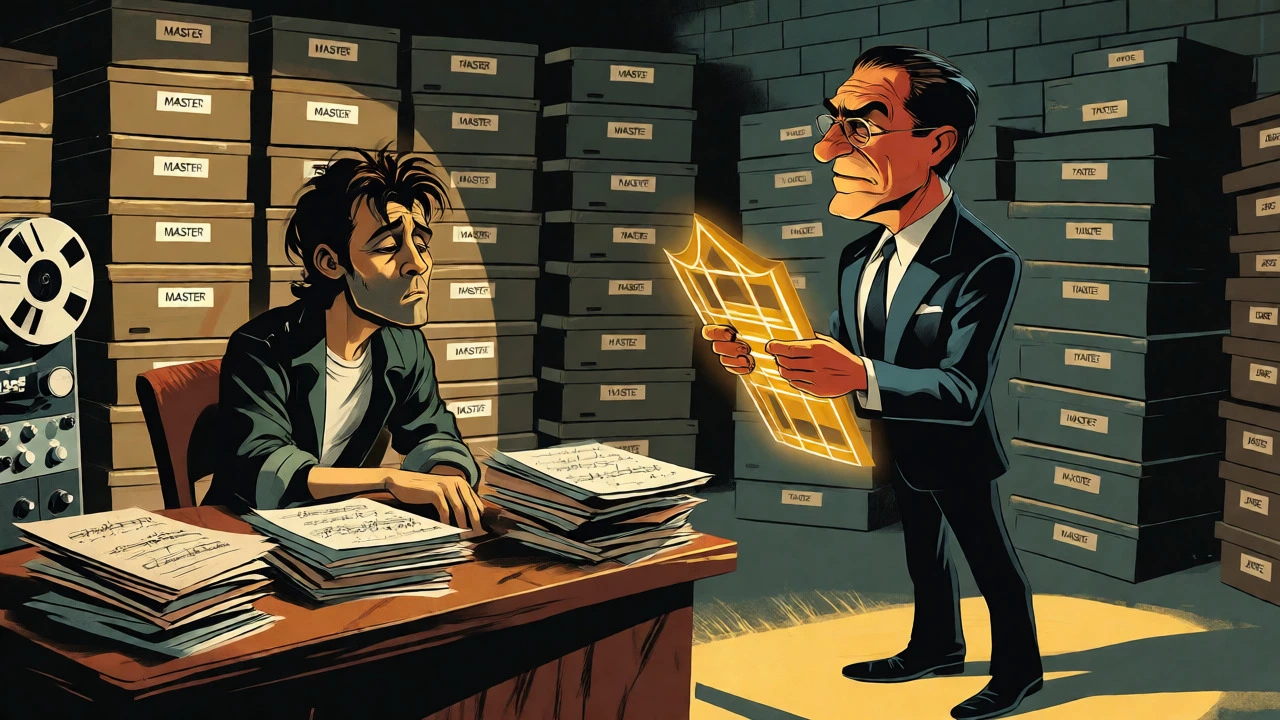
Perhaps the most critical aspect of 1980s catalog strategy was the fight over master recordings. The master tape is the original source recording. Whoever owns the master controls how the music is licensed for movies, commercials, and reissues. For decades, labels owned the masters, not the artists. This dynamic led to some of the most famous feuds in music history.
Prince famously clashed with Warner Bros. over this issue. Prince wanted to release music faster than the label allowed and retain ownership of his work. Warner Bros., however, viewed scarcity and controlled release cycles as essential to protecting value. When Prince signed a reported $100 million contract in the early 90s, part of the negotiation involved how his back catalog would be handled. Greatest-hits packages became pawns in this game. Releasing a compilation could fulfill a contractual obligation, effectively ending the label’s control over future releases for a period, or conversely, extend the label’s hold on the artist’s brand.
David Bowie offers a different perspective. His early RCA recordings reverted to him in 1984 due to contract terms. Rykodisc later obtained rights to reissue these albums. This shows that catalog strategy wasn’t monolithic; it depended entirely on the fine print. Some artists negotiated reversion clauses, others sold their publishing rights, and some simply lost out. The greatest-hits album was often the visible tip of this complex iceberg of intellectual property law.

Consumer Perception vs. Label Reality
From a consumer standpoint, a greatest-hits album seemed like a no-brainer. It was affordable, convenient, and featured familiar songs. But critics argued that these compilations were artistically reductive. They flattened an artist’s evolution into a single narrative, ignoring experimental phases or failed experiments that were crucial to their identity. Pitchfork and other cultural commentators noted that the sheer volume of these releases diluted the impact of genuine artistic statements.
However, for the average listener, the convenience outweighed the critique. In an era before Spotify playlists, a greatest-hits CD was the only easy way to access an artist’s entire body of work. It democratized access to music. You didn’t need to buy five separate albums to hear Journey’s biggest songs; you just bought one disc. This accessibility helped keep older artists relevant. Bands like Eagles used compilations to maintain visibility during long gaps between studio albums. Asylum Records reportedly pushed for Eagles best-of packages because the band generated over 50% of the label’s revenue, yet took years to record new material. The compilation kept the cash flowing and the brand alive.
Legacy of the 1980s Compilation Model
The physical model of the 1980s greatest-hits album has largely disappeared, replaced by streaming playlists and algorithmic discovery. Yet, the underlying strategies remain. Today’s "deluxe editions," anniversary box sets, and vault releases are direct descendants of the 80s approach. Labels still use archival content to monetize catalogs without requiring new creative output from artists.
The key lesson from the 1980s is that a greatest-hits album was never just a collection of songs. It was a financial instrument, a legal shield, and a marketing tool wrapped in cardboard. Understanding this helps explain why certain artists have multiple competing compilations, why some versions include rare tracks while others don’t, and why the person who owns the masters matters more than the person who sang the words. Next time you see a "Best Of" album, ask yourself: Was this made for the fan, or for the contract?
Why did record labels push greatest hits albums in the 1980s?
Labels pushed greatest hits albums primarily to capitalize on the Compact Disc (CD) boom. Since the songs were already recorded and popular, the production risk was low. Additionally, CDs offered higher profit margins than vinyl, encouraging labels to persuade fans to repurchase their existing collections in the new digital format.
Did artists always approve their greatest hits compilations?
No. Approval depended entirely on the recording contract. Many artists, like Tom Petty, used compilations to fulfill remaining contractual obligations cheaply. Others, like Prince, fought against labels that wanted to release compilations to maximize profits without the artist's full creative input or consent regarding track selection.
What is the difference between owning publishing rights and master recordings?
Publishing rights refer to the ownership of the song composition (lyrics and melody), usually held by the songwriter or publisher. Master recording rights refer to the ownership of the specific audio recording of that song, typically held by the record label. In the 1980s, labels often owned the masters, giving them control over reissues and licensing, while artists fought to regain these rights.
Which 1980s greatest hits album was the most successful?
While sales figures vary by source, Billy Joel’s Greatest Hits, Volumes I & II (1985) and Journey’s Greatest Hits (1988) are among the highest-certified. Billy Joel’s set is certified 23-times Platinum in the US, reflecting its massive success across both vinyl and CD formats during the decade.
How did MTV influence the release of greatest hits albums?
MTV increased the visual component of music consumption. Compilations often included video clips or were timed to coincide with heavy video rotation. Artists with strong visual identities, like Queen or Michael Jackson, saw their compilations benefit from constant exposure on television, driving album sales beyond just radio play.