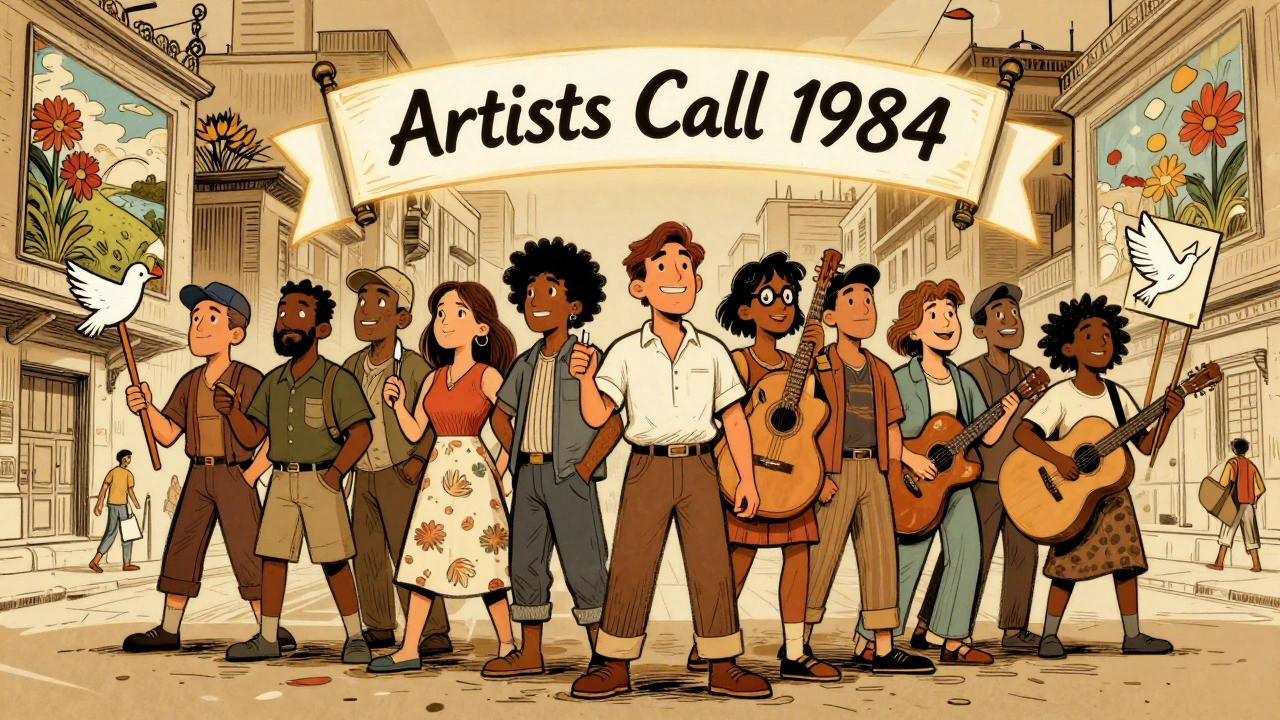

Global Solidarity Tours aren’t just concerts with a cause-they’re organized, intentional movements where musicians, visual artists, and performers leave their home countries to stand with people facing oppression, war, or displacement. These tours don’t ask for applause. They ask for attention. And sometimes, they ask for change.
In 1984, over 1,100 artists from the Americas and Europe came together under a single banner: Artists Call. It wasn’t a festival. It wasn’t a fundraiser. It was a declaration. The group organized 31 exhibitions, film screenings, and performances across 27 cities in the U.S. and Canada. Their goal? To expose the U.S. government’s role in fueling violence in Central America. Paintings, sound installations, mail art, and documentary photos filled galleries, schools, and even TV stations. No artist was asked to make the same piece. But every one was asked to ask: If we can witness the destruction of another culture, are we still allowed to make our own?
That question still echoes today. Artists don’t need to live in a war zone to feel its weight. They don’t need to be refugees to speak for those who are. What they do need is connection. And the best way to build that? Show up. In person. With their art.
From Santiago to Sydney: How Art Became a Tool of Solidarity
The idea of artists crossing borders for justice isn’t new. In the early 1970s, Chile’s President Salvador Allende invited artists worldwide to help tell the story of his country’s democratic experiment. He didn’t ask for money. He asked for art. And they came. Over 600 pieces were donated in the first year alone. From abstract expressionists in New York to conceptualists in Berlin, artists sent paintings, sculptures, and prints. The Museo de la Solidaridad in Santiago became a living archive of global support. Art critic Dore Ashton, poet Pablo Neruda, and curator Harald Szeemann-all played roles in making it happen. It wasn’t about selling art. It was about saying: Your struggle is mine, even if I’ve never set foot in your country.
Fast forward to 2014. The Sydney Biennale was preparing to open, but artists Libia Castro, Ólafur Ólafsson, and others pulled out. Their reason? The event’s sponsor, Transfield, was managing Australia’s offshore detention centers for asylum seekers. These weren’t just political statements-they were acts of refusal. By walking away, they made a louder statement than any poster or song ever could. They said: We won’t let our name be used to clean up injustice.
How Modern Solidarity Tours Work Today
Today’s global solidarity tours blend old-school organizing with digital tools. A curator in Berlin might launch an open call for artists in Ukraine, Colombia, or Palestine. Artists respond by uploading video performances, digital installations, or recorded songs. These are then compiled into online galleries or livestreamed events. The Antiwar Coalition, started by Belarusian curators in exile, lets artists from anywhere upload work to show support for Ukraine. No visa required. No travel costs. Just a connection.
But here’s the tension: Can you truly stand with someone if you’ve never met them? Can a song written in Portland about a village in Gaza carry the same weight as one written in Gaza itself? Some say yes. Others say no. The truth? It’s both.
Physical presence still matters. When musicians tour refugee camps in Jordan or perform in bombed-out theaters in Ukraine, the impact is immediate. A child hears a guitar for the first time in months. A grandmother weeps because the song reminds her of home. These moments can’t be replicated online. But digital platforms expand access. An artist in Nairobi can join a campaign for Indigenous land rights in Canada. A producer in Lagos can remix a protest chant from the Philippines. The network grows. The message spreads.
Who Gets to Be Part of the Movement?
Not everyone is welcome. And that’s intentional.
The Antiwar Coalition doesn’t accept submissions from Russian artists. Why? Because, in their view, Russia is the aggressor. This decision sparked debate. Is solidarity about shared humanity-or shared opposition? Can an artist from a country accused of wrongdoing still contribute meaningfully? Or does their presence dilute the message?
There’s no universal answer. But history shows that solidarity isn’t blind. It’s strategic. In 1984, Artists Call didn’t invite artists from countries supporting U.S. military intervention in Central America. In 2025, a campaign for Palestinian rights might refuse partnerships with corporations tied to arms manufacturing. Solidarity isn’t about including everyone. It’s about aligning with those who are truly aligned.
The Real Impact: Awareness Over Legislation
Let’s be clear: Artistic solidarity tours rarely change laws. They don’t pass bills. They don’t end wars. But they do something just as powerful: they shift how people see.
Artists Call didn’t stop the U.S. from funding death squads in El Salvador. But they made thousands of people in Ohio, Toronto, and Chicago ask questions. They forced museums to host exhibits about Central America when no one else would. They turned silence into noise.
Today, when a musician plays a set in a displaced persons camp in Lebanon and posts it online, it reaches 500,000 people. Some click away. Some share it. A few donate. A handful volunteer. That’s the ripple effect. It’s slow. It’s messy. But it’s real.
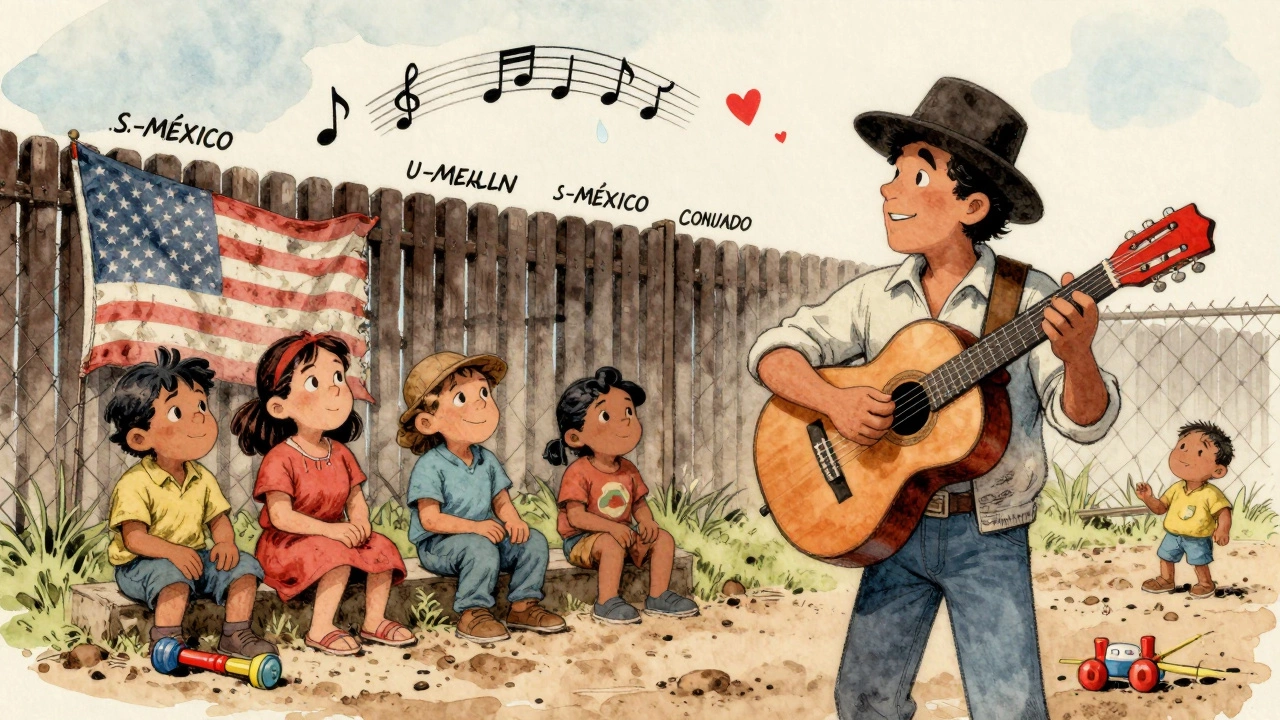
One of the most powerful moments in recent memory came from a small tour in 2023. A group of Colombian musicians traveled to the U.S.-Mexico border to perform for families detained at detention centers. They didn’t have permits. They didn’t have police approval. They had guitars, drums, and a list of names of people they’d met the day before. They played those names as songs. One mother, holding her 3-year-old, whispered: “I haven’t heard music since we left my town.”
What Makes a Solidarity Tour Legitimate?
Not every artist who sings about injustice is part of a solidarity tour. There’s a difference between performative activism and real partnership. Here’s what separates them:
- They listen first. The artists don’t show up with a pre-written script. They sit with community leaders. They learn the language, the history, the pain.
- They share the stage. Local artists aren’t just opening acts-they’re co-creators. The tour is built together.
- They leave something behind. Instruments. Training. Funds. A mural. A recording studio. Not just a concert.
- They don’t take credit. The campaign doesn’t become “Bryan’s Tour.” It becomes “The People’s Response.”
When artists cross borders for causes, they’re not heroes. They’re witnesses. And witnesses have a responsibility: to keep telling the truth, even when it’s uncomfortable.
The Future of Artistic Solidarity
The next wave of global solidarity tours will be hybrid. Physical events in crisis zones will be paired with digital archives. A performance in Kyiv might be live-streamed to a school in Nairobi. A mural painted in Gaza could be projected onto a building in Berlin. Blockchain-based art tokens might fund direct aid to families affected by war.
But the core won’t change. It never has. Solidarity isn’t about how far you travel. It’s about how deeply you listen. It’s not about how many people you reach. It’s about how many voices you carry with you.
Artists don’t need to be experts on every crisis. But they do need to be honest about their place in it. They’re not saviors. They’re messengers. And sometimes, the most powerful message is simply: We see you. We remember you. We’re still here.
Can artists really make a difference through solidarity tours?
Yes-but not by changing laws overnight. Their power lies in shifting public awareness. When artists tour, they bring stories that news outlets ignore. A song about a displaced family in Syria can reach millions who never knew the conflict existed. These tours turn abstract crises into human experiences, making it harder for people to look away.
Do artists need to visit conflict zones to be part of solidarity efforts?
Not always, but it deepens the impact. Virtual campaigns can reach global audiences quickly, but being on the ground builds trust. A musician who plays for refugees in a camp in Lebanon gains insights no Zoom call can provide. The best solidarity combines both: digital reach and physical presence.
How do artists avoid cultural appropriation in solidarity tours?
They don’t speak for others. They amplify. They collaborate with local artists, let them lead the narrative, and credit them fully. Solidarity isn’t about borrowing a culture’s pain to make your art more “authentic.” It’s about standing beside someone, not speaking in their place.
Are there risks for artists who join these tours?
Absolutely. Artists traveling to conflict zones risk detention, surveillance, or violence. Even those working remotely face backlash-online harassment, canceled gigs, or funding cuts. Many operate under pseudonyms or through NGOs for protection. The price of solidarity is often high, but many choose to pay it anyway.
What’s the difference between a charity concert and a solidarity tour?
Charity concerts often center the artist. Solidarity tours center the community. One says, “Help us help them.” The other says, “We are with them.” Solidarity tours are led by local voices, prioritize long-term relationships over one-time events, and often give away resources-not just money, but tools, training, or platforms.


