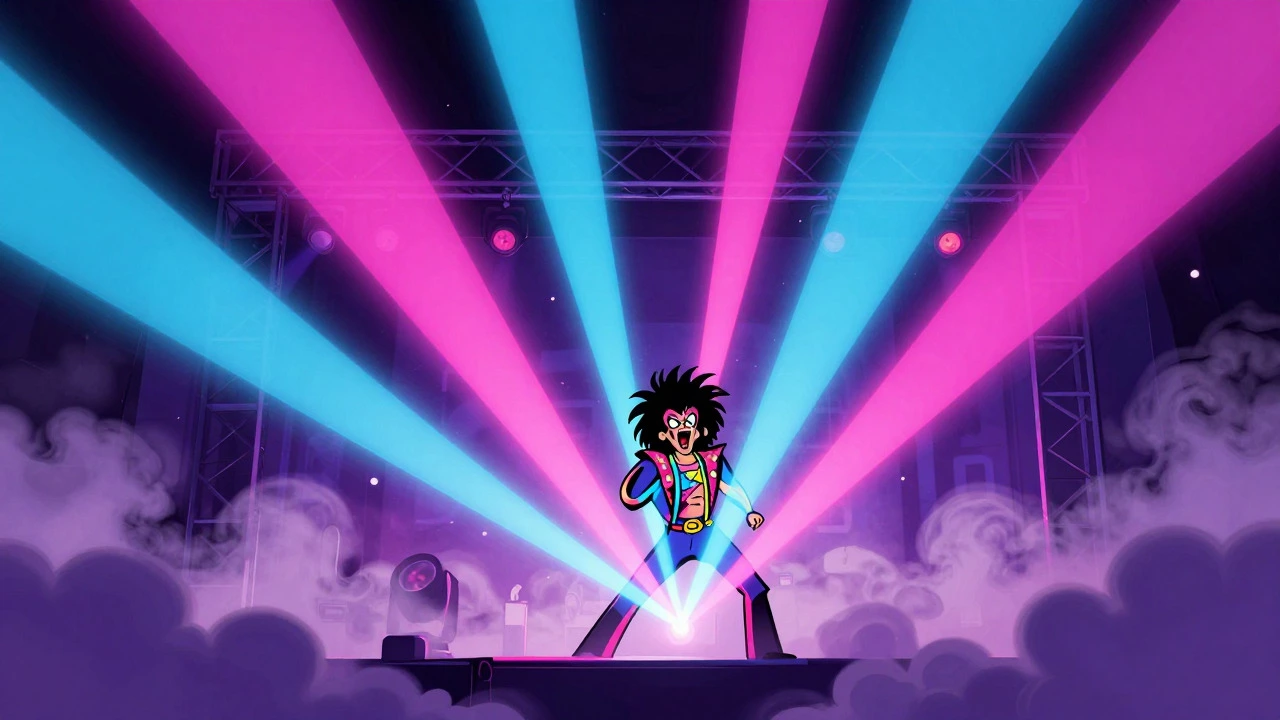

Imagine standing in the front row of a 1970s glam concert. The air is thick, the colors are impossible, and beams of light cut through the darkness like solid objects. That visual shock wasn't just luck; it was a deliberate engineering choice. Today, we have moved far beyond the simple strobes and colored gels of David Bowie's early tours. Modern glam rock lighting relies on a sophisticated blend of solid-state lasers, fine atmospheric haze, and complex color-mixing systems to recreate that era's excess with higher precision and safety.
This isn't just about making things bright. It's about controlling how light interacts with the air itself. If you've ever wondered why some shows feel immersive while others feel flat, the answer lies in the invisible layer of atmosphere and the specific physics of beam projection. Let's break down how these technologies work together to create the signature "glam" look.
The Laser Backbone: Precision Over Power
In the mid-2020s, the laser segment of stage lighting has matured into a highly specialized field. You aren't just buying a light; you're choosing between five distinct categories: moving head, full-color, portable, multi-eye, and projectors. For glam aesthetics, the goal is tightness. We are talking about beam angles as narrow as 1.1 degrees. This allows designers to shoot sharp lines across an arena without the light spreading out and losing intensity before it hits the back wall.
Modern professional stage lasers typically use RGB diode technology. Instead of using three separate physical filters for red, green, and blue, the fixture mixes intensities from three primary diodes to create virtually any color in the visible spectrum. This means a single laser module can produce saturated magentas or deep cyans without needing extra hardware. A prime example is the Miyalaser 300mW x 6pcs moving head beam bar. It uses six independent emitters with high-speed scanning units capable of 20,000 points per second. This speed allows for rapid pattern changes and chases that define the frantic energy of a glam performance.
| Feature | RGB Diode Laser | White Laser Moving Head | LED-Laser Hybrid |
|---|---|---|---|
| Color Range | Full Spectrum (Mixed) | Monochromatic White | Hybrid LED + Laser |
| Beam Sharpness | High (1°-2° divergence) | Extreme (1.1° divergence) | Variable (Tight to Wide) |
| Best Use Case | Aerial Patterns & Chases | Long Throw Distances (>30m) | Combined Beam & Wash Effects |
| Maintenance | Low (Solid State) | Low (Solid State) | Very Low (No Lamp Replacement) |
For large venues, output matters. A white laser moving head can deliver up to 350,000 lux at 10 meters. Why does this matter? Because modern arenas often have bright LED video walls that compete with your lighting rig. You need that raw intensity to ensure the beams remain visible even when the background is glowing. Without that power, the "aerial graphics" disappear into the ambient noise of the venue.
Atmosphere is Everything: Haze vs. Fog
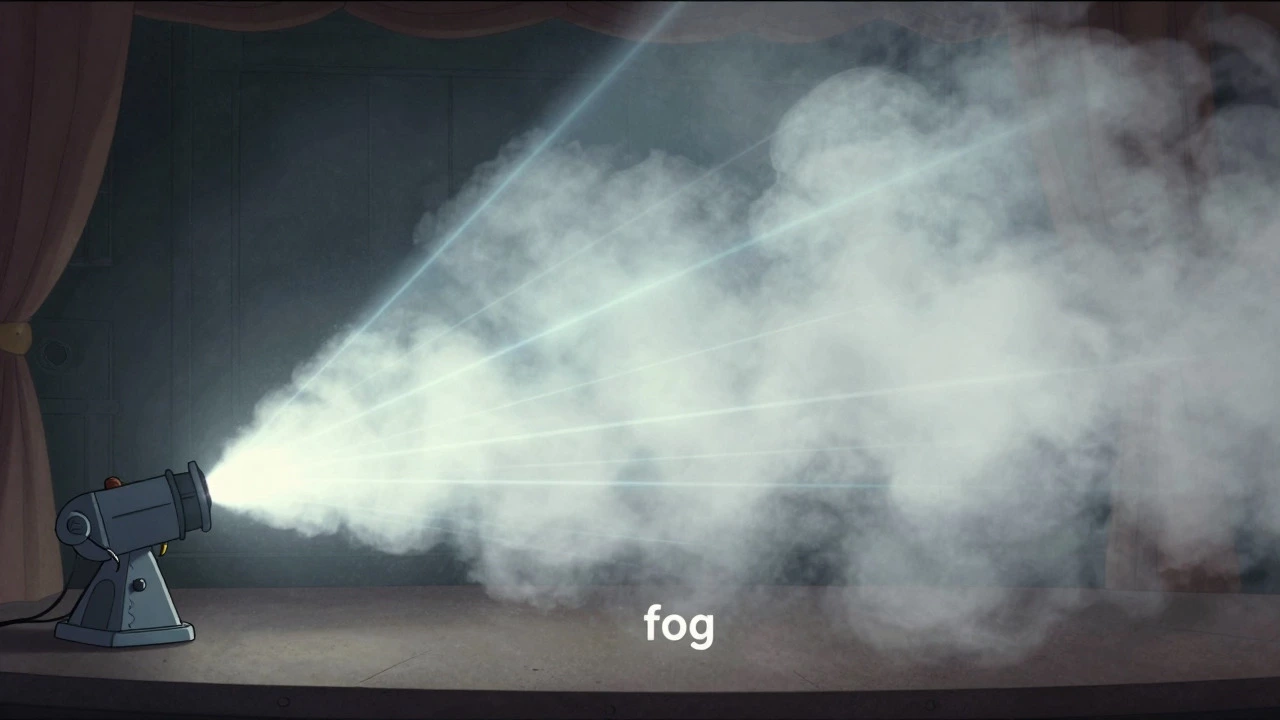
Here is a common misconception: fog makes lasers look cool. Not really. Dense theatrical fog creates opaque clouds that actually block light. If you want those sharp, defined beams cutting through the air, you need haze, not fog. These two terms are often used interchangeably by non-specialists, but they serve completely different purposes in a glam production.
Haze machines produce a continuous, thin aerosol. Think of it as a fine mist that stays suspended in the air for minutes at a time. This fine particle size (often categorized as PM1 or PM2.5) scatters light evenly, allowing you to see the path of every laser beam and moving head sweep. It’s the default setting for most glam shows because it enhances visibility without obscuring the performers.
Fog, on the other hand, is dense. It’s created by heating glycol or mineral oil-based fluids to create heavy clouds. This is perfect for specific moments-like a dramatic song intro or a finale burst-but terrible for constant use. If you run dense fog during a long verse, you’ll lose sightlines, trigger smoke detectors, and make the audience uncomfortable due to reduced oxygen circulation and chemical smell.
Safety is a huge factor here. Operators must coordinate with venue safety staff because any atmospheric aerosol can potentially trigger optical smoke alarms. Haze is generally safer for this reason, but it still requires careful management. Individuals with asthma or COPD may find even low-density haze irritating if ventilation is poor. Therefore, the standard practice is to run pre-show tests at minimum effective output levels. You want just enough haze to reveal the beams, not so much that it feels like breathing through a wet towel.
Color Drama: Mixing Systems for Maximum Impact
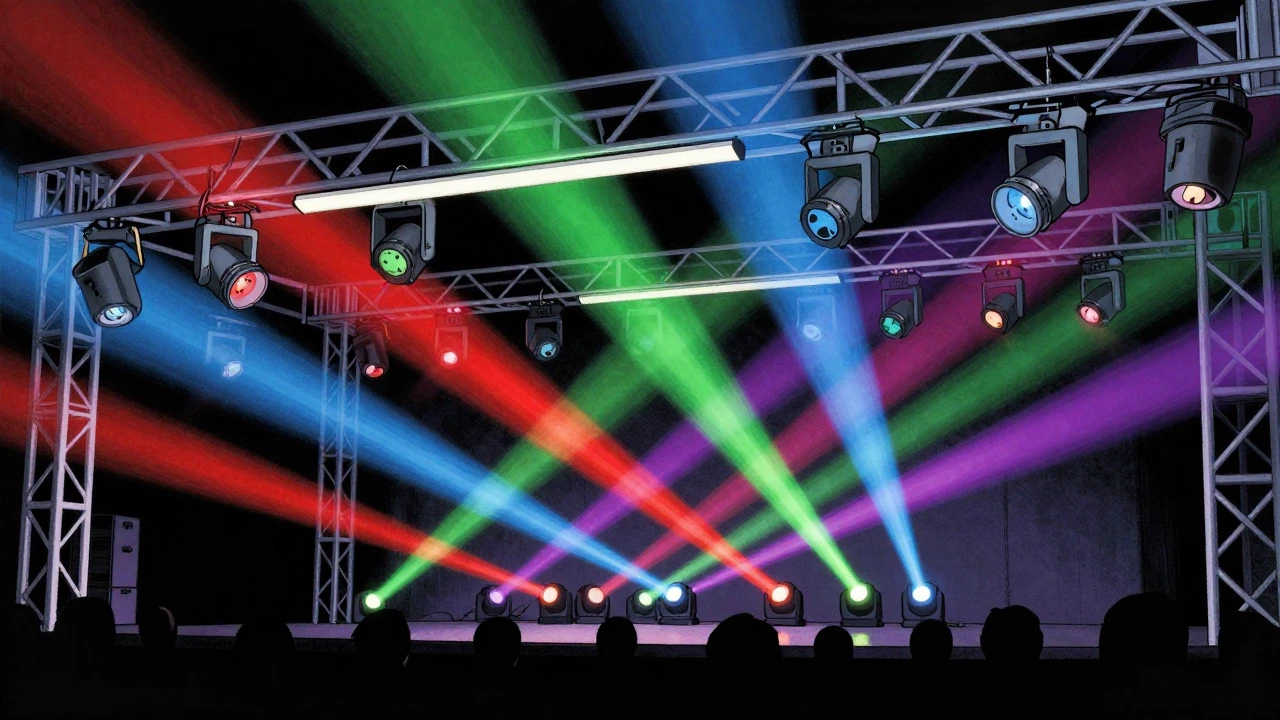
Glam rock is all about contrast. You don't just want light; you want *specific* light. The ability to shift from a deep electric blue to a hot pink in a fraction of a second is what drives the emotional arc of a song. This is where color mixing systems come in.
There are two main approaches: additive and subtractive. Lasers typically use additive RGB mixing. As mentioned, this gives you precise, saturated colors ideal for sharp beams. However, for washing the stage or illuminating costumes, you often need smoother transitions. This is where CMY (Cyan, Magenta, Yellow) systems shine. A 382W CMY Hybrid Moving Head, for instance, allows for continuous scrolling and mixing. This means the color change isn't a hard cut; it's a fluid gradient. You can move from one hue to another over 10 seconds or snap it in milliseconds, depending on the cue.
Then there is RGBW pixel control. Newer fixtures, like IP66-rated outdoor moving heads, offer granular pixel mapping. Each pixel on the fixture can display a different color value simultaneously. This allows for complex animations on large scenographic structures or LED set pieces. Imagine a wall of lights where each section pulses independently to match the rhythm of the drums. That level of detail is only possible with advanced pixel control networks capable of addressing hundreds of points per fixture.
Building the Rig: Practical Setup Tips
So, how do you put this together? It starts with matching fixture power to venue size. A small club doesn't need a 382W hybrid; it might get overwhelmed. But a 10,000-seat arena absolutely does. The rule of thumb is that larger ceilings and longer throw distances require higher wattage to maintain beam definition at the audience level.
Installation is equally critical. Moving head lasers often feature 540-degree pan and 270-degree tilt ranges. When mounting these on trusses, you need to consider sightlines. You don't want a beam sweeping directly into the eyes of someone in the front row unless that's the intended effect. High-precision stepping motors allow for smooth, silent movement, which is essential for maintaining the illusion of effortless choreography.
Maintenance has also changed dramatically. Older halogen and gas-discharge fixtures required frequent lamp replacements, which were expensive and disruptive. Solid-state LED and laser modules offer lifespans measured in tens of thousands of hours. For a touring band doing a multi-month run, this translates to lower consumable costs and fewer technical hiccups. You spend less time swapping bulbs and more time tweaking cues.
Current Trends and Future Outlook
By August 2026, the industry is consolidating around multi-function fixtures. Manufacturers are no longer just selling lasers or just selling washes. They are selling integrated solutions. The trend is clear: reduce the number of physical units required per show while increasing creative options. A single hybrid fixture can now handle beam, spot, and wash duties, reducing rigging space and power runs. This is driven by the logistical pressures of modern tours, where transport volume and setup time are major cost factors.
At the same time, regulatory scrutiny on atmospheric effects is tightening. Safety guides now emphasize SDS documentation, certified devices, and strict ventilation practices. The future of glam lighting isn't just about brighter beams; it's about smarter, safer, and more integrated systems that allow designers to push the visual envelope without compromising audience health or venue compliance.
What is the difference between haze and fog in stage lighting?
Haze produces a fine, low-density aerosol that remains suspended for long periods, enhancing beam visibility without obscuring sightlines. Fog creates dense, short-lived clouds that are visually dramatic but can block views and trigger smoke detectors. Haze is preferred for continuous glam effects, while fog is reserved for specific high-impact moments.
Why do glam shows use RGB laser technology?
RGB laser technology allows for the creation of virtually any color in the visible spectrum by mixing intensities from red, green, and blue diodes. This provides the saturated, high-contrast colors characteristic of glam aesthetics, such as vivid magentas and cyans, without requiring multiple physical color filters.
How much power do I need for laser beams in a large arena?
For large arenas with long throw distances exceeding 30 meters, high-output fixtures are necessary. White laser moving heads delivering up to 350,000 lux at 10 meters are recommended to ensure beams remain intense and visible against bright background elements like LED video walls.
Are laser and haze effects safe for audiences?
Generally yes, when used according to manufacturer guidelines. However, operators must manage risks such as airway irritation for those with respiratory conditions and potential interference with smoke detectors. Pre-show testing, adequate ventilation, and coordination with venue safety staff are essential for compliance and comfort.
What is the advantage of hybrid LED-laser fixtures?
Hybrid fixtures combine the focused precision of lasers with the broad color spectrum and efficiency of LEDs. This allows a single unit to produce both tight aerial beams and wide color washes, reducing the total number of fixtures needed for a rig and lowering maintenance costs compared to older lamp-based systems.