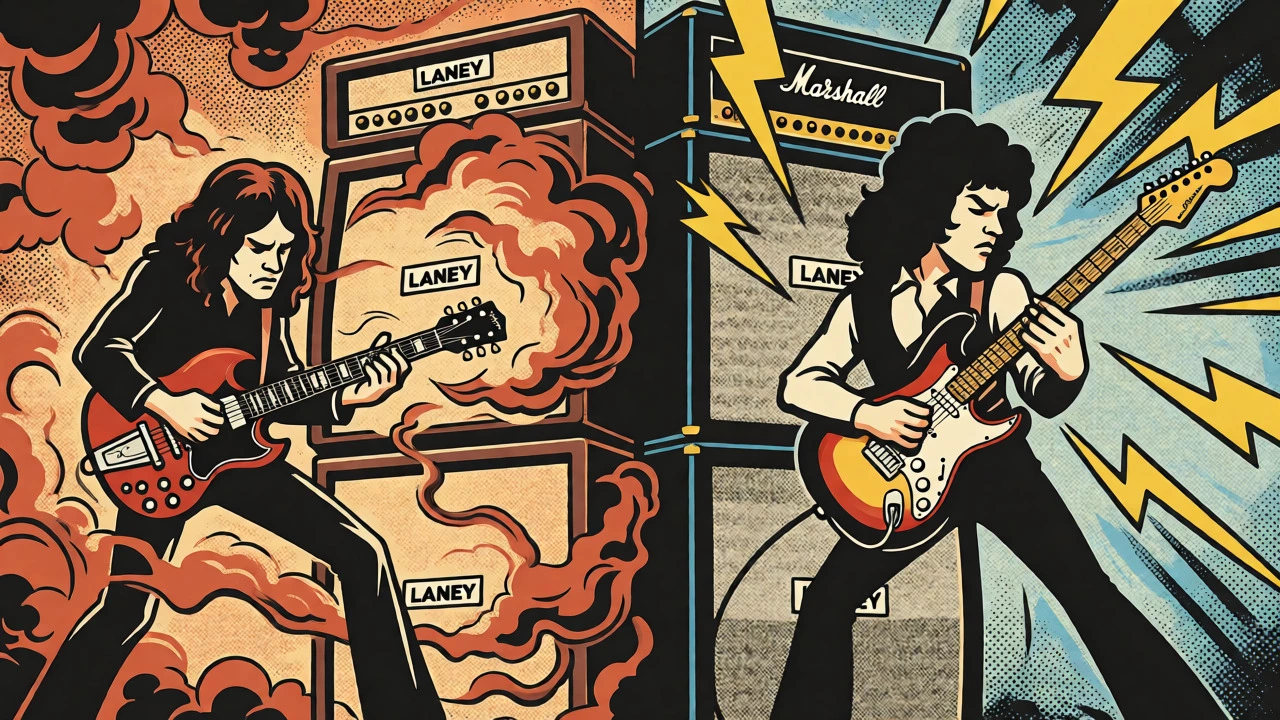

Think of the heaviest riffs from the 1970s, and you likely picture a Gibson Les Paul roaring through a Marshall stack. But that image misses half the story. While Gibson dominated the thick, sustaining side of early heavy metal, Fender instruments were carving out a sharper, more articulate niche that defined a different kind of heaviness. The debate isn't about which brand was "better" for metal; it's about how two distinct engineering philosophies created two completely different sonic paths within the same genre.
The Engineering Divide: Scale Length and Construction
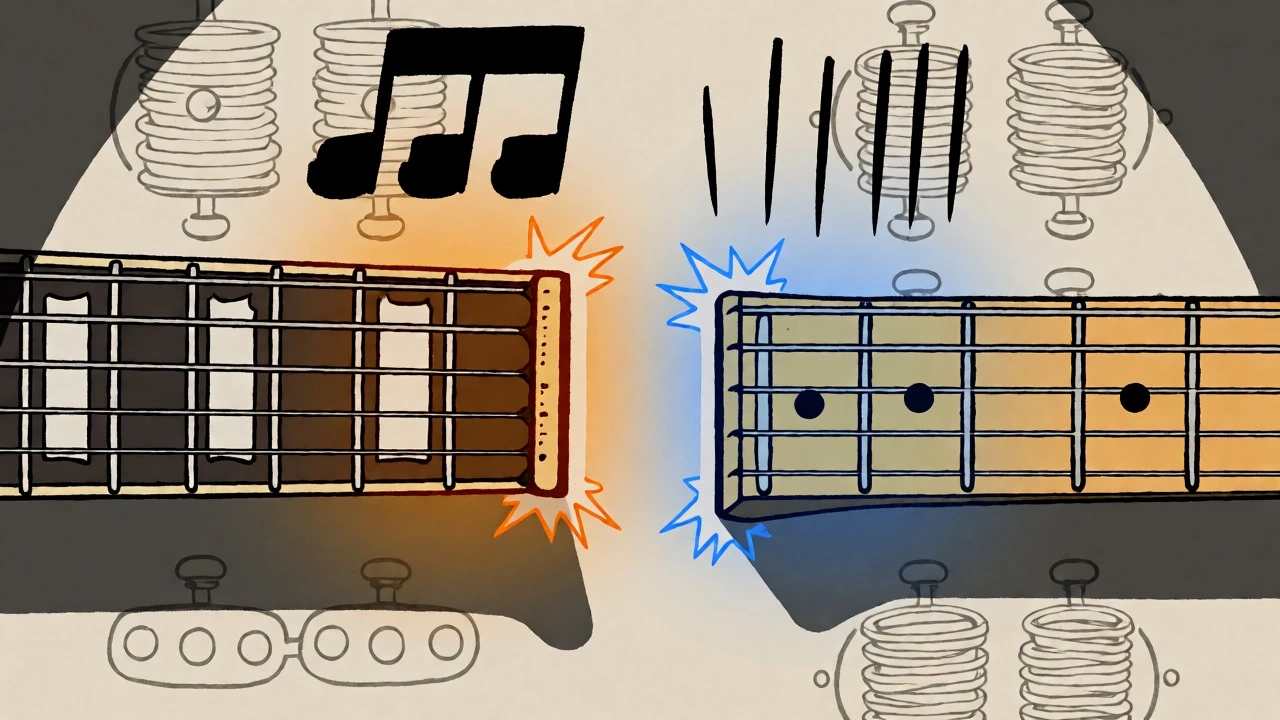
To understand why these guitars sounded so different under high gain, you have to look at the physics. A typical Fender Stratocaster used a 25.5-inch scale length, meaning the strings were stretched longer between the nut and bridge. This creates higher tension at standard pitch, resulting in a tighter, snappier attack and clearer note separation. In contrast, the Gibson Les Paul utilized a shorter 24.75-inch scale with a set-neck construction. This design lowers string tension slightly and transfers vibration more efficiently into the body, promoting sustain and a thicker, more compressed midrange.
The pickup configurations further widened this gap. Gibsons typically featured humbuckers, which canceled the 60-cycle hum inherent in single-coil designs while delivering a higher-output, smoother signal. Fenders relied on three single-coil pickups, which offered brilliant clarity and upper-harmonic sparkle but introduced noise when cranked up. In the noisy, unregulated amplifier environments of the 1970s, this choice dictated whether a player prioritized raw power or cutting precision.
| Feature | Gibson (Les Paul/SG) | Fender (Stratocaster) |
|---|---|---|
| Scale Length | 24.75 inches | 25.5 inches |
| Neck Joint | Set Neck (Glued) | Bolt-On |
| Pickups | Humbuckers or P-90s | Single-Coils |
| Tonal Character | Thick, Sustaining, Mid-Focused | Cutting, Articulate, Bright |
| Metal Application | Rhythm Walls, Doom Riffs | Fast Leads, Sharp Attacks |
The Gibson Path: Thick Sustain and Heavy Riffs
If you want to replicate the foundational sound of early metal, Gibson is usually the first stop. Tony Iommi, the architect of Black Sabbath’s doom-laden riffs, didn’t start with a Les Paul. He famously used a 1965 Gibson SG Special equipped with P-90 pickups. Why? Because the SG’s mahogany body and lightweight design allowed him to play long sets despite his finger injuries, while the P-90s delivered a raw, gritty midrange that cut through the mix differently than later humbuckers.
Iommi’s tone wasn't just about the guitar; it was about the system. He paired his SG with a Laney LA100 amplifier and a treble booster pedal. This combination pushed the amp into natural saturation, creating a wall of sound that felt physically heavy. The Gibson’s construction supported this approach by offering abundant sustain, allowing notes to ring out even during slow, crushing chord progressions. Similarly, Michael Schenker’s work with UFO showcased the Flying V, another Gibson staple. His leads were massive and singing, aided by fully opened Marshall stacks in large rooms. The fixed Tune-o-matic bridge on these Gibsons ensured tuning stability during aggressive strumming, a crucial factor when every note needed to hold its weight.
The Fender Counterpoint: Articulation and Cut
While Gibson players built walls of sound, Fender players like Ritchie Blackmore focused on piercing through them. Blackmore, initially a fan of the Gibson ES-335, switched to the Fender Stratocaster around 1970 after hearing Jimi Hendrix. He found the Strat’s vibrato bridge essential for expressive lead playing and appreciated its ability to remain clear and defined even at high volumes.
Blackmore’s tone on Deep Purple’s "Fireball" era demonstrates that a Stratocaster could be undeniably heavy. By driving his amplifier hard and using forceful pick attacks, he exploited the Strat’s upper harmonics. Instead of a muddy low-end rumble, his riffs had a sharp, nasal quality that sat perfectly above the bass and drums. This approach required more precision from the player because single-coil pickups reveal every mistake and nuance. For metal guitarists who valued speed and complexity over sheer mass, the Fender offered a dynamic range that Gibsons sometimes lacked due to their natural compression.
The Role of Amplification and Era-Specific Modifications
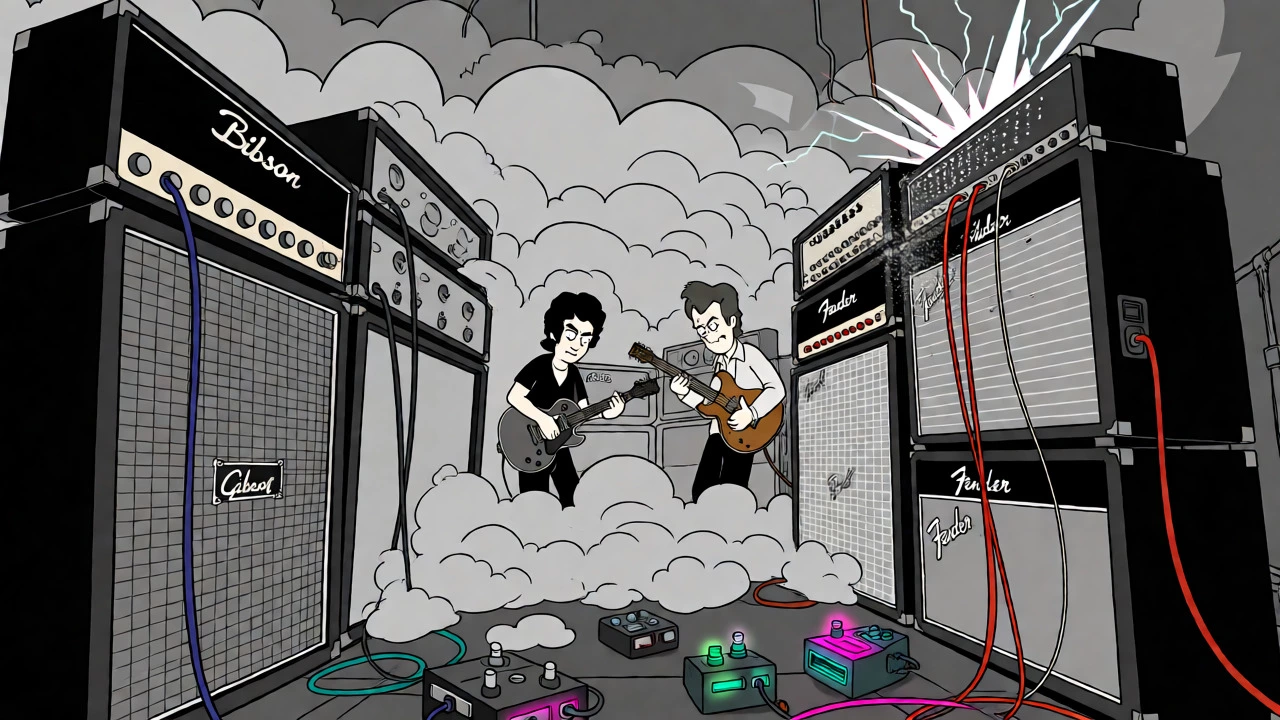
You cannot separate the guitar from the rig in the 1970s. Modern high-gain amplifiers weren't widely available, so distortion came from pushing vacuum tubes to their limits. This meant that the input signal from the guitar mattered immensely. A Gibson humbucker provided a hotter signal, helping drive the amp into saturation faster. A Fender single-coil often required a boost pedal or simply louder volume to achieve similar levels of crunch.
It’s also worth noting that both companies changed their designs during this decade. Gibson entered the "Norlin era," characterized by heavier bodies, multi-piece necks, and variable quality control. Many 1970s Les Pauls weighed close to 10 pounds, making them cumbersome but durable. On the other side, Fender was owned by CBS, leading to changes like the three-bolt neck joint and polyester finishes. These modifications affected resonance and feel, but they didn't stop musicians from achieving iconic tones. In fact, some players preferred the brighter, more consistent output of late-70s CBS Strats for their specific needs.
Choosing Your Tone: Practical Takeaways
So, which path should you take if you're chasing 1970s metal tones today? It depends on what part of the spectrum you want to own. If your goal is a thick, forgiving rhythm foundation that sustains endlessly, look for a Gibson-style instrument with humbuckers. Pair it with a British-style valve amplifier and keep the presence control moderate to avoid harshness. This setup mimics the Iommi and Schenker approach, where the guitar does much of the heavy lifting regarding sustain and body.
Conversely, if you need your leads to cut through a dense mix or prefer a more articulate, percussive response, a Fender Stratocaster is the better tool. Use a treble booster or an overdrive pedal to push a clean channel into breakup, preserving the single-coil clarity. This replicates Blackmore’s strategy, relying on attack and harmonic content rather than raw output. Remember, the logo on the headstock matters less than the entire signal chain. An SG with a treble booster sounds closer to early Sabbath than a modern Les Paul played through a sterile digital modeler.
Key Takeaways
- Gibson Dominated Rhythm: Shorter scale lengths and humbuckers provided natural sustain and thickness, ideal for heavy, slow riffs.
- Fender Excelled in Lead: Longer scales and single-coils offered superior articulation and cut, perfect for fast, complex solos.
- Amps Defined the Sound: Distortion was achieved via volume and boost pedals, not pre-set gain channels, making the guitar's output level critical.
- Player Technique Matters: Blackmore’s aggressive picking made a Strat sound heavy; Iommi’s lowered tuning made an SG sound darker.
- Era Flaws Were Features: Norlin-era weight and CBS-era finish changes contributed to the unique character of 1970s recordings.
Did Tony Iommi use a Les Paul for Black Sabbath's debut?
No, Tony Iommi primarily used a 1965 Gibson SG Special with P-90 pickups for Black Sabbath's early recordings, including their self-titled debut album. He favored the SG for its lighter weight and distinctive midrange punch, which he shaped with a Laney amplifier and a treble booster.
Why did Ritchie Blackmore switch from Gibson to Fender?
Ritchie Blackmore switched to Fender Stratocasters around 1970 because he wanted more "cut" and flexibility for his lead playing. He found Gibsons too mellow and jazzy for his style, preferring the Strat's ability to produce sharp, articulate notes and expressive vibrato that could stand out in a heavy band mix.
What is the main tonal difference between 1970s Gibson and Fender guitars?
The main difference lies in scale length and pickups. Gibsons typically feature a 24.75-inch scale and humbuckers, producing a thicker, warmer, and more sustaining tone. Fenders use a 25.5-inch scale and single-coils, resulting in a brighter, tighter, and more articulate sound with greater note separation.
Can a Fender Stratocaster sound heavy enough for metal?
Yes, absolutely. Players like Ritchie Blackmore proved that a Stratocaster can deliver a powerful metal tone by using high-volume amplifiers, aggressive pick attack, and effects like treble boosters. The key is leveraging the Strat's upper harmonics and clarity rather than seeking the low-end mud associated with humbuckers.
How did amplifier technology influence guitar choices in the 1970s?
In the 1970s, distortion was achieved by turning tube amplifiers up until they broke up, rather than using high-gain channels. This meant guitars with higher-output pickups (like Gibson humbuckers) drove amps into saturation more easily, favoring a thick, compressed sound. Lower-output single-coils required more volume or boosting, encouraging a cleaner, more dynamic playing style.


