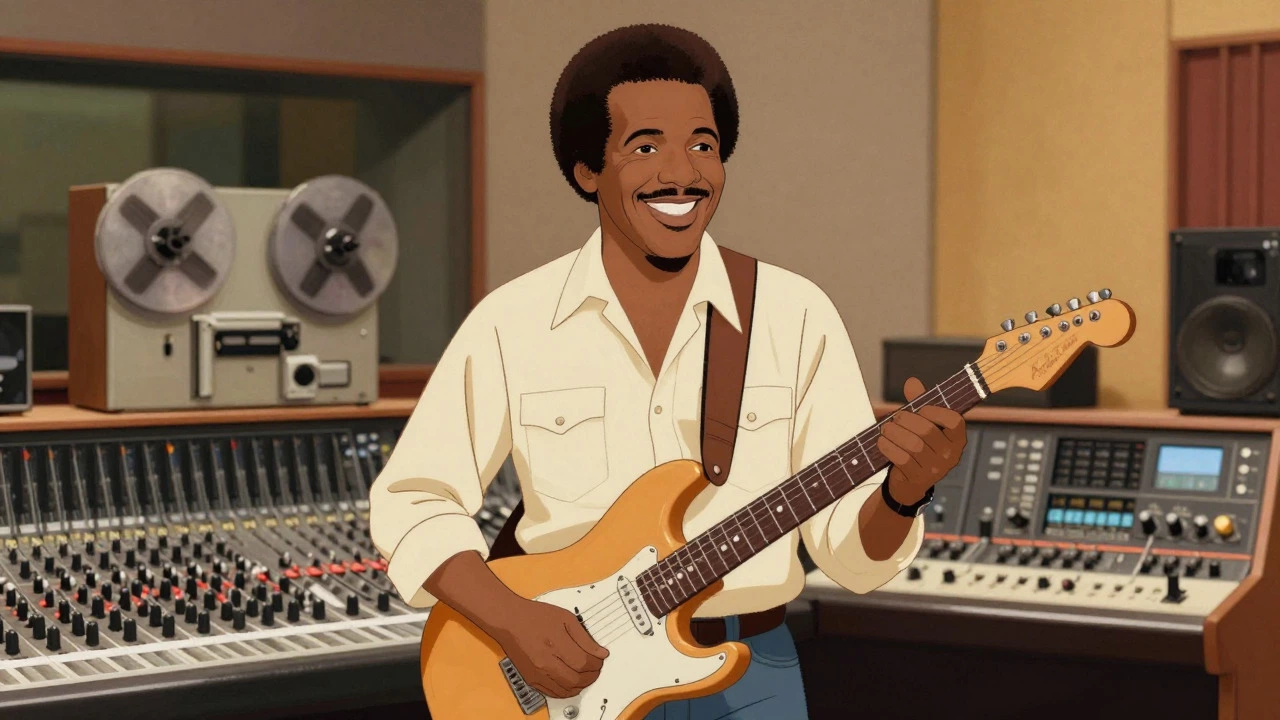

It is easy to forget that in the summer of 1976, a jazz guitarist was selling more records than Peter Frampton. While rock dominated the airwaves and stadiums, Breezin' by George Benson, a landmark jazz-fusion album released on Warner Bros. Records, sat at number one on the Billboard 200 for two consecutive weeks. It wasn't just a chart anomaly; it was a seismic shift in how the music industry viewed instrumental music. For decades, jazz had been largely confined to niche audiences or late-night radio slots. Then came this record, recorded in just three days, which turned a respected session musician into a global pop star overnight.
The Making of a Crossover Hit
To understand why this album worked, you have to look at who was behind the scenes. George Benson was already a legend among musicians, known for his blistering speed on the fretboard during his time with labels like CTI Records. But he wanted something different. He signed with Warner Bros. Records, a major American record label founded in 1958, looking to reach a wider audience. The key player here was producer Tommy LiPuma, an influential record producer known for crafting hits for artists like Miles Davis and Eric Clapton. LiPuma didn't want another dense, improvisational jazz record. He wanted songs. He wanted melodies that stuck in your head.
The recording sessions took place from January 6 to 8, 1976, at Capitol Studios, a historic recording studio in Hollywood, California. There is a nice touch of history there-Benson chose this room because Nat King Cole had recorded there years earlier. You can hear that warmth in the final mix. The team included arranger Claus Ogerman, who provided lush orchestral backgrounds that softened the edges of Benson’s guitar work. The goal was clear: create a sound that felt sophisticated but accessible. They stripped away the complexity that often alienates casual listeners and focused on groove and melody. The result was a six-track album running about 38 minutes that sounded nothing like the jazz records of the past.
Why "This Masquerade" Changed Everything
If you listen to the tracklist, one song stands out as the engine that drove this entire project: "This Masquerade." Originally written by Leon Russell, this ballad became the centerpiece of the album. Benson did something radical here. Instead of just playing guitar solos over the vocals, he sang. And not just any singing-he used a scatting technique where his voice matched the pitch of his single-string guitar lines perfectly. It was a Stevie Wonder-inspired approach that blurred the line between instrument and vocalist.
This decision was risky. Jazz purists often looked down on singers who couldn't play instruments, and vice versa. But Benson pulled it off. The single reached number 10 on the Billboard Hot 100 in August 1976. That top-10 placement was crucial. It got the album into car stereos and living rooms across America. People who never bought a jazz record suddenly had George Benson on their turntables. The vocal performance was irresistible, combining soulful emotion with technical precision. It proved that jazz guitar could carry a pop hit without losing its musical integrity.
| Metric | Detail | Significance |
|---|---|---|
| Billboard 200 Peak | #1 (July 31 - Aug 14, 1976) | Ousted Peter Frampton's live album |
| RIAA Certification | 3x Multi-Platinum | First jazz album to go platinum |
| Hot 100 Single | #10 ("This Masquerade") | Drove album sales to mainstream audiences |
| Grammy Awards | Record of the Year, Best Pop Instrumental | Critical recognition beyond jazz circles |

The Sound of Smooth Jazz
You cannot talk about this album without addressing the term "smooth jazz." Today, that phrase might roll off the tongue with a bit of skepticism, but in 1976, it represented a new frontier. The album blended elements of jazz-funk, a genre combining jazz harmony with funk rhythms, soul, and contemporary pop. Tracks like "Affirmation" and "Six to Four" are mood pieces. They don't demand intense concentration. They invite you to relax. Benson prioritized feel over virtuosity. Sure, his guitar work is technically impressive, but it serves the song rather than dominating it.
Stephen Holden, writing for Rolling Stone in November 1976, noted that some jazz fans accused Benson of "selling out" by making such accessible music. But even critics had to admit the quality was undeniable. The production was clean, the arrangements were tight, and the performances were flawless. This approach paved the way for the smooth jazz radio format that would dominate the 1980s and 1990s. Artists like Grover Washington Jr. and later, Kenny G, followed the path Benson cleared. He showed that instrumental music could be commercially viable without sacrificing artistic merit.

Award-Winning Engineering and Legacy
The success of this record wasn't just about the notes on the page; it was about how those notes sounded. The album won the Grammy Award for Best Engineered Recording, Non-Classical. That is a testament to the technical excellence of the production team. In an era before digital editing, getting every take right in three days required immense skill. The clarity of Benson’s guitar tone-bright yet warm-is still studied by audio engineers today. It set a standard for how electric guitars should sound in a polished, studio environment.
Decades later, the album remains relevant. It has been reissued multiple times, including a nine-track expanded edition in 2005 that added bonus tracks like "Down Here on the Ground." These reissues keep the music alive for new generations. On streaming platforms, you can see people discovering these tracks alongside modern playlists. It serves as both a historical document and a timeless listening experience. For guitar students, it is a masterclass in phrasing and rhythm. For casual listeners, it is simply beautiful music.
Comparing the Era: Why It Stood Out
In 1976, the music landscape was crowded. Rock bands were touring arenas, and disco was taking over dance floors. Yet, this jazz record managed to compete directly with them. To put it in perspective, it displaced *Frampton Comes Alive!*, one of the best-selling live albums of all time, from the number one spot. That is not a minor achievement. It suggests that there was a massive, untapped audience for high-quality instrumental music that previous labels had ignored.
Other jazz fusion projects existed, such as those by Herbie Hancock or Weather Report, but they often leaned harder into experimental structures. Benson’s approach was more direct. He understood pop songwriting. He knew how to build tension and release it within a three-to-five-minute framework. This discipline made the music digestible for the mass market while retaining enough sophistication to satisfy jazz enthusiasts. It was the perfect storm of talent, timing, and strategy.
Is Breezin' considered a jazz or pop album?
It is best described as a crossover jazz-fusion album. While rooted in jazz guitar techniques and harmonies, its production, song structures, and commercial success align closely with pop music standards. It topped both jazz and pop charts simultaneously.
Who produced George Benson's Breezin'?
The album was produced by Tommy LiPuma, a renowned producer who also worked with Miles Davis and Eric Clapton. His vision was crucial in shaping the album's accessible, melodic sound.
How many weeks was Breezin' at number one?
The album held the number one spot on the Billboard 200 for two weeks, specifically starting July 31, 1976. It remained on the charts for a total of 78 weeks.
What makes "This Masquerade" unique?
Benson combined his vocal performance with his guitar playing, using a scat-singing technique where his voice mimicked the pitch of his single-string guitar lines. This innovative approach helped the single reach number 10 on the Hot 100.
Did Breezin' win any Grammy Awards?
Yes, it won three Grammys: Record of the Year for "This Masquerade," Best Pop Instrumental Performance, and Best Engineered Recording, Non-Classical.


