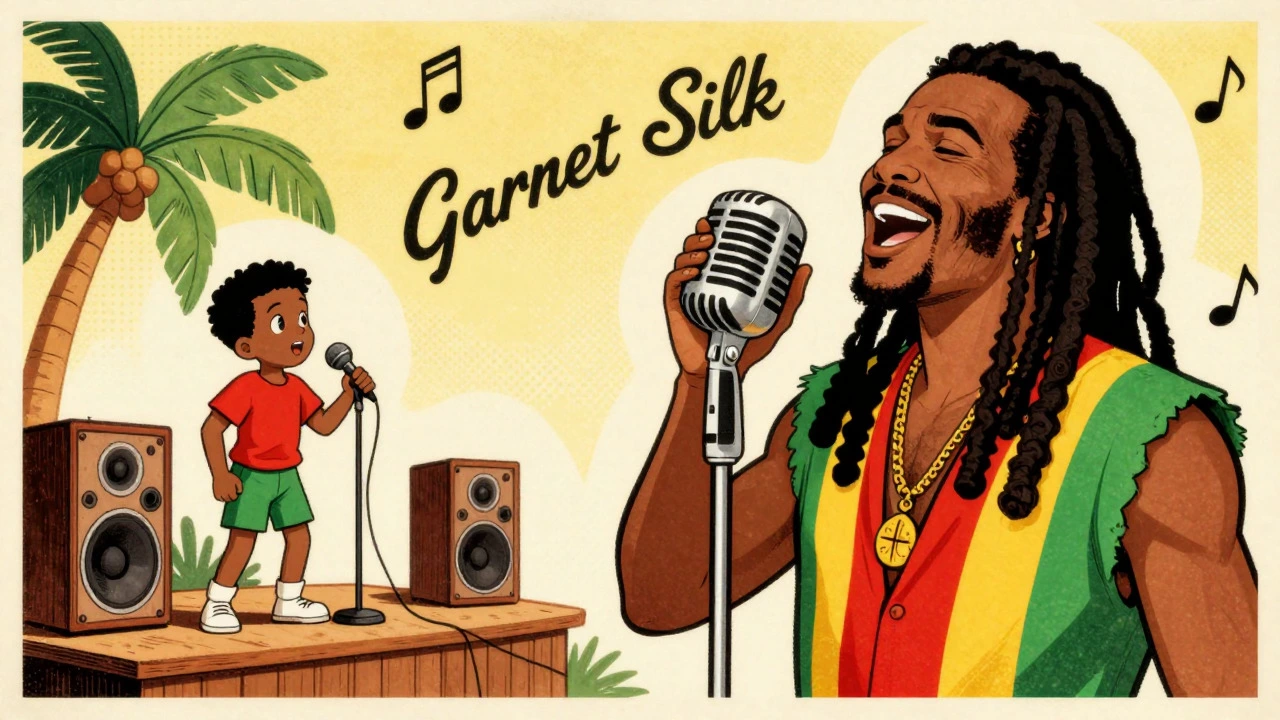

Reggae didn't just change in the early 1990s; it breathed a sigh of relief. After a decade dominated by the aggressive, often explicit "slackness" of dancehall, the genre suddenly pivoted toward something softer, deeper, and spiritually grounded. At the center of this shift stood Garnet Silk, a Jamaican singer whose smooth tenor and Rastafarian devotion defined the soulful turn in reggae during the early 1990s. Born Garnet Damion Smith on April 2, 1966, in Manchester Parish, Jamaica, he became the voice of a generation craving meaning over mayhem. His career was tragically brief-lasting only about four years as a major recording artist-but his impact reshaped the trajectory of roots reggae forever.
If you listen to tracks from 1989 and then jump to 1992, the difference is stark. The gun-toting bravado of the late '80s gave way to prayers for Zion, love for Africa, and pleas for divine protection. This wasn't an accident. It was a cultural correction, and Garnet Silk was its most potent instrument. He didn't just sing songs; he offered a spiritual alternative that resonated with fans tired of the noise. Today, more than three decades after his death, his music remains a cornerstone of conscious reggae, proving that authenticity outlasts trends.
From Little Bimbo to Garnet Silk: A Radical Transformation
Before he was the velvet-voiced icon of roots revival, Garnet Smith was known as Little Bimbo. Starting around age 12 in the late 1970s, he worked as a deejay (the Jamaican term for an MC or rapper) on local sound systems. This era was defined by fast-paced toasting, witty banter, and crowd control. It was a tough apprenticeship. You had to be quick, loud, and engaging to survive on those sound stages.
But something shifted around 1987. With the release of "Problem Every Where," Silk began to step away from pure deejaying. By 1990, the transformation was complete. He grew his dreadlocks, embraced his Rastafarian identity fully, and changed his stage name to Garnet Silk. The nickname wasn't random; it described his voice. Critics and fans alike noted its warm, smooth, emotive quality. Unlike the shouted delivery of dancehall deejays, Silk sang. He crooned. He poured emotion into every note, blending gospel intensity with reggae phrasing.
This visual and vocal change signaled a broader message. In a scene obsessed with materialism and street credibility, Silk chose spirituality and humility. He relocated to Kingston, the hub of the industry, but kept his roots firmly planted in the consciousness of his faith. This move from deejay to singer was not just a stylistic choice; it was a declaration of intent. He wanted to heal, not just entertain.
The Sound of the Soulful Turn
What exactly was this "soulful turn"? It was a rejection of the dominant dancehall aesthetic of the 1980s, which often featured lyrics about violence, sex, and social chaos. Instead, artists like Silk returned to the core values of roots reggae: Pan-Africanism, Rastafarian theology, and social justice. But they did so with a new musical texture. They used popular dancehall riddims-the shared instrumental tracks that were hot at the time-but overlaid them with soulful, melodic vocals and positive lyrics.
Silk mastered this balance. He didn't reject the modern sound; he redeemed it. Take his hit "Hello Mama Africa." It uses a catchy, rhythmic beat, but the lyrics are a heartfelt tribute to the African homeland and maternal love. Similarly, "Splashing Dashing" became an anthem of joy and resilience. These tracks proved that you could stay current musically while staying true to your spirit. Fans flocked to this new direction because it offered hope. In a world still grappling with post-colonial identity and economic hardship, Silk’s messages of divine guidance and unity felt like a balm.
His vocal style was key to this success. Described as "pure, emotional, conscious, tender and powerful all at once," Silk’s voice carried a weight that commanded respect. He could switch from gentle crooning to soaring, dynamic passages, creating a dynamic range that few of his peers could match. This versatility allowed him to connect with both casual listeners and hardcore roots enthusiasts. He wasn't preaching from a pulpit; he was singing from the heart.
Key Albums and Tracks That Defined an Era
Silk’s discography is small but mighty. Between 1992 and 1994, he released three core albums that cemented his status as a pivotal figure in reggae history.
| Album Title | Release Year | Key Tracks & Themes |
|---|---|---|
| It’s Growing | 1992 | It’s Growing, I Am Vex - Marks transition to album-oriented roots artist. |
| 100% Silk | 1993 | Zion In A Vision, Place In Your Heart - Deepens spiritual and romantic themes. |
| Love Is The Answer | 1994 | Love Is The Answer, Lord Watch Over Our Shoulders - Final statement on love and divine protection. |
Each album built on the last. It’s Growing announced his arrival as a serious roots singer. 100% Silk refined his sound, delivering some of his most iconic spiritual anthems. And Love Is The Answer, released shortly before his death, served as a poignant farewell, emphasizing love as the ultimate solution to life’s problems. Tracks like "Zion In A Vision" and "Lord Watch Over Our Shoulders" are still staples in reggae rotations today. They aren't just songs; they are prayers set to music.

The Tragic End and Lasting Legacy
The story of Garnet Silk is one of brilliance cut short. On December 9, 1994 (some sources say December 10), a fire broke out at his mother’s home in Mandeville, Manchester Parish. Accounts vary slightly on the cause-some cite an accidental gas explosion triggered by a firearm, others simply describe a blaze-but the outcome is universally agreed upon. Silk initially escaped the fire but re-entered the burning building in a desperate attempt to save his mother, Etiga Dulcie Grey. Both perished in the tragedy. He was only 28 years old.
His death sent shockwaves through the reggae community. Many saw him as "the next Bob Marley," a phrase used by outlets like Reggae Report to highlight his potential for global influence. Like Marley, Silk combined charismatic performance with deep spiritual conviction. His loss felt like a stolen future. What could he have achieved in another decade? How many more lives could he have touched?
Yet, his legacy endures. In the years since his death, Silk has remained a central figure in the narrative of 1990s reggae. Curators continue to include his tracks in "90s Roots Revival" playlists alongside giants like Beres Hammond, Sanchez, and Capleton. Documentaries and tributes keep his story alive, emphasizing his role as a spiritual messenger. For new generations of fans, discovering Silk is like finding a hidden gem-smooth, valuable, and timeless.
He proved that you don't need a long career to make a lasting impact. You just need to speak truth to power, with a voice as smooth as silk. In doing so, he helped steer reggae back to its roots, ensuring that the soul of the music would never be lost.
Who was Garnet Silk and why is he important?
Garnet Silk (born Garnet Damion Smith) was a Jamaican singer who played a pivotal role in shifting reggae music from the aggressive dancehall style of the 1980s to a more soulful, roots-oriented sound in the early 1990s. His smooth tenor voice and Rastafarian-themed lyrics made him a symbol of the "conscious reggae" revival.
What does the "soulful turn" in reggae mean?
The "soulful turn" refers to the movement in early 1990s reggae where artists moved away from "slackness" (lyrics focused on sex and violence) and returned to themes of spirituality, love, and Pan-African consciousness. Artists like Garnet Silk used popular dancehall rhythms but paired them with melodic singing and positive messages.
How did Garnet Silk die?
Garnet Silk died in a fire at his mother’s home in Mandeville, Jamaica, in December 1994. He reportedly escaped the initial blaze but re-entered the house trying to save his mother, and both tragically perished. He was 28 years old.
What are Garnet Silk’s most famous songs?
Some of his most iconic tracks include "Hello Mama Africa," "Zion In A Vision," "Place In Your Heart," "Lord Watch Over Our Shoulders," and "Love Is The Answer." These songs are celebrated for their spiritual depth and melodic beauty.
Was Garnet Silk considered the next Bob Marley?
Yes, many critics and fans, including publications like Reggae Report, referred to him as "the next Bob Marley" due to his combination of charismatic vocals, spiritual lyrics, and potential for global influence. His tragic death led many to wonder what he might have achieved had he lived longer.
How does Garnet Silk compare to other 1990s reggae artists?
While artists like Capleton focused on fiery deejaying and Beres Hammond on lovers rock, Silk occupied a unique space as a soulful roots singer. He bridged the gap between dancehall rhythms and traditional roots messaging, influencing a wave of artists who prioritized conscious content over commercial slackness.