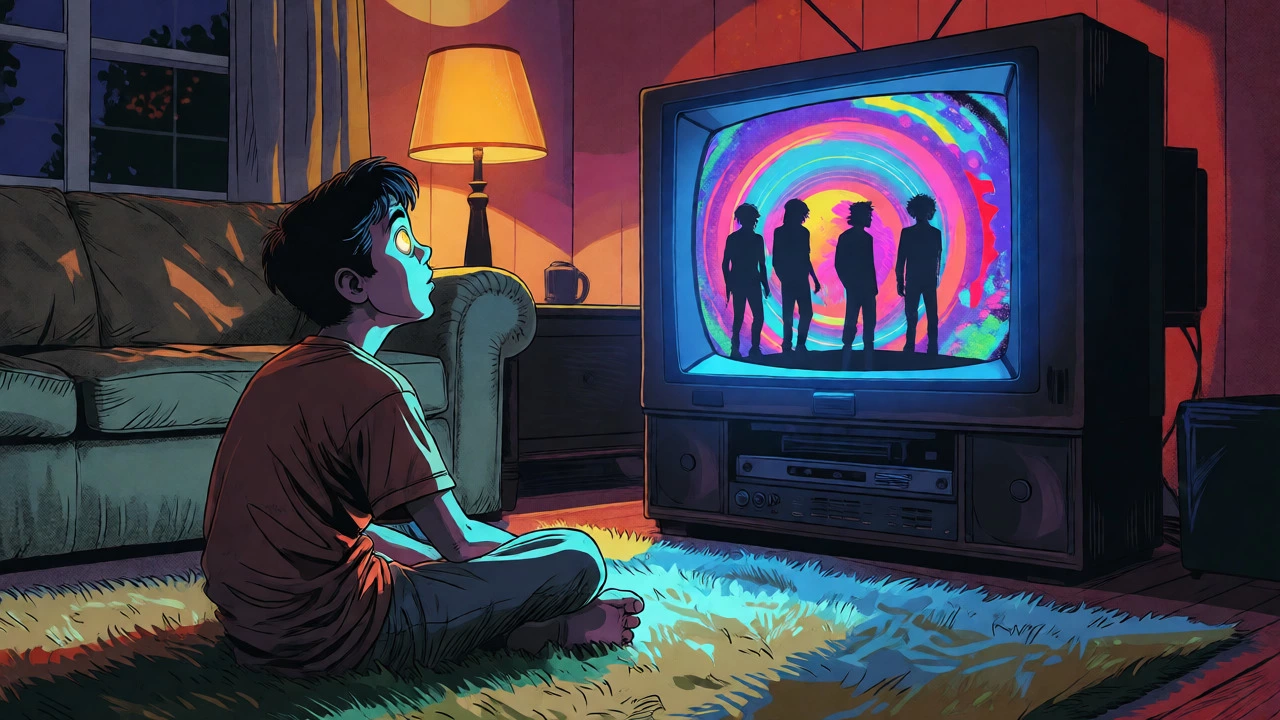

Remember staying up until 1:00 a.m. on a Sunday night, eyes glued to the TV, waiting for MTV’s late-night show dedicated to music too strange, too loud, or too new for daytime rotation? For millions of teenagers in the early 1990s, that ritual wasn’t just about watching videos; it was the primary gateway into worlds previously hidden from Top 40 radio. The journey of 1990s music from underground subcultures to prime-time dominance wasn’t an accident of taste. It was a calculated shift in media infrastructure, corporate strategy, and audience behavior that fundamentally changed how we consume culture today.
This transition didn’t happen overnight. It began with specific programming slots designed to serve niche audiences who felt ignored by mainstream channels. By tracking the rise of shows like 120 Minutes and Alternative Nation, alongside the corporate embrace of hip-hop, we can see exactly how genres like grunge, industrial, and rap moved from local clubs to global charts. If you’ve ever wondered how Nirvana went from Seattle dive bars to selling out stadiums, or how Run-DMC bridged the gap between rock and rap, this is the story of the machinery that made it possible.
The Late-Night Gateway: How 120 Minutes Shaped Taste
Before the internet allowed instant discovery, television was the curator of cool. On March 10, 1986, MTV launched 120 Minutes. This two-hour block aired at 1:00 a.m. Eastern, explicitly targeting viewers who wanted more than the polished pop stars dominating the daytime airwaves. Hosted initially by Dave Kendall and later by Matt Pinfield and Lewis Largent, the show functioned as an after-hours dive bar for the nation’s youth.
The impact of this program cannot be overstated. Music historians often argue that over its seventeen-year run, this single window did more to shape the trajectory of alternative rock than any radio station in America. It introduced artists like The Cure, Siouxsie and the Banshees, and Hüsker Dü to a mass audience that had no other way to access them. These weren’t just random selections; they were curated discoveries that validated the existence of scenes outside the major label spotlight. When a band appeared on 120 Minutes, they gained legitimacy. When they were featured in interviews, they gained context. This visual exposure turned obscure indie acts into household names, proving that demand existed for music that challenged the status quo.
The show’s success lay in its accessibility. You didn’t need to know where to find an import record store or which college radio station played the latest noise-rock demo. You just needed to stay awake. This lowered the barrier to entry for millions of young people, creating a shared cultural vocabulary. Suddenly, knowing about a band from Olympia, Washington, or Manchester, England, became a social currency among peers across the country.
The Grunge Explosion: From College Radio to MTV Rotation
If 120 Minutes built the bridge, Nirvana drove a truck across it. In 1991, the release of "Smells Like Teen Spirit" marked the definitive inflection point. Before this moment, MTV’s daytime rotation was dominated by glam metal and hair bands. After the video hit heavy rotation, the landscape shifted violently. By late 1991 and into 1992, the network’s "Buzz Bin" segment highlighted acts like Pearl Jam, Alice in Chains, Soundgarden, and Nine Inch Nails. These were not fringe experiments anymore; they were core priorities.
The result was a rapid stylistic replacement. Glam bands were phased out almost overnight, with rare exceptions like Aerosmith managing to adapt. MTV responded to this surge in popularity by institutionalizing alternative content. They increased the frequency of 120 Minutes and launched Alternative Nation in 1992, a daily show that moved alternative videos from the graveyard slot to evening hours. This move signaled that alternative rock was no longer a niche interest but a mainstream commodity.
As CloudAtelier notes in recent retrospectives, "the underground had become the mainstream and, in doing so, had dissolved as an underground." This dissolution is key to understanding the era. The raw, distorted aesthetics of grunge were packaged and sold back to the masses. Flannel shirts became fashion staples, and angst became a marketable product. The path from a small club gig to a prime-time appearance was shortened dramatically, driven by the network’s desire to capitalize on the authentic energy these bands brought to the screen.
Hip-Hop’s Corporate Ascent: Commodifying the Street
While alternative rock rode the wave of MTV’s rebranding, hip-hop followed a different, yet parallel, trajectory. Its path to prime time was less about one breakout video and more about systematic corporate integration. By 1989, scholars note that hip-hop had completed its transition from a South Bronx cultural phenomenon to a highly marketable element of American popular culture. This commodification accelerated through the 1990s, turning a localized art form into a multi-billion-dollar industry.
MTV embraced hip-hop in 1988, launching daily programming that gave African American artists consistent national visibility. Unlike the sporadic exposure earlier in the decade, this steady stream normalized rap videos within everyday viewing routines. The collaboration between Run-DMC and Aerosmith on "Walk This Way" in 1986 had already cracked the door open, bridging rock and rap audiences. But it was the sustained media presence throughout the 1990s that cemented hip-hop’s place at the center of youth culture.
Corporate consolidation played a massive role here. The "Big 4" conglomerates-Sony/BMG, Universal Music Group, AOL Time Warner, and others-coordinated labels, distribution, and marketing campaigns. Hip-hop wasn’t just music; it became a lifestyle brand. Fashion companies, sneaker brands, and advertisers latched onto the genre, using its imagery and language to sell products to a diverse demographic. This era birthed the concept of the "mainstream subculture," where oppositional styles were rebranded as aspirational identities for mass consumers.
Niche Genres Finding Airtime: Industrial and EBM
Not every underground genre achieved the same level of saturation as grunge or hip-hop, but many found significant footholds in mass media. Industrial and Electronic Body Music (EBM) groups utilized specialist blocks to reach wider audiences. Shows like PostModern MTV, which aired weeknights from 1988 to 1990, featured darker, experimental sounds from artists like Front 242, Skinny Puppy, and Ministry.
These programs served as crucial educational tools. They exposed viewers to aesthetics that might have been considered too abrasive for standard radio. Tracks like Nine Inch Nails’ "Head Like a Hole" or KMFDM’s "A Drug Against War" appeared in unexpected places, such as episodes of Beavis and Butt-Head. This cross-pollination meant that even comedic or metal-oriented shows became secondary pathways for underground industrial sounds to reach mainstream youth. While these genres didn’t dominate the charts in the same way, their visual presence on cable TV helped normalize electronic textures and aggressive production styles in broader pop contexts.
The Shift in Crossover Logic: Race and Audience Integration
The 1990s also reshaped the traditional logic of "crossover." Historically, crossover implied black artists moving into white pop formats. However, during this decade, hip-hop itself became the default pop language for youth culture. Black youth were just as interested in Nirvana’s top-ten hits as their white peers were in Tupac or Biggie Smalls. This mutual exchange broke down rigid genre boundaries that had segregated radio stations and audiences for decades.
Mass media platforms allowed these genres to circulate across racial and class lines. A teenager in suburbia could watch a grunge video and a rap video back-to-back on MTV, absorbing both without the filter of local radio biases. This integration wasn’t just musical; it was social. It created a shared generational experience where the distinctions between "rock kid" and "rap fan" blurred. The media infrastructure of the 1990s effectively erased some of the spatial segregation of race in music consumption, making the charts a true reflection of a mixed, integrated audience.
| Feature | Alternative Rock/Grunge | Hip-Hop/Rap |
|---|---|---|
| Primary Media Driver | MTV Programming (120 Minutes, Alternative Nation) | Daily MTV Blocks & Major Label Marketing |
| Key Catalyst Event | Nirvana's "Smells Like Teen Spirit" (1991) | Run-DMC/Aerosmith Collab (1986) & Daily Show Launch (1988) |
| Corporate Strategy | Rebranding rock identity; replacing glam metal | Vertical integration; lifestyle branding |
| Audience Impact | Validated indie/college scenes; normalized distortion | Globalized street culture; crossed racial barriers |
| Legacy Format | Mainstream Rock/Indie Pop | Pop-Rap/Hybrid Genres |
Legacy of the Transition: Why It Still Matters
The programs that defined this era eventually faded. 120 Minutes ceased regular airing around 2000, and Alternative Nation ended in 1997. Yet, their influence persists. The model established in the 1990s-where niche genres are discovered via specialized media channels before being absorbed into the mainstream-remains the standard playbook for the music industry. Today, TikTok serves as the digital equivalent of 120 Minutes, curating underground trends for a global audience.
Understanding this history helps us appreciate the mechanics of fame. It reminds us that mass media doesn’t just reflect culture; it constructs it. The decision to air a video at midnight versus prime time can determine whether a band remains a local secret or becomes a global icon. The 1990s proved that when media institutions align with emerging subcultures, the results can redefine entire decades of artistic expression.
What was the significance of MTV's "120 Minutes"?
Launched in 1986, 120 Minutes aired late at night and showcased alternative, indie, and experimental music that was ignored by daytime programming. It is widely credited with shaping the tastes of a generation and providing the initial platform for bands like Nirvana and R.E.M. to gain national recognition.
How did hip-hop move from underground to mainstream in the 1990s?
Hip-hop’s mainstreaming was driven by consistent exposure on MTV starting in 1988 and aggressive marketing by major record labels. By the mid-1990s, corporate consolidation under conglomerates like Sony and Universal turned hip-hop into a multi-billion dollar industry, integrating it into fashion, advertising, and global pop culture.
Why did glam metal decline in the early 1990s?
The rise of grunge and alternative rock, spearheaded by Nirvana’s success in 1991, shifted audience preferences toward more authentic, less polished sounds. MTV responded by phasing out glam metal bands from heavy rotation in favor of alternative acts, marking a decisive change in the network’s musical identity.
What role did college radio play in this transition?
College radio served as the incubator for many alternative and indie artists. It provided the initial airplay and credibility that caught the attention of MTV programmers. Once these bands gained traction on college stations, shows like 120 Minutes amplified their reach to a mass television audience.
Did industrial music achieve mainstream success in the 1990s?
Industrial music found moderate mainstream success through MTV’s alternative programming and crossover hits like Nine Inch Nails’ "Closer" and "Hurt." While not as dominant as grunge or hip-hop, industrial aesthetics influenced mainstream pop and rock production, and bands like Ministry and Marilyn Manson achieved significant chart positions.