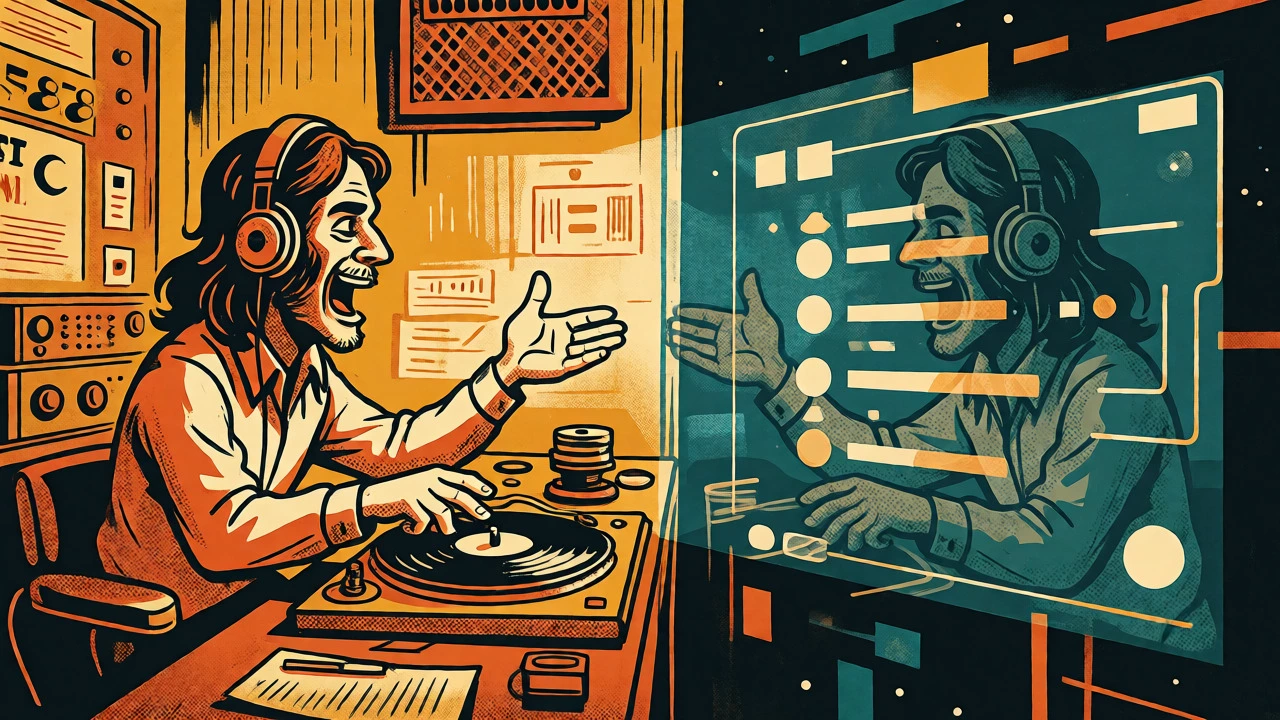

You press play on a Spotify playlist titled "1970s Rock Essentials." It feels like time travel. But is it? Or is it just a data-driven echo of what an algorithm thinks you want to hear next? The truth is messier and more interesting. Today's streaming recommendations are the digital grandchildren of the freeform DJs who ruled the airwaves fifty years ago. We haven't replaced human curation with cold code; we've just hidden the humans behind a curtain of math.
| Feature | 1970s Analog Era | 2026 Streaming Era |
|---|---|---|
| Primary Gatekeeper | Radio DJ / Record Store Clerk | Algorithm / Editorial Team |
| Discovery Speed | Slow (Weekly rotation) | Instant (Real-time updates) |
| Personalization | Low (One broadcast for all) | High (Unique per user) |
| Serendipity Source | DJ sequencing & Album cuts | Collaborative filtering |
| Main Risk | Limited access / Regional bias | Filter bubbles / Homogenization |
The Ghost of Freeform Radio
In the early 1970s, if you lived in San Francisco, you might have tuned into KMPX. This wasn't just a station; it was a cultural experiment led by Tom Donahue. He pioneered Freeform Radio, a format where DJs had total control over what played and when. No rigid playlists, no Top 40 constraints. Just vibes. If a track needed six minutes to build tension, the DJ let it breathe. If they wanted to segue from a jazz fusion piece into a heavy rock cut, they did it. This created a sense of narrative. You weren't just hearing songs; you were being guided through a musical journey by a trusted human voice.
As the decade progressed, this chaos got tamed. Stations shifted toward Album-Oriented Rock (AOR), which kept the focus on full albums but introduced structure. Consultants replaced intuitive DJs with cue cards and research data. Sound familiar? That shift from intuition to metrics is exactly what happened to streaming platforms. We traded the erratic magic of freeform for the reliable predictability of AOR, and eventually, for the hyper-personalized precision of algorithms.
How Algorithms Actually Work (It’s Not Magic)
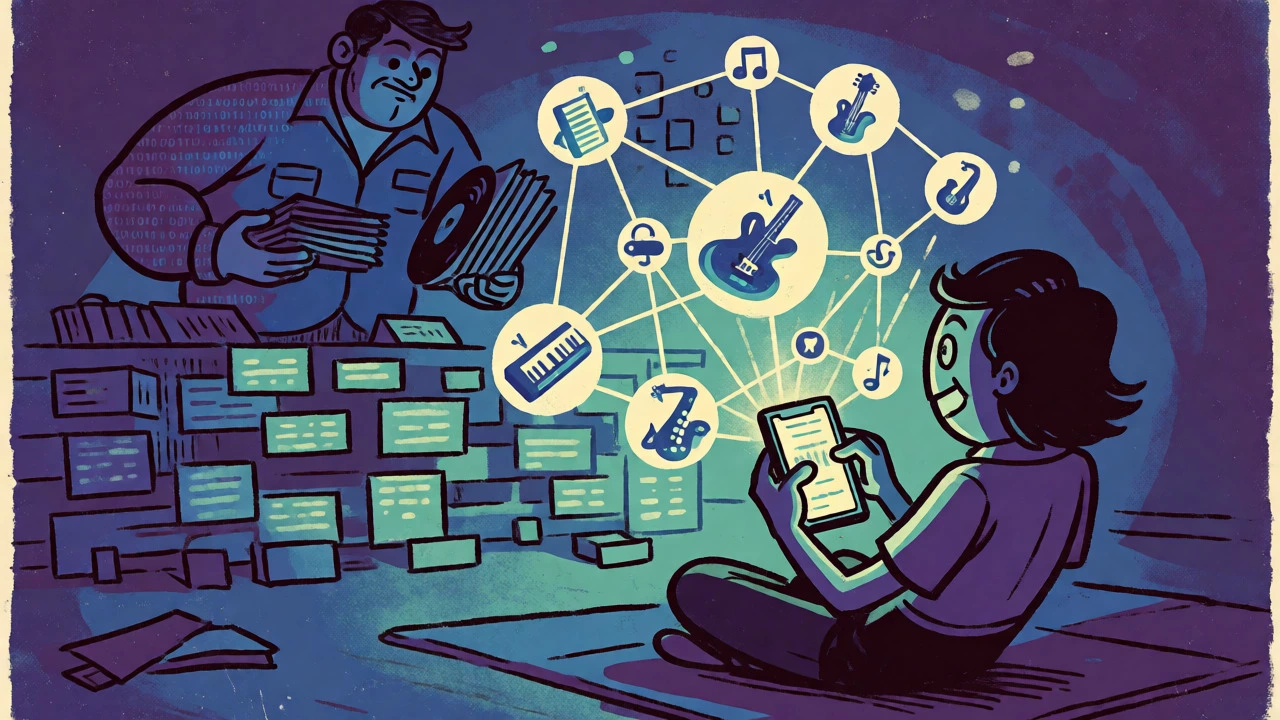
When you open your streaming app, you aren't seeing a random list. You're seeing the output of complex systems designed to minimize skips and maximize session length. Take Discover Weekly. Launched by Spotify in 2015, this feature doesn't just look at what you like. It looks at what people *like you* like. It analyzes millions of listening histories to find patterns. If User A likes Artist X and Artist Y, and User B likes Artist X, the system guesses User B will also like Artist Y.
This is called collaborative filtering. It’s powerful, but it has a blind spot. It tends to recommend music that is safe and similar to what you already know. In the 1970s, a record store clerk might push you toward something weird because they thought you’d appreciate the risk. An algorithm rarely takes risks unless the data suggests a high probability of success. This creates a feedback loop. You listen to what is recommended, which reinforces the recommendation, which narrows your world further.
The New Payola: Playlist Economics
Money talks, even in the cloud. In the 1970s, labels paid promoters to get songs on the radio. Today, the dynamic is subtler but equally potent. Placement on major editorial playlists can make or break a career. Consider RapCaviar. This single playlist generated over 7 billion streams in five years. For many artists, landing a spot here is worth more than traditional radio play ever was.
But who decides who gets on these lists? It’s a mix of human editors and algorithmic signals. Editors curate themes-like "Workout Energy" or "Chill Vibes"-but the selection process often favors tracks with high engagement rates. If a song keeps listeners on the platform, it gets promoted. This mirrors the commercial pressures of 1970s radio, where stations played hits to keep advertisers happy. The difference is scale. One bad playlist decision affects thousands; one algorithmic tweak affects millions.
Diversity vs. Satisfaction: The Data Dilemma
Does algorithmic curation broaden our horizons or shrink them? Studies offer conflicting answers. Some research suggests that while recommendations help users find new music, they often narrow the overall diversity of their listening habits over time. You might discover ten new indie bands, but they’ll likely sound like the ones you already liked.
However, other studies show that for some users, especially those with eclectic tastes, algorithms can introduce genres they’d never search for themselves. The key variable is the listener. Passive listeners tend to fall into filter bubbles. Active listeners who use search and browse different genres can leverage algorithms as tools rather than masters. The 1970s lesson holds true: discovery requires active participation. If you wait for the DJ-or the algorithm-to surprise you, you’ll mostly get more of the same.
Building Your Own 1970s-Style Discovery Engine
You don’t have to surrender to the black box. You can recreate the spirit of 1970s discovery using modern tools. Here’s how:
- Mix Human and Machine: Use algorithmic playlists for volume, but rely on human-curated lists for context. Look for playlists made by critics or historians, not just mood-based generators.
- Explore Deep Cuts: Instead of playing singles, play entire albums. The 1970s were about album coherence. Find an album you love and listen to it start to finish. Then explore the artist’s influences.
- Reset Your Inputs: Periodically clear your listening history or create a separate profile for experimental listening. This prevents old preferences from dominating new discoveries.
- Seek Context: Read liner notes or articles about why a song matters. Understanding the historical moment adds depth that metadata alone cannot provide.
The Future of Listening
We are moving toward a hybrid model. Platforms are experimenting with conversational AI, allowing you to type requests like "Play me something like David Bowie but slower." This brings us full circle to the interactive nature of radio request lines, but with infinite scale. Yet, the core challenge remains unchanged: balancing efficiency with serendipity. Algorithms excel at efficiency. Humans excel at meaning. The best listening experiences in 2026 will come from combining both.
So next time you hit shuffle, remember the ghost of the freeform DJ. They’re still there, hiding in the code, waiting for you to take control.
Do streaming algorithms really limit my music taste?
They can, but it depends on your behavior. Algorithms tend to reinforce existing preferences, creating a "filter bubble." However, if you actively search for new genres and step outside your usual categories, algorithms can serve as a bridge to unfamiliar territory rather than a wall.
What is the difference between editorial and algorithmic playlists?
Editorial playlists are curated by human staff who select songs based on theme, mood, or cultural relevance. Algorithmic playlists are generated automatically by analyzing your listening history and comparing it to other users' behaviors. Editorial playlists offer context and curation; algorithmic playlists offer personalization and scale.
How did 1970s radio influence today's streaming services?
1970s radio established the concept of gatekeeping and curated sequences. The shift from freeform to structured AOR programming mirrors the evolution of streaming from broad categories to personalized feeds. Both systems rely on intermediaries to manage information overload, though streaming uses data instead of human judgment.
Is payola still a thing in streaming?
Traditional pay-for-play is regulated differently now, but economic influence persists. Labels and managers invest heavily in marketing campaigns designed to boost engagement metrics, which algorithms interpret as popularity. This indirect influence ensures that commercially backed artists often receive preferential placement on major playlists.
Can I train my algorithm to be more diverse?
Yes. Actively skip tracks you dislike, save songs from unexpected genres, and use features like "Enhance Queue" or "Radio" based on niche artists. Regularly reviewing and pruning your liked-songs library also helps reset the algorithm's assumptions about your taste.