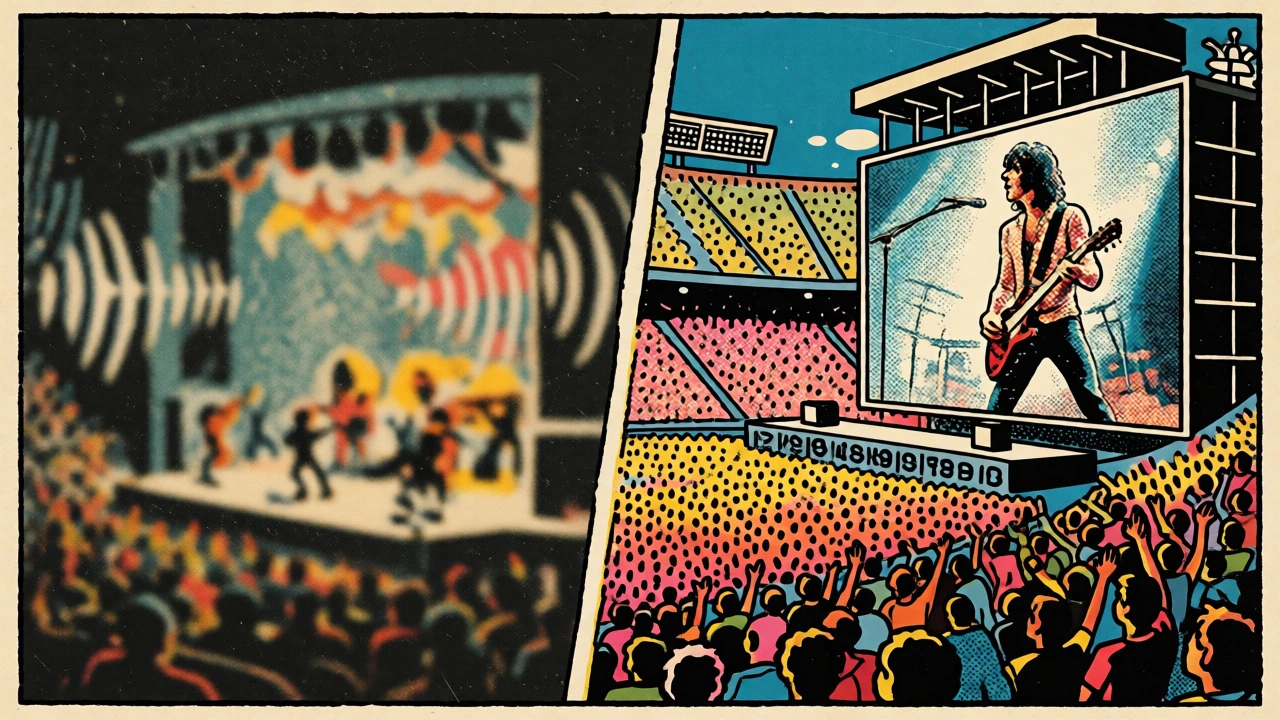

Imagine standing in the back row of a stadium, 300 feet from the stage. In the 1970s, you’d likely be hearing muffled echoes and seeing tiny specks moving under dim lights. By the late 1980s, you were watching a high-definition video feed while crystal-clear audio hit your ears simultaneously. What changed? It wasn’t just that bands got louder. The entire business model of live music shifted from selling tickets to individual fans in arenas to manufacturing global events for millions in stadiums.
This shift didn’t happen by accident. It was driven by cold hard math, technological breakthroughs, and a media landscape that suddenly made being a rock star a full-time, worldwide job. If you’ve ever wondered why stadium tours became the default for superstars like Bruce Springsteen, Michael Jackson, and U2, you’re looking at a perfect storm of economics and technology.
The Math Behind the Move
Let’s start with the money, because that’s what really drove this change. In the early 1980s, playing an arena holding 15,000 people was standard for major acts. But if you could sell out a stadium holding 60,000 people, you could make more money per night than three or four arena shows combined, even after paying for the extra production costs.
Consider the numbers from 1988. U2 played fewer shows than Bon Jovi but grossed significantly more-about $35.1 million compared to Bon Jovi’s lower total. Why? Because U2 packed stadiums with over 50,000 capacity, while Bon Jovi stuck to 15,000-seat arenas. The logic was simple: one big truckload of gear, one crew, one setup, but way more tickets sold. This is what economists call economies of scale. The cost per fan went down as the crowd size went up.
It wasn’t just about ticket sales, either. A massive stadium show creates a platform for merchandise, sponsorship deals, and broadcast rights. When Live Aid happened in 1985, it wasn’t just a concert; it was a marketing machine. Sponsors like Pepsi and AT&T paid top dollar to have their logos seen by billions of TV viewers. For promoters, the stadium wasn’t just a venue; it was a billboard.
MTV Created Audiences Too Big for Arenas
You can’t talk about 1980s touring without talking about MTV. When the channel launched in August 1981, it changed how we consumed music. Suddenly, a kid in Ohio could see a band from London every day. This visual exposure created a level of fame that was previously impossible. Artists weren’t just known for their records; they were known for their image, their style, and their stage presence.
This new kind of fame created demand that arenas couldn’t handle. Michael Jackson’s Bad World Tour, starting in 1987, is the prime example. He played 123 shows across 15 countries, reaching nearly 4.5 million people. Could he have done that in arenas? Technically, yes, but he would have had to play twice as many dates, doubling his travel and production costs for the same number of fans. Stadiums allowed him to reach those fans faster and cheaper.
| Feature | Arena Tour (e.g., 15k capacity) | Stadium Tour (e.g., 60k capacity) |
|---|---|---|
| Ticket Revenue Potential | Moderate; requires more dates | High; fewer dates needed |
| Production Cost Per Show | Lower | Significantly Higher |
| Merchandise Sales | Good | Excellent (higher volume) |
| Broadcast/Sponsor Value | Limited local/regional appeal | High global/national appeal |
| Risk Factor | Low; easier to fill | High; empty seats are obvious |
Technology Made the Back Row Possible
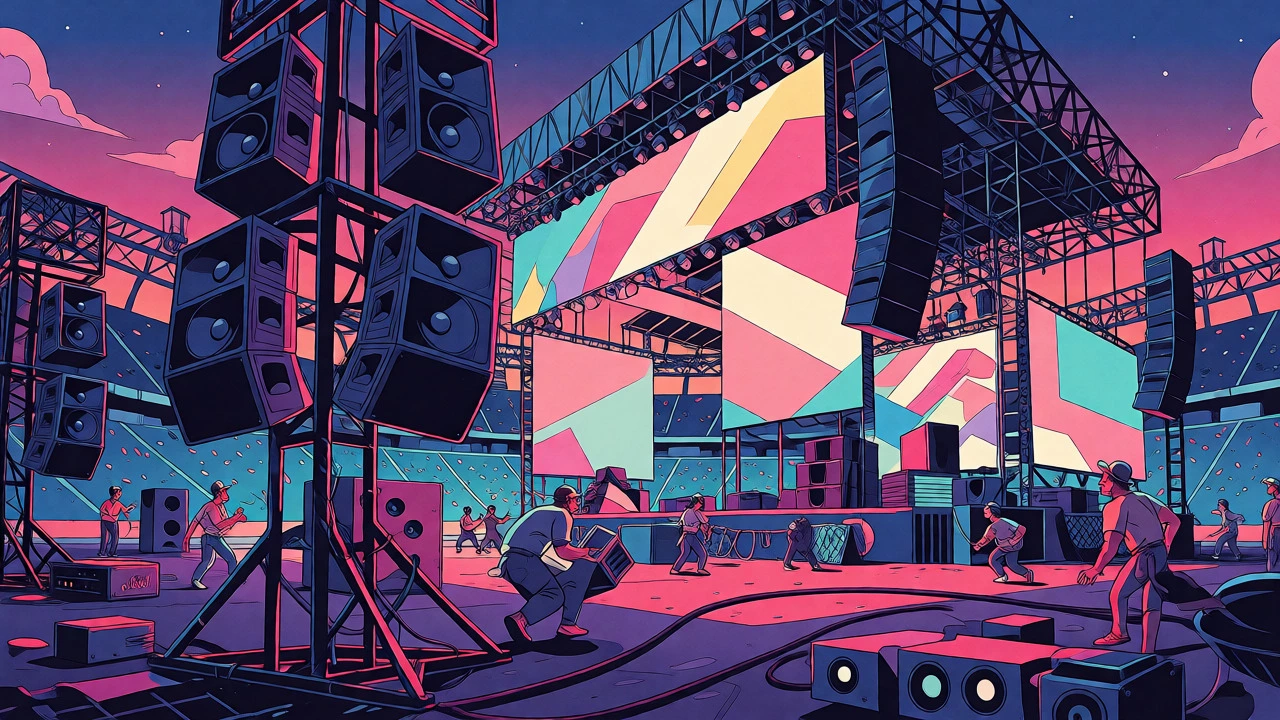
So, how did you actually enjoy a show when you were so far away? Before the 1980s, stadium sound was a mess. Sound waves bounce off concrete and dissipate in open air. If you were in the nosebleeds, you heard the echo seconds after the person near the stage. It was disjointed and often unintelligible.
The solution came from distributed sound systems and delay towers. Engineers placed speakers throughout the stadium, not just at the front. These speakers were wired to receive the signal from the main stage with a slight delay, timed perfectly so that the sound from the distant speakers arrived at your ears at the exact same time as the sound traveling directly from the stage. It was acoustic engineering magic.
Then there was the visual problem. You couldn’t see the drummer’s face from 200 yards away. Enter large-format video screens. While we take jumbotrons for granted now, in the 1980s, projecting live video onto massive walls behind the stage was revolutionary. Pink Floyd’s The Wall tour pushed these limits further, using projection mapping and inflatable props that required huge spaces to be effective. They proved that a concert could be a theatrical spectacle, not just a band playing songs.
Live Aid: The Moment Stadiums Became Global Studios
If you want to pinpoint the moment stadiums became essential infrastructure for pop culture, look no further than July 13, 1985. Live Aid wasn’t just a benefit concert; it was a test run for the modern mega-tour. Organized by Bob Geldof and Midge Ure, it utilized Wembley Stadium in London and JFK Stadium in Philadelphia.
The scale was unprecedented. Over 160,000 people attended physically, but the real audience was the estimated 1.9 billion people watching via satellite. This event normalized the idea that a stadium show was designed for two audiences: the people buying tickets and the people watching on TV. Queen’s performance at Wembley, for instance, is iconic not just because of the music, but because of how well it translated to television. The cameras, the lighting, the crowd shots-it all worked together.
This broadcast capability added immense value to the tour itself. Record labels and sponsors realized that a stadium tour generated content that could keep an artist relevant for months after the final show. It turned a live event into a multi-media campaign.
The Risks of Going Big
Going bigger wasn’t without its pitfalls. Playing a stadium is risky business. If you only sell 30,000 tickets for a 60,000-seat venue, the empty seats look terrible on camera and feel depressing for the fans who did buy tickets. Unlike an arena where you can close off upper decks, a half-empty stadium looks like a failure.
Weather was another nightmare factor. Rain could ruin equipment, cancel shows, and turn fields into mud pits. Security and logistics also scaled up exponentially. Moving 60,000 people in and out of a stadium requires military-grade planning. Traffic jams, long lines for bathrooms, and security checks could sour the experience before the first note was played.
Furthermore, the technology was fragile. At Live Aid, despite the sophisticated setup, there were temporary sound failures. Imagine trying to fix a blown speaker in a stadium while 70,000 people are waiting. The margin for error was slim, and the costs of failure were huge.
Why It Matters Today
The blueprint established in the 1980s is still the gold standard for superstars today. Taylor Swift, Beyoncé, and Coldplay operate on the same principles: leverage economies of scale, use technology to bridge the distance gap, and utilize media exposure to drive demand. The 1980s didn’t just make concerts louder; it made them smarter.
We often think of this era as purely about excess-big hair, big synths, big egos. But underneath the glitter was a rigorous business calculation. Bands realized that to sustain a career in a global market, they had to go big or go home. And thanks to better sound, better screens, and better management, going big became not just possible, but profitable.
Why did U2 earn more than Bon Jovi in the late 80s despite fewer shows?
U2 focused on stadium-sized venues with capacities over 50,000, allowing them to sell more tickets per night. Bon Jovi primarily played smaller arenas (around 15,000 seats). Although Bon Jovi played more dates, U2’s higher volume per show resulted in greater total revenue due to economies of scale.
How did sound work in 1980s stadiums?
Engineers used distributed speaker systems and delay towers. Speakers placed farther back in the stadium received the audio signal with a calculated delay so that the sound reached listeners in the back rows at the same time as the direct sound from the stage, reducing echo and improving clarity.
What role did MTV play in the rise of stadium tours?
MTV created mass awareness and visual identity for artists globally. This heightened fame generated demand too large for arenas. Artists like Michael Jackson and Madonna used MTV to build a brand that justified the high production costs and risks associated with filling stadiums.
Was Live Aid a typical stadium concert?
No, Live Aid was a unique hybrid event. It functioned as a ticketed concert, a global TV broadcast, and a charity fundraiser. Its success demonstrated the commercial potential of combining physical attendance with satellite broadcasting, influencing how future tours were marketed and produced.
What were the downsides of stadium touring?
Major downsides included poor acoustics compared to indoor arenas, vulnerability to weather conditions, high logistical costs for security and transport, and the risk of conspicuous empty seats if ticket sales fell short of capacity.