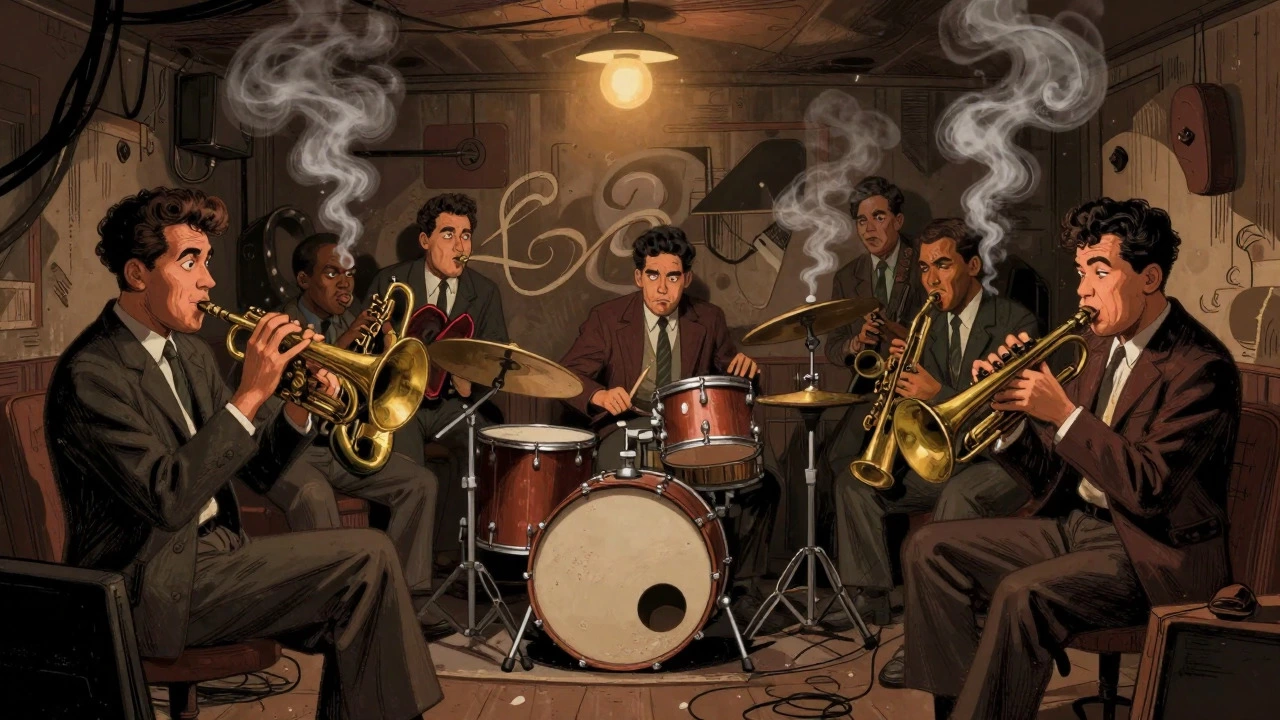

Imagine a band that started in a smoky Chicago basement playing complex jazz-fusion, only to end up dominating the dance floors of 1980s America with synth-heavy hits. That is exactly what Earth, Wind & Fire is an American pop, soul, funk, and jazz-fusion band formed in 1969 by Maurice White that redefined Black pop music by blending R&B, rock, funk, soul, jazz, and disco into a distinctive sound. Their journey from underground fusion artists to global superstars isn't just a story of musical change; it is a masterclass in how an artist can adapt to shifting industry trends without losing their soul. If you have ever wondered how a horn-driven funk group became the voice of 1980s pop radio, you are looking at one of the most calculated and successful evolutions in modern music history.
The Roots: Jazz-Fusion and Spiritual Vision
To understand where they went, you have to look at where they started. In 1969, drummer and bandleader Maurice White is the founder and creative force behind Earth, Wind & Fire, known for his vision of spiritually uplifting music that transcended racial boundaries. Originally called The Salty Peppers, the group moved from Chicago to Los Angeles and eventually adopted the name Earth, Wind & Fire in 1970. The name came from White’s astrological chart, but the sound was rooted in something much deeper: a desire to create music that felt cosmic and universal.
Their early albums, like the self-titled debut released in February 1971 on Warner Bros., were not radio-friendly in the traditional sense. They featured extended instrumental tracks, complex horn arrangements, and lyrics focused on social consciousness and spirituality. This era positioned them alongside other jazz-fusion acts, but with a crucial difference. White always prioritized melody over technical showmanship. Even in these raw, experimental days, the songs had hooks. This balance between sophisticated musicianship and accessible songwriting laid the foundation for everything that followed.
The Breakthrough: From Niche to Mainstream Funk
The turning point arrived in 1973 with the album Head to the Sky. Released on Columbia Records after a pivotal move under producer Clive Davis, this record marked the shift from niche fusion to mass-market appeal. The title track and a cover of "Evil" showcased smoother vocal harmonies and tighter song structures. It was still funky, but it was cleaner, more polished, and ready for a wider audience.
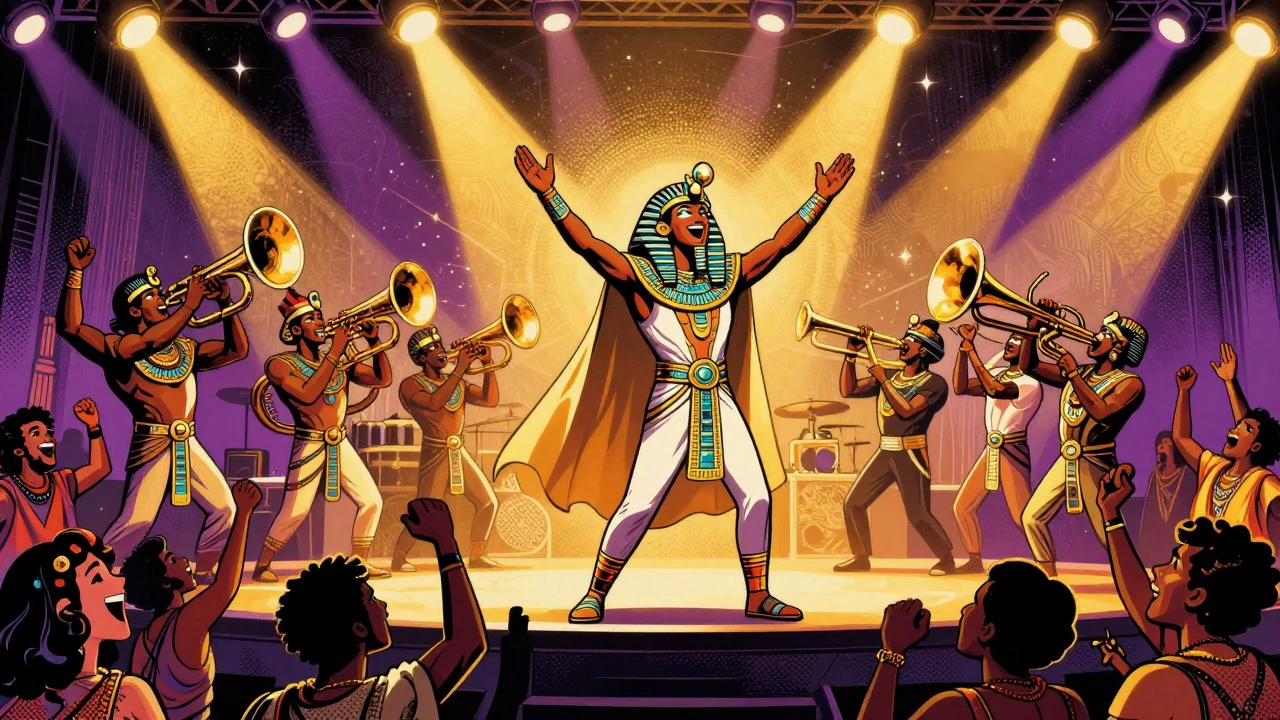
By the mid-1970s, the band had solidified its identity as a cosmic, Afrocentric funk ensemble. Albums like That’s the Way of the World (1975) produced "Shining Star," a No. 1 hit on both pop and R&B charts. This single was a watershed moment. It proved that a Black band could dominate mainstream white radio without diluting its cultural roots. The live album Gratitude captured the energy of this period, cementing their reputation as perhaps the most commercially successful Black band of the decade. They weren't just making records; they were creating a spectacle with elaborate stage shows and Egyptian iconography that drew audiences across genre lines.
The Disco Bridge: Late 1970s Crossover
As the 1970s progressed, the music landscape shifted toward disco. Earth, Wind & Fire didn't resist this change; they embraced it. By 1978, their sound had evolved to fit the dance floor perfectly. The release of "September" is a perfect example of this transition. Unlike the harmonically exploratory tracks of 1971, "September" features a straightforward groove, bright horn stabs, and a simple, repetitive lyrical hook. It was designed to be sung along to, and it worked.
The 1979 album I Am pushed this crossover further. It paired the disco-floor filler "Boogie Wonderland" (featuring The Emotions) with lush ballads like "After the Love Has Gone." These ballads used sophisticated chord changes and string arrangements but were crafted explicitly for adult-contemporary radio. Critics often point to this period as the moment Earth, Wind & Fire stopped being primarily album-oriented innovators and became full-scale pop hitmakers. They were no longer just a funk band; they were a pop act with a funk heart.
Embracing the 1980s: Synth-Driven Pop
The final step in their evolution happened in the early 1980s. With the rise of synthesizers and drum machines, many bands struggled to keep up. Earth, Wind & Fire adapted seamlessly. The 1981 album Raise! featured the hit "Let’s Groove," a track defined by prominent synthesizers, electronic drum patterns, and a streamlined dance-pop structure. It was a stark contrast to the organic, horn-driven funk of their mid-70s work, yet it retained the same infectious energy.
By 1983, albums like Powerlight and Electric Universe leaned heavily into contemporary 1980s R&B aesthetics. Drum machines replaced some live percussion, and sequenced bass lines added a new layer of precision. Some critics argued that this slick production diluted the raw energy that made them revolutionary earlier. However, the results spoke for themselves. The band remained visible on MTV and radio, sustaining their commercial relevance in a market dominated by new wave and synth-pop. They had successfully navigated the shift from analog funk to digital pop without disappearing.
| Era | Key Albums | Dominant Instruments | Primary Audience |
|---|---|---|---|
| Jazz-Fusion (1971-1972) | Earth, Wind & Fire, Last Days and Time | Acoustic horns, live drums, modal jazz | Niche fusion fans, college radio |
| Cosmic Funk (1973-1977) | Head to the Sky, That’s the Way of the World | Phenix Horns, electric bass, live rhythm section | Funk, R&B, and crossover pop listeners |
| Disco Crossover (1978-1980) | I Am, Faces | Polished horns, tight rhythm sections, strings | Disco clubs, mainstream pop radio |
| 1980s Pop (1981-1983) | Raise!, Powerlight | Synthesizers, drum machines, sequencers | MTV viewers, dance-pop fans |

Why the Shift Worked: Strategy Over Accident
It is easy to look back and see this evolution as a natural progression, but it was actually a strategic decision. Maurice White understood that the music industry rewards adaptability. In the early 1970s, album-oriented rock was king, so they played long, complex sets. In the late 1970s, disco ruled the clubs, so they tightened their grooves. In the early 1980s, technology changed the sound of music, so they incorporated synths. Each step was a response to the market, but each step also respected the core identity of the band: positivity, spiritual uplift, and high-energy performance.
This approach allowed them to sell over 90 million albums worldwide and achieve eight No. 1 hits. They paved the way for subsequent R&B/pop acts that blended dance rhythms with polished songwriting. Their success demonstrated that Black pop could be central, not peripheral, to mainstream charts. By balancing artistic integrity with commercial savvy, they created a legacy that remains relevant decades later.
The Legacy: A Living Repertoire
After a hiatus in 1983, the band reformed in 1987 and continued to tour and record through the 1990s and 2000s. Although critical attention often focuses on their 1974-1981 peak, their catalog continues to find new life in streaming playlists, film soundtracks, and live performances. Today, when you hear "September" or "Let’s Groove," you are hearing the result of a deliberate journey from Chicago jazz basements to global pop stages. Earth, Wind & Fire’s evolution proves that staying relevant doesn't mean staying static. It means knowing when to hold onto your roots and when to let them grow into new soil.
When did Earth, Wind & Fire start using synthesizers?
The band began incorporating synthesizers prominently in the early 1980s, starting with the 1981 album Raise! and the hit single "Let’s Groove." This marked a clear shift from their earlier horn-driven funk sound to a more electronic, synth-pop aesthetic.
Who was the key figure behind Earth, Wind & Fire's stylistic evolution?
Maurice White, the founder and bandleader, was the primary architect of the band's evolution. He strategically guided the group from jazz-fusion to funk, then to disco-inflected R&B, and finally to 1980s pop, ensuring they remained commercially viable while maintaining their spiritual and musical core.
What was the first major album that signaled Earth, Wind & Fire's move toward mainstream pop?
The 1973 album Head to the Sky is widely considered the first major step toward mainstream success. It featured tighter song structures and smoother vocals compared to their earlier jazz-fusion releases, helping them break out of the niche fusion scene.
Did critics dislike Earth, Wind & Fire's 1980s pop direction?
Some critics and purist fans felt that the 1980s synth-heavy production diluted the raw, organic funk energy of the 1970s. However, mainstream metrics showed that this shift kept the band highly visible and commercially successful during a competitive era dominated by new wave and synth-pop.
How did Earth, Wind & Fire influence other artists?
They pioneered the R&B/pop crossover phenomenon, showing that Black bands could reach large white audiences without sacrificing their cultural identity. Their blend of funk, soul, and pop set a template for many subsequent artists in the late 1970s and 1980s who sought similar mainstream success.