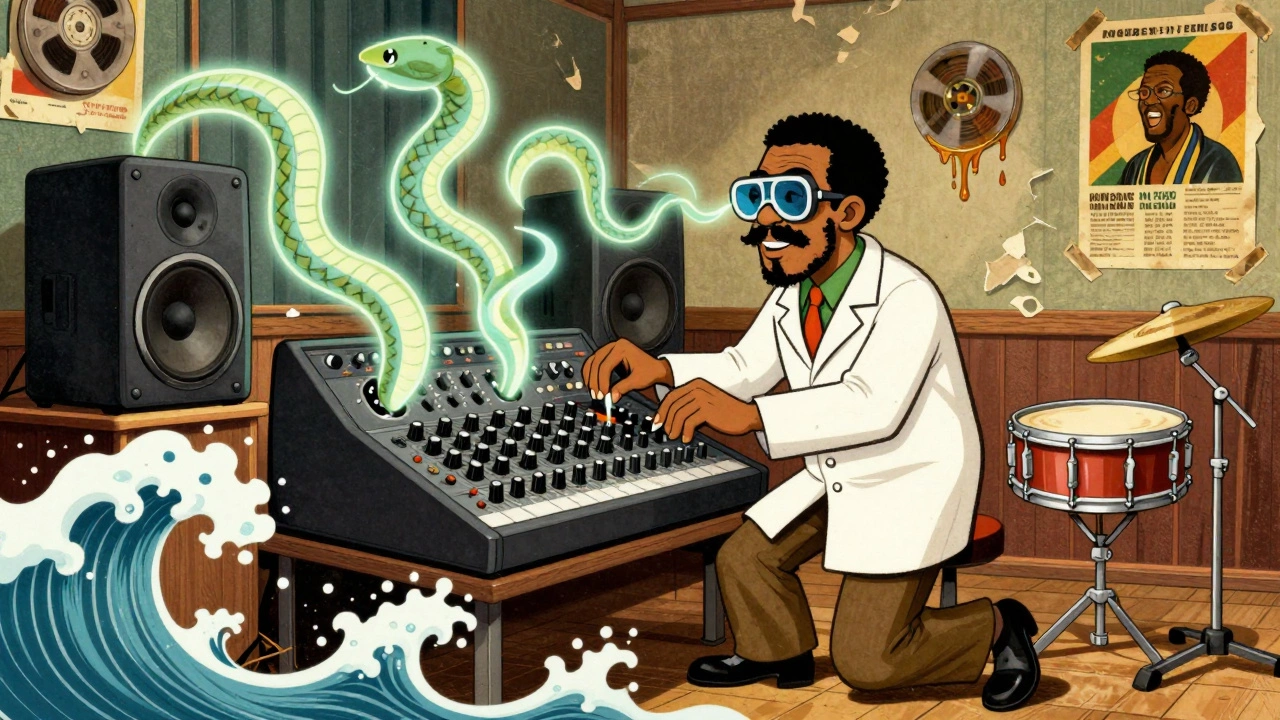

By the mid-1970s, a new kind of music was shaking the streets of Kingston. It wasn’t the full song you heard on the radio. It was something darker, deeper, and weirder - a version of a track stripped down to its bones, then rebuilt with echoes that rolled like thunder and reverb that swallowed whole instruments whole. This was dub, and it didn’t just change reggae - it rewired how music could be made.
What Dub Mixing Really Is
Dub mixing isn’t just adding effects. It’s remixing a song into something new - a live, evolving performance captured on tape. Producers didn’t just tweak levels. They used the mixing board like a musical instrument, turning knobs and flipping faders in real time. The original track - usually a reggae cut with vocals, bass, drums, and guitar - became a canvas. The vocals? Often erased. The drums? Pulled forward. The bass? Made huge. And then, the magic: echo, reverb, and space were carved into the sound like chisels.
Think of it like this: a reggae song is a house. Dub is the same house, but with half the walls removed, the roof opened to the sky, and a fog machine running in the hallway. You still recognize the structure - but now it breathes.
The Three Pillars: Echo, Reverb, and Space
Three tools defined the sound of 1970s dub: echo, reverb, and silence.
Echo wasn’t just a delay. It was rhythmic. Engineers set delay times to match triplets - three echoes per beat. That created a rolling, cascading effect that felt like a heartbeat with a stutter. King Tubby would send a snare hit into a delay unit, then manually ride the send knob until the echo spiraled out of control. It wasn’t a mistake. It was the point. That’s what they called a "runaway echo." It didn’t just repeat - it danced.
Reverb was used like paint. Not smeared everywhere. Just slapped on certain parts at key moments. A single cymbal crash might get drenched in reverb and then vanish into nothing. A bass note might echo into a cavernous room, then cut off mid-decay. This wasn’t about making things sound "big." It was about making them feel present - then pulling them away. The space between the sounds became as important as the sounds themselves.
Space was the silent weapon. Producers would mute entire sections - bass, drums, even the guitar - for 4, 8, or 16 bars. Then, out of nowhere, a lone flute would creep in with a heavy delay. Or a vocal snippet, chopped and reversed, would echo from the left channel. This wasn’t random. It was tension and release. The silence made the next sound hit harder. Listeners didn’t just hear the music - they felt its heartbeat.
The Riddim: The Foundation of Everything
Without the rhythm, dub doesn’t work. The backbone of every dub track was the riddim - the reggae groove. Three main patterns ruled:
- The One-Drop: The kick drum hits only on the third beat, leaving the first beat silent. That empty space made the bass feel heavier.
- The Steppers: A steady, marching kick on every beat. It locked the groove into a hypnotic pulse.
- The Chop: Not a drum part. The guitar or piano playing short, staccato chords on the off-beat - like a piston firing. This is what made reggae feel like it was swaying.
The bass wasn’t just low-end. It was the lead instrument. Jamaican engineers didn’t just boost bass - they sculpted it. They’d roll off everything above 200Hz, leaving only the thump. Then they’d compress it hard to keep it loud without distorting. The result? A bass that didn’t just play notes - it moved your chest.
How It Was Done: The Studio as a Machine
Most studios in Jamaica were tiny. No fancy computers. No undo buttons. Just tape machines, analog mixers, and a handful of effects units - often jury-rigged. King Tubby didn’t just use his equipment. He modified it. He opened up echo units and rewired them. He turned reverb tanks into feedback loops. He’d patch a delay into itself so the echo would echo itself - over and over - until it became a wall of sound.
The process was simple in theory, brutal in practice. Start with a 16-bar loop of the original track. Then, during mixing:
- Mute the vocals completely.
- Boost the bass and kick drum - push them to the edge of distortion.
- Send the snare and hi-hat through a phaser for movement.
- Use auxiliary sends to route instruments into delay and reverb units.
- Manually ride the send knobs while the tape rolls - sometimes for minutes at a time.
- At the peak, cut everything except the echo tail - let it fade into silence.
Some dub tracks were over five minutes long. They weren’t songs. They were journeys. You didn’t listen to them once. You got lost in them.
Lee ‘Scratch’ Perry and the Black Ark
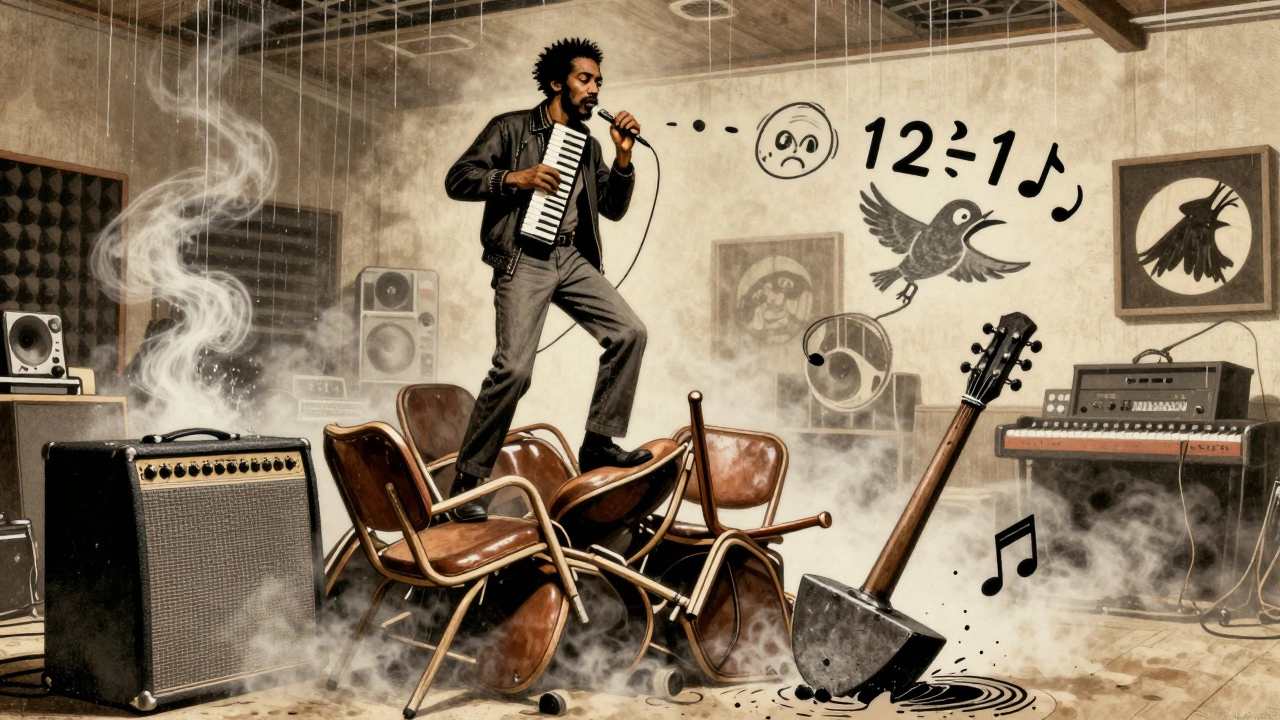
If King Tubby was the architect, Lee ‘Scratch’ Perry was the mad scientist. His Black Ark Studio - a converted house in Kingston - became the epicenter of dub experimentation. Perry didn’t follow rules. He broke them. He’d throw pots of water on the studio floor to change the acoustics. He’d record through broken microphones. He’d play a melodica through a guitar amp and call it a "spirit instrument."
His mixes were chaotic, surreal, and deeply emotional. He’d drop a voice sample of a woman screaming into a 12-second reverb. He’d mute the bass for 16 bars, then slam it back in with a slapback echo. He didn’t just make music. He made rituals.
Why It Mattered
Dub didn’t stay in Jamaica. It spread. Sound system operators in London and New York started playing dub tracks as backing for DJs to toast over. That’s how hip-hop was born - not from breakbeats alone, but from the idea that a track could be remixed live, stripped, and rebuilt. Punk, post-punk, industrial, ambient - all borrowed from dub’s playbook.
But more than that, dub taught producers something radical: the studio is a creative space, not just a recording room. You don’t have to play an instrument to make music. You just need to listen, cut, and rebuild.
What You Can Learn Today
You don’t need a 1970s tape machine to make dub. But you need the mindset.
- Start with a clean reggae riddim. Focus on the one-drop or steppers groove.
- Remove the vocals. Let the rhythm breathe.
- Boost the bass - then compress it so it doesn’t blow out your speakers.
- Use delay in triplets. Set the time to 1/8th note triplets. Ride the send knob live.
- Use reverb like a spotlight. Only hit one instrument at a time.
- Let silence be part of the arrangement. Mute the snare. Mute the bass. Wait. Then drop back in.
- Don’t fear distortion. A little clipping on the bass? Sometimes it’s the soul of the track.
Modern plugins can mimic tape saturation, analog delay, and phaser effects. But the real trick isn’t the gear. It’s the patience. Dub isn’t about adding more. It’s about removing everything that doesn’t move you.
What’s the difference between dub and reggae?
Reggae is the original song - full vocals, instruments, structure. Dub is the remix: vocals removed, effects added, rhythm emphasized. Dub takes the rhythm section and turns it into the main event, using echo, reverb, and silence to create a new experience. Think of reggae as the recipe, and dub as the chef improvising in the kitchen.
Why was King Tubby so important?
King Tubby didn’t just mix tracks - he invented the whole idea of dub. He was the first to take a reggae record, remove the vocals, and rebuild it using echo, reverb, and live mixing. He turned the mixing board into an instrument. His studio became a laboratory, and his mixes became the blueprint for every dub producer after him.
Do you need analog gear to make authentic dub?
No. But analog gear gives you the feel. Tape machines naturally saturate and compress. Analog delays have a warm, slightly unstable character. Digital plugins can replicate this, but the key is how you use them - riding faders, letting echoes run wild, and trusting your ears over presets. The spirit of dub is in the hands-on process, not the hardware.
How did dub influence modern music?
Dub laid the groundwork for hip-hop (sampling and beat manipulation), ambient music (space and texture), techno (repetition and groove), and even electronic dance music (live effects manipulation). Producers like Brian Eno, Aphex Twin, and even Radiohead owe a debt to dub’s use of silence, delay, and reverb as emotional tools.
What’s the role of the bass in dub?
The bass isn’t just low-end - it’s the lead. In dub, it’s mixed louder than anything else. Engineers would boost the low frequencies, cut out the highs, and compress it hard to keep it thick and consistent. The bass carries the groove, the emotion, and the physical weight of the track. A weak bass means a weak dub.
Final Thought
Dub wasn’t made to be perfect. It was made to be alive. You don’t need a studio to get it. You just need to listen - and then dare to cut something out. Sometimes, the most powerful sound is the one you never heard.


