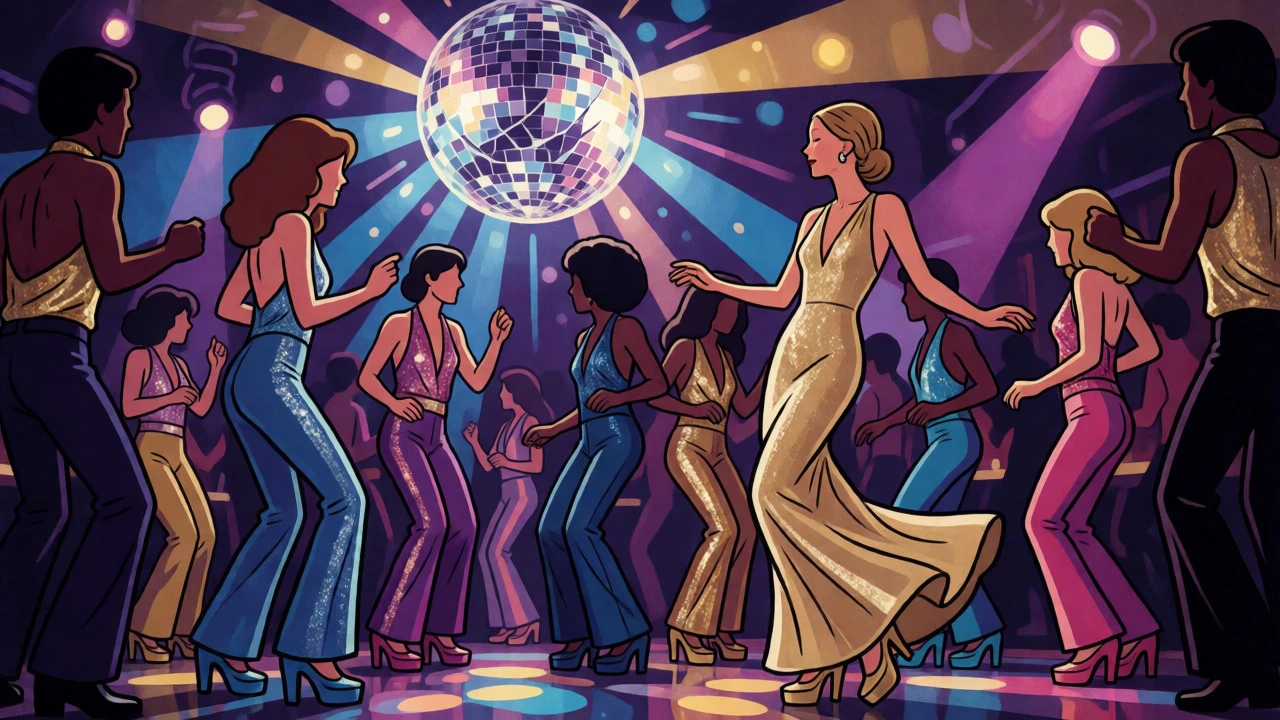

Imagine walking into a room where the air is thick with bass, the lights are spinning in fractured beams, and everyone looks like they stepped out of a glossy magazine spread. That wasn't just a vibe; it was a carefully engineered visual ecosystem. Between 1973 and 1980, disco fashion transformed from a niche subculture into a global phenomenon, driven by designers who understood that clothes had to move as hard as the music did. You didn't just wear these outfits; you performed in them. The look was a blend of athletic freedom and high-glamour spectacle, rooted deeply in Black and Latin queer nightlife before hitting the mainstream via venues like Studio 54.
This era wasn't just about shiny fabric. It was a political statement wrapped in polyester. When you put on a sequined halter top or a pair of flared trousers, you were aligning yourself with liberation movements-gay pride, women's rights, and racial visibility. But how did we get from exclusive couture to the knock-off bell-bottoms sold at your local mall? Let's break down the architects of this glittering revolution and see how their designs still echo in today's party wardrobes.
The Architect of Minimalist Glamour: Halston
If there is one name synonymous with disco elegance, it's Halston, formally known as Roy Halston Frowick. He didn't just design clothes; he designed a lifestyle. Before disco took over, Halston gained fame designing the iconic pillbox hat worn by Jacqueline Kennedy in 1961. By the mid-1970s, his Madison Avenue boutique became the playground for socialites and celebrities like Liza Minnelli and Bianca Jagger.
What made Halston different? He stripped away the structure. Traditional haute couture relied on boning, padding, and rigid silhouettes. Halston removed the "cage," as model Pat Cleveland famously described it. His signature pieces were minimalist column gowns, draped jersey dresses, and sleek jumpsuits made from Ultrasuede and cashmere. These garments clung to the body but allowed total freedom of movement. For the disco dancer, this was revolutionary. You could spin, kick, and sweat without fighting against stiff seams. His aesthetic defined the "effortless chic" that became the uniform of New York's elite nightlife.
However, Halston's story also highlights the tension between exclusivity and accessibility. In the early 1980s, he signed a licensing deal with JCPenney to launch the Halston III line. This move aimed to bring his draped glamour to middle-income consumers. High-fashion insiders were horrified, viewing it as a dilution of luxury. Yet, historically, this democratization helped cement disco style in the public consciousness, even if it contributed to his temporary fall from grace within the upper echelons of fashion.
The Rhythm of Color: Stephen Burrows
While Halston offered refined minimalism, Stephen Burrows brought raw energy and vibrant color to the dance floor. A graduate of the Fashion Institute of Technology, Burrows was one of the first internationally famous African-American designers. His work captured the chaotic, joyful spirit of early disco more instinctively than many of his peers.
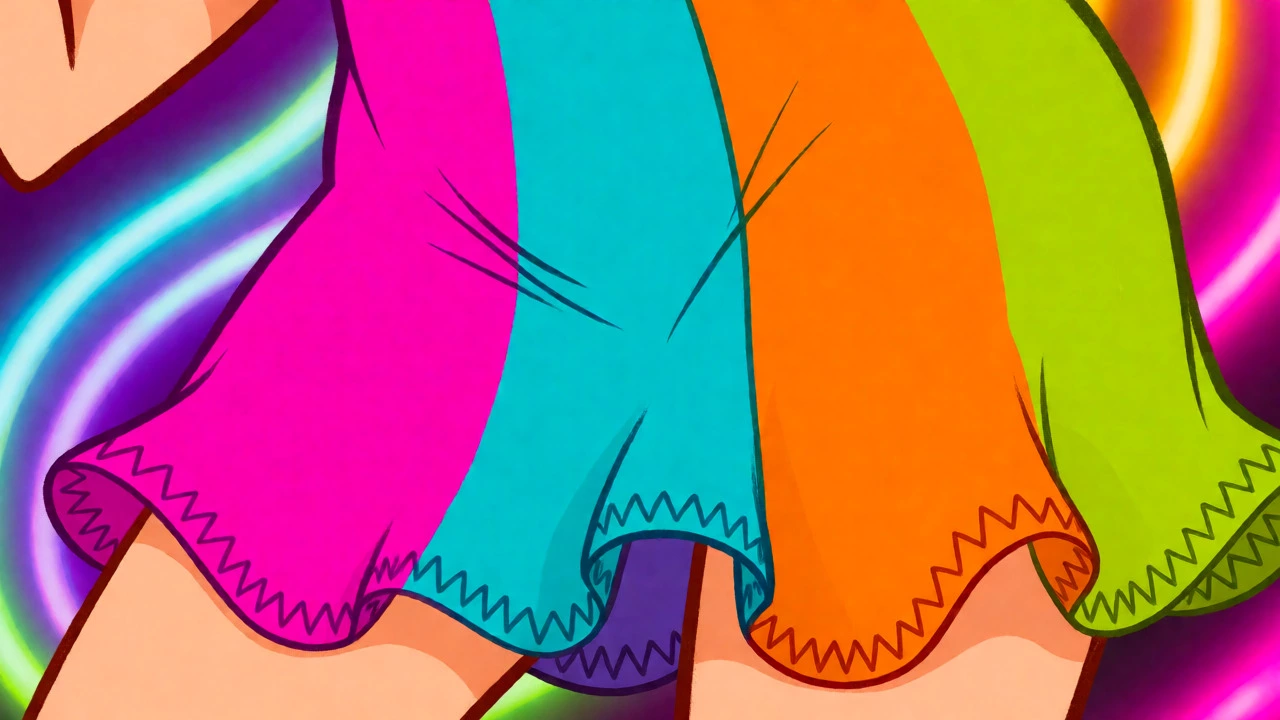
Burrows is best known for his technical innovations. He popularized the "lettuce edge" hem, created by using an exaggerated zigzag stitch on stretch jersey. This technique caused the fabric to ripple and curl, mimicking the movement of the wearer. His use of bold color blocking-fuchsia next to turquoise, orange beside lime green-was hypnotic under club lights. Unlike the subdued tones often associated with traditional luxury, Burrows’s palettes were loud and unapologetic.
His designs were less about static beauty and more about kinetic impact. A Burrows dress looked different when standing still versus when dancing. The fabric flowed, twisted, and caught the light in unpredictable ways. Halston himself acknowledged Burrows's genius, calling him "one of the unrecognized geniuses of the fashion world." Today, exhibitions at institutions like the Museum of the City of New York highlight how Burrows's clothes blurred the lines between daywear and nightwear, perfectly suiting the all-night lifestyle of disco devotees.
The Versatile Icon: Diane von Furstenberg
You can't talk about disco without mentioning the wrap dress. Diane von Furstenberg (DVF) launched her eponymous label in 1972, and her jersey wrap dress became the definitive garment for working women who wanted to transition seamlessly from the office to the club.
The magic of the DVF wrap dress lay in its practicality. Made from washable jersey, it featured a robe-like construction that cinched at the waist and adjusted to any body type. It was sexy but not restrictive, professional but playful. During the disco era, this versatility was key. Women needed clothes that could handle a 9-to-5 job and then survive a night of dancing at Studio 54. The wrap dress did exactly that. Its popularity exploded in the mid-1970s, making it a best-seller and an enduring symbol of female empowerment through fashion.
DVF herself was a regular at the clubs, embodying the independent, cosmopolitan woman the brand represented. Her designs proved that comfort and glamour weren't mutually exclusive. While other designers focused on exotic fabrics, DVF mastered the art of simple, flattering cuts that empowered the wearer to feel confident without sacrificing ease.
Street-Level Glamour and Synthetic Fabrics
Not everyone could afford Halston originals. The real power of disco fashion lay in how it trickled down to street level. Thanks to advances in textile manufacturing, synthetic fibers like polyester, Lycra, and Qiana became affordable and widely available. These materials were crucial. They were durable, resistant to wrinkles, and most importantly, shiny. Metallic lamé and sequins reflected the mirror-ball light, creating a visual spectacle that natural fibers couldn't match.
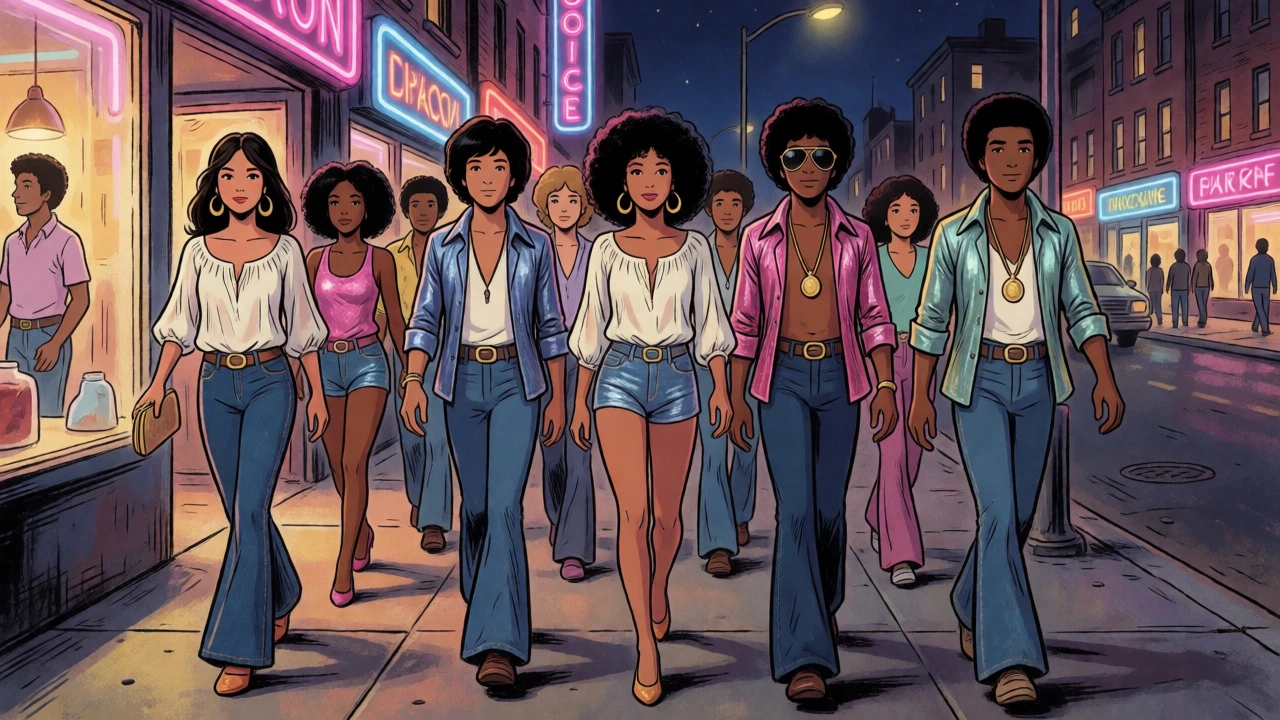
Street-level disco style was assembled from mass-market pieces. Bell-bottom jeans, peasant blouses, hot pants, and tube tops became staples for youth across socioeconomic lines. Brands like Fiorucci played a huge role here, translating high-fashion concepts into accessible ready-to-wear items. Fiorucci’s transparent dance skirts and bold prints allowed everyday people to participate in the glamour. The look was democratic: if you had a pair of platform shoes and a shiny top, you belonged.
For men, the trend followed a similar path. Tight-fitting polyester bell-bottoms, wide-collared shirts left unbuttoned to show chest hair, and three-piece suits (minus the jacket on the dance floor) created a body-conscious yet semi-formal uniform. Platform shoes, often 3-4 inches high, elongated the silhouette and added drama to every step. This emphasis on synthetic shine and tight fits distinguished disco from the relaxed, natural-fiber aesthetics of the hippie era or the theatrical costumes of glam rock.
The Anatomy of a Disco Outfit
Understanding the specific components of disco fashion helps explain why it remains influential. It wasn't random; it was a formula. Here is a breakdown of the key elements that defined the era:
| Component | Women's Style | Men's Style | Purpose |
|---|---|---|---|
| Fabric | Lurex, Satin, Jersey, Spandex | Polyester, Qiana, Silk | Reflect light, allow movement, resist sweat stains |
| Silhouette | Halter necks, wide-leg jumpsuits, wrap dresses | Tight tops, flared trousers, open collars | Highlight body shape while permitting dance moves |
| Footwear | Platform sandals, ankle boots | Heeled boots, platform loafers | Elongate legs, add height and drama |
| Accessories | Large hoop earrings, gold chains, clutch bags | Medallion necklaces, aviator sunglasses | Add sparkle and status signals |
Notice the common thread: everything served the dance floor. The fabrics were chosen for their reflective properties and durability. The silhouettes were cut to avoid wardrobe malfunctions during vigorous movement. Even the accessories were selected to catch the light. This functional approach to glamour is what makes disco fashion so compelling to study-it was design meeting utility in the most visceral way possible.
Legacy and Modern Revivals
Disco didn't just vanish; it evolved. After the "Disco Demolition Night" backlash in 1979, the overt glitz faded, but the DNA remained. House music in the 80s and rave culture in the 90s adopted some elements, though often leaning toward more casual sportswear. However, the cyclical nature of fashion means disco keeps returning. Contemporary brands frequently release capsule collections featuring flared pants, metallic finishes, and body-con dresses.
Today, the Halston brand continues to market "disco jersey" gowns, proving that the association between the name and 1970s nightlife is still commercially viable. Museums like the Brooklyn Museum have hosted exhibitions such as "Studio 54: Night Magic," reframing disco not as kitsch, but as serious design history. Curators emphasize how these designs broke barriers regarding gender, race, and sexuality, embedding political meaning into the very weave of the fabric.
Valerie Steele, a prominent fashion historian, argues that the core appeal of disco fashion-merging comfort with confidence-remains relevant. In an era where athleisure dominates daily wear, the disco principle of clothes that look good while moving freely feels surprisingly modern. We are still chasing that same feeling of liberation, just with different soundtracks.
Who was the most famous designer of the disco era?
Roy Halston Frowick, known simply as Halston, is widely considered the central figure of disco fashion. His minimalist, draped designs in Ultrasuede and jersey became synonymous with the glamour of Studio 54 and New York nightlife in the late 1970s.
Why were synthetic fabrics important for disco fashion?
Synthetic fabrics like polyester, Lycra, and Lurex were essential because they were shiny, stretchy, and durable. They reflected club lights effectively and allowed dancers to move freely without worrying about wrinkling or tearing, which natural fibers often struggled with during intense physical activity.
What is the significance of the lettuce edge in Stephen Burrows' designs?
The lettuce edge was a signature technique used by Stephen Burrows, created by using an exaggerated zigzag stitch on stretch jersey. This caused the hem to ripple and curl, adding dynamic movement and texture to the garments, which enhanced their visual appeal while dancing.
Did disco fashion influence men's clothing?
Yes, significantly. Men adopted tight-fitting polyester bell-bottoms, wide-collared shirts worn open at the chest, and platform shoes. The trend emphasized body-conscious silhouettes and synthetic shine, breaking away from the conservative menswear norms of previous decades.
How did disco fashion become accessible to the general public?
Mass production of synthetic fabrics lowered costs, allowing brands like Fiorucci and later JCPenney (with the Halston III line) to offer affordable versions of high-fashion looks. Street-level adaptations included bell-bottom jeans, tube tops, and platform shoes, enabling widespread adoption beyond elite circles.


