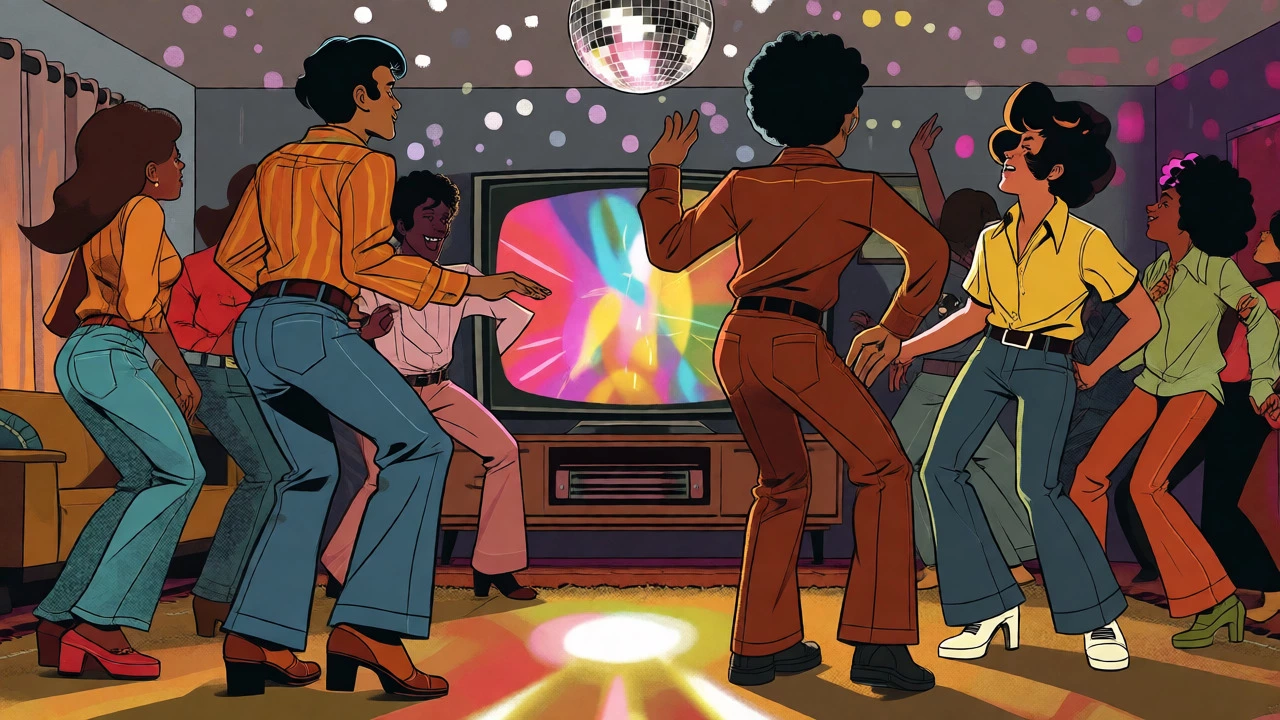

Imagine turning on your radio in July 1979 and hearing nothing but bass-heavy grooves. For one specific week, the top six songs on the Billboard Hot 100 were all disco tracks. This wasn't a glitch; it was the peak of a cultural takeover. If you think disco was just a fad that died overnight, look at the data. Between 1977 and 1980, roughly 22 disco songs hit number one. These weren't just background noise for nightclubs; they were the dominant sound of American pop culture. But which songs actually defined this era? Was it the polished production of the Bee Gees or the raw energy of Gloria Gaynor? Let's break down the real history behind the beats.
The Proto-Disco Foundation (1973-1974)
Before the glitter balls took over, there was a slow burn. Early 1970s radio didn't know what to do with long, instrumental dance tracks. Then came "Love's Theme" by Barry White’s Love Unlimited Orchestra. It reached No. 1 in February 1974. Some historians argue this was the first true disco No. 1 because of its lush string arrangements and steady four-on-the-floor beat. Others point to "TSOP (The Sound of Philadelphia)" by MFSB featuring The Three Degrees, which also topped the charts in early 1974. These tracks proved that dance music could sell records without relying on traditional verse-chorus structures.
Then came the debate over the first "real" disco hit. In May 1974, The Hues Corporation released "Rock the Boat." Many observers declared it the first authentic disco anthem to reach No. 1. Around the same time, George McCrae’s "Rock Your Baby" became the first disco song to top the UK charts. This international spread was crucial. Disco wasn't just an American phenomenon; it was exporting a new kind of rhythm to London and beyond. Carl Douglas’s "Kung-Fu Fighting" also hit No. 1 in 1974, blending martial arts movie hype with a funky groove, showing how adaptable the genre already was.
Dance Moves and Mainstream Breakthroughs (1975-1976)
By 1975, disco moved from niche club play to living rooms across America. Van McCoy & The Soul City Symphony released "The Hustle," which hit No. 1 in the summer of 1975. This track did something unique: it taught people how to dance. The associated line-dance turned a complex choreography into a national craze. You couldn't go to a party without someone trying to lead the hustle. This cemented the link between disco and social dancing, making the music functional as well as entertaining.
Meanwhile, KC and The Sunshine Band began their incredible run. Between 1975 and 1979, they scored five No. 1 singles on the Billboard Hot 100. Tracks like "That's the Way (I Like It)" and "Shake Your Booty" dominated radio rotations. Their success showed that a single act could control the airwaves for years if they nailed the formula. Donna Summer also started her ascent during this period. Her mid-70s breakthroughs, including "Love to Love You Baby," helped shift disco from underground scenes to mainstream pop stardom. She would eventually be branded "The Queen of Disco," but in these early days, she was proving that extended vocal performances could work on the radio.
| Song Title | Artist | Year | Chart Achievement |
|---|---|---|---|
| Love's Theme | Barry White’s Love Unlimited Orchestra | 1974 | No. 1 Billboard Hot 100 |
| TSOP (The Sound of Philadelphia) | MFSB feat. The Three Degrees | 1974 | No. 1 Billboard Hot 100 |
| Rock the Boat | The Hues Corporation | 1974 | No. 1 Billboard Hot 100 |
| The Hustle | Van McCoy & The Soul City Symphony | 1975 | No. 1 Billboard Hot 100 |
| You Should Be Dancing | Bee Gees | 1976 | No. 1 Dance Club Songs |
The Rise of Dedicated Dance Charts
As disco grew, the industry realized that club play didn't always match radio play. A song might rule the dance floor but flop on the AM dial. To fix this, Billboard launched the Disco Action chart in 1974. This was the predecessor to today’s Dance Club Songs chart. Gloria Gaynor’s "Never Can Say Goodbye" became the first No. 1 on this specialized chart in late 1974. This move legitimized disco as a distinct market segment worth tracking separately from pop radio.
Some songs ruled these charts for months. Harold Melvin & The Blue Notes’ "Bad Luck" spent an astonishing eleven weeks at No. 1 on the Disco Action chart. Compare that to B.T. Express’s "Express," which held the top spot for five weeks. These long runs show that DJs had significant power in determining which songs stayed hot. When the Bee Gees' "You Should Be Dancing" hit No. 1 on the newly formalized Dance Club Songs chart in August 1976, it marked a shift. The Gibb brothers were no longer just pop singers; they were club staples. This dual identity would soon make them global superstars.
Peak Saturation: The Saturday Night Fever Effect
If 1975 was the buildup, 1979 was the explosion. The release of the film "Saturday Night Fever" in late 1977 acted as a rocket booster for the genre. By 1979, the Bee Gees were everywhere. Their tracks "Stayin' Alive," "Night Fever," and "How Deep Is Your Love" dominated the charts. Fans often cite "Stayin' Alive" as the definitive disco song due to its iconic bassline and cultural impact. It wasn't just a hit; it was a symbol of the era's excess and energy.
The year-end Billboard Hot 100 for 1979 tells the whole story. Seven of the top ten songs were disco tracks. Donna Summer’s "Bad Girls" was No. 1, followed by Anita Ward’s "Ring My Bell" and another Summer hit, "Hot Stuff." Chic’s "Good Times" sat at No. 4. On July 21, 1979, the top six positions of the Hot 100 were all occupied by disco singles. This level of saturation is almost unheard of in modern music. It proves that disco wasn't just popular; it was the only thing that mattered.
Novelty vs. Substance: The Controversial Hits
Not every disco No. 1 was a masterpiece. The commercial viability of the genre led to a flood of novelty tracks. Rick Dees’ "Disco Duck (Part I)" reached No. 1 in 1976. Critics hated it. They argued it diluted the artistic merit of the genre. Yet, it sold millions. Similarly, Johnnie Taylor’s "Disco Lady" topped the charts before the peak of the movement. These songs highlight a tension in disco history: the gap between critical respect and commercial success.
Chic’s "Le Freak" offers a different perspective. Released in 1979, it spent three weeks at No. 1. Unlike "Disco Duck," "Le Freak" is celebrated for its precision rhythm section and sophisticated production. Nile Rodgers and Bernard Edwards created a sound that influenced hip-hop and house music decades later. While novelty hits like "Disco Duck" are remembered as curiosities, tracks like "Le Freak" remain in the canon of great music. This distinction matters when defining what truly "defined" the era. Did the era get defined by its best art or its biggest sales?
Enduring Legacy and Modern Relevance
Disco supposedly "died" around 1980, with events like "Disco Demolition Night" symbolizing the backlash. But the music never really left. Today, 1970s disco chart toppers are default selections for DJs, wedding planners, and event organizers. Songs like "I Will Survive" by Gloria Gaynor still dominate karaoke nights and Pride parades. Its message of empowerment resonates just as strongly now as it did in 1978.
Streaming playlists and retrospective lists continue to feature these tracks heavily. Forbes and other outlets regularly rank "Stayin' Alive," "Le Freak," and "The Hustle" among the greatest songs of all time. The production techniques-layered strings, synthesized basslines, and tight percussion-have been sampled in countless modern hits. From Daft Punk to Dua Lipa, contemporary artists owe a debt to the disco architects. These songs aren't just relics; they are foundational blocks of modern pop music.
Frequently Asked Questions
What was the first disco song to hit No. 1 on the Billboard Hot 100?
There is some debate, but "Love's Theme" by Barry White’s Love Unlimited Orchestra reached No. 1 in February 1974. However, many historians consider "Rock the Boat" by The Hues Corporation, which hit No. 1 in May 1974, to be the first true disco anthem to top the pop charts.
Why did disco decline so quickly after 1979?
Several factors contributed to disco's rapid decline, including market oversaturation, listener fatigue from repetitive formulas, and a strong rock-and-roll backlash. Events like "Disco Demolition Night" in 1979 symbolized this cultural pushback, leading radio stations to drop disco tracks in favor of rock and new wave.
Which artist had the most No. 1 disco hits?
KC and The Sunshine Band achieved remarkable success with five No. 1 singles on the Billboard Hot 100 between 1975 and 1979. The Bee Gees also dominated the late 70s, particularly through the "Saturday Night Fever" soundtrack, though their style evolved beyond pure disco.
Did disco have its own specific chart?
Yes. Billboard introduced the Disco Action chart in 1974 to track club play specifically. Gloria Gaynor’s "Never Can Say Goodbye" was the first No. 1 on this chart. It later evolved into the Dance Club Songs chart, which continues to track DJ preferences today.
Are any modern songs considered disco?
While few modern songs are labeled strictly as "disco," the genre's influence is pervasive. Artists like Dua Lipa, Bruno Mars, and The Weeknd incorporate disco elements such as four-on-the-floor beats, funk basslines, and string arrangements into their pop and R&B hits, keeping the spirit of the 1970s alive.