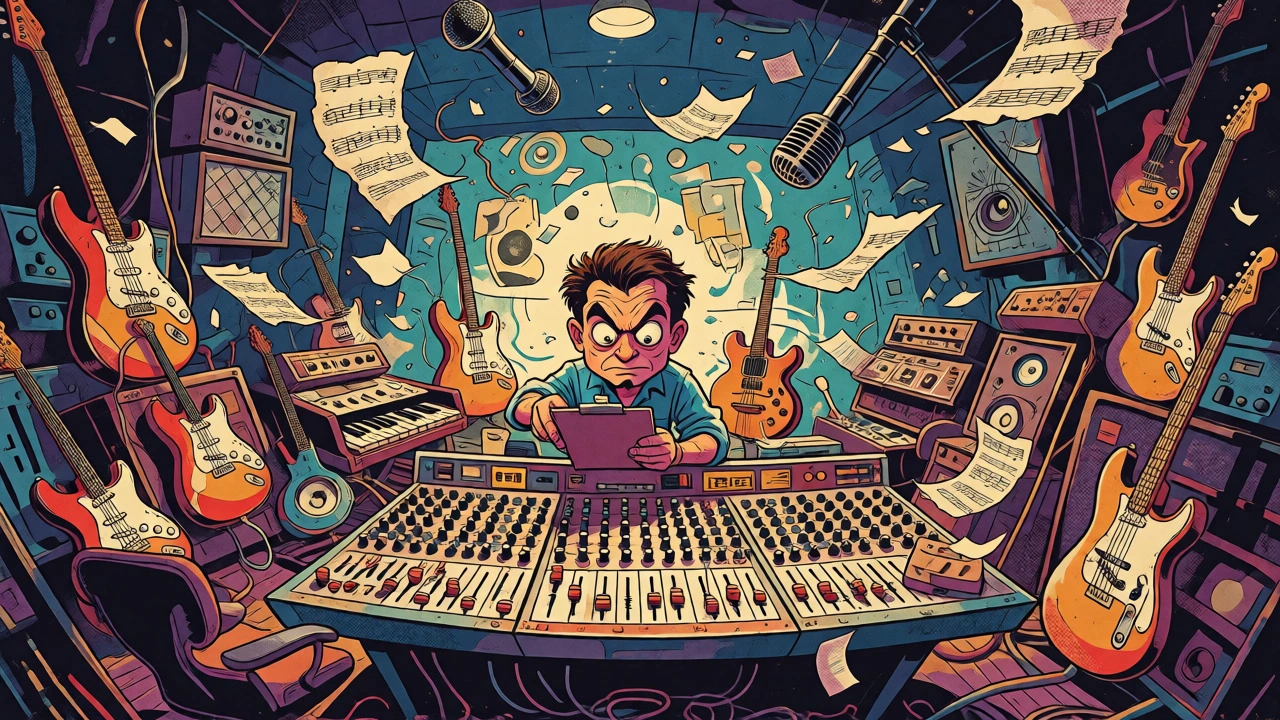

Imagine spending three years on a single album. Not because you were lazy, but because you were obsessed with making every single second sound perfect. That is the story of Hysteria, the fourth studio album by Def Leppard. Released in August 1987, it wasn't just a collection of songs; it was a sonic weapon forged in the fires of perfectionism. Producer Robert John "Mutt" Lange challenged the band to create a rock version of Michael Jackson's Thriller-an album where almost every track could become a hit. They did exactly that, generating seven singles and selling over 25 million copies worldwide. But how did they pull off such a feat? And why does this album still feel like a masterclass in production today?
The Thriller Challenge and the Three-Year Grind
In the mid-1980s, pop music was dominating the charts with polished, radio-friendly hits. Rock bands were often criticized for being messy or too long-winded. Mutt Lange saw an opportunity. He looked at Def Leppard and asked a simple question: Why can't a rock band have six or seven top-ten hits? This wasn't just a suggestion; it was a mandate. The result was a recording process that stretched from February 1984 to January 1987. Yes, three years. For a rock band used to knocking out albums in a few months, this was insane.
The cost reflected the time. Estimates vary, but sources range from £2 million to £4.5 million-a massive sum for the era. The band was already deep in debt from their previous album, Pyromania, so the stakes were incredibly high. If Hysteria failed, Def Leppard might have gone bankrupt. Lange didn't care about the budget; he cared about the sound. He wanted a crystalline, flawless audio experience where no note was out of place. This approach frustrated the band members at times, but it also pushed them to new creative heights. They weren't just playing instruments; they were engineering a product.
Rick Allen’s Triumph Over Tragedy
You can't talk about Hysteria without talking about Rick Allen. On New Year's Eve 1984, a car accident claimed his left arm. Most people would assume his career was over. Most bands would hire a new drummer and move on. Def Leppard didn't. They waited for him. This decision changed the trajectory of the album and rock history itself.
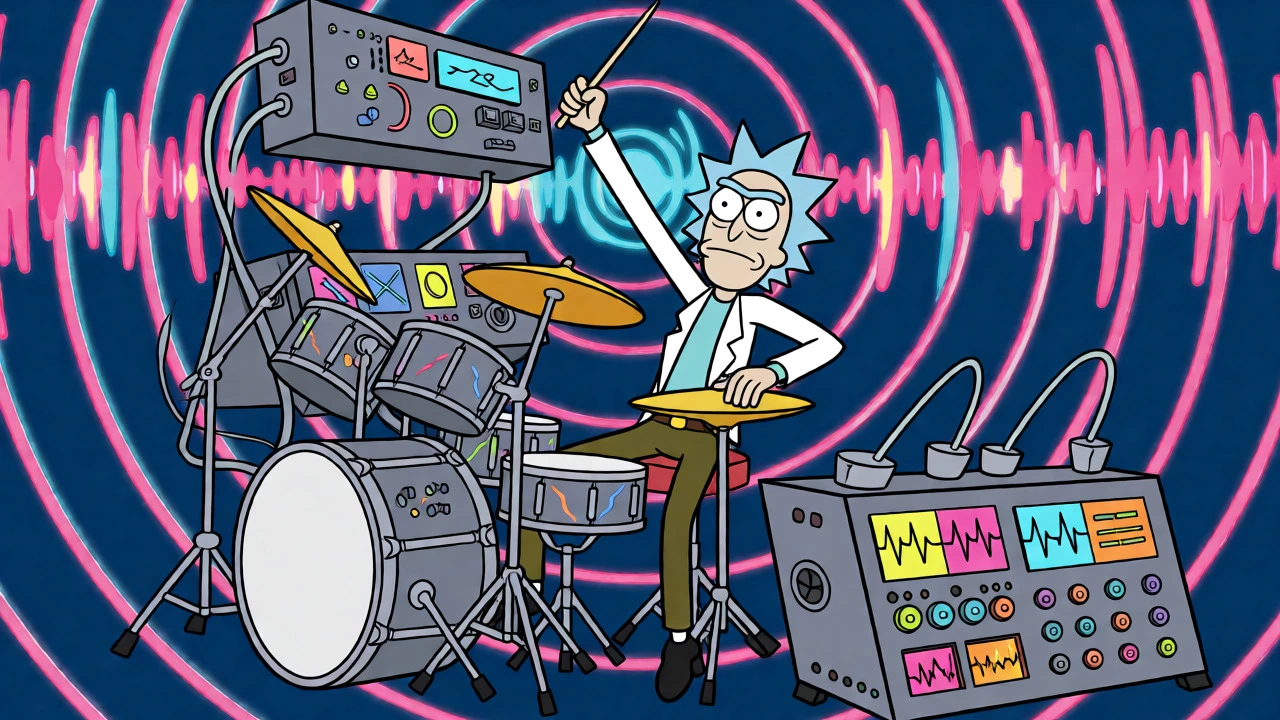
Allen had to relearn how to play drums. He worked with engineers to design a custom electronic kit that allowed him to trigger bass drum sounds with his feet and snare patterns with his remaining hand. It wasn't just a workaround; it became part of the album's unique texture. Lange and the producers sampled these sounds, feeding them into a Fairlight CMI sampler and a Synclavier system. The result was a drum sound that was both human and machine-like-tight, punchy, and utterly modern for its time. Allen's performance wasn't just about overcoming disability; it was about adapting technology to serve the music. His kit became a character in the album's narrative, proving that limitation can drive innovation.
Studio Sorcery: How They Built the Sound
If you listen closely to Hysteria, you'll hear things that shouldn't be there. Or rather, things that are there but shouldn't sound so natural. Lange and the band used a technique called multi-tracking to an extreme degree. Guitar parts were recorded one string at a time. Vocal harmonies were stacked dozens of times until they formed a wall of sound. Drums weren't just recorded; they were constructed. A kick drum might be a sample layered with a live hit, all quantized to align perfectly with the grid.
This wasn't standard rock recording. It was closer to pop production or even early hip-hop sampling techniques. The band used MIDI to trigger electronic drums, allowing for precise timing that a human couldn't achieve naturally. Guitars were often run through customized Rockman amplifiers, known for their clean, sustaining tone. The goal was clarity. Every instrument had its own space in the stereo field. There was no mud, no bleed between microphones. It was sterile, yes, but it was also powerful. This "studio-as-instrument" approach meant that the final mix was as important as the performance. Mixing alone took months, with engineers tweaking delays and reverbs to ensure every hook landed with maximum impact.
The Seven-Single Strategy
Most albums release two or three singles. Hysteria released seven. This was a calculated move to keep the album in the public consciousness for nearly two years. Each single targeted a different aspect of the rock audience:
- "Pour Some Sugar on Me": The party anthem. Its chant-driven chorus made it impossible to ignore, reaching No. 2 on the Billboard Hot 100.
- "Love Bites": The power ballad. It showcased Joe Elliott's vocal range and emotional depth, hitting No. 1.
- "Animal": The hard rocker. It reminded fans that despite the polish, this was still a heavy band.
- "Armageddon It": The glam-metal banger. It captured the fun, rebellious spirit of the 80s.
- "Hysteria": The title track. Atmospheric and moody, it proved the band could do subtlety.
- "Women": A gritty, riff-heavy track that appealed to traditional rock fans.
- "Rocket": A sci-fi-themed homage to Bowie and T. Rex, showing their musical influences.
This strategy worked. Six of the seven singles reached the Top 20 in the US. The album spent 78 weeks in the Billboard Top 10, a record for a rock band at the time. It wasn't just a hit; it was a phenomenon. By segmenting the audience, Def Leppard ensured that whether you liked ballads, anthems, or riffs, there was a song for you.

Critical Reception and Legacy
Not everyone loved the perfection. Critics argued that the album sounded too mechanical. Where was the sweat? Where was the danger? Some felt that Lange's obsession with detail stripped away the raw energy that defined rock and roll. They called it "plastic" or "over-produced." But history has been kind to Hysteria. Today, it is widely regarded as one of the greatest rock albums ever made. AllMusic gave it five stars, calling it "arguably the best pop-metal album ever recorded."
The debate continues: Is the polish a flaw or a feature? For many listeners, the precision is part of the appeal. In an era of digital production, Hysteria feels surprisingly current. It anticipated the way modern music is made-layered, edited, and crafted for maximum impact. It bridged the gap between the analog warmth of the 70s and the digital precision of the 90s. It showed that rock could be as sophisticated as pop without losing its edge.
| Metric | Data |
|---|---|
| Release Date | August 3, 1987 |
| Recording Duration | Approx. 3 Years (1984-1987) |
| Estimated Cost | £2 Million - £4.5 Million |
| US Sales Certification | 12x Platinum (12 Million Units) |
| Worldwide Sales | 20-25 Million Copies |
| Singles Released | 7 |
| Billboard Hot 100 Top 20 Hits | 6 |
Why It Still Matters
So, why should we care about an album from 1987? Because Hysteria teaches us something about ambition. It shows what happens when artists refuse to compromise on their vision. Def Leppard didn't settle for "good enough." They chased perfection, even if it meant going broke and taking years to finish. They embraced technology not as a cheat code, but as a tool to expand their creative possibilities.
Rick Allen's story adds a layer of humanity to the technical achievement. It reminds us that behind the glossy production are real people overcoming real struggles. The album is a testament to resilience, creativity, and the power of collaboration. Whether you're a producer looking for inspiration or a fan wanting to understand the 80s, Hysteria offers a rich listening experience. It’s loud, it’s shiny, and it’s unforgettable.
How long did it take to record Hysteria?
It took approximately three years, from February 1984 to January 1987. This unusually long period was due to producer Mutt Lange's perfectionism and the band's desire to craft each track meticulously.
Did Rick Allen actually play drums on the album?
Yes, Rick Allen performed the drum parts. However, he used a custom electronic drum kit designed to accommodate his one-arm status. The sounds were often sampled and triggered via a Fairlight CMI, blending his performance with electronic textures.
What was the most successful single from Hysteria?
"Love Bites" reached No. 1 on the Billboard Hot 100. "Pour Some Sugar on Me" was also massively successful, peaking at No. 2 and becoming one of the most recognizable rock anthems of the decade.
Why is Hysteria considered a masterpiece?
It is praised for its innovative production techniques, which blended hard rock with pop sensibilities. The album achieved unprecedented commercial success, with seven singles and over 20 million sales worldwide, setting a new standard for rock production.
How much did the album cost to make?
Estimates vary, but costs are reported between £2 million and £4.5 million. This was an enormous budget for a rock album in the 1980s, reflecting the extensive studio time and technical resources required.