
Have you ever listened to a ten-minute track about an armored creature destroying religion or a spiritual journey through dimensions, only to realize the band isn't just showing off their guitar skills? That is the heart of progressive rock, a genre defined by its ambition to merge complex musical structures with dense, literary storytelling. Unlike standard pop songs that focus on romance or daily life, prog rock uses science fiction, fantasy, and deep philosophy to critique society and explore consciousness.
Key Takeaways
- Prog lyrics emerged from the late-1960s counterculture as a reaction against simple pop structures, drawing heavily from mythology and sacred texts.
- Science fiction and fantasy are not just decorations; they serve as allegories for dystopian fears and utopian ideals.
- The "concept album" format allows artists to build cohesive narratives that require active listening and interpretation.
- Philosophical themes in prog often challenge mechanized modernity and explore spiritual transformation rather than offering literal plots.
- Modern listeners still value lyrical depth, treating it as a primary reason for engaging with the genre over instrumental-focused music.
The Roots of Literary Ambition
To understand why progressive rock sounds and reads the way it does, we have to look back at where it started. In the late 1960s and early 1970s, musicians associated with the hippie movement were tired of the three-minute pop song model. They wanted more. They searched for ambitious, symbolically dense ways to write lyrics that could match the complexity of their music. According to analysis published by Oxford University Press, these artists drew from a "host of sacred texts," mythology, and fantasy literature. They weren't just writing songs; they were creating cultural artifacts that reflected the counterculture's desire for a new social order while simultaneously expressing anxiety about technological domination.
This shift wasn't accidental. It was a deliberate move away from mainstream simplicity. Lyricists like Keith Reid of Procol Harum crafted lines grounded in "human pure philosophy," mixing wise-fool paradoxes with existential self-reflection. This established a precedent: if your music breaks the rules of structure, your lyrics should break the rules of subject matter. The result was a genre that treated rock music as a vehicle for high art and intellectual discourse.
Science Fiction as Social Critique
When you hear spaceships, alien civilizations, or futuristic cities in prog rock, don't just think of special effects. These settings are often metaphors. Science fiction in prog lyrics frequently depicts a dystopian "nightmarish technocracy." This reflects the fear that technology would overwhelm individual freedom-a common concern during the rapid industrialization of the mid-20th century. By placing characters in futuristic scenarios, artists could critique modern society without being overly direct, using the distance of sci-fi to make their points sharper.
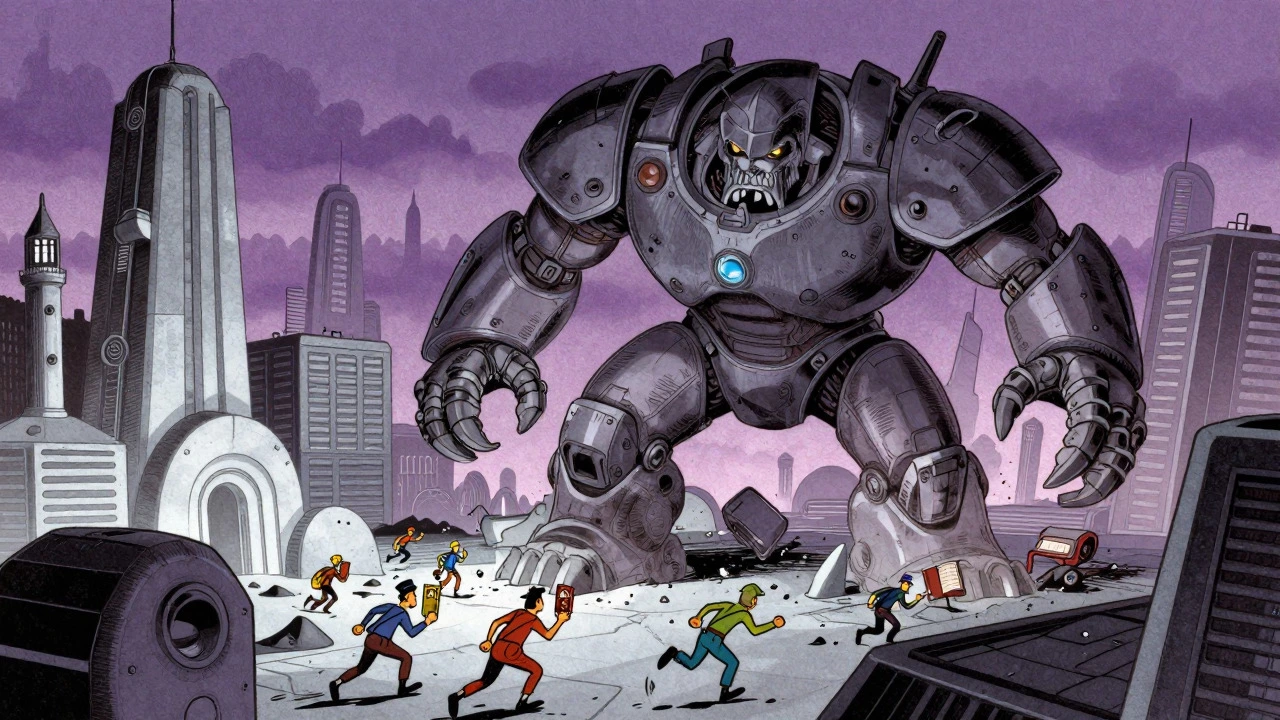
Consider the work of Emerson, Lake & Palmer. Their epic piece "Tarkus" features an armored creature that serves as an unstoppable symbol of technocracy. The lyrics and artwork present a continuous narrative of conflict, showing this force destroying religion, independent thought, and cultural tradition. Here, the sci-fi element isn't about adventure; it's a warning. It dramatizes the clash between tradition and mechanized warfare, forcing the listener to consider what is lost when efficiency replaces humanity.
Fantasy Worlds and Mythological Symbolism
If science fiction looks forward to warn us, fantasy often looks inward or backward to heal us. Prog rock frequently uses mythological creatures and otherworldly landscapes to symbolize idealized, utopian societies. These aren't just fairy tales; they are symbolic resources used to represent resistance and protest. The dense references to legends and myths can sometimes confuse outsiders, who might dismiss them as mere "myth and fairy-tale books." However, within the genre, these elements create a shared language of symbolism that resonates with fans seeking deeper meaning.
Some bands take this integration of literature seriously, embedding passages from canonical speculative fiction directly into their songs. For instance, referencing works like C.S. Lewis’s "Prince Caspian" intensifies the mythic resonance of the music. This practice turns the album into a form of speculative poetry, allowing writers to "break the bounds of conventional thought." The fantasy setting provides a safe space to explore complex emotional and ethical dilemmas that might feel too heavy or abstract in a realistic context.
Philosophy and Spiritual Journeys
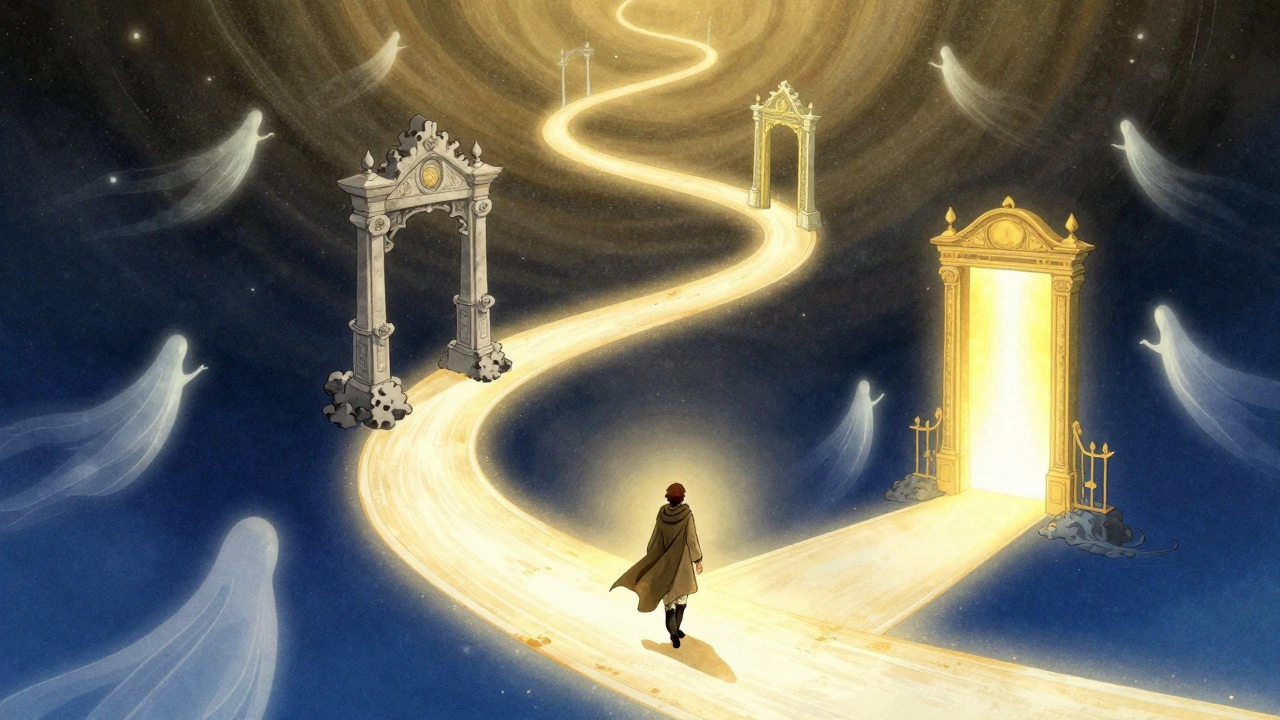
Beyond the imagery of spaceships and dragons lies the core of prog rock: philosophy and spirituality. Many prog lyrics function as allegories of transformation rather than straightforward narratives. A prime example is Yes’s "Close to the Edge." Musicologist Thomas Mosbø interprets this four-movement piece as "a ritual about ritual." The lyrics follow a seeker who passes through stages of spiritual poverty, encounters new realities, assimilates them, and returns transformed. This structure suggests that prog lyrics were exploring complex consciousness themes long before mindfulness became a mainstream buzzword.
These philosophical concepts often challenge the listener to free themselves from past constraints. Voices in the lyrics may urge liberation from "the bondage of the ashes of death," framing the song as a call to self-definition. This engagement with questions of how to live, how to structure society, and how to relate to the transcendent distinguishes prog from other rock genres. It invites the audience to participate in a mental and spiritual exercise, making the listening experience active rather than passive.
The Power of the Concept Album
All these themes-sci-fi, fantasy, philosophy-are tied together by the format of the concept album. In this structure, lyrics form a unified sequence that tells a single story or explores a tightly focused theme across multiple tracks. This cohesion is crucial. It allows for extended world-building and argumentation that a single three-minute song simply cannot support. Fans consistently praise albums that maintain consistent narrative perspective, symbolism, and emotional arcs from the opening track to the finale.
The concept album format also changes how we listen. Instead of looking for a catchy hook, listeners trace recurring motifs and characters. Aspiring writers in the prog community emphasize starting from a clear conceptual premise and structuring the album as a narrative in multiple sections. This approach requires discipline and vision, but it rewards the audience with a rich, immersive experience. The album becomes a book set to music, demanding attention and reflection.
Comparing Prog to Other Genres
Why do these themes matter so much in prog rock specifically? Because the genre encourages unusual topics that are relatively rare in mainstream rock and pop. While standard rock often focuses on romance or everyday struggles, prog occupies a distinctive thematic niche. Its extended song forms provide a structural advantage for developing philosophical or speculative narratives. Even when vocals become non-semantic-using shouts, noise, or silence-they are framed by these conceptual ideas, adding another layer of abstraction.
In progressive metal, a subgenre that has evolved from classic prog, these themes are intensified. Narratives often follow characters across planetary wars or post-apocalyptic futures, embedding political themes of resistance against authoritarian empires. This distinguishes prog-metal from more conventional metal styles that prioritize aggression or personal catharsis over structured ideological storytelling. The lyrics take on greater importance because they carry the weight of the entire conceptual framework.
How to Engage with Prog Lyrics
If you want to get the most out of progressive rock, you have to change how you listen. Casual listening often misses the point because instrumental virtuosity can overshadow the words. To truly appreciate the genre, try reading lyric sheets alongside the music. Look for connections to album art and track sequencing. Ask yourself: What is the central metaphor here? How does the story evolve from one section to the next?
Don't expect literal plots. Instead, read the lyrics as symbolic or ritual structures. Trace the stages of psychological or spiritual transformation. If a song feels abstract, remember that ambiguity is often intentional, inviting multiple interpretations. Embrace the complexity. The value of prog rock lies not just in the skill of the musicians, but in the depth of the ideas they communicate. By engaging with the text, you unlock the full impact of the art.
| Feature | Progressive Rock | Mainstream Pop/Rock |
|---|---|---|
| Primary Subjects | Sci-fi, fantasy, philosophy, spirituality | Romance, partying, personal relationships |
| Narrative Structure | Cohesive concept albums, multi-section suites | Standalone singles, verse-chorus format |
| Symbolism | Dense allegory, mythological references | Literal or simple metaphors |
| Listener Role | Active interpretation, analytical engagement | Passive enjoyment, emotional connection |
| Social Function | Critique of modernity, exploration of consciousness | Entertainment, reflection of current trends |
Why do progressive rock bands use science fiction and fantasy so much?
They use these genres as allegorical tools. Sci-fi often critiques technological domination and dystopian futures, while fantasy explores utopian ideals and spiritual journeys. This allows artists to discuss complex social and philosophical issues indirectly, using metaphor to deepen the meaning.
What is a concept album in progressive rock?
A concept album is a record where all the songs are linked by a single narrative, theme, or idea. Instead of being a collection of unrelated tracks, the album tells one continuous story or explores one philosophical question from start to finish, requiring the listener to engage with the whole work.
Are progressive rock lyrics always easy to understand?
Not necessarily. Prog lyrics are often dense, surreal, and filled with abstract symbolism. They may require reading lyric sheets and studying album art to fully grasp. The ambiguity is often intentional, inviting listeners to interpret the meanings based on their own experiences and thoughts.
How did the hippie movement influence prog rock lyrics?
The late-1960s counterculture emphasized spirituality, alternative lifestyles, and resistance to mainstream norms. Prog musicians adopted these values, drawing on sacred texts, mythology, and anti-establishment sentiments to create lyrics that challenged mechanized modernity and sought new forms of consciousness.
Is progressive rock still relevant today?
Yes, especially in subgenres like progressive metal. Modern bands continue to use sci-fi, fantasy, and philosophical themes to address contemporary issues like oppression and revolution. The demand for intellectually stimulating and narratively cohesive music remains strong among dedicated fans.