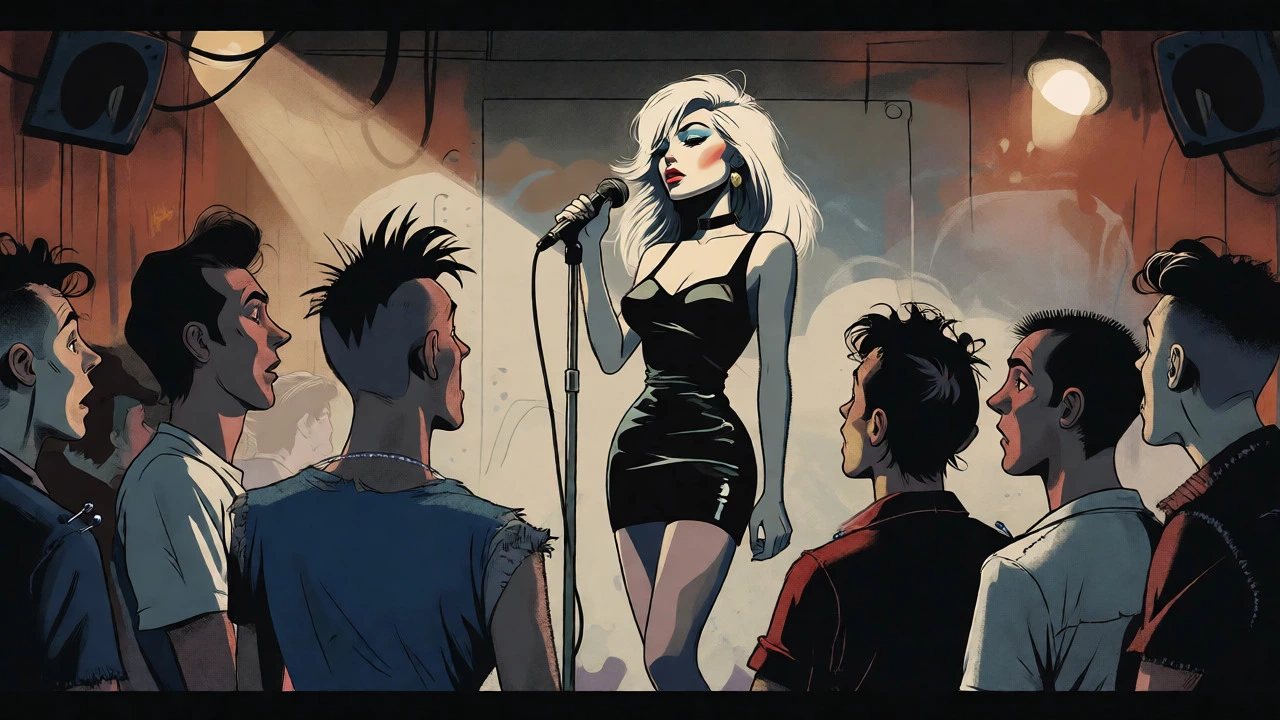

Imagine standing on the stage of CBGB in 1975. The air smells like stale beer and sweat. The audience is mostly men who believe rock and roll belongs to them. Then a woman walks out. She isn’t hiding her femininity behind leather jackets or shaved heads. She has bleached-blonde hair, heavy makeup, and a tight dress that looks more like a 1960s girl group uniform than a punk battle armor. This was Debbie Harry, and she wasn’t just singing; she was rewriting the rules.
For decades, historians have debated whether Blondie was truly a punk band or something else entirely. But one thing is certain: under Harry’s leadership, they became the most commercially successful act of the entire punk and new wave scene. They didn’t just survive the male-dominated landscape of 1970s rock; they dominated it. How did a former Playboy Bunny become the undisputed queen of a genre built on anti-glamour? And what does her story tell us about women’s leadership when you refuse to choose between being tough and being feminine?
The Paradox of Glamour in a Gritty Scene
Punk was supposed to be ugly. It was a reaction against the bloated excess of 1970s prog-rock. Bands like the Sex Pistols and The Clash wore safety pins and ripped shirts to signal their rejection of mainstream beauty standards. Many women in the scene followed suit, adopting androgynous looks or deliberately unsexy clothing to avoid being objectified. They wanted to be taken seriously as musicians, not as eye candy.
Debbie Harry took the opposite approach. She leaned into glamour. Her look-inspired by old Hollywood starlets and 1960s pop groups-was polished, deliberate, and undeniably sexual. Critics initially dismissed this as superficial. But Harry saw it differently. In a 1982 reflection, she described the band’s concept as being "desirable, feminine, and vulnerable" but also "resilient, tenacious." She wasn’t pretending to be weak. She was using femininity as a weapon. By looking like a pin-up while sounding like a punk, she forced audiences to confront their own biases. You couldn’t ignore her because she was pretty, and you couldn’t dismiss her talent because she looked like she belonged on a magazine cover.
This strategy created a unique space for women in rock. Harry proved you didn’t have to erase your gender to lead a band. Instead, she amplified it. Her presence challenged the idea that authority in music required masculinity. When she stood at the microphone, she wasn’t asking for permission to be there. She owned the stage with a confidence that made the aggressive posturing of many male punks seem insecure by comparison.
From Waitress to Chart-Topping Icon
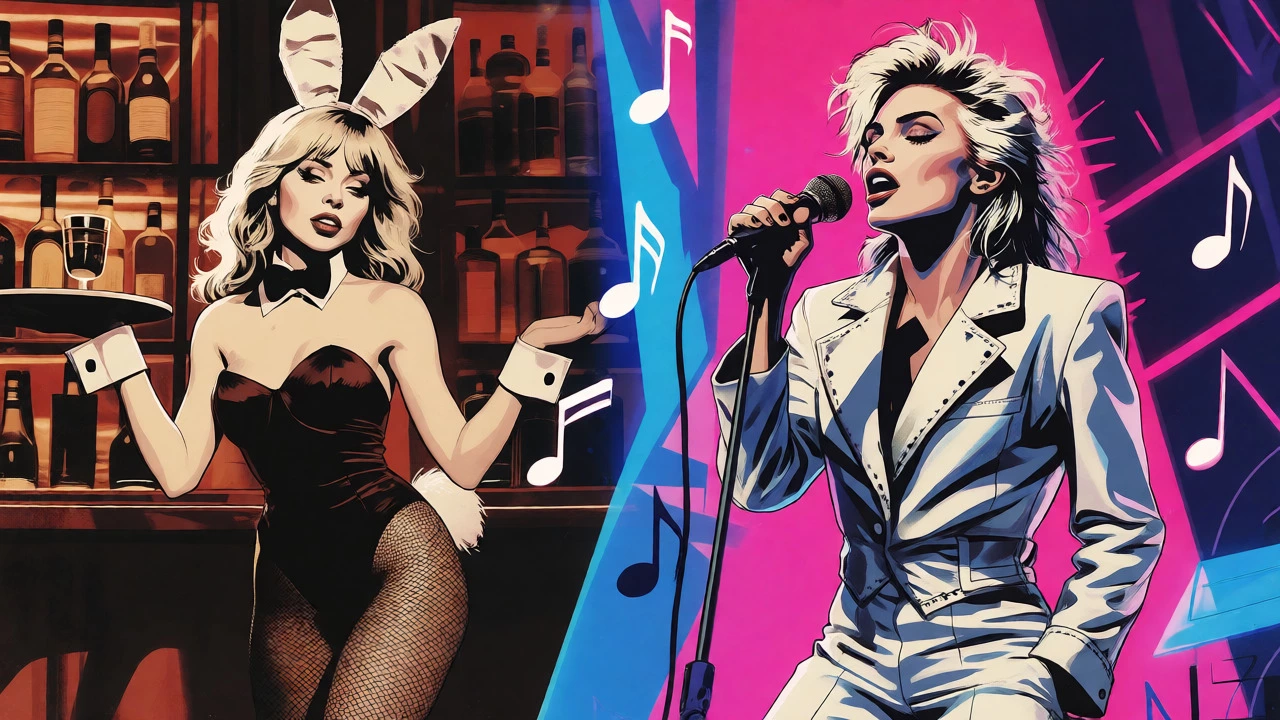
Harry’s path to leadership wasn’t paved with gold. Before Blondie formed in 1974, she worked as a waitress, a folk singer, and even a Playboy Bunny. That last job is often highlighted in biographies, sometimes sensationally. But for Harry, it was just another gig in a city where survival meant doing whatever it took. The experience gave her thick skin. Working in an environment widely viewed as misogynistic taught her how to navigate spaces where men held all the power.
When she and guitarist Chris Stein formed Blondie after her previous band, The Stilettos, collapsed, Harry stepped into the role of co-songwriter and frontwoman immediately. This wasn’t a case of a manager picking a pretty face to sell records. Harry had creative control from day one. She wrote lyrics that reflected her worldview-stories about independence, obsession, and self-definition. Tracks like "One Way or Another" (1978) aren’t just catchy hooks; they’re narratives of agency. The protagonist isn’t waiting for a man to save her; she’s tracking him down, taking charge of the situation.
The commercial results speak for themselves. Between 1978 and 1981, Blondie achieved five UK No. 1 singles and four US No. 1 hits. Songs like "Heart of Glass," "Call Me," and "Rapture" topped charts worldwide. For context, very few other punk bands managed such sustained mainstream success. Talking Heads were critically acclaimed but never hit the same sales peaks. Television remained cult favorites. Blondie crossed over completely, bringing punk aesthetics to living rooms everywhere. And at the center of it all was a woman who refused to compromise her image or her sound.
| Band | US No. 1 Hits | UK No. 1 Hits | Primary Genre Label | Frontperson Gender |
|---|---|---|---|---|
| Blondie | 4 | 5 | New Wave / Pop-Punk | Female (Debbie Harry) |
| Talking Heads | 0 | 0 | New Wave / Art Rock | Male (David Byrne) |
| The Ramones | 0 | 0 | Punk Rock | Male (Joey Ramone) |
| Television | 0 | 0 | Punk Rock | Male (Tom Verlaine) |
Musical Hybridity as a Leadership Tool
Leadership in music isn’t just about personality; it’s about vision. Blondie’s sound was a chaotic mix of genres that shouldn’t have worked together. They blended the raw energy of CBGB punk with the smooth grooves of disco, the rhythm of calypso, and the spoken-word flow of early hip-hop. This hybridity allowed them to reach audiences that pure punk bands missed.
Consider "Rapture" (1981). It featured one of the first rap verses ever broadcast on MTV. Debbie Harry delivered the lines with a cool detachment that matched the track’s experimental vibe. Or take "The Tide Is High," a reggae-influenced cover that showcased her vocal versatility. These choices weren’t random. They reflected Harry’s refusal to be boxed in. If punk demanded three chords and attitude, Blondie offered sophistication without losing its edge.
This musical flexibility mirrored Harry’s leadership style. She adapted to changing trends without abandoning her core identity. While other punk bands struggled to evolve as the movement fragmented, Blondie kept innovating. They stayed relevant because they listened to everything-from street corner doo-wop to underground dance clubs-and filtered it through their own distinct perspective. Harry’s voice acted as the anchor, holding these disparate elements together with a consistent, recognizable tone.
Navigating Feminism Without the Label
Did Debbie Harry consider herself a feminist? The answer changed over time. In the 1970s, many women in punk, including Patti Smith and Tina Weymouth of Talking Heads, avoided the label. They preferred to focus on individual freedom rather than organized political movements. Punk prized autonomy above all else, and aligning with any specific ideology felt restrictive.
Harry later clarified her stance. In interviews from the mid-2010s, she stated plainly that she always saw herself as a feminist because she wanted freedom of choice. "How can one be a woman and not be a feminist?" she asked rhetorically. She recognized that her career existed within a historical shift. Before punk, women in rock were often relegated to backup singers or novelty acts. After punk, women could actively pursue careers as leaders and creators. Harry didn’t just benefit from this shift; she helped drive it.
Her reluctance to wear the feminist badge loudly in the 70s didn’t mean she lacked political awareness. It meant she prioritized action over rhetoric. By succeeding on her own terms, she demonstrated feminist ideals in practice. She controlled her image, her music, and her business decisions. She showed young women that they could be ambitious and assertive without apologizing for their femininity. This quiet revolution resonated deeply with Gen X and Boomer listeners, who found anthems of empowerment in songs like "Sunday Girl" and "Atomic."
Legacy: A Blueprint for Female Authority
Blondie broke up in 1982, only to reunite in 1997. Their longevity is remarkable. Few bands from the original punk era maintained such cultural relevance for five decades. Today, Debbie Harry remains a style icon and a respected elder stateswoman of rock. Her influence extends beyond music into fashion, film, and art.
Why does her story still matter? Because it offers a model of leadership that rejects false binaries. Harry proved you can be glamorous and gritty. You can be feminine and powerful. You can be part of a rebellion and still play by the rules of commerce. Later movements like Riot Grrrl would adopt more explicit political language, but they walked a path Harry had already cleared. She showed that women could lead major rock bands, write their own material, and dominate global charts.
In a modern industry where female artists are still often scrutinized for their appearance and age, Harry’s career stands as a testament to enduring relevance. She didn’t fade away when trends changed. She evolved. She stayed curious. And she kept leading. Whether you view her as a punk rebel or a pop star, one fact remains undeniable: Debbie Harry redefined what it meant for a woman to hold the microphone.
Was Blondie actually a punk band?
Yes and no. They emerged from the CBGB punk scene and shared its DIY ethos and rebellious attitude. However, their musical style incorporated disco, pop, reggae, and rap, making them more accurately described as a New Wave band. Despite this hybridity, they are historically categorized within the first wave of American punk due to their origins and cultural impact.
How did Debbie Harry’s background as a Playboy Bunny influence her career?
Working as a Playboy Bunny exposed Harry to a highly sexualized, male-controlled environment. She used this experience to develop a thick skin and a strategic understanding of how to wield femininity as a tool. Rather than rejecting the gaze, she controlled it, combining the polish of a bunny with the aggression of a punk rocker to create a unique and powerful stage persona.
What were Blondie’s biggest commercial achievements?
Blondie achieved massive commercial success, particularly between 1978 and 1981. They scored four US No. 1 hits, including "Heart of Glass," "Call Me," "The Tide Is High," and "Rapture." They also had five UK No. 1 singles, such as "Sunday Girl" and "Maria." This level of chart dominance made them the most commercially successful act of the punk and new wave era.
Did Debbie Harry identify as a feminist during the punk era?
During the 1970s, Harry, like many punk women, avoided explicit feminist labels, preferring to emphasize individual autonomy and nonconformity. However, she later embraced the term, stating in recent years that she always sought freedom of choice and equality. Her career embodied feminist ideals through creative control and professional success, even if she didn’t use the political terminology at the time.
How did Blondie’s music differ from other punk bands?
While contemporaries like The Ramones focused on fast, simple chord progressions, Blondie experimented with diverse genres. They integrated disco beats, reggae rhythms, calypso influences, and early hip-hop elements into their songs. This stylistic breadth allowed them to appeal to a wider mainstream audience while maintaining their punk credibility.