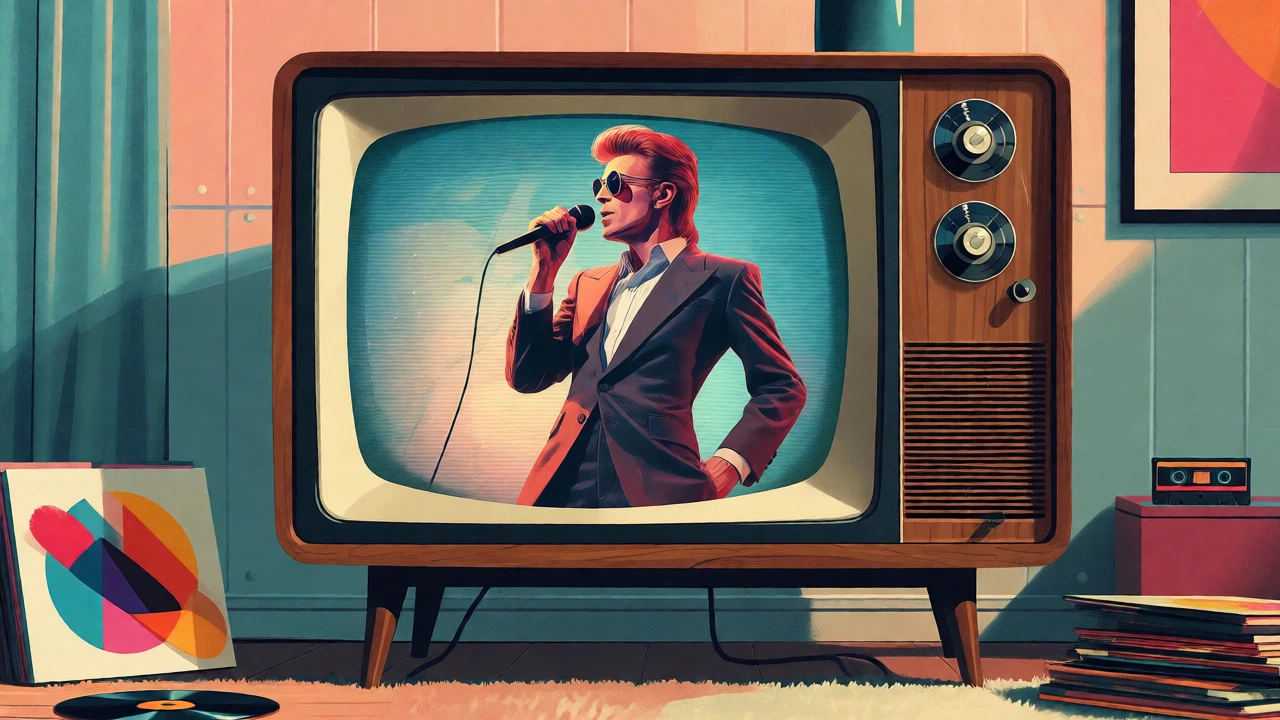

Most people think of the 1980s as the era when music videos became elaborate short films. You picture David Mallet’s surreal imagery for "Let's Dance" or the provocative storytelling in "China Girl." But there is a quieter, more practical revolution happening on screen at the same time. It wasn’t about special effects or complex plots. It was about capturing raw energy. David Bowie’s video for "Modern Love" stands out not because it invented new visual tricks, but because it perfected the art of repurposing live performance for television. Released in 1983, this clip turned a concert encore into a repeatable pop event, proving that you didn’t need a Hollywood budget to dominate MTV.
The Context: A Star Reborn in Video Form
To understand why this specific video mattered, you have to look at where Bowie stood in 1983. He had just released Let’s Dance, his best-selling album ever. The record was a massive commercial pivot, moving away from the experimental Berlin trilogy toward polished, dance-oriented pop produced by Nile Rodgers. While the title track and "China Girl" received high-concept treatments directed by David Mallet, "Modern Love" needed something different. It was the fourth single, released in September 1983, and it carried a distinct vibe: urgent, rhythmic, and communal.
The song itself was a bridge between genres. It combined Rodgers’s disco-funk precision with Stevie Ray Vaughan’s blues guitar and a repetitive, anthemic hook. Musically, it demanded movement. Visually, however, the label faced a logistical problem. Bowie was deep into the Serious Moonlight Tour, playing stadiums across North America. Organizing a separate narrative shoot would have been expensive and disruptive. Instead, Capitol-EMI chose efficiency over spectacle. They tasked Jim Yukich, an in-house director who had started in the mailroom, with creating a promotional film using existing assets. This decision set the stage for a different kind of innovation.
Jim Yukich and the Art of Efficiency
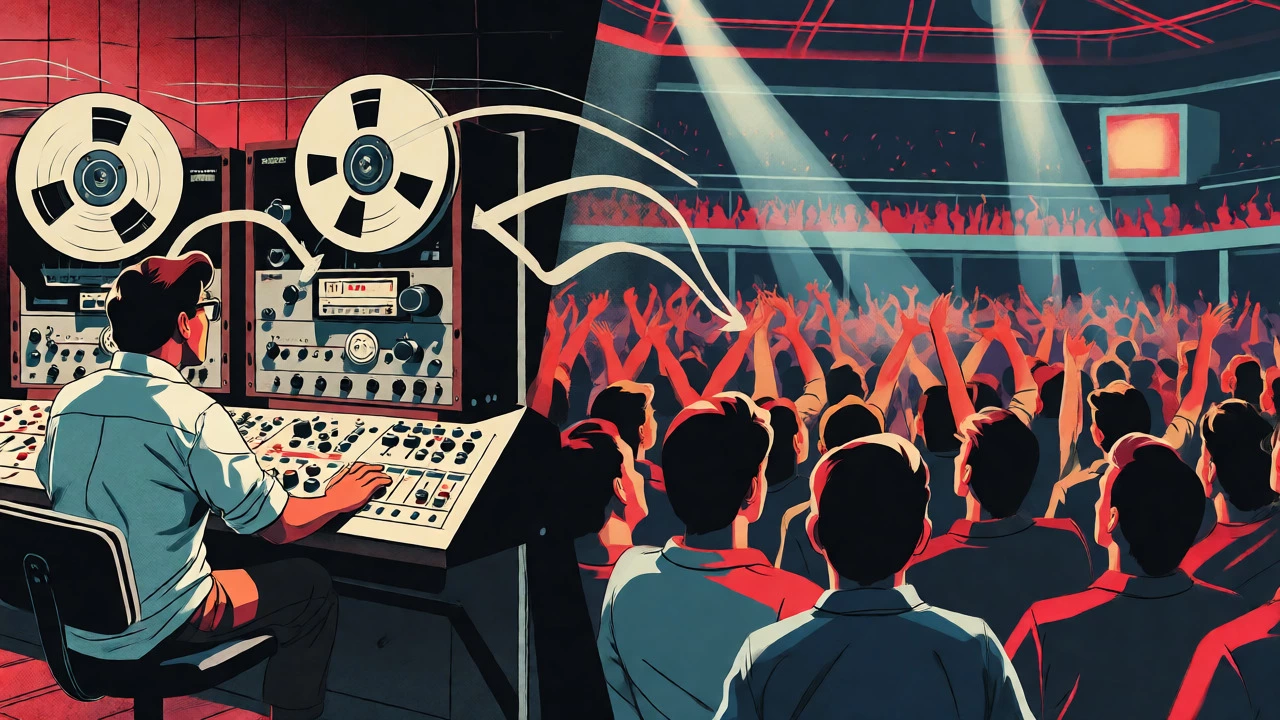
Jim Yukich’s background tells you everything about the video’s aesthetic. He wasn’t an auteur trying to make a statement; he was a craftsman working within the constraints of the record company system. After graduating from Purdue University’s Brian Lamb School of Communication in 1978, he climbed the ranks at Capitol Records. When asked to direct "Modern Love," he didn’t build a set. He didn’t hire actors. He took footage from Bowie’s July 20, 1983, performance at the Philadelphia Spectrum and synced it perfectly to the studio recording.
This approach might sound lazy to modern eyes, but in 1983, it was clever engineering. The video runs for about four minutes, mirroring the length of the seven-inch single edit. By using the Philadelphia concert-where attendance figures hovered around 64,000 per night-Yukich captured a moment of genuine euphoria. The audience wasn’t acting; they were reacting to a hit song played by their favorite artist. The result was a video that felt immediate and authentic. It won Yukich his first Grammy, launching a career that would include work with Michael Jackson and Phil Collins. His method proved that in the early MTV economy, credibility could be manufactured through editing rather than creation.
Visual Strategy: The Encore Effect
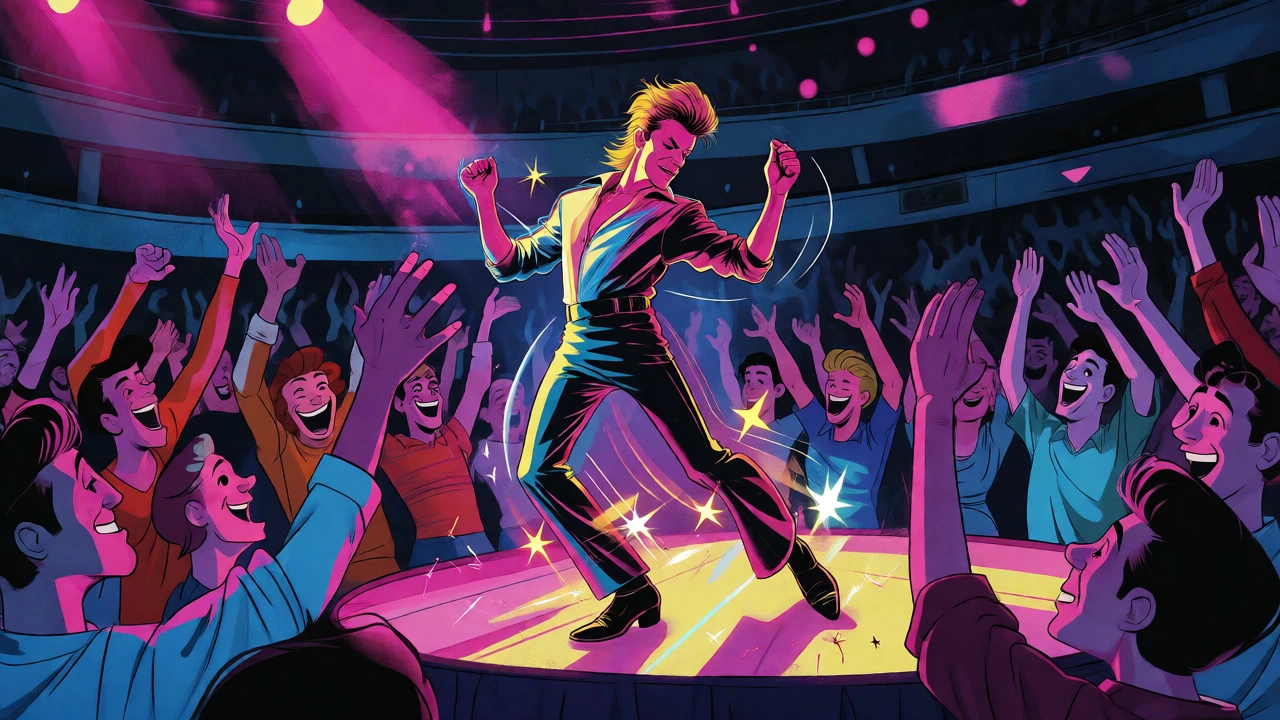
The genius of the "Modern Love" video lies in its implied structure. It doesn’t start with Bowie walking onto a stage. It starts mid-performance, as if the camera caught the band returning for an encore. This creates a sense of privilege for the viewer. You aren’t watching a staged scene; you are witnessing the climax of a live event. Bowie appears in a sharp, tailored suit, moving with the confident rhythm of a man who knows he owns the room. He points to the crowd, gestures with open palms, and dances with a swagger that anticipates the swing revival of the 1990s.
Unlike the allegorical complexity of "Let’s Dance," which dealt with Indigenous Australian history and colonialism, "Modern Love" offers no hidden metaphors. It is literal. The lyrics speak of faith and relationships, but the visuals focus entirely on the physical release of the chorus. Critics like Kyle Ryan of The A.V. Club noted that the video is "as straightforward as it gets," contrasting it sharply with Bowie’s other 1983 clips. Yet, this simplicity was its strength. In a landscape cluttered with confusing narratives, "Modern Love" offered pure kinetic joy. It allowed viewers to project their own feelings onto the performance, making the song feel personal even though it was broadcast to millions.
| Video Title | Director | Primary Visual Approach | Key Innovation |
|---|---|---|---|
| Let’s Dance | David Mallet | Narrative Allegory | High-budget cinematic storytelling addressing social issues |
| China Girl | David Mallet | Provocative Conceptualism | Challenging MTV standards with racial and sexual imagery |
| Modern Love | Jim Yukich | Live Concert Footage | Repurposing tour assets for cost-effective, high-energy promotion |
Musical Precision Meets Televisual Packaging
You cannot separate the video’s impact from the song’s construction. Nile Rodgers, known for his work with Chic, brought a rhythmic tightness that made the track irresistible. Bob Clearmountain’s mixing ensured the drums punched through small television speakers. The video visualizes this pulse. There is no formal choreography, yet Bowie’s movements sync perfectly with the beat. This alignment turns the screen into a dance floor proxy. Viewers at home don’t just hear the groove; they see it embodied by a star who looks like he’s having the time of his life.
This fusion of audio and visual energy helped Bowie transition from an avant-garde icon to a mainstream pop giant. Steve Knopper of TIME magazine argued that MTV gave Bowie the outlet he needed to become an "unabashed pop star." While some longtime fans missed the Ziggy Stardust eccentricity, the general public embraced the accessible charm of "Modern Love." The video reinforced this shift. It showed Bowie not as an alien from another planet, but as a cool, stylish leader of the party. It positioned him alongside New Romantic acts like Duran Duran, yet retained enough gravitas to remind viewers of his artistic pedigree.
Limitations and Legacy
It is fair to criticize the video for lacking depth. Compared to "Ashes to Ashes," which featured clowns and futuristic sets, or the emotional weight of "Life on Mars?", "Modern Love" feels thin. There is no symbolic plot, no location-based commentary, and no technological breakthrough in terms of camera work. If you are looking for a masterpiece of cinema, you won’t find it here. The A.V. Club’s critique highlights this restraint, noting that the video prioritizes function over form.
However, judging it by cinematic standards misses the point. Its legacy isn’t in artistry, but in strategy. It demonstrated that a successful song could be sold through the credible immediacy of a live performance. This model became standard practice for decades. Today, artists routinely use festival clips or tour documentaries as official music videos. Bowie and Yukich pioneered this workflow. They proved that the audience’s reaction is part of the product. The cheering crowd, the scale of the arena, and the sweat on Bowie’s brow all serve as proof of popularity. In the attention-economy of 1983, that proof was worth more than any scripted drama.
Frequently Asked Questions
Who directed the "Modern Love" music video?
The video was directed by James "Jim" Yukich, who was an in-house director at Capitol-EMI Records at the time. Unlike many of Bowie's other videos from the Let's Dance era, which were directed by David Mallet, Yukich's approach focused on editing live concert footage rather than filming a new narrative concept.
What concert footage is used in the "Modern Love" video?
The primary footage comes from David Bowie's performance during the Serious Moonlight Tour at the Philadelphia Spectrum on July 20, 1983. The video captures the energy of the show, presenting the performance as if it were an encore, which adds to the feeling of spontaneity and excitement.
Why is the "Modern Love" video considered innovative?
Its innovation lies in strategic simplicity. Rather than creating an expensive, conceptual narrative, the video repurposed existing tour footage to create a low-cost, high-impact promotional tool. It effectively translated the communal energy of a live stadium show into a format suitable for repeated television broadcast, influencing how future artists promoted singles during tours.
How did "Modern Love" perform on the charts?
Released as a single in September 1983, "Modern Love" reached number two on the UK Singles Chart, staying on the chart for eight weeks. In the United States, it peaked at number fourteen on the Billboard Hot 100. Its success was bolstered by heavy rotation on MTV, where the video's energetic live performance resonated with viewers.
Did David Bowie choreograph the dance moves in the video?
There was no formal choreography. Bowie’s movements were natural expressions of his performance style during the Serious Moonlight Tour. He danced with rhythmic confidence, gesturing to the audience and moving in sync with the music's beat. This improvisational style contributed to the video's authentic and spontaneous feel.