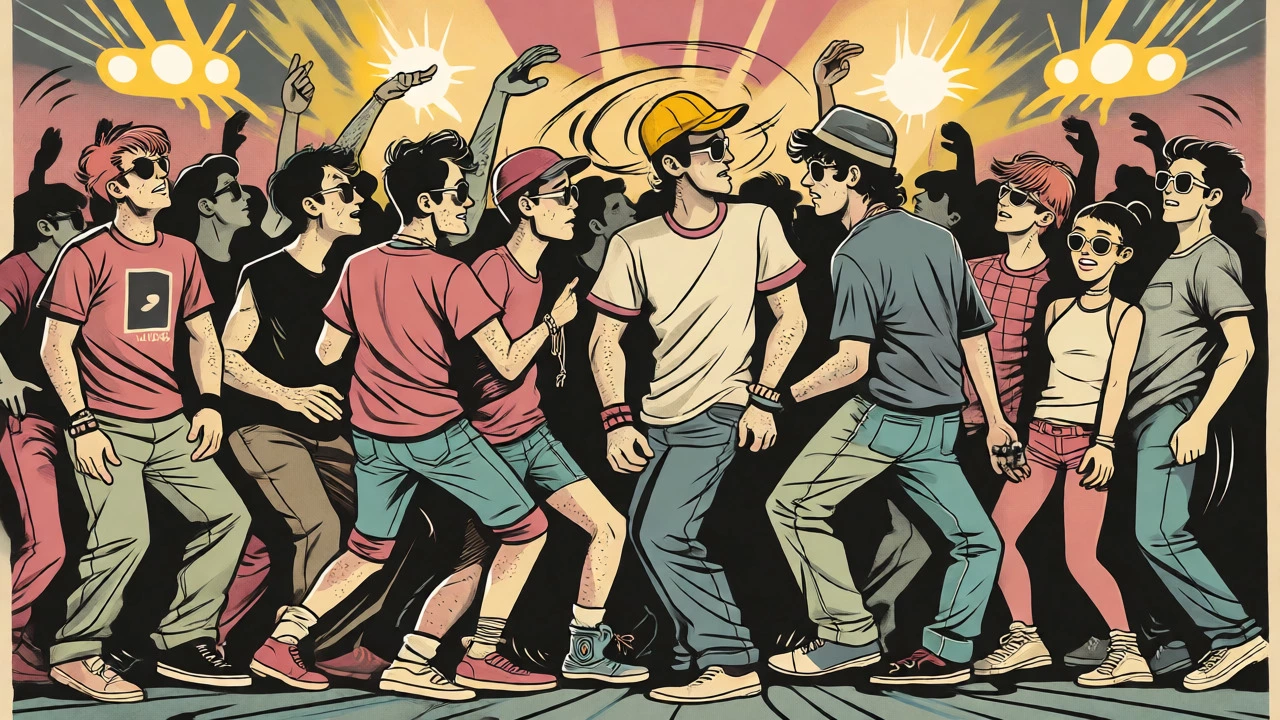

You’re standing in the pit, bass thumping through your chest, lights flashing. It feels electric, invincible even. But history tells a different story. From the Indiana State Fair stage collapse to the Astroworld crush, concert safety is not just a buzzword-it’s a life-or-death calculation involving physics, weather, human behavior, and engineering. When things go wrong, they often happen fast. Understanding why stage incidents occur helps you spot the red flags before they become tragedies.
The Physics of Panic: Crowd Density and Compression
Most people think crowd disasters are about trampling. They’re usually about compression. Research by Dirk Helbing shows that when density hits six people per square meter, flow drops by two-thirds. People can’t breathe because their chests can’t expand. This is compression asphyxia, the primary cause of death at events like Astroworld Festival in 2021. At Houston’s NRG Park, ten people died, including a nine-year-old child, not from being stepped on, but from being squeezed so tightly they couldn’t inhale.
Venues with bottlenecks-like the tunnel at Love Parade in Duisburg-are ticking time bombs. In 2010, 21 people died there because entry and exit streams collided in a narrow space. Organizers failed to model simultaneous inflows and outflows. If you feel pressure building around your torso, don’t push forward. Move diagonally or toward the edges where pressure is lower. Stewards need clear sightlines to see distress signals, but often they’re overwhelmed by the sheer volume of bodies.
| Hazard Factor | Real-World Example | Effective Control Measure |
|---|---|---|
| Crowd Density >6/m² | Astroworld (2021) | Pressure-relief spaces; stop-show authority |
| Bottleneck Flows | Love Parade (2010) | Separated entry/exit routes; unidirectional flow |
| Muddy Ground/Surge | Roskilde Festival (2000) | Improved barriers; alcohol restrictions |
When the Sky Falls: Weather and Structural Failure
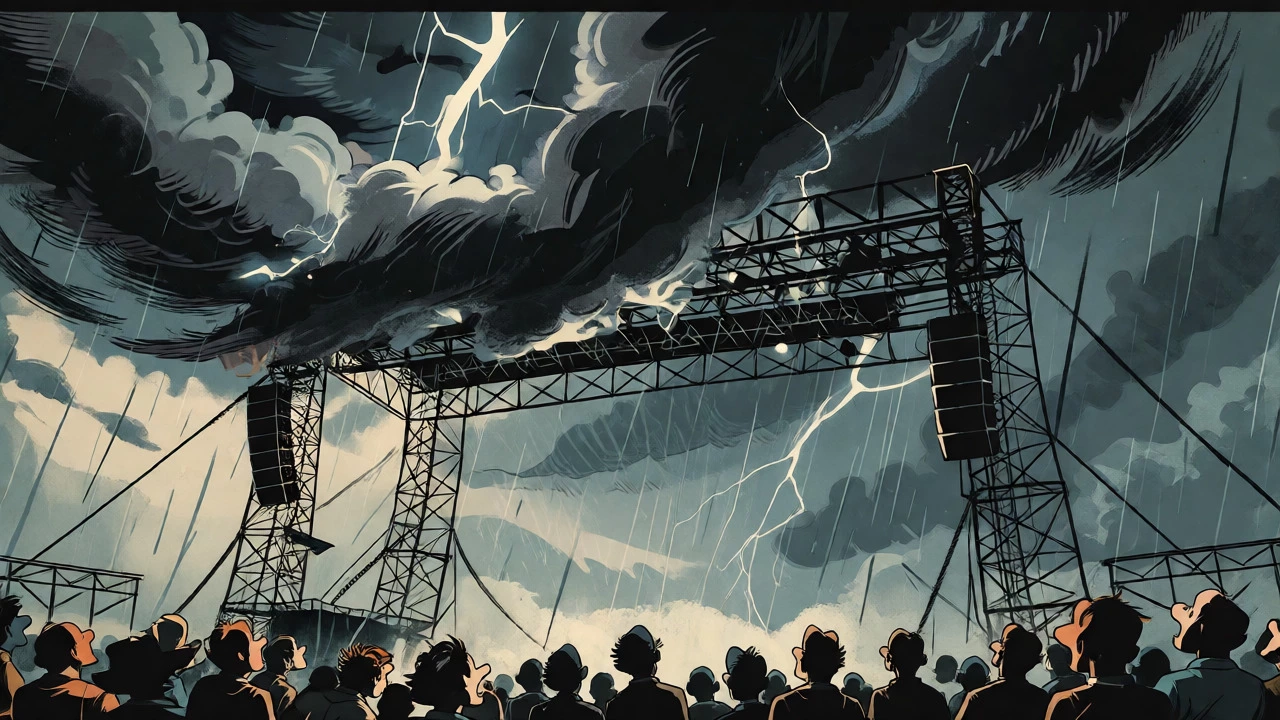
Outdoor stages are temporary structures fighting nature. The Indiana State Fair disaster in 2011 killed seven people when wind gusts hit 59 mph. The stage was designed to resist only 25-43 mph depending on direction. It wasn’t built for the storm that arrived. Engineers later found inadequate lateral-load resistance. The lesson? Nominal appearance isn’t proof of safety. A stage looks solid until the wind hits it sideways.
Lightning adds another layer of danger. The National Weather Service mandates stopping activity immediately if thunder is heard. You shouldn’t wait for rain. Lightning can strike miles away from the cloud base. Organizers must have a designated "weather watcher" with absolute authority to pause the show. No setlist is worth risking lives. Severe weather plans aren’t paperwork-they’re survival tools. If you see dark clouds rolling in and the band keeps playing while no one moves, ask yourself: Who has the power to stop this?
Invisible Killers: Electricity and Fire
We worry about crowds and storms, but electricity kills quietly. Faulty wiring, water exposure, and overloaded circuits create shock hazards. The Health and Safety Executive in the UK requires generators to be segregated from the public and cables protected from rain. Yet, at many festivals, cables snake across wet ground, taped down with hope rather than engineering.
Fire remains a catastrophic risk. The Crocus City Hall attack in Moscow in 2024 showed how quickly flammable liquids and gunfire turn a venue into a trap. Exits must be screened for security but never locked during operation. Smoke inhalation causes more deaths than flames in enclosed spaces. Evacuation routes must be marked, unobstructed, and known to staff. If you enter a venue, find two exits. Not one. Two. Because the first one might be blocked by smoke or panic.
The Human Element: Communication and Command
Technology fails. Radios crackle. Phones die. In a crisis, clear communication saves lives. The WHO emphasizes an "all-hazards" approach, requiring redundant channels and rehearsed scenarios. At Roskilde Festival in 2000, poor communication contributed to nine deaths during a Pearl Jam set. Afterward, organizers shortened the chain of command and added large screens to broadcast instructions.
Who stops the show? That’s the critical question. In many incidents, delays occurred because no single person had the authority to halt the performance. Promoters want revenue; venues want reputation; artists want to finish. Safety officers need empowered stop-work authority. If a structural engineer says the rigging is shaking, the music stops. Period. If you’re working in live entertainment, know your role in the emergency plan. Don’t assume someone else will make the call.
Your Role as an Attendee: Spotting Danger
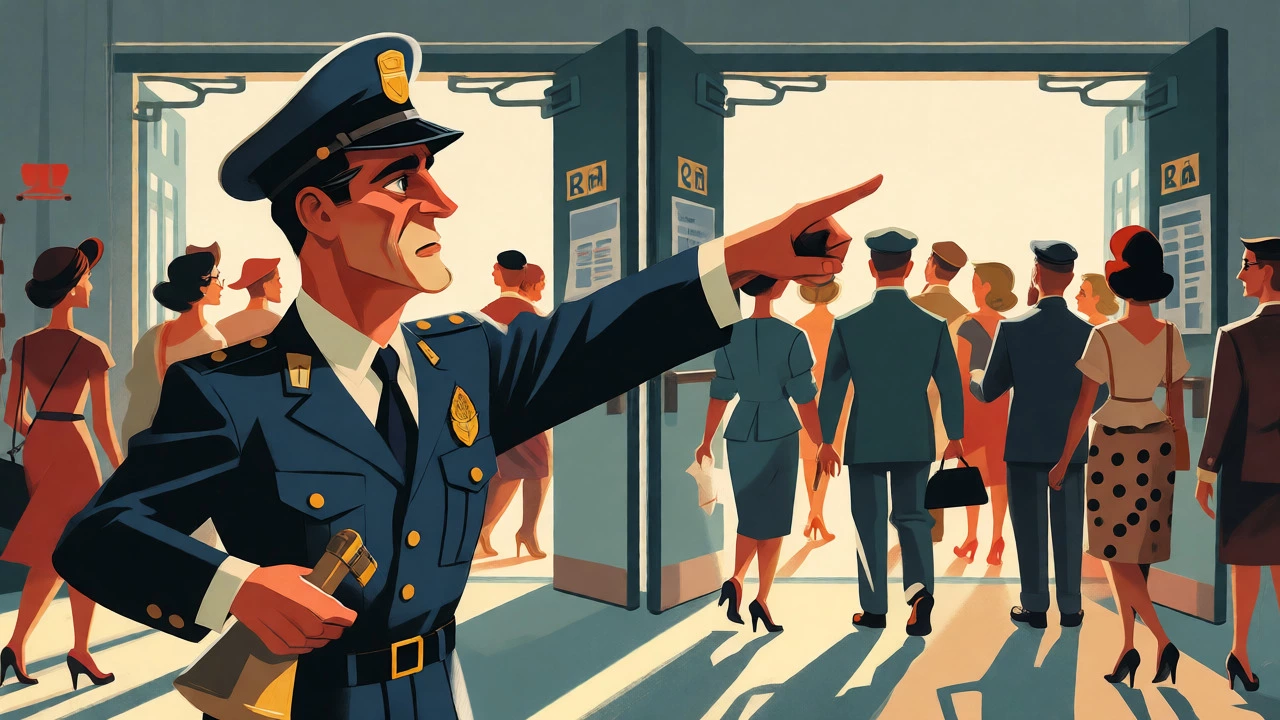
You aren’t helpless. Your awareness contributes to collective safety. Check exits upon arrival. Identify medical points. Avoid pushing toward a blocked stage-front area unless necessary. Hydrate, especially in heat, which exacerbates crowd stress. The World Health Organization notes that dense crowds plus heat plus limited water equals high risk.
If you see someone struggling to breathe, help them raise their arms above their head to open their chest cavity. Report crowd pressure immediately. Don’t wait for sirens. Trust your gut. If the vibe shifts from excitement to anxiety, move toward the perimeter. Leave early if instructed. Following evacuation orders calmly prevents secondary incidents. Remember, safe concerts depend less on fancy tech and more on competent design, conservative decisions, and empowered people.
Frequently Asked Questions
What is compression asphyxia?
Compression asphyxia occurs when external pressure on the chest prevents lung expansion, making breathing impossible. It is a common cause of death in crowd surges, distinct from trampling, and can lead to rapid loss of consciousness and cardiac arrest.
Why do stage collapses happen?
Stage collapses typically result from inadequate structural design for specific wind loads, poor anchorage, or failure to account for dynamic forces like speaker vibrations. The Indiana State Fair incident highlighted how nominal wind ratings can fail under actual gust conditions.
How does crowd density affect safety?
When crowd density exceeds approximately six people per square meter, individual movement becomes restricted, and flow rates drop significantly. This creates dangerous pressure gradients that can lead to crushing injuries and hinder evacuation efforts.
What should I do if I feel unsafe at a concert?
Move toward the nearest exit or edge of the crowd where pressure is lower. Raise your hands to protect your chest and signal distress to stewards. Follow official announcements and avoid pushing against the flow of the crowd.
Are indoor concerts safer than outdoor ones?
Not necessarily. Indoor venues face risks like fire, smoke inhalation, and electrical faults, while outdoor venues contend with weather and structural instability. Both require rigorous risk assessments, clear egress paths, and effective crowd management strategies.