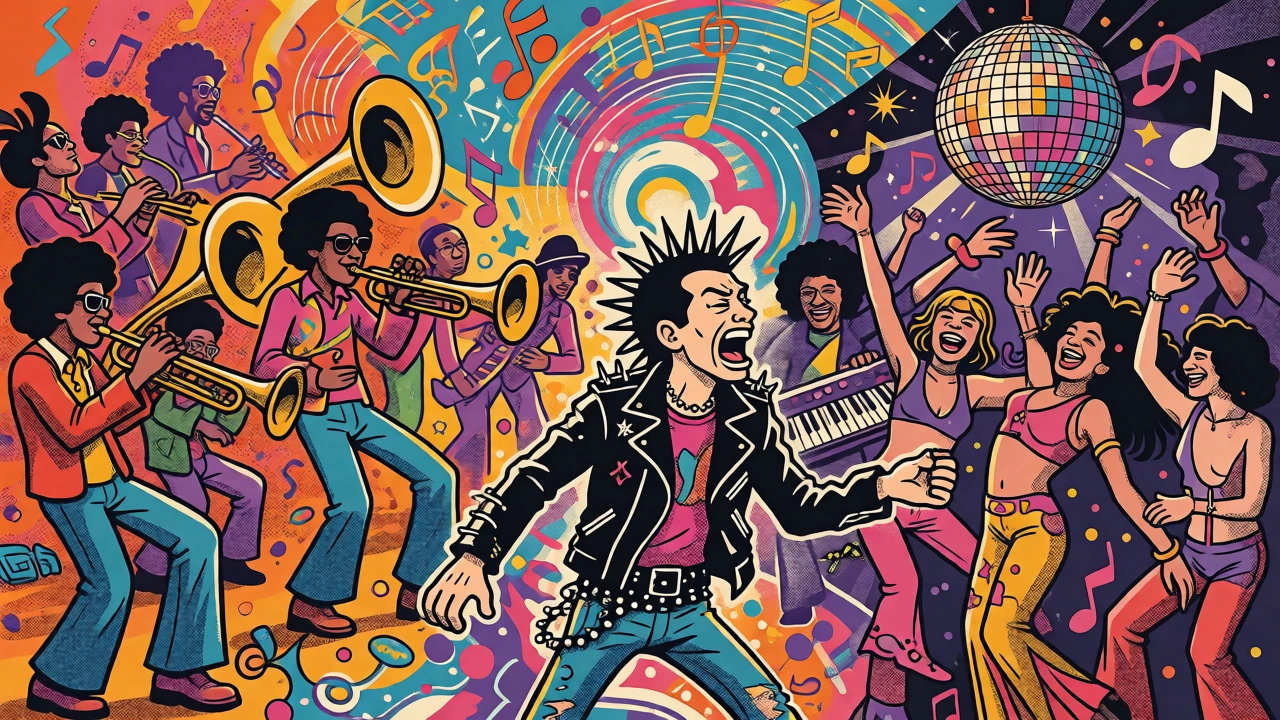

You think you know the 1970s. You picture bell-bottoms, vinyl crackle, maybe a stadium full of people singing Stairway to Heaven, or the glitter of Studio 54. But here’s the twist: that picture isn’t what actually happened. It’s what was allowed to survive. The decade wasn’t a single sound; it was a chaotic collision of funk, punk, disco, reggae, singer-songwriters, and electronic experiments. So why do our histories feel so tidy? Because cultural memory is a filter, not a mirror.
We don’t just remember music. We curate it. And who does the curation matters more than you might think. This article breaks down how the story of 1970s music gets written, rewritten, and sometimes erased, by institutions, nostalgia, and power dynamics.
The Myth of the Unified Decade
Ask someone to describe 1970s music, and they’ll likely give you one answer. Maybe it’s "classic rock." Maybe it’s "disco." Rarely do they mention both in the same breath, even though they coexisted. This simplification happens because cultural memory prefers coherence over complexity.
Cultural Memory is the shared pool of knowledge and information in the memories of two or more members of a social group. Unlike personal memory, which is messy and subjective, cultural memory is institutionalized. It lives in textbooks, museum exhibits, streaming playlists, and anniversary documentaries. In the 1970s, this meant that while Black communities were pioneering hip-hop’s precursors and queer clubs were inventing house music’s DNA, mainstream media often focused on white male rock stars.
Think about the phrase "Disco Sucks." If you only read mainstream rock histories from the early 1980s, you’d think disco died a natural death because it was bad. But look closer. Disco was born in Black, Latino, and gay spaces. The backlash wasn’t just musical taste; it was a reaction against those identities entering the mainstream. By framing disco as a fad, history erased its social significance. That’s cultural memory at work: selecting the narrative that fits the dominant group’s comfort zone.
How Canons Are Built (And Who Gets Left Out)
A musical canon is a list of artists deemed "important" enough to be taught, reissued, and celebrated. It sounds objective, but it’s deeply political. The 1970s canon was built by record labels with marketing budgets, critics with specific biases, and radio stations with narrow formats.
Consider the Rock & Roll Hall of Fame. It is an institution that inducts musicians based on influence and innovation, effectively cementing their place in history. Its criteria seem neutral, but the results tell a different story. For years, the Hall heavily favored white male rock acts. Women made up less than 10% of inductees for decades. Black artists, who laid the groundwork for rock itself, saw their representation fluctuate wildly depending on the era of induction.
This isn’t accidental. Canon formation relies on visibility. If your album gets reissued every ten years, it stays in print. If it stays in print, new listeners discover it. If new listeners discover it, critics write about it. It’s a feedback loop. Artists like Fanny, a all-female rock band active in the early 70s, didn’t lack talent. They lacked the institutional machinery to keep them visible when trends shifted. Their erasure wasn’t a judgment on quality; it was a failure of infrastructure.
| Mechanism | What It Measures | What It Misses |
|---|---|---|
| Billboard Charts | National commercial sales and airplay | Local scenes, underground genres, non-English markets |
| Hall of Fame Inductions | Influence on subsequent popular music | Community impact, marginalized voices, genre diversity |
| Streaming Playlists | Current listener engagement and algorithmic popularity | Historical context, deep cuts, experimental works |
| Music Journalism | Critical consensus and cultural commentary | Working-class audiences, minority perspectives, technical innovation |
Nostalgia Is Not Accuracy
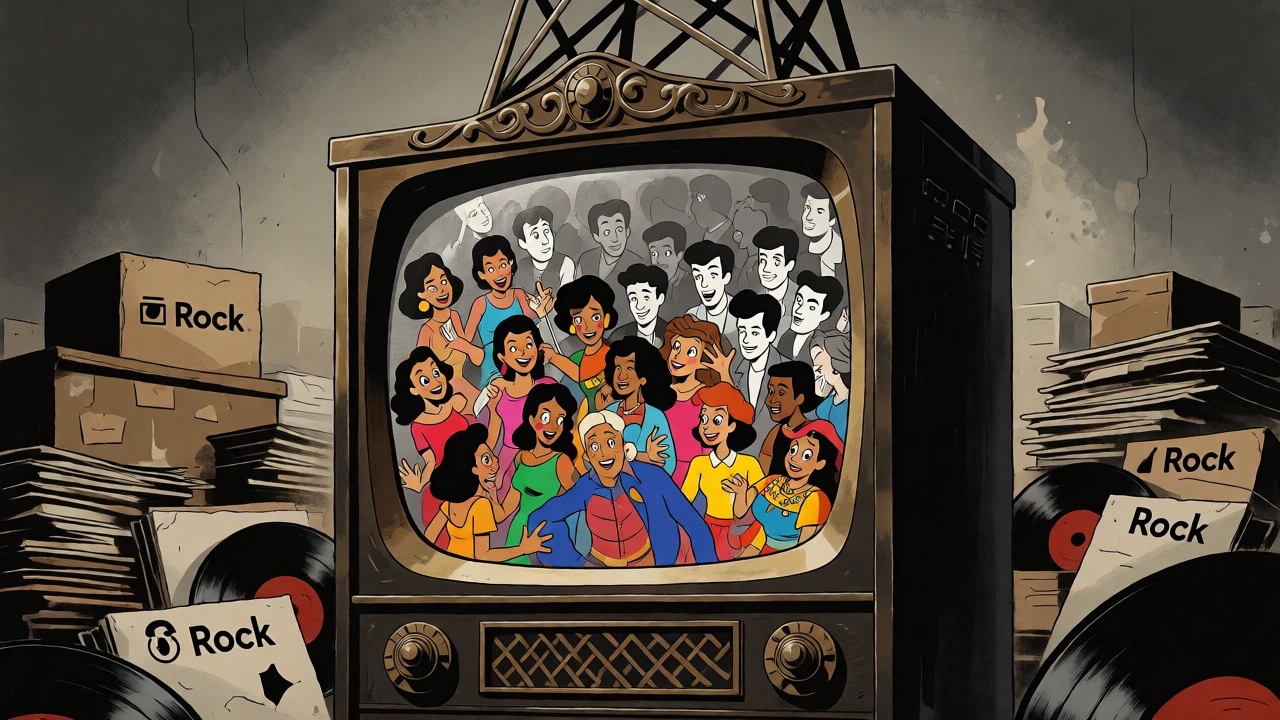
Nostalgia feels real, but it’s often fabricated. Sociologists call this "received nostalgia." It’s when you feel connected to a time period you never actually lived through. Why? Because the artifacts of that era-vinyl records, posters, movies-are designed to evoke emotion, not accuracy.
When you watch a documentary about 1970s punk, you see leather jackets and safety pins. You hear fast, aggressive chords. What you rarely see is the nuance. Punk wasn’t just noise; it was a DIY ethic that empowered women, queers, and working-class kids who felt shut out of the bloated prog-rock scene. But pop culture flattens this into a costume. The emotional charge of the music remains, but the social struggle behind it fades.
Research shows that personally salient music triggers autobiographical memories. But for younger generations, 1970s music triggers a second-hand memory. They associate Fleetwood Mac with independence because of a TV show or a viral TikTok trend, not because they experienced the gender politics of the mid-70s. This disconnect allows myths to solidify. The "party vibe" of disco becomes the whole truth, ignoring the liberation it offered to marginalized groups.
The Erasure of Women and Queer Spaces
If you look at standard 1970s retrospectives, women are often reduced to three categories: the muse, the diva, or the exception. Joni Mitchell, Stevie Nicks, and Donna Summer get mentioned. But where are the session musicians? The producers? The organizers?
Feminist scholarship has spent the last thirty years digging up these stories. Bands like The Runaways and Fanny proved that women could play hard rock, yet their narratives were often filtered through male managers and critics. Beyond rock, women’s music festivals created entire economic ecosystems independent of major labels. These weren’t side notes; they were parallel industries.
Similarly, queer spaces were central to the 1970s soundscape. Disco wasn’t just dance music; it was a sanctuary for gay men and trans women during a time of rising AIDS fears and legal discrimination. When history centers the "white rock guy," it treats these spaces as exotic backdrops rather than primary drivers of culture. Correcting this doesn’t mean deleting Led Zeppelin. It means adding context. It means acknowledging that the club scene was as influential to fashion, language, and identity as any arena tour.
Technology Shapes What Survives
We forget that music history is material history. In the 1970s, if you wanted to hear something, you had to buy the physical object. Vinyl records degrade. Cassettes tangle. Eight-tracks jam. The survival of a song often depended on whether a label kept the master tape in good condition and whether a distributor kept stocking the shelf.
Digital archives have changed this, but not entirely. Streaming platforms use algorithms that favor tracks with high initial engagement. A deep cut from a obscure 1974 funk album might remain invisible unless a curator actively surfaces it. Meanwhile, "greatest hits" collections reinforce the existing canon. If an artist wasn’t a hitmaker in 1975, they’re unlikely to appear on a modern "Best of the 70s" playlist, regardless of their artistic merit.
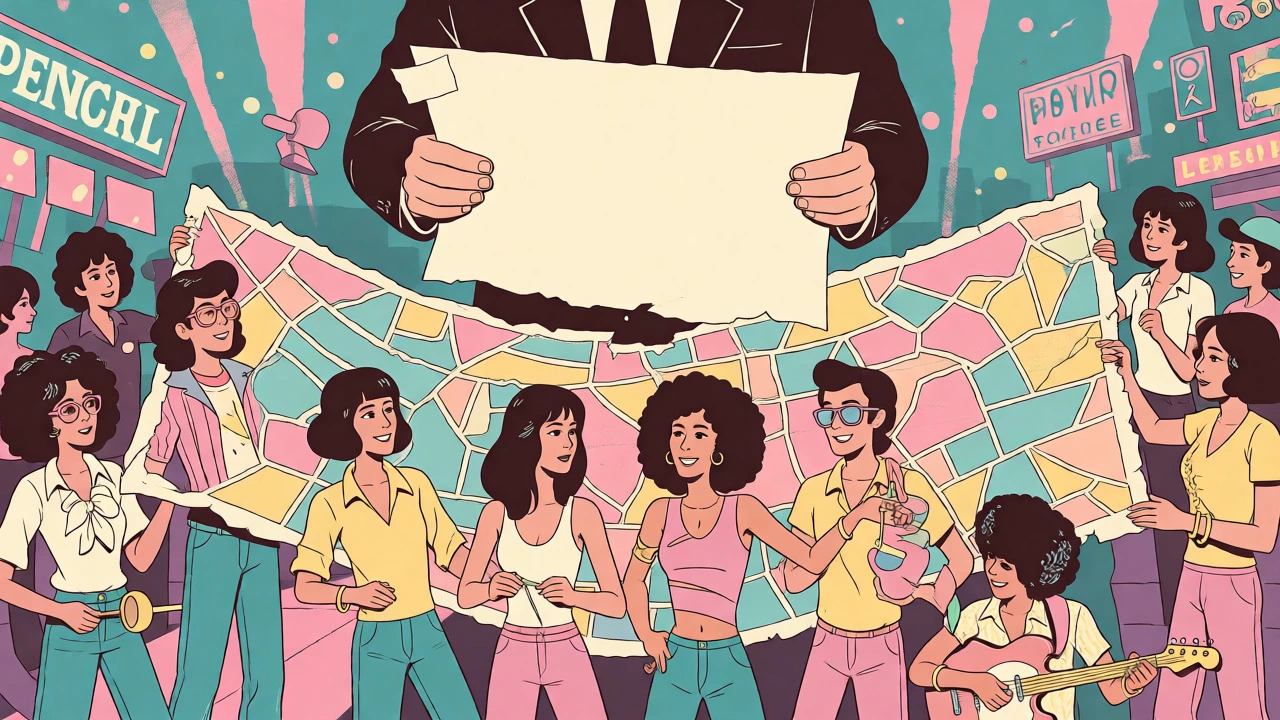
This creates a bias toward accessibility. We remember what we can easily find. Local bands that played weekly gigs but never toured nationally leave few traces. Oral histories and community archives are vital here. Without them, the map of 1970s music looks sparse, dotted only with the biggest cities and biggest names.
Writing Your Own History
So, how do you navigate this? Don’t trust the first narrative you encounter. When you listen to 1970s music, ask questions:
- Who benefited? Did this artist have major label backing? Did they fit a pre-existing format?
- Who is missing? Where are the women, the people of color, the queer artists? Were they absent, or just unrecorded?
- What was the context? Was this song a protest? A celebration? A commercial product?
Engage with counter-memory. Seek out oral histories from local venues. Read fanzines from the era. Explore compilations dedicated to forgotten genres like Afrobeat, Latin Soul, or Early Electronic. These sources don’t replace the classics; they complicate them. And complexity is the point. The 1970s weren’t simple. Our memories should reflect that richness, not flatten it into a postcard.
History isn’t static. As we uncover more archives and challenge old biases, the story changes. The 1970s legacy isn’t just about the songs we know. It’s about the ones we’re still finding.
Why is disco often misunderstood in music history?
Disco is frequently dismissed as a shallow fad due to the "Disco Sucks" movement of the late 1970s. However, this backlash was largely driven by homophobia, racism, and sexism, targeting the Black, Latino, and queer origins of the genre. Modern scholarship recognizes disco as a crucial bridge between soul, funk, and electronic dance music, with significant social importance for marginalized communities.
How did the Rock & Roll Hall of Fame influence the 1970s canon?
The Hall of Fame validates artists as historically significant, influencing educational curricula, media coverage, and public perception. Historically, its selection criteria favored white male rock acts, leading to the underrepresentation of women, disco, funk, and progressive rock artists from the 1970s. Recent reforms aim to address these biases, but the initial canon established by the Hall has had a lasting impact on how the decade is remembered.
What is 'received nostalgia' in the context of 1970s music?
Received nostalgia refers to the feeling of longing for a past era one did not personally experience. For 1970s music, this occurs when younger generations connect with the aesthetic and emotional tone of the decade through media, fashion, and curated playlists, without understanding the complex social and political realities of the time. This can lead to a simplified, romanticized view of the era.
Why are some 1970s artists forgotten despite critical acclaim?
Artists can be forgotten due to a lack of institutional support, such as limited touring opportunities, poor distribution networks, or exclusion from major radio formats. Additionally, if an artist's style fell out of fashion quickly, record labels may have ceased reissuing their work, making them less accessible to new listeners. Cultural memory favors continuity and visibility, often overlooking niche or avant-garde contributions.
How has digital streaming changed the way we remember 1970s music?
Streaming has increased access to obscure recordings, allowing listeners to explore beyond the top 40 hits. However, algorithmic recommendations often reinforce existing canons by promoting tracks with high engagement metrics. While digitization preserves audio quality, it can detach music from its original social context, potentially flattening the diverse experiences associated with 1970s genres like disco, punk, and funk.