

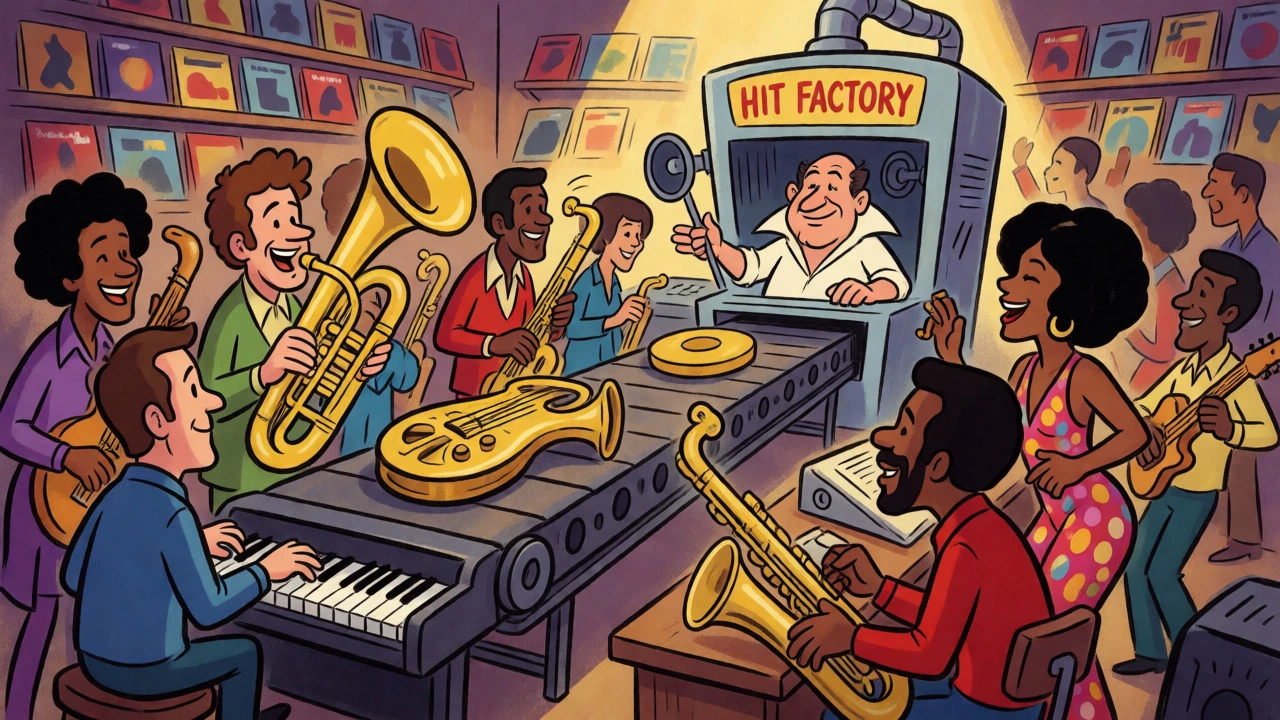
You might think Columbia Records was just another record company in the 1970s. But if you look at the charts, the sales figures, and the sheer volume of hits, it becomes clear that this wasn't just a label-it was an empire. Often called the "Big Red Machine," Columbia didn't just participate in the music industry; for much of the decade, it ran it. If you're trying to understand how a single company could control nearly a quarter of American music sales while signing everyone from Bob Dylan to Barbra Streisand, you have to look at the corporate machinery behind the scenes.
This isn't just about nostalgia for vinyl records. It's about understanding the mechanics of market power. How did a media conglomerate like CBS turn a recording division into a profit center? Why did Warner Bros. eventually catch up? And what happened when the label tried to do everything at once? Let's break down the strategy, the roster, and the economics that defined Columbia's golden age.
The Corporate Engine Behind the Music
To get why Columbia was so powerful, you have to look at its parent company: CBS (the Columbia Broadcasting System). Before the 1970s, most record labels were standalone businesses. They had to pay for their own advertising and hope radio stations would play their songs. CBS was different. It owned television networks and radio stations. This vertical integration meant that when Columbia released a new album, they didn't just send it to radio DJs; they could push it through their own TV variety shows and news segments. This cross-promotion gave them an unfair advantage over competitors who had to buy ad space separately.
By the mid-1970s, this structure allowed CBS to spend millions on marketing campaigns that smaller labels couldn't match. While independent labels struggled to get airplay, Columbia artists appeared on network television specials watched by tens of millions of households. This wasn't just good luck; it was a deliberate corporate strategy to leverage media ownership into record sales dominance.
The Roster That Built an Empire
A label is only as strong as its artists, and Columbia's 1970s roster was staggering in its diversity. The label moved away from its conservative jazz and pop roots to embrace rock, singer-songwriters, and funk. Under executives like Clive Davis, who served as president of CBS Records in the late 1960s and early 1970s, the label aggressively signed acts that appealed to the youth market.
Consider the sheer breadth of talent. You had Billy Joel, whose piano-driven anthems like "Piano Man" (1973) became staples of FM radio. You had Chicago, blending rock with brass sections to create massive hits like "25 or 6 to 4." Then there was Santana, bringing Latin rock fusion to mainstream audiences. And let's not forget Barbra Streisand, who kept the traditional pop audience engaged with best-sellers like "Stoney End."
This wasn't a random collection of stars. It was a calculated portfolio. By covering rock, pop, folk, and R&B, Columbia ensured that no matter what trend hit the charts, they likely had an artist ready to capitalize on it. When disco took off, they had Earth, Wind & Fire. When punk emerged, they still held onto legacy acts like Bob Dylan, who released the critically acclaimed "Blood on the Tracks" in 1975.
| Artist | Genre | Notable 1970s Album | Commercial Impact |
|---|---|---|---|
| Billy Joel | Rock/Pop | The Stranger (1977) | Multiple Top 10 singles; established arena rock status |
| Chicago | Rock/Soul | Chicago V (1972) | First #1 album; sustained multi-platinum sales |
| Santana | Latin Rock | Borboletta (1974) | Bridged jazz and rock audiences globally |
| Bruce Springsteen | Heartland Rock | Born to Run (1975) | Critical darling; laid groundwork for 1980s superstardom |
| Earth, Wind & Fire | Funk/Disco | All 'N All (1977) | Dominated R&B and Pop charts simultaneously |
Jazz and the Strategic Depth
While rock and pop grabbed the headlines, Columbia maintained its reputation as a premier jazz label. This wasn't just for prestige; it was a strategic hedge. Jazz albums sold fewer copies than rock records, but they had longer shelf lives and appealed to a wealthier, more stable demographic. Under executives like Bruce Lundvall, the label signed modern jazz innovators such as Weather Report and Herbie Hancock.
This commitment to jazz also allowed Columbia to retain older, legendary artists like Miles Davis, whose fusion work continued to influence the broader music landscape. By keeping a robust jazz catalog, Columbia ensured that even during periods when rock trends shifted rapidly, they had a steady stream of revenue from dedicated audiophiles and college-educated listeners. This dual approach-high-volume rock/pop sales combined with high-margin, long-tail jazz sales-created a financial stability that many competitors lacked.
The Competition: WEA vs. CBS
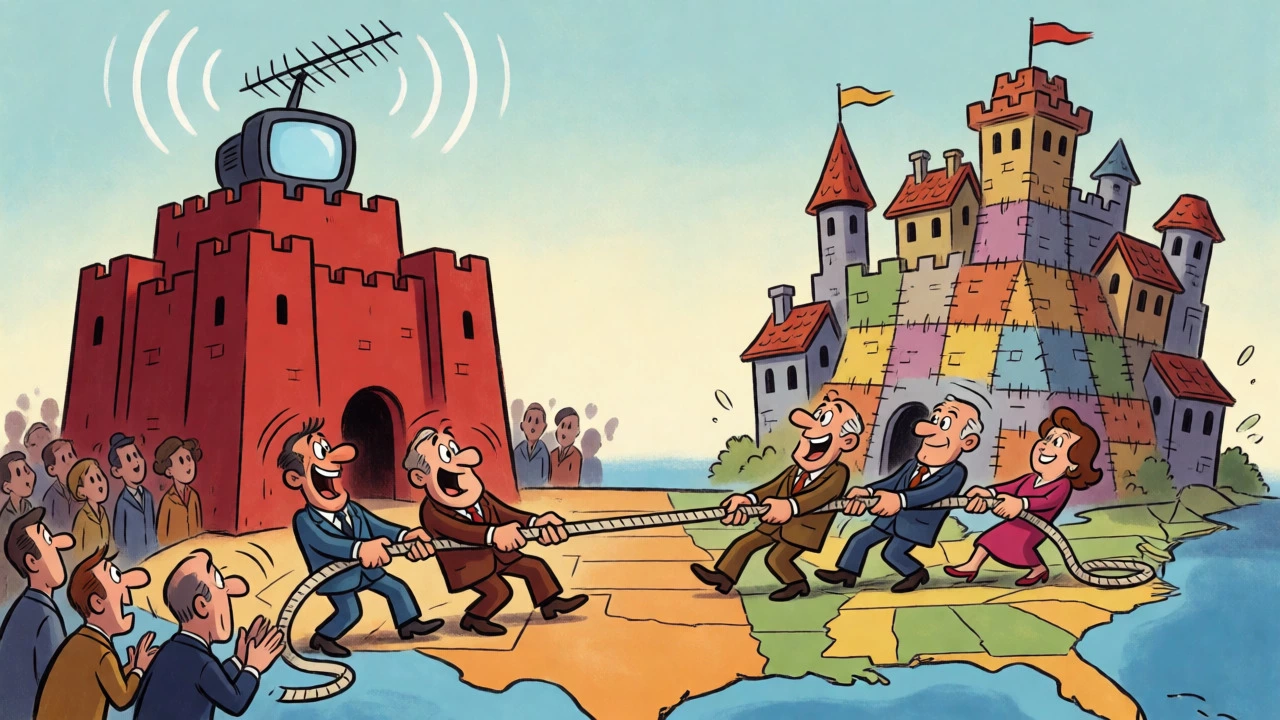
No discussion of Columbia's dominance is complete without mentioning its main rival: Warner-Elektra-Atlantic (WEA). Formed in 1972, WEA adopted a different strategy. Instead of relying solely on internal A&R to find superstars, Warner aggressively acquired existing independent labels. This allowed them to absorb entire rosters overnight.
Historians debate who actually won the 1970s. Some metrics show Columbia holding the number one spot in market share for ten consecutive years starting in the mid-70s. Others argue that when you look at the total corporate group including sister labels like Epic, WEA sometimes edged ahead because of their acquisition-heavy model. Warner secured giants like Led Zeppelin and Fleetwood Mac through these deals, while Columbia focused on nurturing individual talents like Billy Joel and Bruce Springsteen.
Both strategies worked, but they carried different risks. Columbia's reliance on expensive, individually developed stars made them vulnerable if those stars lost popularity. Warner's acquisition model was riskier upfront but diversified their portfolio across many smaller catalogs. Ultimately, both companies controlled over 50% of the U.S. market together, creating a duopoly that squeezed out smaller independents.
International Reach and Licensing
Columbia's power wasn't limited to the United States. Through its international arm, the Columbia Graphophone Company, the label dominated markets in the UK and Europe. This global network allowed for efficient licensing. For example, Pink Floyd's early albums were licensed to Columbia in the US, giving them access to one of the biggest progressive rock bands in the world without having to sign them directly from the start.
This transatlantic coordination meant that a hit in London could quickly be promoted in New York, and vice versa. Singles like Christie's "Yellow River" reached number one in the UK in 1970, demonstrating that Columbia's European operations were just as potent as its American ones. This global footprint provided economies of scale that reduced production costs and maximized promotional budgets across multiple territories.
Why It Matters Today
The era of Columbia's dominance ended as the music industry fragmented in the 1980s and beyond. The rise of MTV, the compact disc, and eventually digital downloads changed the rules. However, the lessons from the 1970s remain relevant. Columbia proved that owning distribution channels (like CBS's TV network) creates a moat around your business. They showed that diversifying your genre portfolio protects against changing tastes. And they demonstrated that investing in long-term artist development can yield decades of royalties.
Today, Sony Music owns the Columbia brand, and while the industry looks very different, the core principles of leveraging infrastructure and curating diverse talent pools still drive major label success. Understanding how the Big Red Machine operated gives you a blueprint for how media empires are built-and how they can fall when they fail to adapt.
Why was Columbia Records called the "Big Red Machine"?
The nickname referred to Columbia's immense size, efficiency, and commercial power within the music industry during the 1970s. Like a well-oiled machine, the label consistently produced chart-topping hits and maintained dominant market share through aggressive promotion and a vast roster of successful artists.
Did Columbia Records dominate the entire 1970s?
Yes, Columbia held the number one position in U.S. market share for approximately ten consecutive years, starting in the mid-1970s. This streak was built on the success of artists like Billy Joel, Chicago, and Santana, as well as the label's ability to cross-promote through CBS television networks.
How did CBS help Columbia Records succeed?
CBS provided vertical integration. Because CBS owned television and radio networks, Columbia artists received significant free or discounted exposure on popular TV shows and news programs. This cross-promotion gave Columbia a massive competitive advantage over labels that had to purchase advertising space independently.
Who was the main competitor to Columbia in the 1970s?
The primary competitor was Warner-Elektra-Atlantic (WEA). While Columbia focused on developing superstar acts internally, WEA grew by acquiring other labels. Together, CBS/Columbia and WEA controlled more than 50% of the U.S. recorded music market during the decade.
What genres did Columbia Records focus on in the 1970s?
Columbia had a highly diverse roster. While they became famous for rock and pop acts like Billy Joel and Chicago, they also maintained a strong presence in jazz with artists like Herbie Hancock, embraced funk and disco with Earth, Wind & Fire, and retained traditional pop stars like Barbra Streisand. This genre diversity helped insulate them from shifting musical trends.


