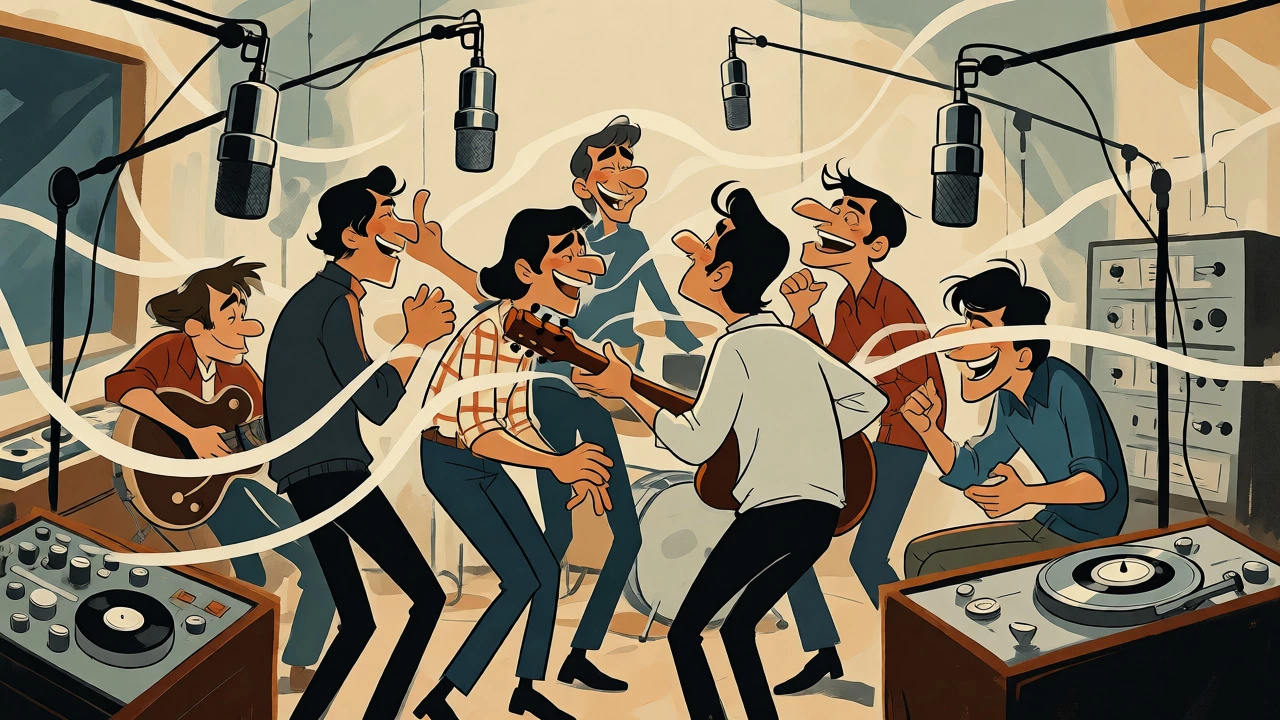

Imagine walking into a recording studio in 1965. The band plays live, breathing together, speeding up slightly when the energy rises and slowing down when the singer takes a breath. Now fast-forward to 1979. The drummer wears headphones, staring at a blinking light or listening to a rigid beep, playing exactly on the grid while everyone else layers their parts separately. What happened between those two moments? It wasn’t just better microphones or fancier consoles. It was the click track.
This isn’t a story about robots taking over music. It’s about a shift in how we define time itself in art. For decades, musicians fought against the metronome, arguing that strict timing killed the soul of a song. But by the end of the 1970s, the click became essential infrastructure for some of the biggest hits ever made. Why did producers suddenly embrace a tool they once hated? And what did it cost the groove?
The Pre-Click Era and Early Experiments
Click tracks are audible timing references, usually percussive pulses recorded onto one track of tape and heard through headphones but excluded from the final mix. They weren’t invented in the 70s. Film studios used them as early as the 1930s to keep orchestras synchronized with moving pictures. If you’ve ever watched an old Disney cartoon, the musicians were likely playing to a hidden beat to match the animation frames.
In pop music, however, using a click was rare before the late 60s. Bands like The Beatles or The Rolling Stones captured magic by playing together in one room. Engineer Glyn Johns, who worked with both bands, famously stated he "completely disagrees" with clicks for rock and roll. He believed that if you lock musicians to a rigid pulse, you lose the "breathing" quality that makes a performance feel alive. In his view, a perfect tempo is sterile nonsense.
But technology was changing. As multitrack recorders expanded from 8 tracks to 16, and eventually 24, producers gained the ability to record instruments separately. This created a new problem: how do you ensure the bass guitar recorded on Tuesday matches the drums recorded on Monday? Without a shared reference point, edits become nightmares. Enter the primitive click.
How Producers Built Clicks Before Digital Clocks
You might picture a sleek digital interface when you hear "click track," but 1970s producers were working with analog tape and mechanical gadgets. There was no universal MIDI standard until 1983, so synchronization was fragile and creative.
Producer Tony Visconti recalled creating a basic click by recording roughly 500 beats of a metronome onto tape, counting them out loud into the microphone-"two, 56, 57..."-and then looping that section. It wasn’t perfectly precise, but it provided a guide. Stan Lynch, drummer for Tom Petty, described a different approach: slapping a sound baffle with a rolled-up magazine, recording that slap, and looping the tape around the studio room. The result had natural room reverb and wasn’t locked to a numerical BPM (beats per minute) grid. It was a "groovy" click, not a robotic one.
These methods show that early clicks weren’t necessarily the cold, quantized pulses we know today. They were often human-made guides meant to help humans play together, not replace them.
The Disco Revolution and Giorgio Moroder’s Precision
If rock resisted the click, disco embraced it. Dance floors demand consistency. If the tempo drifts too much, dancers lose the beat. Extended mixes required seamless loops, which are nearly impossible to create if the original recording has fluctuating timing.
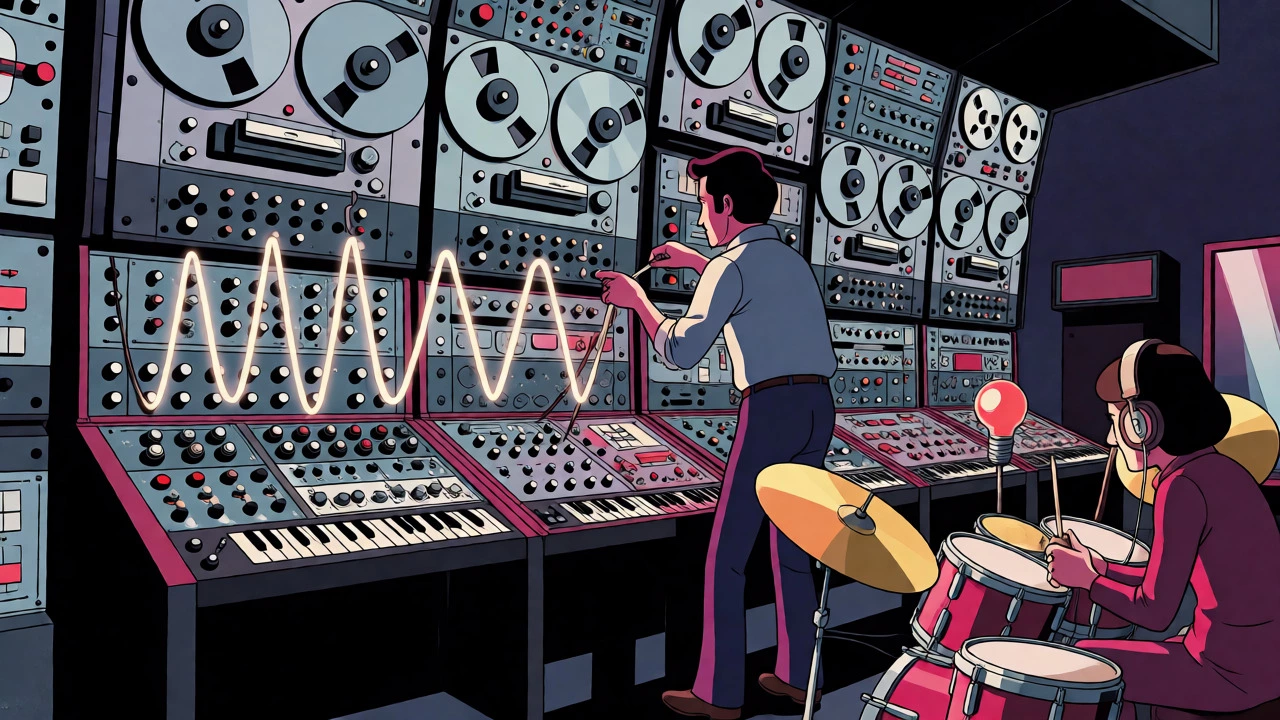
Giorgio Moroder, the Italian producer behind Donna Summer’s hits, became the poster child for click-based production. His work on "I Feel Love" (1977) is a landmark moment. Moroder didn’t just use a click; he built the entire track around it. He reportedly recorded 20 minutes of a Japanese drum machine click onto 24-track tape. Then, he synchronized Moog modular synthesizers and computer-generated parts to that tape reference.
Interestingly, Moroder still hired a real drummer for the kick-drum impact. This proves that click-based precision and human groove weren’t mutually exclusive. The click served as infrastructure, allowing electronic and acoustic layers to stack without falling apart. It wasn’t about correcting bad players; it was about enabling complex assembly.
| Feature | Live Band (No Click) | Early Click Use (Overdubs) | Sequenced Production (Disco/Electronic) |
|---|---|---|---|
| Timing Source | Drummer’s internal feel | Mechanical metronome or looped tape | Drum machine or sequencer clock |
| Groove Character | Organic, fluctuating, interactive | Stable but potentially stiff | Rigid, consistent, machine-like |
| Primary Genre | Rock, Soul, Jazz | Pop, Ballads | Disco, Synth-Pop |
| Editing Flexibility | Low (hard to splice) | Medium (requires matching tempo) | High (parts can be moved easily) |
Resistance: When the Click Killed the Vibe
Not everyone agreed with Moroder’s vision. A significant portion of the industry viewed the click as the "groove killer." This wasn’t just stubbornness; it was a philosophical stance on what music should feel like.
Tony Visconti, despite using clicks for complex arrangements, admitted in later interviews that in rock contexts, the click could destroy the vibe. He noted that musicians often played tighter when they felt free to push and pull. When forced to follow a beep, they sometimes lost the subtle delays that make a backbeat feel deep. A drummer playing strictly on the grid can sound lifeless compared to one who lays back slightly behind the beat.
The resistance centered on interaction. In a live band setting, the bassist listens to the drummer’s slight accelerations and responds instantly. That micro-timing conversation creates tension and release. A click removes that conversation. It dictates the pace rather than allowing the performers to negotiate it in real-time.
The Tipping Point: Data Shows the Shift
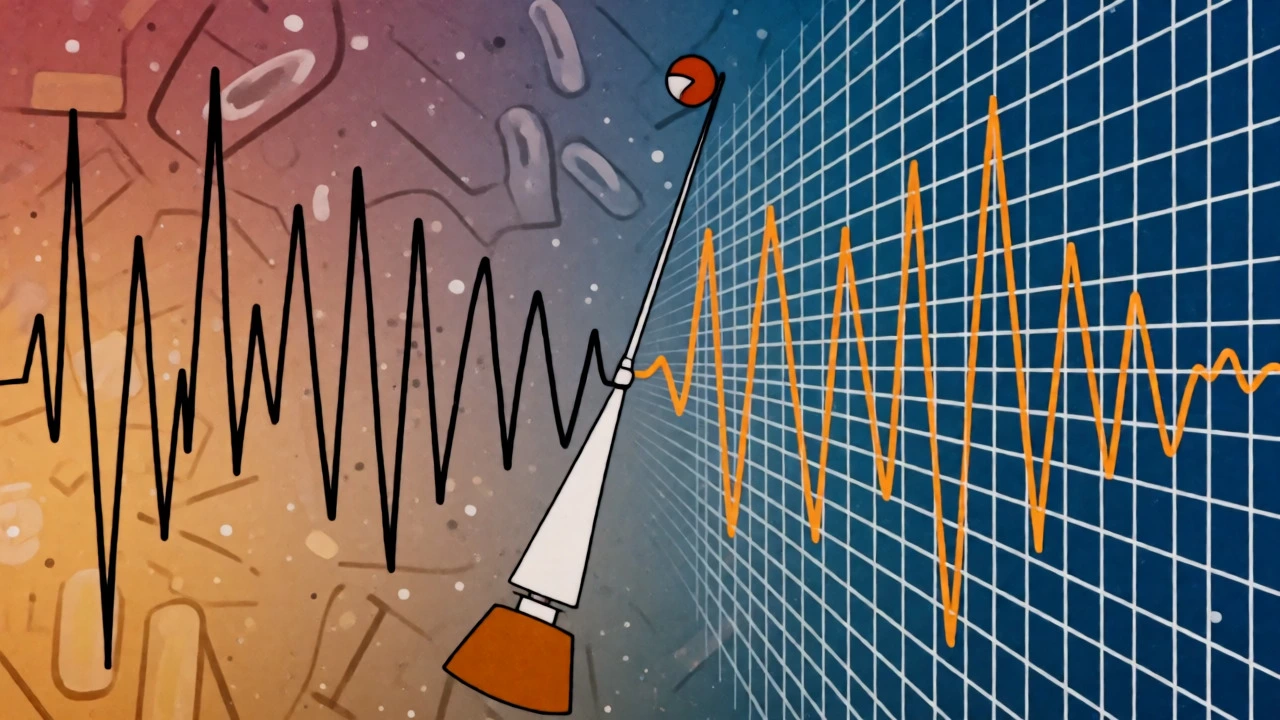
Was this shift subjective, or did it actually change the sound of popular music? A 2025 study by Daniel J. Carter and James von Appen analyzed 255 Billboard Hot 100 number-one singles from 1966 to 1995. They measured tempo variability-the degree to which a song’s speed fluctuates.
Their findings were stark. Tempo variability remained relatively high through the mid-70s but dropped steeply starting in 1979. The authors attribute this decline largely to the widespread adoption of click tracks and sequencing. By 1979, click-based practice had become the norm for mainstream pop. Songs recorded after this date exhibited significantly less natural drift than those from the early 70s.
This data confirms that the 1970s were the decisive decade where the click transitioned from a niche film tool to a standard pop-production method. It wasn’t an overnight switch, but by the end of the decade, the default expectation for a hit record had changed.
Legacy: Precision vs. Personality
Today, in 2026, click tracks are ubiquitous. Modern Digital Audio Workstations (DAWs) allow for tempo maps, automated accelerandos, and "humanized" MIDI that mimics natural timing variations. We have the best of both worlds: the structural stability of a click and the option to reintroduce human imperfection.
However, the debate started in the 70s remains relevant. Do you prioritize technical perfection or emotional resonance? The click excels when you need repeatability-for syncing video, building layered synth tracks, or creating dance remixes. It fails when the goal is to capture a fleeting moment of collective inspiration.
The lesson from the 1970s isn’t that technology ruined music. It’s that tools shape art. The click didn’t eliminate groove; it redefined it. Groove became less about a band breathing together and more about the intentional placement of sounds within a fixed grid. Understanding this history helps us appreciate why some records feel tight and polished, while others feel loose and alive.
Did all 1970s songs use click tracks?
No. While adoption increased significantly, especially in disco and electronic pop, many rock, funk, and soul recordings continued to rely on live band timing. The 1970s saw coexistence, with click usage becoming dominant only near the end of the decade.
What is a click track?
A click track is an audible timing reference, typically a metronome pulse, recorded onto a tape track or generated digitally. Musicians listen to it via headphones during recording to maintain a steady tempo, but it is removed from the final mix.
Why did disco producers prefer click tracks?
Disco requires a consistent pulse for dancing and extended mixes. Click tracks ensured that long repeated grooves remained stable, making it easier to edit, loop, and synchronize musical elements across multiple tracks.
Did click tracks kill the groove?
Critics argued yes, claiming rigid timing suppressed natural human fluctuations. However, skilled producers used clicks as a foundation while retaining expressive timing in performances. The conflict was about control: whether time was dictated by a machine or negotiated by musicians.
When did click tracks become standard?
Research indicates that click-based practice became the norm for mainstream pop around 1979, marked by a measurable decline in tempo variability in chart-topping songs.