
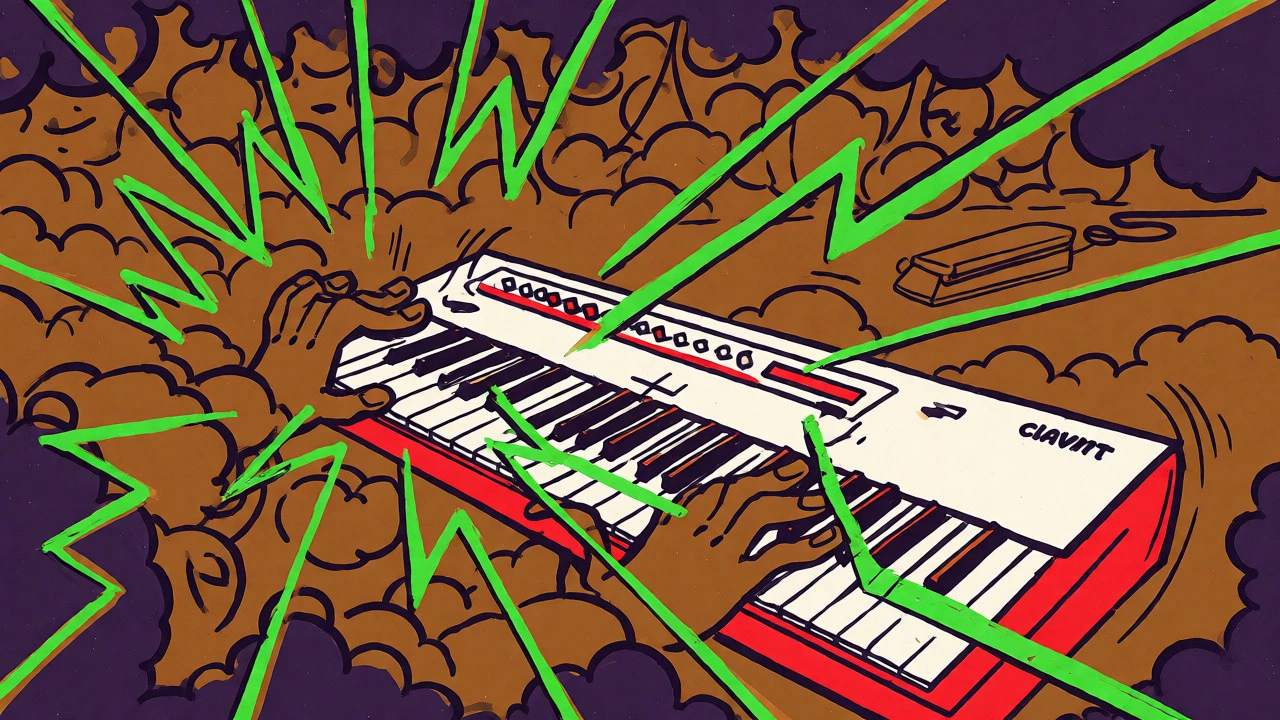
You know that sound. It’s sharp, percussive, and cuts right through a dense wall of drums and bass like a hot knife through butter. It’s not a guitar, but it behaves like one. It’s not an organ, because it doesn’t sustain. It’s the Hohner Clavinet, an electro-mechanical electric clavichord that defined the rhythmic backbone of 1970s funk. If you’ve ever wondered why Superstition hits so hard or how Herbie Hancock’s Chameleon groove stays tight without muddying the low end, the answer lies in this German-made instrument.
Most keyboards of the era-like the Rhodes or Hammond organ-were built for warmth, sustain, and lush chords. The Clavinet was different. It was designed to be dry, punchy, and aggressive. This article breaks down exactly how this unique machine worked, why it became the secret weapon for funk producers, and what you can learn from its mix-cutting abilities today.
The Anatomy of a Funk Machine
To understand why the Clavinet sounded unlike anything else, you have to look inside the box. Invented by Ernst Zacharias and manufactured by Hohner in Trossingen, West Germany, the first model appeared in 1964. But it was the D6 model, introduced in 1971, that became the industry standard.
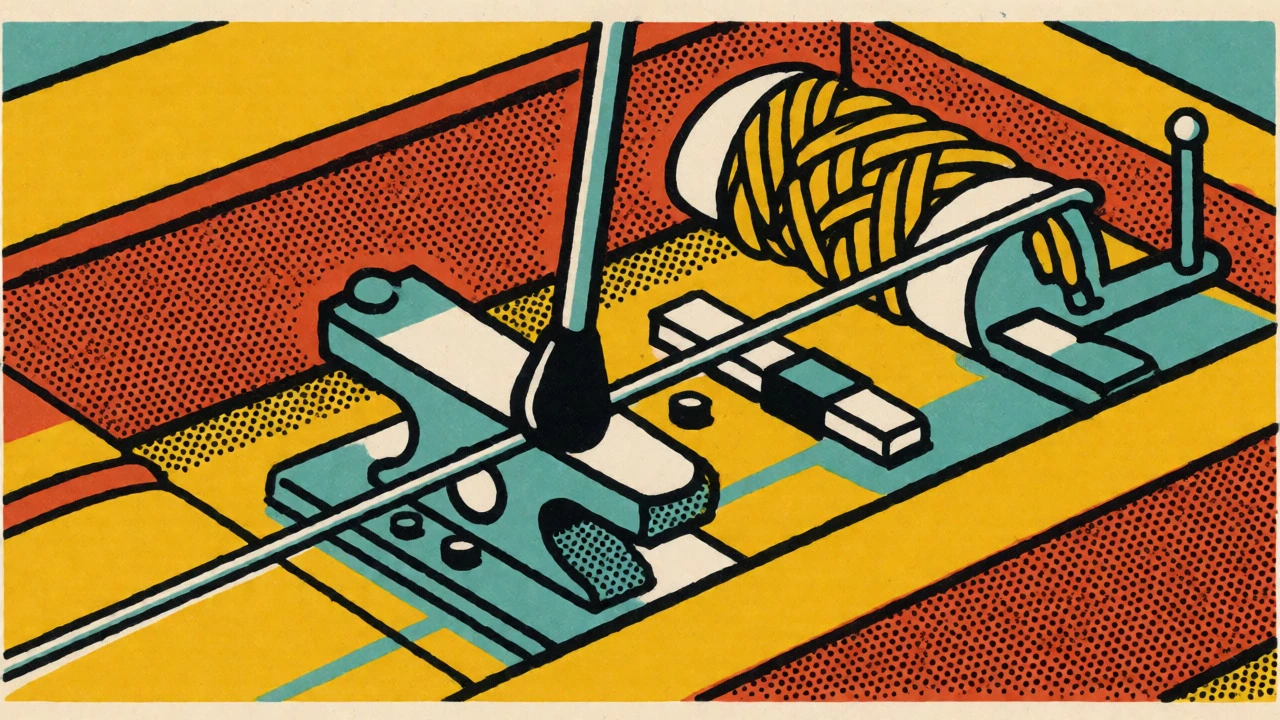
Unlike a piano, where a hammer strikes a string and lets it ring out, the Clavinet works more like a guitar with keys. Each key presses a rubber-tipped plunger against a single steel string, pinning it against an anvil. A magnetic pickup, similar to those on an electric guitar, senses the vibration. When you release the key, a woven yarn damper instantly stops the string. This mechanism creates a sound with almost zero sustain and a massive, immediate attack.
This mechanical design gave players two critical advantages:
- Touch Sensitivity: Hit it hard, and it screams. Hit it softly, and it whispers. You could play ghost notes and accents within the same phrase without changing your volume knob.
- Percussive Decay: Because the sound dies instantly, rapid sixteenth-note runs didn’t blur together. They stayed crisp and separated, leaving space for the bass and drums to breathe.
Why It Dominated the Frequency Spectrum
In a funk band, the bass player owns the low frequencies (below 200Hz), and the drummer owns the kick and snare transients. Where does the keyboardist fit? Usually, they get pushed into the background or forced to play high-pitched stabs. The Clavinet solved this by occupying the upper-midrange (around 800Hz to 3kHz) with extreme clarity.
The D6 featured two pickups: a neck-side pickup for a rounder tone and a bridge-side pickup for a biting, nasal edge. Combined with onboard filters labeled Brilliant, Treble, Medium, and Soft, players could dial in a tone that cut through any mix. Engineers loved it because it didn’t require heavy EQ carving. It just sat there, loud and clear, without fighting the bass guitar.
| Feature | Hohner Clavinet | Fender Rhodes | Hammond Organ |
|---|---|---|---|
| Sustain | Very Short (Damped) | Long (Bell-like) | Continuous |
| Attack | Sharp, Percussive | Soft, Mellow | Smooth, Swelling |
| Mix Role | Rhythmic Comping/Riffing | Harmonic Pads/Ballads | Full Band Foundation |
| Best For | Funk Grooves | Jazz/Pop Ballads | Soul/Rock Power |
Stevie Wonder and the "Superstition" Blueprint
You cannot talk about the Clavinet without talking about Stevie Wonder’s "Superstition". Released in October 1972, this track is arguably the most important recording in the instrument’s history. Wonder didn’t just play the Clavinet; he engineered its success.
Recorded at Electric Lady Studios, Wonder layered multiple Clavinet tracks to create that iconic opening riff. He combined a white-and-red Clavinet C (though some sources cite the D6) with a Moog synthesizer bass and his own drumming. The result was a three-way interlock: the Moog provided the sustained low-end foundation, the drums locked in the pocket, and the Clavinet delivered the syncopated, high-frequency hook.
This arrangement became the template for modern funk. It proved that a keyboard could drive a song rhythmically, not just harmonically. Before "Superstition," keyboards were often accompaniment. After it, they were lead instruments.
Beyond Wonder: Jazz-Funk and Rock Crossovers
While Stevie Wonder popularized the sound, other artists expanded its vocabulary. Herbie Hancock brought the Clavinet into jazz fusion on his 1973 album Head Hunters. On the track "Chameleon," Hancock used the Clavinet for funky, repetitive patterns while using synthesizers for the bass line. This separation of duties allowed for complex, extended jams that remained groovy rather than chaotic.
Then there was Parliament-Funkadelic. Bernie Worrell, the group’s keyboard wizard, used the Clavinet alongside synthesizers and effects pedals to create the P-Funk soundscape. His use of wah-wah pedals and envelope filters turned the Clavinet’s natural bite into a vocal-like cry, influencing generations of hip-hop producers who would later sample these records.
The instrument also crossed over into rock. Led Zeppelin’s Jimmy Page used a Clavinet on "Trampled Under Foot," proving that its percussive nature could compete with distorted electric guitars. Pink Floyd’s "Have a Cigar" and Fleetwood Mac’s "You Make Loving Fun" further demonstrated its versatility across genres.

The Effects Chain: Wah-Wah and Envelope Filters
A dry Clavinet signal is great, but a wet one is legendary. The most common effect paired with the instrument was the wah-wah pedal. By rocking the pedal back and forth, players could sweep a resonant frequency up and down, adding a human, vocal quality to the electronic tone.
More advanced users employed envelope filters, such as the Mu-Tron III. Unlike a wah-wah, which is controlled by foot position, an envelope filter reacts to the player’s touch. Play harder, and the filter opens wider; play softer, and it closes. This dynamic response amplified the Clavinet’s inherent touch sensitivity, creating a self-automating effect that felt alive.
Recording engineers also favored direct injection (DI) boxes over microphone amplifiers for the Clavinet. Because the instrument had no internal speakers, plugging directly into the console preserved the transient detail. However, some players ran it through a small guitar amp for grit, though too much distortion could mask the defining click of the strings.
Legacy and Modern Usage
Hohner stopped producing the Clavinet in the early 1980s, but its influence never faded. Today, you’ll find its sound sampled in everything from neo-soul to trap music. Producers love it because it solves a specific mixing problem: how to add rhythmic energy without cluttering the low-mids.
If you’re trying to replicate the classic funk sound, here are three tips:
- Use the Bridge Pickup: Select the brighter, harsher tone to ensure your riff cuts through.
- Keep Notes Short: Don’t let chords ring out. Staccato playing is essential for the funk feel.
- Add Dynamic Effects: Use an auto-wah or envelope filter to bring movement to static parts.
The Clavinet wasn’t just another keyboard. It was a tool that changed how we think about rhythm in popular music. By behaving like a guitar but offering the harmonic range of a piano, it carved out a niche that remains vital decades later.
What makes the Clavinet different from an electric piano?
An electric piano (like a Rhodes) uses hammers striking metal tines, producing a bell-like tone with long sustain. The Clavinet uses a plunger pressing a steel string against an anvil, creating a short, percussive sound with very little sustain, similar to a guitar.
Which Clavinet model is the most famous?
The Hohner Clavinet D6, released in 1971, is the most iconic model. It features improved filters and pickup switching compared to earlier models and is the instrument heard on many classic funk recordings.
Did Stevie Wonder use a Clavinet on Superstition?
Yes, Stevie Wonder played the Clavinet on "Superstition." He recorded multiple layers of the instrument to create the thick, driving riff that defines the song.
Why do funk musicians prefer the Clavinet over the organ?
Funk relies on tight, syncopated rhythms. The organ’s continuous sustain can muddy fast rhythmic figures. The Clavinet’s instant decay allows for clean, articulate sixteenth-note patterns that lock in with the drums and bass.
Can I buy a vintage Clavinet today?
Yes, but they are expensive and require maintenance. Rubber parts degrade over time, and electronics can fail. Many musicians opt for software emulations or modern hardware clones instead.